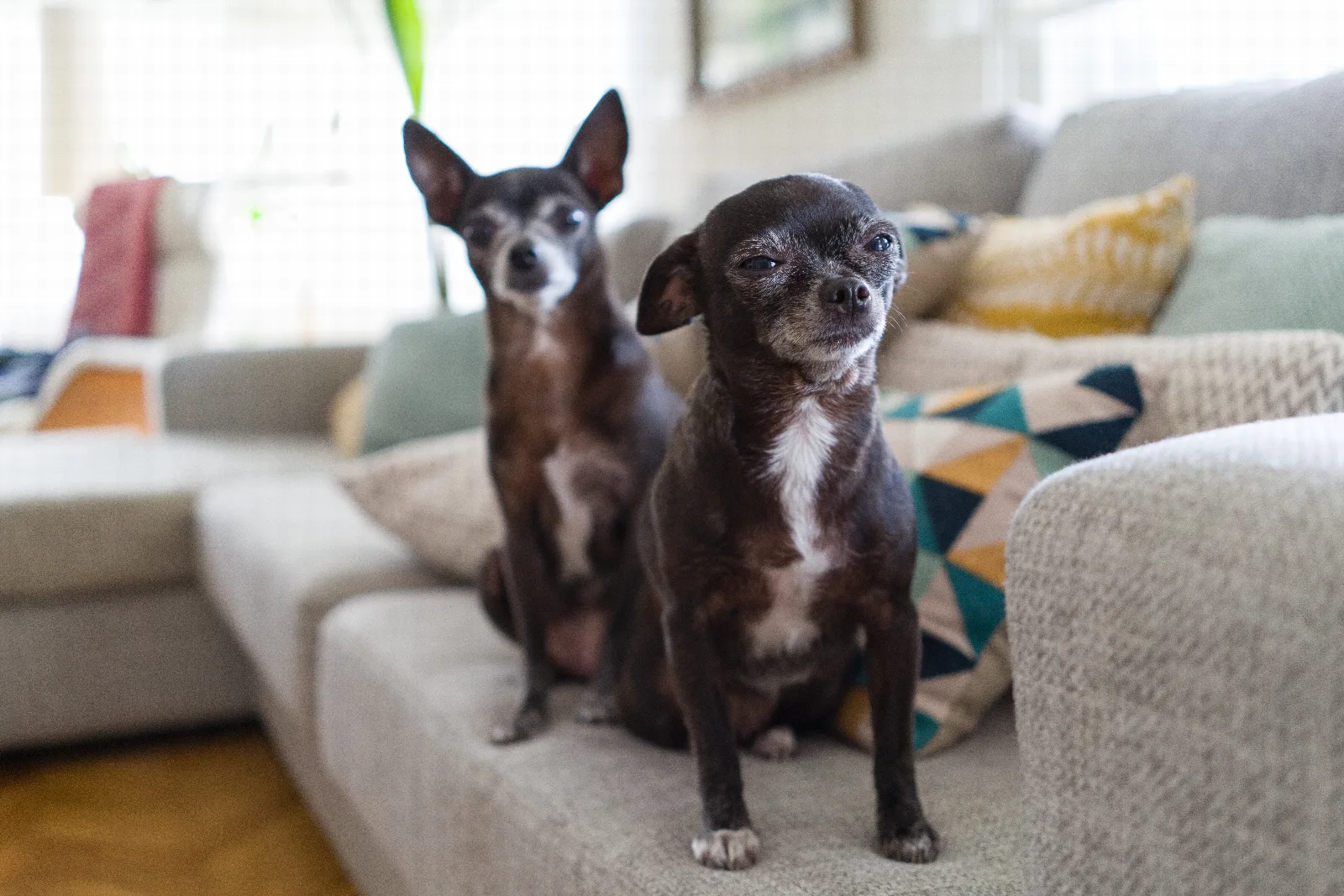
How long do chihuahuas live? Longer than almost any other dog. The American Kennel Club lists a life expectancy of 14 to 16 years for the breed, and well-cared-for chihuahuas regularly pass that mark. A chihuahua joining your family as a puppy is, in ordinary circumstances, a fifteen-year commitment.
That number is an average, not a promise, and averages have moving parts. This guide covers where the longevity comes from, what tends to shorten it, and which of those factors an owner can actually do something about.
Quick answer: The American Kennel Club puts chihuahua life expectancy at 14 to 16 years, and individual dogs commonly live past that, routinely outliving a large breed by five years or more. Some reach their late teens and a few pass twenty. Genetics, lean weight, dental health, accident prevention, and regular veterinary care are what move an individual dog around that average. Unusually tiny chihuahuas tend to be more fragile rather than longer-lived.
Why small dogs get the long calendars
Across breeds, size and lifespan run in opposite directions. The American Kennel Club's longevity overview puts giant breeds at roughly 8 to 10 years, while small breeds average 10 to 15, with some reaching 18. Researchers are still working out exactly why. The leading explanation is that large dogs grow from puppy to adult at an accelerated pace and seem to age faster for it, developing age-related disease sooner. Chihuahuas sit at the favorable end of that curve, which is how the breed keeps producing dogs that meet their owner's grandchildren.
One caution inside the good news: extreme smallness is not extra longevity. Dogs marketed as teacup or micro sit below the breed's healthy range and often carry more medical trouble, not less. We cover that marketing honestly in how big chihuahuas actually get.

What actually shapes an individual chihuahua's lifespan
Dental health, first and always. Periodontal disease, infection and inflammation of the tissue around the teeth, is the most common disease in adult dogs: VCA Animal Hospitals estimates that more than two-thirds of dogs over age three have some degree of it, and small breeds with crowded jaws are especially prone.
It does not reliably stay in the mouth, either. Bacteria from diseased gums can enter the bloodstream and may be associated with changes in the heart, liver, and kidneys. It is also the most preventable item on this list. Our dental care guide covers the routine, and it is not an exaggeration to call brushing a longevity habit.
Weight. An extra pound on a five-pound dog is twenty percent of the animal. Excess weight loads the same knees that are already prone to patellar luxation, a kneecap that slips out of its groove, and it strains the heart and worsens nearly every condition on the senior list. Lean chihuahuas age better; the measuring cup does more for lifespan than most supplements ever will.
Heart disease in the senior years. Degenerative valve disease, a heart valve that gradually leaks with age, is common in small senior dogs. Caught early through routine exams, it can often be managed for years; our piece on senior and hospice adoption describes what a managed heart condition looks like day to day.
Accidents. This is the entry people underestimate. For a breed this size, falls from furniture and arms, slammed doors, rough play with large dogs, and underfoot collisions are genuine lifespan events. The unglamorous safeguards, ramps, gates, screened playmates, check-before-you-sit, are covered in the owner's briefing.
Veterinary rhythm. Annual exams through adulthood, then twice-yearly visits once your veterinarian considers your dog senior, are how slow diseases get caught while they are still cheap and manageable. Small dogs hide illness well; bloodwork does not.
The chihuahua life timeline, roughly
Puppyhood runs to about a year, with growth mostly finished before then. Adulthood stretches long, and a chihuahua is generally treated as senior later than a large breed would be, often around age ten. The senior chapter can itself last five years or more, which is why it deserves planning rather than dread. Our senior quality-of-life guide covers the daily side, and, when the time eventually comes, the goodbye guide covers the rest, gently.
When to call your veterinarian
For lifespan purposes, the calls that matter are the boring ones: book the annual exam, move to twice-yearly visits in the senior years, and bring up small changes, drinking more, slowing down, new lumps, weight drift, while they are still small. Same-day call: appetite loss lasting more than a day, labored breathing, sudden weakness, or collapse at any age. The upper end is genuinely remarkable: a Florida chihuahua confirmed as the world's oldest living dog at 21 in 2022.
Frequently asked questions
What is the average lifespan of a chihuahua?
Fourteen to sixteen years by the American Kennel Club's estimate, and individual dogs commonly live past that. Genetics, weight, dental health, accident prevention, and veterinary care all move an individual dog around the average.
How long does a chihuahua live compared to other breeds?
Longer than almost all of them. It is routine for a chihuahua to outlive a large breed dog by five or more years, which is worth factoring into the commitment before you bring one home.
Can a chihuahua live to 20?
Some do reach their late teens, and a few pass twenty. It is not typical and cannot be engineered, but the fundamentals, lean weight, healthy teeth, a safe environment, regular exams, are the same habits that make eighteen or twenty possible.
Do smaller chihuahuas live longer?
No. Within the breed, unusually tiny dogs tend to be more fragile, not more durable, and the teacup label describes marketing rather than a healthier variety. A normal-size chihuahua in lean condition has the better outlook.
How can I help my chihuahua live longer?
Keep the weight lean, care for the teeth, prevent falls and rough play with large dogs, keep up vaccinations and parasite prevention, and hold the exam schedule. None of it is dramatic. All of it compounds.
Fifteen years is a long time to share a couch with someone. The habits that stretch the number are small and repetitive: a measured meal, a brushed tooth, a ramp by the sofa, a calendar reminder for the checkup. Do them anyway. The dog at the end of that routine is the one still climbing into your lap when the kids who grew up with her are packing for college.



No comments yet
Leave a comment