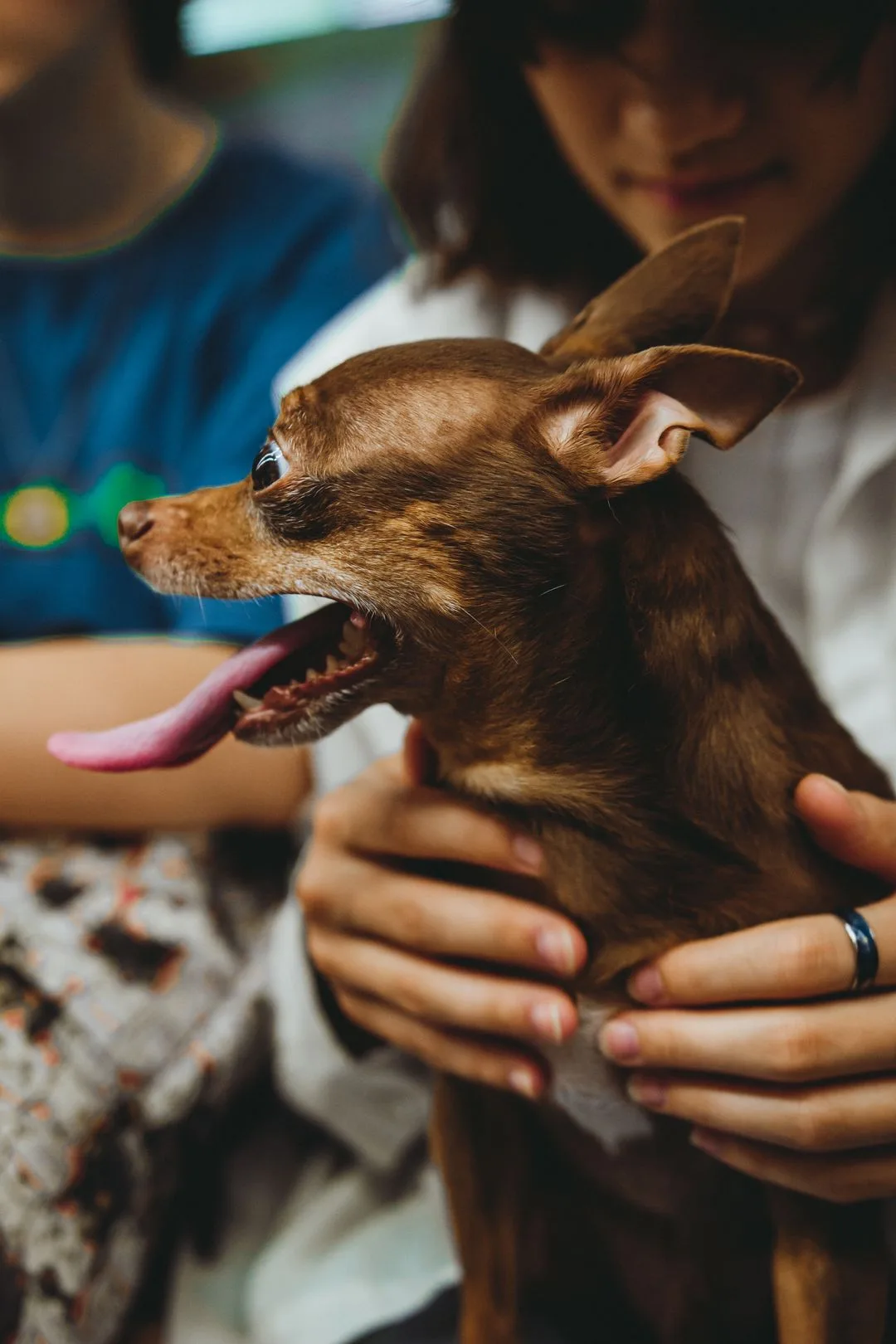
If you adopt exactly one health habit for your chihuahua, make it this one. Dental disease is the most common health problem in small dogs, it starts years earlier than most owners expect, and it is substantially preventable at home for the price of a toothbrush and three minutes a day. Few corners of dog care offer that trade.
The reason chihuahuas top the dental charts is anatomy. The breed carries a full set of 42 adult teeth, the same count as a Great Dane, in a jaw a fraction of the size. Crowded teeth trap food and plaque; plaque hardens into tartar; tartar pushes bacteria under the gumline. The result is periodontal disease, infection and inflammation of the tissues that anchor the teeth, and the American Veterinary Medical Association notes that most dogs show signs of it by age three. In small breeds it arrives earlier and hits harder.
Quick answer: Dental disease is the most common health problem in small dogs, and it is substantially preventable at home. Chihuahuas carry 42 adult teeth, the same count as a Great Dane, in a fraction of the jaw, so crowding traps plaque and periodontal disease starts early; most dogs show signs by age three. Brush daily if you can, every other day at minimum. Dry kibble does not clean teeth, and anesthesia-free cleaning is not recommended because nothing can be cleaned below the gumline without anesthesia.
Why the mouth does not stay in the mouth
Untreated periodontal disease costs teeth, which is bad enough in an animal that started with a crowded jaw. The larger problem is systemic: chronic oral infection means a steady bacterial load for the heart, kidneys, and liver to process, year after year. That is why dental care sits high in our guide to the three conditions every chihuahua owner should watch for, and why veterinarians keep repeating one unglamorous fact: dog breath is not normal. A healthy mouth does not smell bad. Persistent bad breath is the earliest, most ignorable sign on the list.
Why toy mouths fail first
A chihuahua carries the same 42 adult teeth as a labrador, in a jaw a fraction of the size. The arithmetic does the damage: crowded, rotated teeth press against each other, plaque settles into contact points a brush struggles to reach, and gum tissue stretched over tight roots recedes early. Add the breed's habit of keeping baby teeth, retained deciduous fangs that double-park beside the adult ones and trap food between them, a problem our teething guide covers in detail, and you have the reason veterinary dentists see toy breeds years before the big dogs. None of this is negligence; it is architecture. It just means the maintenance schedule that keeps a retriever's mouth acceptable is already too casual for a chihuahua.
The four stages, and why the X-ray decides
Veterinarians stage periodontal disease from one to four. Stage one is gingivitis, a red inflamed gumline, and it is the only stage that is fully reversible. Stage two brings early attachment loss; stage three, moderate bone loss around the roots; stage four, severe loss with loose teeth and extractions on the table. The catch is that most of that progression happens below the gumline, which is why the AAHA dental care guidelines treat dental X-rays under anesthesia as the standard of care: a crown can look clean over a root that is quietly losing its grip. Cost follows stage. A stage-one cleaning is the cheap visit; stage-four surgery is the expensive one, and the difference between them is usually two or three postponed checkups.
The home routine that actually works
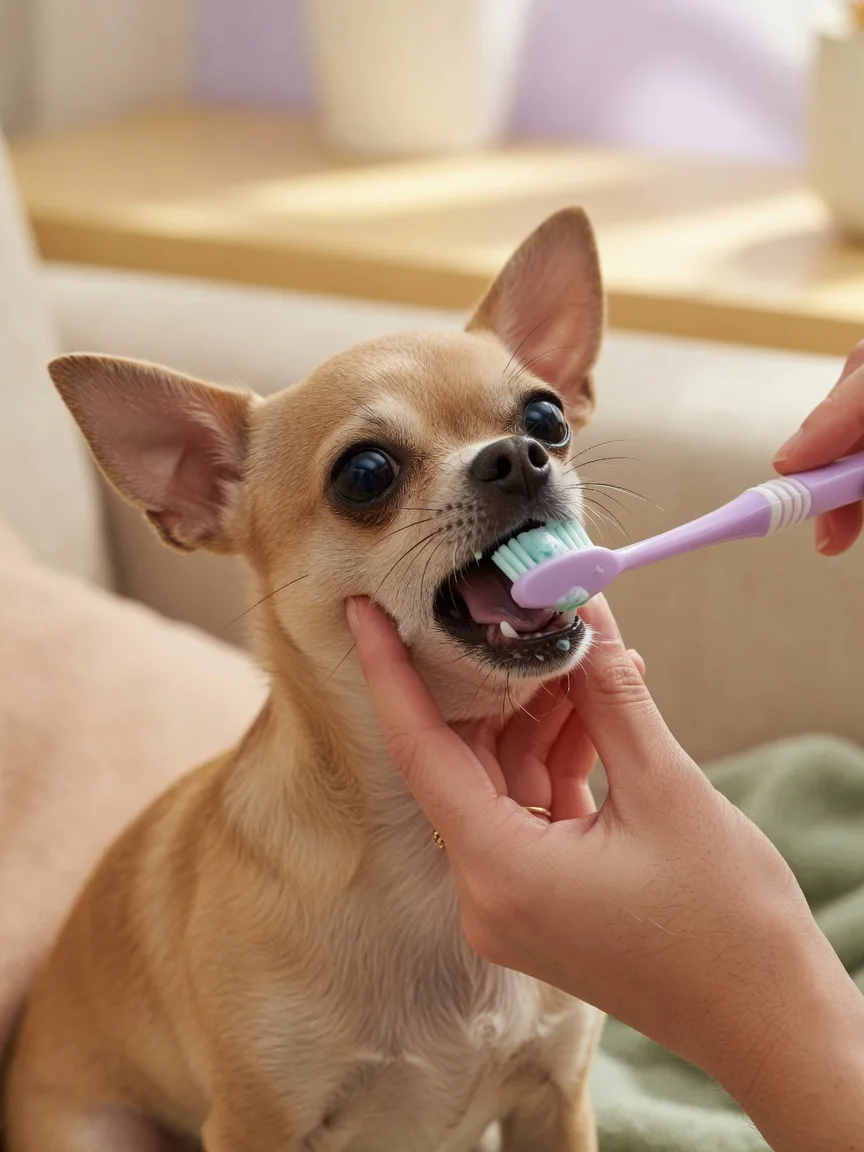
Brushing is the gold standard. Nothing else removes plaque from the gumline as effectively. Use a small pet toothbrush or a finger brush and pet toothpaste only; human toothpaste contains ingredients dogs should not swallow, sometimes including xylitol, which is toxic to them. Daily is ideal, several times a week still pays.
Ramp up slowly. Start with a fingertip of pet toothpaste licked off your finger, then a finger along the gums for two seconds, then five, then the brush on the front teeth, paying generously at every step. This is the same cooperative care we recommend for paws and ears, applied to the mouth, and it is far easier to install in a puppy than to retrofit into a suspicious adult. Retrofitting works too; it just takes more chicken and more patience.
Chews and additives help, with two caveats. Dental chews, coated kibbles, and water additives can slow plaque between brushings; look for products carrying the Veterinary Oral Health Council seal, which marks items tested for actual plaque or tartar reduction. The caveats: chews supplement brushing rather than replace it, and chew calories count double on a five-pound dog. Skip hard items like antlers and bones entirely; crowded little teeth crack on them.
Professional cleanings, and the shortcut to avoid
Even brushed mouths eventually need a professional cleaning, done under anesthesia so the veterinarian can scale below the gumline, probe every tooth, and take dental X-rays where most small-breed damage hides. Anesthesia in a tiny dog is a reasonable worry with a reassuring answer; we wrote a full guide to how anesthesia and dental cleanings actually work for chihuahuas, including the pre-anesthetic checks that make modern cleanings routinely safe.
What is not recommended is the anesthesia-free cleaning sold at some groomers and shops. It scrapes only the visible crown, leaves the disease under the gumline untouched, and adds stress and injury risk in a fully awake dog; the veterinary dental community's own consumer resource, the American Veterinary Dental College's anesthesia-free dentistry guide, explains why the polished look is misleading. A cosmetic mouth over an infected jaw is the worst of both purchases.
What owners actually ask
Read any owner forum and the dental threads all orbit one fear. The recurring Quora question asks it plainly: should I choose the anesthesia-free service, because anesthesia frightens me? The fear deserves respect, and the answer above stands: the awake cleaning polishes the part of the tooth that was never the problem. The other version of the worry is age, owners of ten-year-old dogs assuming anesthesia is off the table. Age alone is not a disease; pre-anesthetic bloodwork and tailored protocols decide case by case, and senior mouths are usually the ones carrying the most painful disease, a trade-off our senior care guide weighs honestly. The riskiest common choice is the quiet one: deciding the mouth can wait another year, every year.
Reading the VOHC list like a vet
The Veterinary Oral Health Council seal is the one label in the dental aisle that means something: products carry it only after controlled trials show they actually reduce plaque or tartar. The accepted products list spans chews, dental diets, water additives, and gels, and the fine print matters for this breed twice over. First, match the chew size to a chihuahua jaw; a chew engineered for a beagle is a choking hazard, not a toothbrush. Second, count the calories: a single dental chew can be a meaningful slice of a four-pound dog's daily budget, math our weight guide takes seriously. The seal supplements brushing; nothing on the list replaces it.
Signs the mouth already needs help
Bad breath that persists, red or bleeding gums, yellow-brown crust on the teeth, chewing on one side, dropping kibble, pawing at the mouth, drooling, a new preference for soft food, or approaching the bowl and retreating, which overlaps with the patterns in our guide to appetite loss. Any of these earns a dental exam rather than a stronger breath mint.
When to call your veterinarian
Same-day call: a dog that suddenly cannot or will not eat, a swollen face or muzzle, bleeding from the mouth, or obvious pain. Routine appointment: persistent bad breath, visible tartar, red gums, or any of the signs above; also book the first dental checkup by age one so your veterinarian can stage the mouth early. At home: build the brushing habit now, whatever the dog's age; the second-best time to start is today.
Frequently asked questions
Does dry kibble keep a chihuahua's teeth clean?
Mostly no. Ordinary kibble shatters on contact and scrubs almost nothing, which is why kibble-fed dogs still develop periodontal disease on schedule. Prescription dental diets are the exception; they use a fiber matrix that squeegees the tooth as it bites through, and the effective ones carry the VOHC seal. Treat kibble as nutrition, brushing as dental care.
How often should I brush my chihuahua's teeth?
Daily is the goal; every other day still makes a real difference. Below that, plaque wins. Pair brushing with a fixed daily anchor, after the evening meal works well, and pay the dog every time while the habit installs.
How many teeth do chihuahuas have?
Forty-two adult teeth, the standard canine count, packed into one of the smallest jaws in dogdom. That mismatch is the whole story of chihuahua dental trouble: crowding, trapped plaque, and early periodontal disease. Puppies start with 28 temporary teeth, and retained baby teeth, ones that fail to fall out, are common in the breed and worth flagging at a checkup.
Are anesthesia-free dental cleanings safe for chihuahuas?
They are not recommended. Without anesthesia nothing can be cleaned below the gumline, which is where periodontal disease lives, and no X-rays can be taken. The American Veterinary Dental College advises against the procedure; the money is better saved toward a proper veterinary cleaning.
What fixes chihuahua bad breath?
Treating its cause, which is almost always dental disease. Brushing and VOHC-accepted chews prevent it; an established infected mouth needs a veterinary cleaning first, after which home care keeps the breath honest. Mints and food toppers only perfume the problem.
None of this is complicated, and that is the point. A minute with a toothbrush, a sensible chew, an annual look inside the mouth, and a proper cleaning when your veterinarian calls for one; that modest routine is the single highest-return health investment a chihuahua owner can make, and the payoff is measured in years, not freshness.

No comments yet
Leave a comment