
If your chihuahua is refusing food, the first job is not finding a tastier kibble. It is working out which kind of not-eating you are looking at, because in a dog this small the stakes scale differently. A Labrador can sulk past a few meals with no consequence; a four-pound dog, and especially a chihuahua puppy, runs out of fuel fast.
Here is the calm version of the problem: most appetite dips have ordinary explanations, several have medical ones, and the difference usually shows within a day. This guide covers both lists, and the deadlines that tell you when a skipped meal stops being a preference and becomes a phone call.
Quick answer: A healthy adult chihuahua that is still drinking can usually tolerate about a day without food, and 24 hours is also the sensible limit before calling your veterinarian. A puppy gets no such allowance: two refused meals is already a same-day matter. Refusing kibble while still taking treats is usually negotiation rather than illness, but approaching the bowl with interest and then walking away is a classic dental-pain pattern. Not eating alongside repeated vomiting, collapse, severe lethargy, or a swollen, painful belly needs emergency care now.
The ordinary reasons a chihuahua skips a meal
The treat economy. Start with arithmetic. A five-pound dog needs a surprisingly small amount of food per day, and a couple of training treats plus a corner of toast can quietly deliver half of it. A dog that ate elsewhere is not off its food; it is full. Audit everything that crossed the lips in the past day before concluding anything.
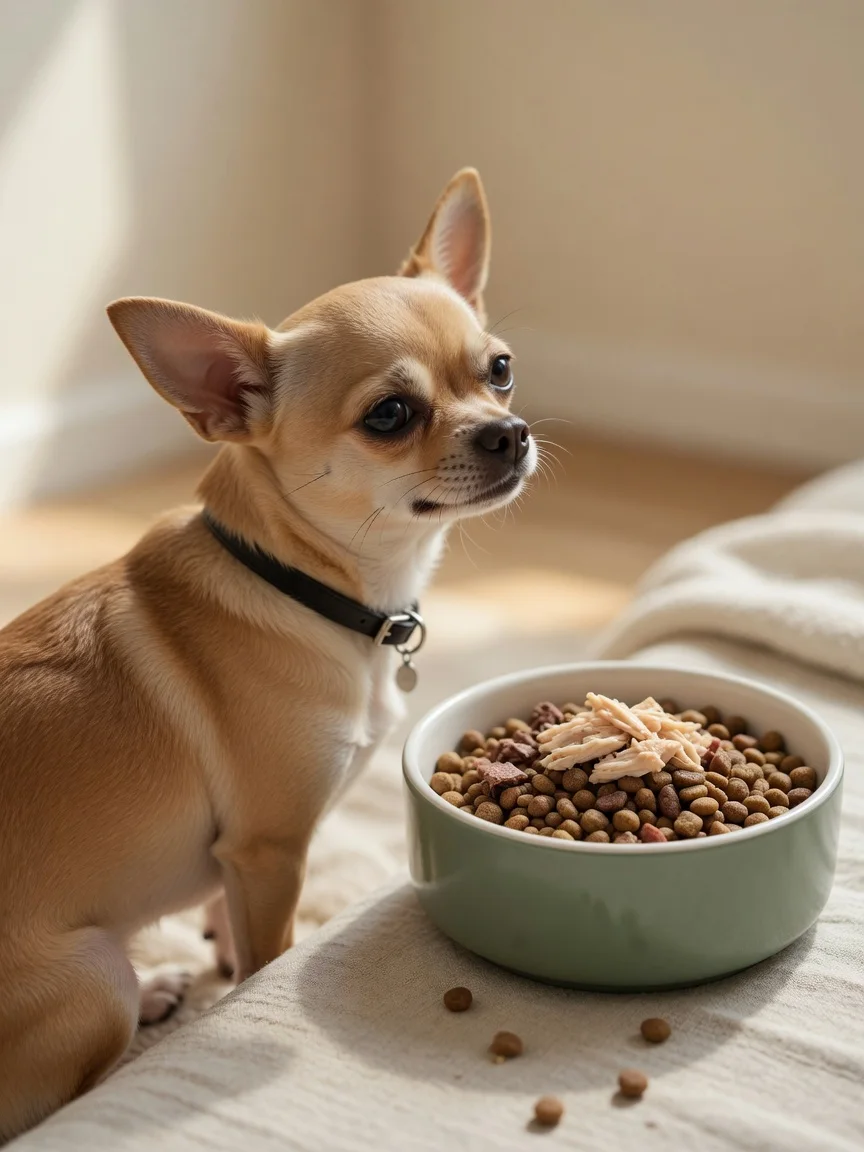
Learned pickiness. Chihuahuas are intelligent enough to run experiments on their owners. If refusing kibble reliably produces chicken, the dog has not lost its appetite; it has negotiated a better contract. The fix is boring consistency: the meal goes down for fifteen or twenty minutes, then comes up until the next scheduled feeding. A healthy adult repairs this habit quickly. A dog that ignores even the chicken belongs in the medical half of this article.
Stress and change. A move, a new pet, a houseguest, construction noise, even a relocated bowl can pause a small dog's appetite; a rescue settling into a new home commonly eats poorly for the first days, which is normal and covered in our guide to helping a fearful chihuahua settle. Heat does it too; many dogs simply eat less in hot weather.
The medical reasons, from most to least common
Dental pain. This is the big one in this breed. Periodontal disease, infection of the tissues around crowded teeth, is almost the default state of unbrushed chihuahua mouths, and a dog with a sore mouth may approach the bowl eagerly and then back away, chew on one side, drop kibble, or prefer soft food only. Bad breath usually comes along for the ride. Our dental care guide covers prevention, and the three-conditions guide explains what untreated dental disease turns into.
Digestive upset. Nausea, the raided trash, a too-rich treat, or a genuine gastrointestinal illness all present as appetite loss, often with drooling, lip licking, grass eating, vomiting, or diarrhea alongside. The Merck Veterinary Manual lists appetite loss among the earliest general signs of digestive disease, which is exactly why persistence matters more than any single skipped bowl.
Everything else. Kidney and liver disease, infections, pain anywhere in the body, and medication side effects all suppress appetite, especially in seniors. A senior chihuahua whose eating has drifted down over weeks deserves an exam and likely bloodwork even if nothing else looks wrong; slow fading is how small dogs report chronic illness. Our senior guide covers appetite as one of the quality-of-life measures worth tracking.
The puppy rule, which is stricter
Chihuahua puppies under about four months carry almost no energy reserve, and a missed meal can tip them into hypoglycemia, a dangerous drop in blood sugar. The American Kennel Club's hypoglycemia guide lists weakness, wobbling, trembling, and a glassy stare among the warning signs. A puppy that refuses two meals, or shows any of those signs, is a same-day veterinary visit. Do not wait overnight on a tiny puppy.
What to do at home, and what not to do
Keep water available always; hydration buys time that food does not. Note everything: when the appetite changed, what was eaten last, stool and vomit if any, energy level. Offer the normal food at normal times rather than escalating through your refrigerator, because a parade of new foods teaches pickiness and muddies the picture your veterinarian needs. Do not force-feed a dog that may be nauseated, and do not reach for appetite remedies or human medications on your own; several common ones are dangerous to dogs.
When to call your veterinarian
Emergency care now: not eating plus repeated vomiting, collapse, severe lethargy, a swollen or painful belly, or a puppy showing weakness or trembling. Same-day call: any puppy refusing meals; an adult past 24 hours with no food; appetite loss with vomiting, diarrhea, drooling, or obvious pain. Routine appointment: an adult eating noticeably less over a week or more, a senior with slow appetite drift, or repeated bowl refusals that treats no longer explain. Monitor at home: one skipped meal in a bright, playful, hydrated adult with a plausible ordinary explanation.
Frequently asked questions
How long can a chihuahua safely go without eating?
A healthy adult that is drinking water can typically tolerate a day, and that is also the sensible limit: past 24 hours, call your veterinarian. Puppies get no such allowance; two refused meals in a young puppy is already a same-day matter.
My chihuahua refuses kibble but eats treats. Is that medical?
Usually it is negotiation rather than illness: the dog is holding out for the better menu. Keep meals scheduled and boring and the strike normally ends within a couple of days. If the dog starts refusing the treats too, or shows other changes, treat it as medical.
Why does my chihuahua sniff the food and walk away?
Approaching with interest and then retreating is a classic dental-pain pattern in small breeds, especially with bad breath, one-sided chewing, or dropped kibble. A veterinary dental exam is the useful next step rather than another brand of food.
Should I switch foods to tempt my chihuahua?
Not as a first move. One familiar fallback, a bland option your veterinarian has previously approved, is reasonable for a day; rotating through novelties teaches the dog that refusal upgrades the menu, and it hides the pattern a clinic needs to see.
Appetite is one of the clearest signals a small dog sends. Most dips are noise: a warm day, a full treat ledger, a negotiation. The ones that persist, or that arrive with other changes, are information, and information is exactly what your veterinarian needs early rather than late. Watch the bowl, write down what you see, and make the call when the deadlines above say so.

No comments yet
Leave a comment