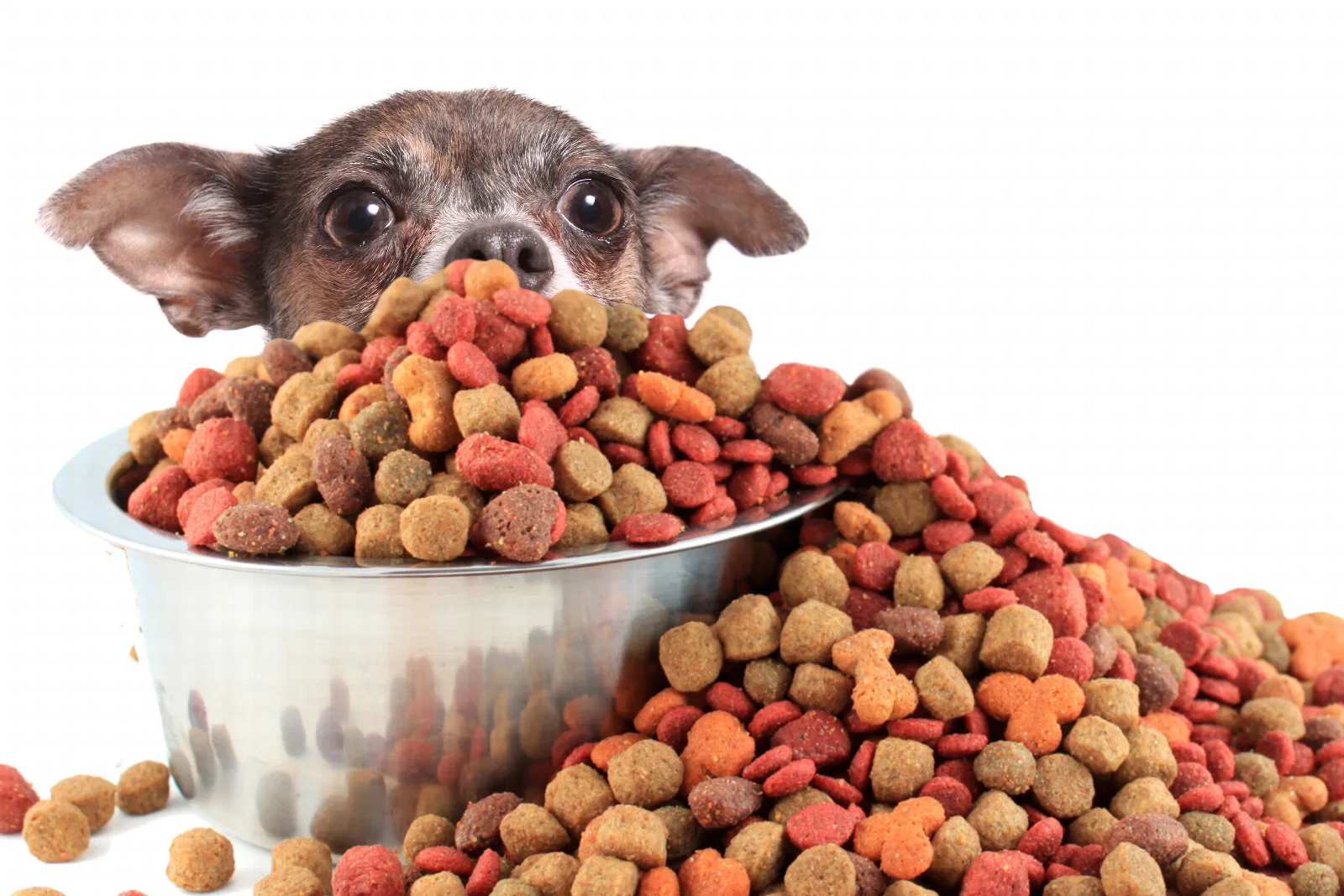
On a chihuahua, one extra pound is never just one pound. Spread across a five pound frame, it is a twenty percent overshoot, roughly what thirty extra pounds would mean on an average adult. The knees, the windpipe, and the heart all carry that percentage, which is why weight is one of the most useful numbers in this breed's health.
The encouraging part: extra weight is one of the few common chihuahua health problems an owner can fully reverse at home, with a veterinarian setting the targets. This guide covers how to judge your dog's condition with your hands, why the weight arrives in the first place, and the slow, safe way to take it off.
Quick answer: On a chihuahua, one extra pound is a twenty percent overshoot on a five-pound frame, roughly what thirty extra pounds would mean on an average adult, and the knees, windpipe, and heart all carry that percentage. Judge condition with your hands rather than the scale: ribs easy to feel under light pressure, a visible waist from above, a tuck from the side. Take it off slowly at a pace your veterinarian sets, with monthly weigh-ins, using measured kibble and plain vegetables in place of treats.
Check body condition first, not the scale
Healthy chihuahuas vary too much for a single target weight to mean much. Veterinarians work around this with a body condition score, a standardized grade of how much fat covers the frame, and the reference charts published with the WSAVA global nutrition guidelines are the version many clinics keep on the exam room wall. The home check takes about ten seconds and uses your hands, which matters on a coat that hides silhouettes.
- Ribs: with flat fingers and light pressure, ribs should be easy to feel under a thin layer, similar to the bones on the back of your hand. If you have to press to find them, there is padding.
- Waist: looking down from above, the body should narrow visibly behind the ribs.
- Tuck: from the side, the belly should rise from the chest toward the hind legs rather than hanging level.
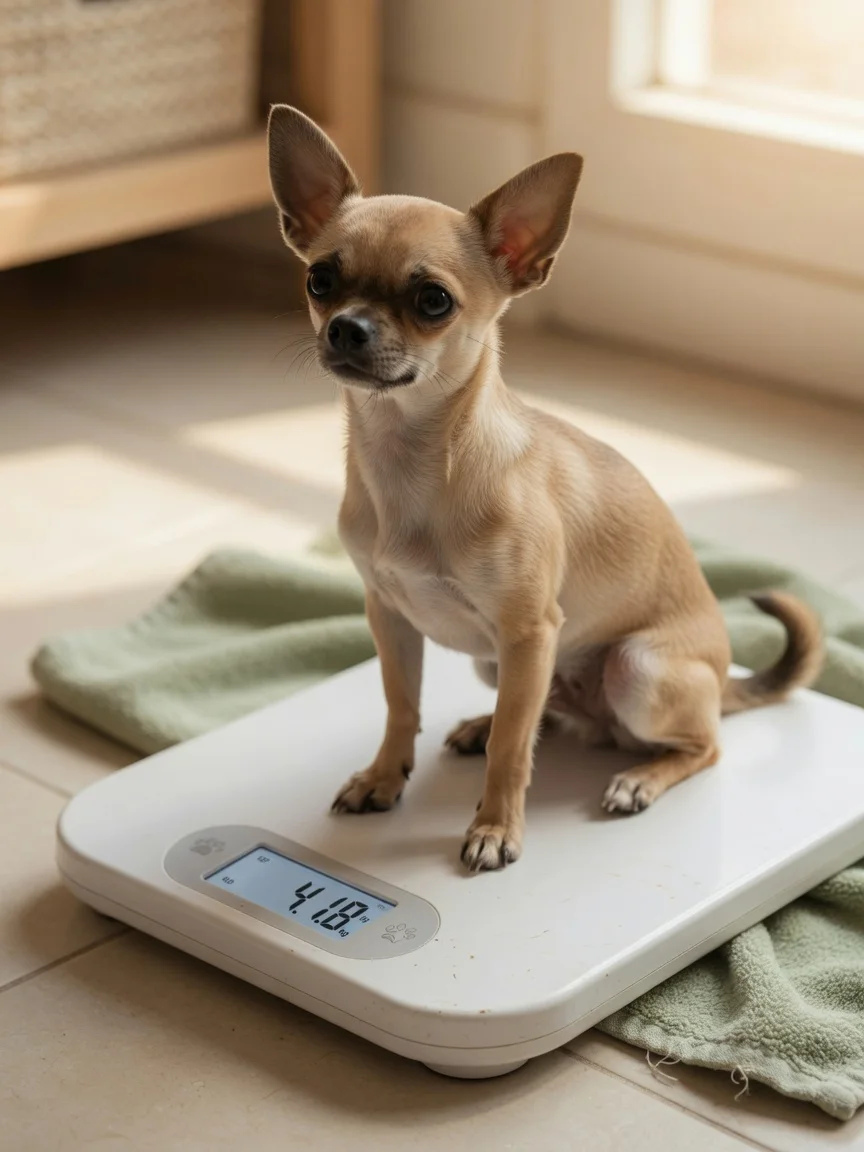
A dog who fails two of the three checks is likely carrying extra weight. The scale still earns its place for tracking: weigh monthly on the same scale, because a quarter of a pound is a real trend at this size. A baby scale works well at home.
Why the weight arrives so easily
Rarely from meals alone. A very small dog has a very small calorie budget, so the gap between needs and habits does the damage: a bowl filled by eye instead of by measure, training treats sized for a much larger dog, and a steady tax of table food.
One rich human treat can be a meaningful share of a four pound dog's entire day of calories, which is why a single household habit can undo an otherwise sensible diet. If pleading eyes drive the extra handouts, our guide to stopping a chihuahua from begging covers how to retire that routine kindly.
Age and lower activity add to the drift. Occasionally there is a medical cause: weight gain can be associated with hypothyroidism, an underactive thyroid gland, or Cushing's disease, an overactivity of the adrenal glands. That possibility is one of several reasons a weight loss plan should start with a veterinary exam rather than a smaller scoop.
The safe way to take weight off
Start with your veterinarian. A pre-diet exam rules out medical causes, sets a realistic target weight, and matches the food and portions to your dog. Crash dieting is genuinely risky for a tiny dog, and the right pace of loss is a clinical decision. Expect a methodical plan with scheduled weigh-ins rather than a dramatic one.
Measure every meal. An inexpensive kitchen gram scale ends portion drift permanently. Eyeballed scoops wander over time, and on portions this small, the wander is the whole problem. Our chihuahua feeding guide walks through portions and meal timing in more detail.
Put treats on a budget. The AVMA's healthy weight guidance recommends keeping treats under ten percent of daily calories. Reserve part of the measured daily food as the training allowance, and use plain green beans or cucumber for the crunchy moments. Everyone in the household has to follow the same rules.
Add gentle movement. Longer sniffing walks and short play sessions, built up gradually, suit an overweight chihuahua far better than sudden exertion. Our guide to how much exercise a chihuahua needs covers realistic amounts, and joints matter here: weight loss protects the kneecaps, but the exercise has to respect them first, as our patellar luxation guide explains.
Track and adjust. Weigh monthly, take a photo from above every few weeks, and review progress with your clinic so portions can be tuned. Veterinarians watch the rate closely because loss that is too fast is as much a problem as loss that is too slow. For a sense of what a supervised programme can achieve, one chihuahua on a six-month veterinary slimming plan lost 29 percent of his bodyweight after starting 83 percent above his ideal weight.
Why a lean weight pays off in this breed
Extra weight worsens nearly everything chihuahuas are prone to: more load on kneecaps that already tend to slip, more pressure around a delicate windpipe, more work for a small heart, and a higher risk of complications during anesthesia. It also costs time. Veterinary hospitals such as VCA note that even moderately overweight dogs can lose nearly two years of expected lifespan, a heavy price in a breed famous for long life. Our chihuahua lifespan guide looks at what those extra years can hold when health goes well.
When to call your veterinarian
Same day: a belly that becomes swollen or tight over hours to days, which is not fat and can signal something urgent, or rapid weight change in either direction over days to weeks.
Routine appointment: before starting any weight loss plan, when you are unsure how to read your dog's body condition, or when weight gain appears alongside lethargy, coat changes, or increased thirst.
Monitor at home: the monthly weigh-in and the ten second rib, waist, and tuck check. It is the cheapest health screen this breed has.
Chubby or clinically obese? How to tell
A chubby chihuahua still shows a waist from above and ribs you can find under light pressure. An obese chihuahua has lost both: the back looks flat and wide, fat pads settle over the ribs and tail base, and the dog tires within minutes. On the body condition scale described above, chubby sits around 6 to 7 out of 9, while a fat chihuahua at 8 or 9 is in the obese range and needs the structured plan below, not just fewer treats.
Frequently asked questions
How much should a chihuahua weigh?
The breed standard used in the show ring disqualifies dogs over six pounds, but healthy pets range wider because frames vary. Body condition matters more than any single number: ribs easy to feel, a visible waist, and a rising tuck mean the weight suits the frame.
How fast should a chihuahua lose weight?
Slowly, at a pace your veterinarian sets and rechecks. Monthly weigh-ins confirm the loss is neither too fast nor too slow, and portions are adjusted as the dog changes. Rapid loss in a very small dog is a reason to call the clinic, not to celebrate.
Is my chihuahua overweight or just fluffy?
Hands answer what eyes cannot through a long coat. Feel for ribs with light pressure, then check for the waist from above and the tuck from the side. Coat adds silhouette, but it does not add padding over the ribs.
What treats can an overweight chihuahua still have?
Pieces of the measured daily kibble cover most training, and plain vegetables such as green beans or cucumber handle the rest. Keep everything within the budget your veterinarian sets, and pause rich human foods entirely while the weight is coming down.
The whole project is arithmetic plus habits: measure the food, budget the treats, walk the dog gently, and check ribs, waist, and tuck each month. A good first step is a baseline this week. Weigh your dog, run the ten second check, and if two of three fail, book a body condition assessment with your veterinarian.


No comments yet
Leave a comment