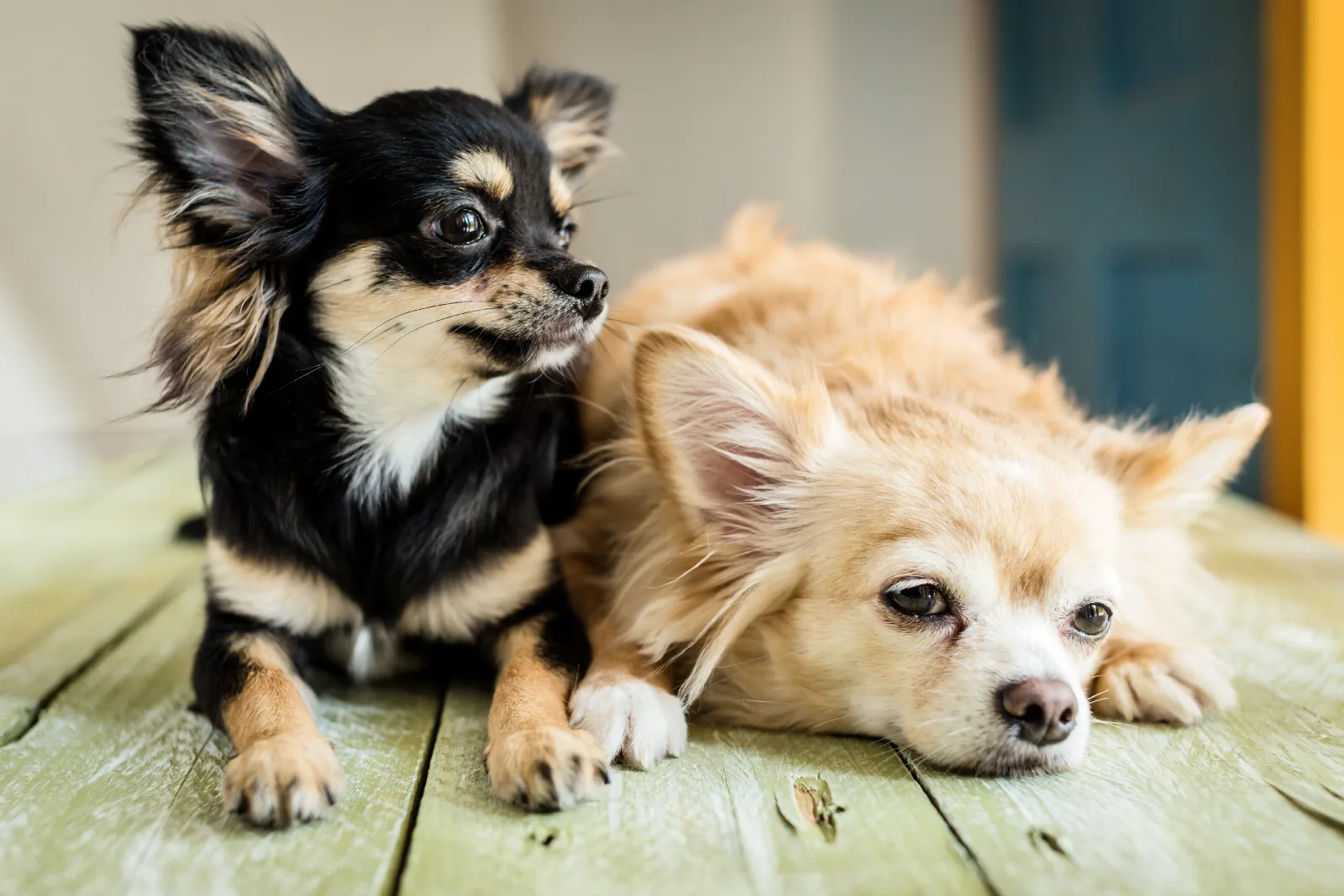
Nobody warns you that a four-pound dog can clear a room. Gas is one of the most common, least dignified complaints in dog ownership, and chihuahua owners file it constantly, usually with the same bafflement: how does something this small produce this much atmosphere? The answer is a short list of causes, most of them fixable at the food bowl, plus one serious look-alike every owner should be able to rule out. Taking it in that order.
Quick answer: Most chihuahua gas traces to swallowed air from speed-eating, plus dairy, rich table scraps, or a food change made too fast. Normal is gas without companions: no weight loss, no vomiting, no change in stool. Sudden gassiness usually means something changed, so tighten the menu for a week and watch. Do not use human gas medicine at this size. A swollen, tight belly, with or without unproductive retching, is emergency care now.
Where the gas actually comes from
Swallowed air leads the list. Gas is partly just air that went down with dinner, and chihuahuas are champion speed-eaters, inhaling kibble in gulps with a garnish of oxygen. Fast eaters, competitive eaters in multi-pet homes, and dedicated post-meal zoomers all load the system with air that has exactly two exits.
Diet does the rest. The usual suspects: table scraps and rich human food, which a four-pound gut meets in proportionally heroic servings; dairy, since most adult dogs digest lactose poorly, and the cheese tax collected at every fridge visit ferments accordingly; abrupt food switches that ambush the gut flora, the same one-week-transition rule from our diarrhea guide; and some dogs simply ferment certain ingredients enthusiastically, with legumes and cruciferous vegetables the classic examples. Food sensitivity is the deeper version of the same theme, and it usually brings companions: soft stool, itchiness, or an unsettled gut across weeks.
The medical tier is real but the minority. Persistent, dramatic gas alongside weight loss, diarrhea, appetite change, or vomiting points beyond diet, at parasites, covered in the parasite guide, or at digestive conditions that need a workup. The Merck Veterinary Manual's digestive overview is the sober tour of how much machinery sits behind a symptom this comedic.

The fixes, in the order to try them
Slow the intake. A slow-feeder bowl or a snuffle mat turns inhalation into eating, and smaller, more frequent meals load less air and less fermentable cargo per sitting. In multi-pet homes, feed the chihuahua separately so speed stops being a competitive sport.
Audit the menu. Cut dairy entirely, put table scraps on the treaty everyone signs, per the household-diplomacy section of our weight guide, and make any food change gradual over a week or more. If you suspect a specific ingredient, resist the urge to rotate bags on a hunch; a proper diet trial run with your veterinarian answers the question once instead of never.
Add gentle motion. An easy walk after meals helps the gut move things along in the intended direction, and it is good for approximately everything else in this article series too.
Skip the human remedies. Human anti-gas and stomach products are not safe assumptions at four pounds, and dosing is not a kitchen-table calculation; if gas seems bad enough to medicate, it has earned a veterinary conversation, where safe options and, more importantly, the actual cause live.
The belly that is never just gas
One picture demands its own paragraph: a belly that becomes suddenly swollen, tight, or drum-like, especially with retching that produces nothing, restlessness, drooling, or obvious distress, is not flatulence. That combination is an emergency, now, at whatever hour, the same red flag flown in our vomiting guide. Ordinary gas is soft-bellied, comes with a mortified dog and an evacuated couch, and resolves. The emergency version looks and behaves nothing like it, and knowing the difference is the serious cargo this silly article exists to deliver.
When to call your veterinarian
Emergency care now: the swollen tight belly picture above, with or without unproductive retching. Same-day call: gas with repeated vomiting, bloody or black stool, or a dog who is flat and unwell. Routine appointment: chronic room-clearing gas despite the fixes above, gas with weight loss or recurring soft stool, or planning a proper diet trial. Monitor at home: the ordinary post-cheese incident, the after-dinner concert in a bright, thriving dog, and everything that improves within a week of slower bowls and a cleaner menu.
Frequently asked questions
Is it normal for chihuahuas to fart a lot?
Some gas is standard equipment in every dog, and noticeable gas usually traces to speed-eating, dairy, scraps, or a recent food change. Normal is gas without companions: no weight loss, no diarrhea, no appetite change, and a dog who is otherwise entirely herself.
Why did my chihuahua suddenly get so gassy?
Sudden usually means something changed: a new food introduced too fast, a raid on the trash or the table, a new treat, or a gut bug incubating. Tighten the menu for a week and watch the stool; a change that persists or brings friends earns an appointment.
What foods give chihuahuas gas?
Dairy is the headliner, followed by rich table scraps, abrupt food switches, and for some individuals legumes and cruciferous vegetables. Every dog ferments a little differently, which is why a vet-guided diet trial beats folk experimentation when the pattern will not break.
Can I give my chihuahua gas medicine?
Not from the human shelf, and nothing dosed by guesswork at this size. Your veterinarian has safe options and, better, the tests that find out why the gas exists, which is the version of the fix that lasts.
Gas is the rare chihuahua complaint that is mostly comedy with a fixable cause: slow the eating, clean up the menu, walk after dinner, and reserve your alarm for the one tight-bellied picture that was never funny. The couch, and everyone on it, thanks you in advance.




No comments yet
Leave a comment