
Every guide on this site ends with a section called when to call your veterinarian. This is the article about what happens when the answer is now: where you go, what you bring, how an emergency clinic actually works, and, because preparation is the difference between a bad hour and a bad week, the small amount of homework that future-you will be pathetically grateful for.
Quick answer: Do the preparation before you need it: save your regular clinic's hours and after-hours policy plus the nearest 24-hour emergency hospital in your phone and on the fridge, and drive the route once so it is boring. Call ahead whenever it does not delay you, because the team can prepare and poison guidance can start on the phone. Bring the dog secured in a carrier, your one-page dog file, current medication bottles, and the packaging or a sample of anything she ate.
The homework: do it this week, not that night
Know your two addresses. Your regular clinic's hours and after-hours policy, and the nearest 24-hour emergency hospital, saved in your phone and stuck on the fridge. Drive the route once so it is boring. If you travel with your dog, look up the equivalent at the destination; five minutes on arrival beats forty at midnight.
Build the one-page dog file. Weight, age, conditions, every medication and preventive with doses, vaccine status, microchip number, your regular clinic's contact. Photograph it so it lives in your phone. In an emergency, this page answers the intake questions your adrenaline will have deleted.
Decide about money in daylight. Emergency medicine costs real money everywhere, and the sums vary too much by region and case for any honest article to quote figures. What you can do now: know roughly what you could absorb, look at pet insurance while your dog is young and unexcluded, or start a dedicated savings buffer. Clinics can work with a plan; nobody works well with a surprise.
Keep a carrier ready. A secure carrier is the safest transport for a sick, painful, or panicky chihuahua, and a hurt dog, even yours, may bite. A towel over the carrier lowers the stress of the ride.
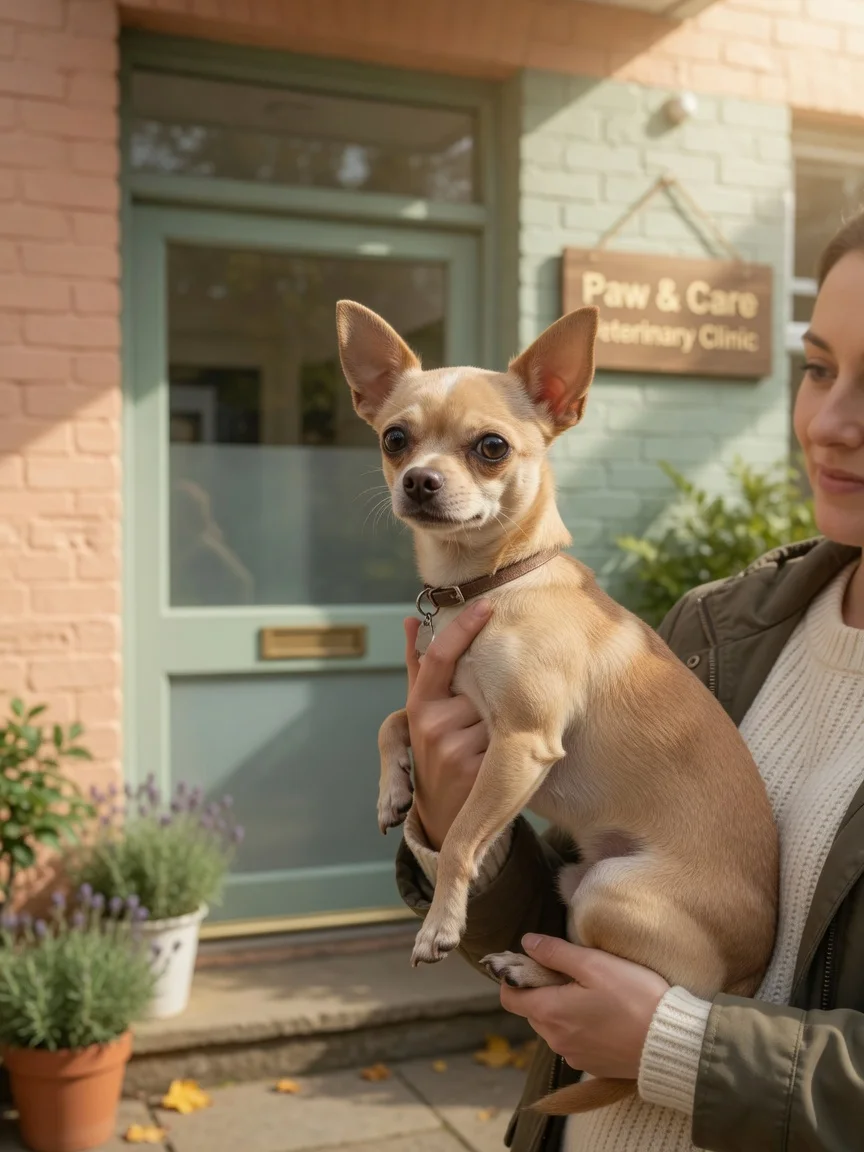
What counts as go-now
The consolidated list from across our guides, in one place. Breathing distress or blue-grey gums. Collapse, seizures, or a dog who cannot be roused. Repeated vomiting, unproductive retching, or a swollen tight belly. Significant bleeding, or black tarry stool. Suspected poisoning: human medications, chocolate, xylitol, grapes and raisins, rodent bait, or a vanished pill. Trauma: a fall, a car, a big-dog altercation, even if she seems fine, because small bodies hide internal injury.
A bulging or injured eye. Heatstroke signs, or the hypothermia signs from our cold guide. Labor that stalls or distresses. And any tiny puppy who is weak, cold, or will not wake, per the blood sugar guide. The AVMA's list of animal emergencies matches this shape, and when in genuine doubt, the phone call itself is free: describe what you see and let the professionals sort urgent from urgent-enough.
How the emergency clinic actually works
Call ahead if you can; thirty seconds of warning lets them prepare. On arrival, expect triage, meaning the sickest patient goes first, not the earliest. A stable dog waiting behind a critical one is frustrating and is also exactly the system you would want the night the critical one is yours. Expect stabilization before answers: oxygen, fluids, pain control, and tests come before a tidy diagnosis.
Expect a cost estimate and consent conversation, and ask every question you have, including about options and staged plans; good ER teams have those conversations all night and do not resent them. Bring the dog file, the medication bottles, and, for suspected poisonings, the packaging of whatever was eaten. Afterward, the ER sends records to your regular clinic; book the follow-up they recommend, because the handoff is where recoveries are won.
The ten-minute monthly home exam
The cheapest early-warning system in dog ownership, and the reason many emergencies never happen. Once a month, hands and eyes over the whole dog: gum color, pink and moist, and how fast color returns when you press briefly. Eyes clear, ears clean-smelling. Hands over the body for new lumps, scabs, or sore spots. The rib-waist-tuck body check from the weight guide, plus the scale.
Nails, paw pads, and a look in the mouth per the dental guide. A thirty-second sleeping-breath count from the breathing guide. Notes in your phone. This is the ritual the VCA wellness exam guide describes from the clinic side, miniaturized for your couch, and it is how small problems get caught at the routine-appointment stage instead of the flashing-lights stage; the top early signals live in our watch-for guide.
When to call your veterinarian
This entire article is that section, so instead: when to call your regular clinic versus the ER. Business hours, non-collapse problems: regular clinic first, they know the dog. Nights and weekends with go-now signs: the emergency hospital, calling as you move. Genuinely unsure: call either and describe what you see; phone triage exists precisely for you. And nothing on the go-now list ever waits for morning to be polite.
Frequently asked questions
How much does an emergency vet visit cost for a chihuahua?
Too variable by region and case for honest numbers here: an exam and fluids sits in a different universe from overnight intensive care. What you control is the preparation: ask for the estimate up front, ask about options, and decide your insurance-or-savings strategy this month rather than that night.
Should I call the emergency clinic before coming in?
Yes, whenever it does not delay you. It lets the team prepare, sometimes redirects you somewhere better suited, and for poisonings the phone guidance can start helping in the car.
What should I bring to an emergency visit?
The dog, secured in a carrier; your one-page dog file or its photo; current medication bottles; and the packaging or a sample of anything she ate. Records from your regular clinic help but will not be the bottleneck; ERs can treat first and reconcile paperwork later.
How do I know it is an emergency and not just a bad evening?
Check the go-now list above, then apply the rule that has never failed an owner: if you are genuinely torn, call and describe it. The phone is free, the triage nurse has heard everything, and being told it can wait until morning is a happy outcome, not an embarrassing one.
Emergencies are rare, and the entire strategy for them is boring and doable in advance: two addresses, one page, one carrier, one money decision, and ten minutes of hands-on homework a month. Do it this week, and then go enjoy the dog.




No comments yet
Leave a comment