
Hypoglycemia is the clinical word for blood sugar dropping below what the body needs to run. In a Labrador it is rare outside of specific diseases. In chihuahuas, especially chihuahua puppies, it is common enough that every owner should know the signs before they ever need them, because a tiny body burns through its reserves at a speed that surprises people, and the window for responding is measured in minutes to hours, not days.
The reassuring part: classic low blood sugar in a small puppy is one of the most preventable emergencies in dog ownership, and prevention is mostly a feeding schedule. Here is the whole picture, calmly.
Quick answer: Low blood sugar is common enough in chihuahua puppies that every owner should know the signs before they need them: a healthy-looking puppy can turn weak and wobbly within hours of a missed meal, hard play, or cold exposure. Prevention is mostly a feeding schedule rather than vigilance. Collapse, a seizure, twitching, a puppy who cannot be woken, or pale or grey gums is an emergency; wobbliness, trembling with dullness, or a weak, vacant puppy means calling immediately. Most puppies outgrow the risk as they grow.
Why this breed, and why puppies most of all
Glucose is the body's quick fuel, and the liver keeps a reserve of it. A chihuahua puppy has a very small liver, very little body fat, a high metabolic rate, and a brain that is large for the body it runs. That combination means the reserve is shallow: a skipped meal, a hard play session, a stretch of cold, or the stress of rehoming can drain it. The American Kennel Club's guide to hypoglycemia lists toy-breed puppies as the textbook risk group, and the chihuahua is the smallest of the toys.
Adults are not exempt. Low blood sugar in a grown chihuahua is less common and more meaningful, because it usually has a cause behind it: a missed meal on a very small dog, intense exertion, or an underlying condition that needs diagnosing. A puppy episode is often a management problem. An adult episode is a veterinary question, every time.
The signs, from early to emergency
Early: unusual sleepiness, weakness, a wobbly or drunken gait, trembling, a vacant or confused look, and sometimes a dog who simply goes quiet and still in a way that feels wrong. Owners often describe it afterward as the puppy seeming to run out of battery. If you have read our guide on why chihuahuas shake, note the difference in company it keeps: cold or excited shaking happens in an otherwise alert dog; hypoglycemic trembling comes with dullness.
Advanced: stumbling and collapse, twitching, a seizure, or a puppy who cannot be roused. This stage is a true emergency. Seizures in a tiny puppy are frequently a blood sugar event, which is one reason our seizure guide keeps pointing back at this topic.
What to do in the first minutes
Call your veterinarian or the nearest emergency clinic immediately and tell them you suspect low blood sugar; this is a phone-first situation, and they will talk you through the ride in. For a conscious puppy who can swallow, clinics commonly direct owners to rub a small amount of corn syrup or honey on the gums on the way to the appointment.
Follow their instructions rather than improvising: never pour liquid into the mouth of a dog who is limp, seizing, or unable to swallow, because choking is the immediate danger there, and do not consider a perked-up puppy fixed. The perk is temporary by design. A dog who needed sugar on the gums needs an exam the same day, both to steady them properly and to ask why it happened.
Keep the puppy warm on the trip. Cold and low blood sugar feed each other in tiny dogs, a pairing our cold-weather guide covers from the other side.
Prevention is a feeding schedule
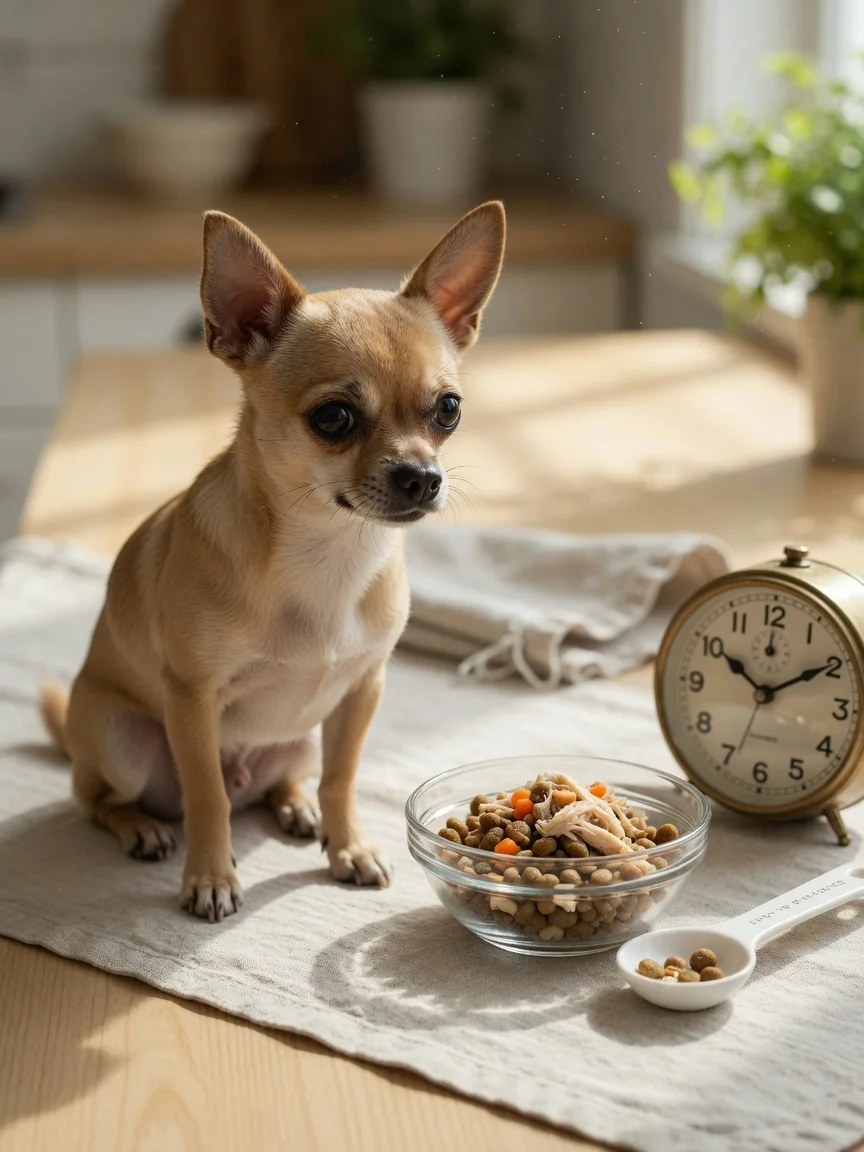
For puppies: several small meals a day, spaced so no long gaps open up, with the exact count and portions set by your veterinarian for the puppy's age and size. Do not free-pour and hope; measure, and watch that the puppy actually eats. New-home stress is the classic trigger week, so the first days home deserve extra attention to intake. Keep play sessions short and follow them with rest and food. In cold weather, shorten outdoor time.
For adults: a consistent two-meal rhythm suits most chihuahuas, and any adult who has had a low blood sugar episode should be on whatever schedule the clinic prescribes, plus a workup. An adult chihuahua who refuses food for a day is also running closer to the edge than a bigger dog would be, which is why our not-eating guide gives small dogs shorter deadlines. The Cornell Riney Canine Health Center materials are a good general reference for feeding and monitoring habits in small dogs.
When to call your veterinarian
Emergency care now: collapse, seizure, twitching, a puppy who cannot be woken, or gums that look pale or grey. Call immediately and follow instructions: wobbliness, trembling with dullness, or a puppy who seems weak and vacant, even if sugar on the gums perks them up. Same-day call: any suspected episode, however brief, and any adult chihuahua with these signs. Routine appointment: planning meals for a new puppy, or an adult who has episodes of shakiness you cannot place.
Frequently asked questions
How fast does hypoglycemia come on in a chihuahua puppy?
Fast. A healthy-looking puppy can become weak and wobbly within hours of a missed meal, hard play, or cold exposure. That speed is exactly why the fix is a schedule rather than vigilance alone: small meals, regular gaps, no exceptions during the first months.
Can adult chihuahuas get low blood sugar?
Yes, though far less often, and it usually points at something: a long fast in a very small dog, unusual exertion, or an underlying illness. Treat any adult episode as a same-day veterinary question rather than a quirk to watch.
Should I keep corn syrup or honey at home?
Many toy-breed owners do, and clinics often direct its use on the gums of a conscious puppy during the ride in. Keep it as a bridge to the clinic, used on your veterinarian's instruction, never as a substitute for the visit.
Will my chihuahua puppy outgrow this risk?
Mostly, yes. The risk is highest in small young puppies and drops as the liver and body mass grow. Sensible meal spacing remains good practice for the whole life of a four-pound dog, but the emergency-level fragility belongs mainly to puppyhood.
The whole topic compresses to one habit: food, on schedule, every day of puppyhood, with a phone call the moment a tiny dog goes weak or vacant. Shallow fuel tanks are manageable. You just do not let them run dry.


No comments yet
Leave a comment