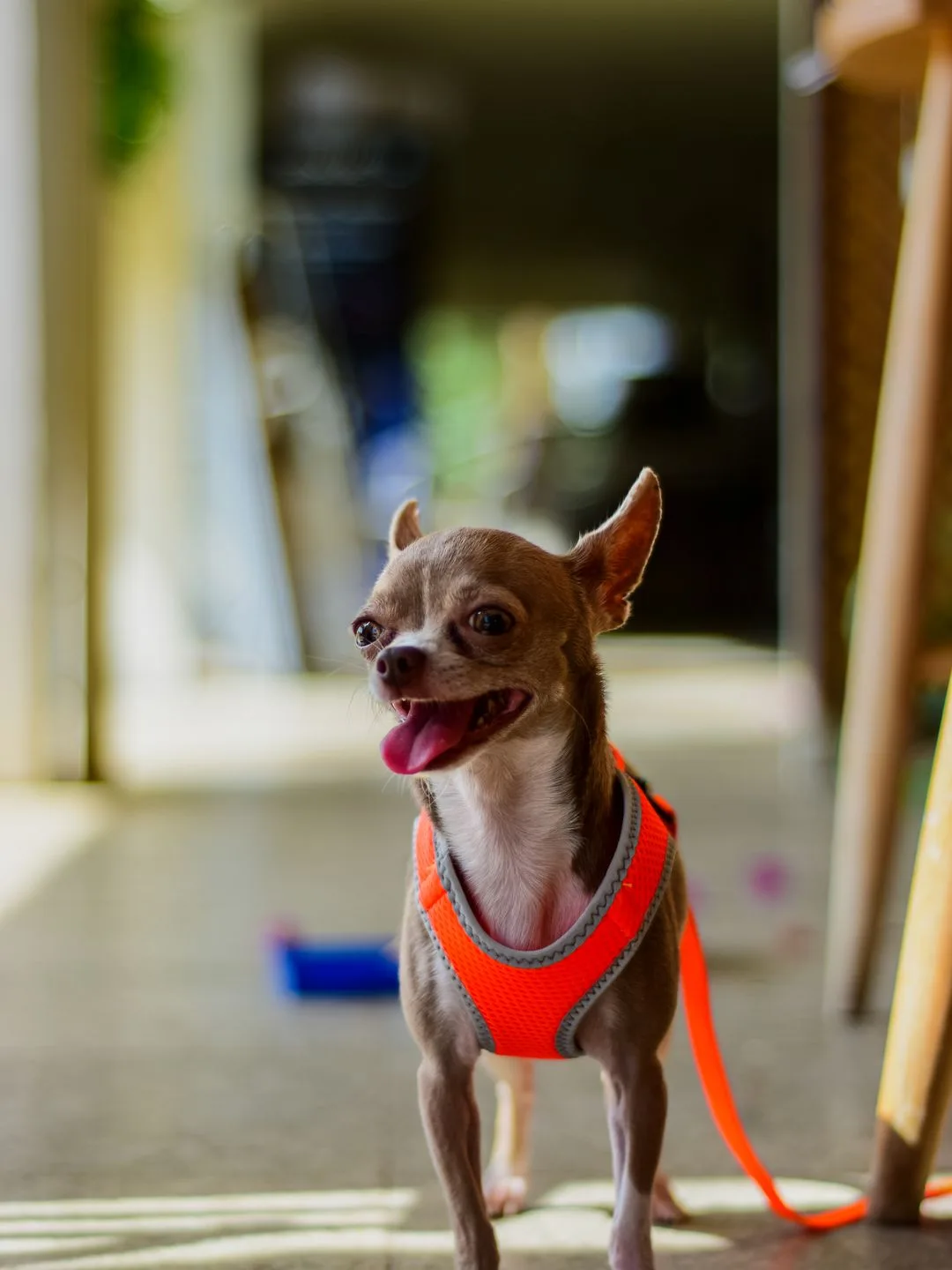
It usually announces itself as the skip: your chihuahua is trotting normally, hops on three legs for a few strides with one back leg held up, then drops back to four as if nothing happened. That signature little dance is the most common sign of patellar luxation, a kneecap that slips out of its groove, and it is one of the most frequent orthopedic problems in toy breeds.
The condition sounds alarming and is often very manageable, especially caught early. Here is what is actually happening in that knee, how veterinarians grade it, and what helps at each stage.
Quick answer: The skip, a few strides on three legs and then back to four, is the classic sign of a luxating patella: a kneecap slipping out of its shallow groove, and one of the most common orthopedic problems in toy breeds. The slip itself usually does not hurt, which is why owners underestimate it. The anatomy will not remodel itself, but many low-grade knees stay comfortable for life on lean weight and sensible management, and supplements cannot change the shape of a joint. An early exam sets the grade and a baseline.
What is actually happening in the knee
The patella is the kneecap, a small bone that glides up and down a groove at the end of the thigh bone as the leg bends. In many small dogs that groove is too shallow, or the attachments pull slightly off-line, and the kneecap can pop out of its track, usually toward the inside of the leg. That momentary derailment is the skip; when the kneecap slides back, the dog walks on as if nothing happened, because for that moment nothing hurts.
The American College of Veterinary Surgeons notes that the condition is most common in small breeds, frequently affects both knees, and is usually developmental, meaning the anatomy formed that way rather than an injury causing it. Genetics carry much of the load, which is why asking a breeder about parents' knees is standard advice in this breed, and why we flagged the condition in the owner's briefing and in the three-conditions guide.
The grades, translated
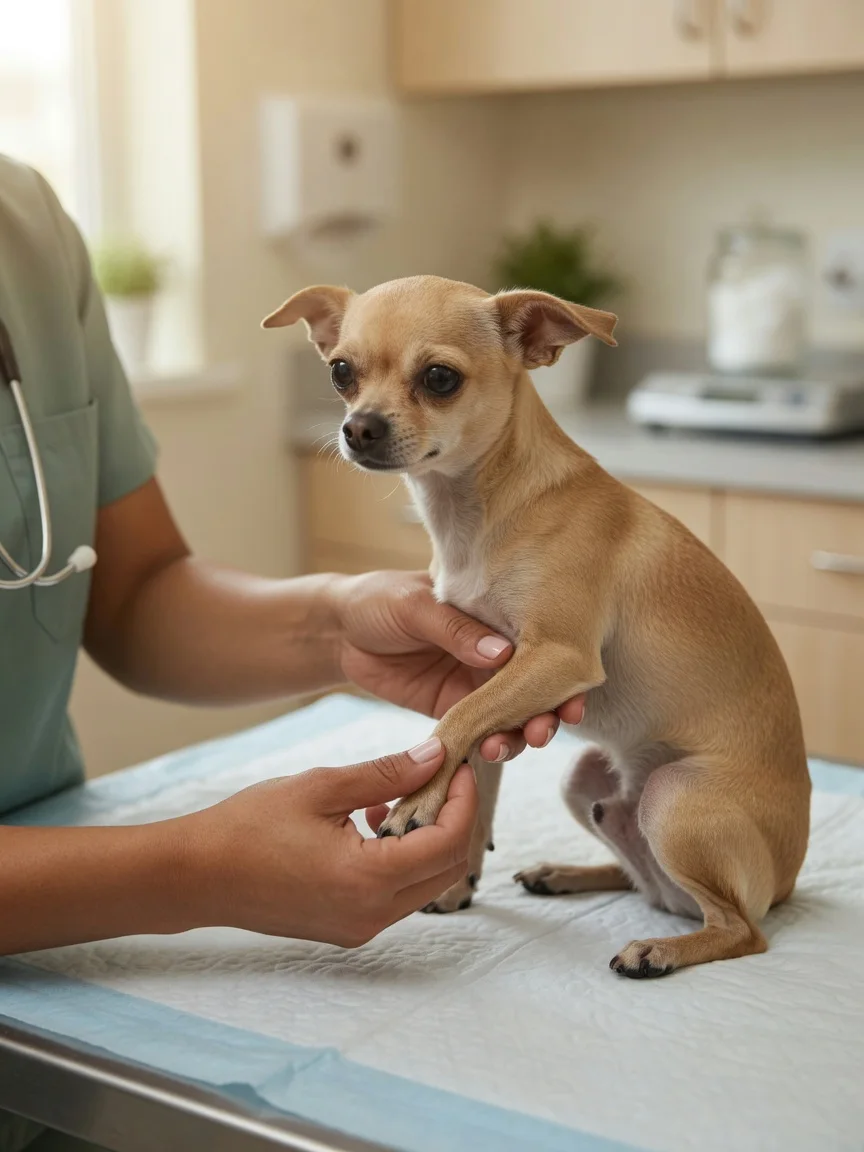
Veterinarians grade luxation from one to four. Grade one: the kneecap can be pushed out during an exam but pops straight back; many dogs never show symptoms. Grade two: the kneecap slips out on its own now and then, the classic intermittent skip, and returns by itself.
Grade three: the kneecap sits out of the groove most of the time and can be pushed back in temporarily. Grade four: the kneecap is permanently out and cannot be repositioned; the leg posture and gait change visibly. The grade, the dog's discomfort, and the trend over time drive every treatment decision, which is why a proper exam matters more than the internet.
Both knees, more often than not
Luxation is frequently a two-knee condition; the surgeons' college notes that both legs are involved in roughly half of affected dogs. In practice that changes three things. The exam should always cover both knees, even if only one skips. If surgery is ever needed on both, it is usually staged weeks apart rather than done at once, so the dog always has one leg it trusts. And a dog recovering from one knee is loading the other harder for a while, which is exactly when the second knee's grade gets its test. Ask for both grades at every checkup and write them down; the pair of numbers tells the story better than either alone.
The quiet cost: the arthritis clock
The reason veterinarians track grades at all is cartilage. Every derailment scuffs the surfaces a little, and over years a busy grade-two knee quietly builds the arthritis that stiffens a senior dog. That clock cannot be reversed, only slowed, and the two levers that slow it are the ones already in your hands: lean body weight, per our weight guide, and traction underfoot. It also reframes the senior years; some of the slowing down owners write off as age is a knee that has been keeping score, a distinction our senior care guide covers in detail, and one a veterinarian can actually treat.
What helps at home, whatever the grade
Lean weight, first and always. Every extra ounce loads a joint that is already mis-tracking; weight control is the single most effective thing an owner controls. Traction and furniture management. Rugs on slick floors, and ramps or steps instead of flying leaps off the sofa; the repeated hard landing is exactly the wrong force for these knees, which is why ramps make our apartment essentials list.
Sensible muscle. Regular moderate walks build the thigh muscle that helps hold the kneecap in line; weekend-warrior sprints and skid-turns on hardwood do the opposite. Supplements, honestly. Joint supplements are popular, evidence is mixed, and none of them re-deepen a groove; treat them as a possible assist you discuss with your veterinarian, not a treatment, and never as a reason to delay an exam.
When surgery enters the conversation
Persistent lameness, pain, worsening grade, or a young dog with a high-grade luxation are the usual triggers for a surgical consult. The operation typically deepens the groove and realigns the attachments, and outcomes in small dogs are generally good, particularly before arthritis sets in. If surgery is recommended, the anesthesia questions that worry small-dog owners are fair ones, and our guide to anesthesia in chihuahuas covers how modern protocols manage that risk. Cost varies widely by region and severity; ask for an estimate that separates the exam, imaging, surgery, and rehab so you can plan honestly.
What the surgeon actually does
Patella surgery is not one operation but a menu, combined to fit the knee. The groove that is too shallow can be deepened, a step called trochleoplasty, so the kneecap has a real track to ride in. The attachment point of the tendon below the knee can be moved sideways and re-anchored, a tibial tuberosity transposition, so the whole mechanism pulls in a straight line instead of dragging the kneecap inward. And the stretched or tight soft tissue around the joint is balanced so it holds the new alignment. Per VCA's client guidance, most dogs regain full, comfortable use of the leg, and outcomes are best in dogs operated before arthritis has taken hold, which is why the grade trend, not panic, should drive the timing.
Recovery, week by week
The operation is an afternoon; the recovery is the project. Weeks one and two are strict confinement, a pen or crate with carried bathroom trips, incision checks, and a dog who feels better than she is allowed to act. Weeks three to six move to short leashed walks on traction, no sofa launches, no stairs, no zoomies, which for this breed is the hard part; the boredom is real, and the food-puzzle ideas in our games guide earn their keep here. From week six onward the walks lengthen and muscle rebuilds, and most dogs are back to normal life around the three-month mark. Rushing the middle weeks is how a repaired knee re-luxates, so when the surgeon says leash only, the leash means it.
When to call your veterinarian
Same-day call: a leg held up continuously, crying or obvious pain, or a knee that suddenly will not bear weight at all. Book an appointment: the first time you notice the skip, even if it seems painless; a baseline exam and grade let you track the trend instead of guessing. Mention at the next visit: an occasional skip in a dog already examined and graded, unless it is becoming more frequent. Monitor at home: a graded, stable knee in a lean dog with good traction; keep notes on how often you see the hop.
Frequently asked questions
My chihuahua skips on one back leg but seems happy. Is it urgent?
Not usually urgent, but it is worth a proper exam soon. The skip is the classic sign of a grade-two luxation, and an early baseline lets your veterinarian track whether it stays stable or progresses. Sudden constant lameness or pain moves it to same-day.
Can a luxating patella heal on its own?
The anatomy does not remodel itself, so the groove stays shallow. Many low-grade knees stay comfortable for life with lean weight and sensible management; that is stability, not healing. Worsening grades and recurring pain are what push toward surgery.
Do joint supplements fix luxating patellas?
No. Supplements cannot change the shape of the joint. They are sometimes used alongside management for joint comfort, with mixed evidence, and are worth a conversation with your veterinarian rather than an online shopping decision.
Is a luxating patella painful?
The slip itself usually is not, which is why the skip looks so casual and why owners underestimate it. Discomfort arrives two other ways: a kneecap that locks out and pinches, which can make a dog yelp and hold the leg, and the slow ache of arthritis in a knee that has been derailing for years. A graded knee plus a lean dog is how you keep it in the painless column.
How much does patellar luxation surgery cost for a chihuahua?
It varies too much by region, grade, and whether one or both knees are done for any honest single number. Ask for an itemized estimate covering imaging, the procedure, medications, and rehab, and ask what the plan would be without surgery for comparison.
The skip is easy to laugh off, and plenty of chihuahuas do it for years without trouble. The difference between a quirk and a countdown is knowing the grade, keeping the dog lean, and watching the trend with your veterinarian. Get the baseline exam; after that, most of this condition is managed in the living room, one ramp and one measured meal at a time.

No comments yet
Leave a comment