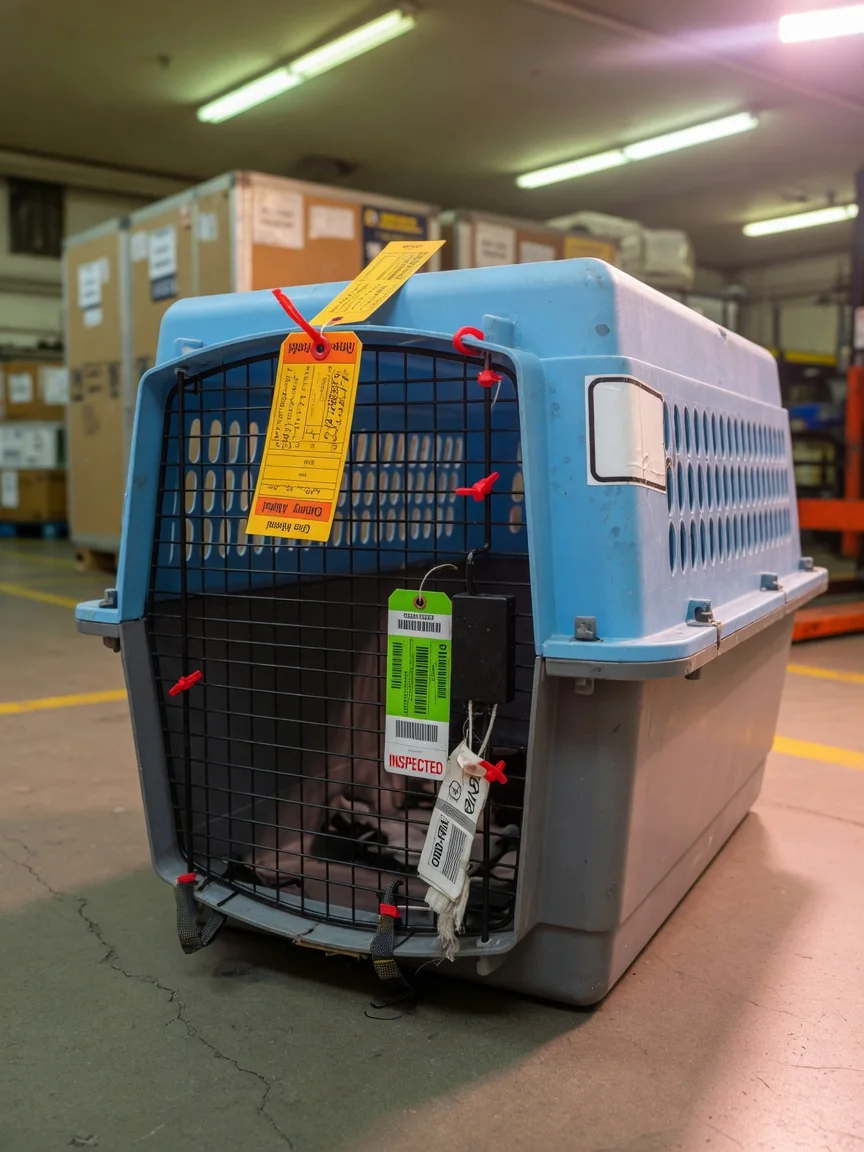
On Monday, October 19, 2020, Bulgaria's Food Safety Authority agreed to accept the return of a three-month-old chihuahua named Raya, canceling the euthanasia that Norwegian authorities had scheduled for the following day. The reversal followed a weekend in which the Belgian actor Jean-Claude Van Damme pushed a petition on the puppy's behalf to a social media audience in the millions, and Euronews reported the reprieve that same day. The case is worth revisiting six years later, not for the celebrity, but for the paperwork failure underneath it. That failure is ordinary, it is still happening, and it almost never ends with a film star intervening.
Quick answer: On Monday, October 19, 2020, Bulgaria's Food Safety Authority agreed to accept the return of a three-month-old chihuahua named Raya, cancelling the euthanasia Norwegian authorities had scheduled for the following day. Raya had been taken into isolation in Oslo on September 23 after officials found her documentation insufficient as proof of vaccination. The reversal followed a weekend in which Jean-Claude Van Damme pushed a petition on her behalf to millions of followers.
A puppy seized in Oslo
Raya was sold to a buyer in Norway in September 2020. Her owner, Alexey Iversen, brought her to Oslo, and on September 23 the Norwegian Food Safety Authority, the agency known domestically as Mattilsynet, took her into isolation. According to Euronews, officials found that her documentation was not sufficient as proof of vaccination. She had traveled on a Bulgarian pet passport that Norwegian authorities treated as false, and without a valid one they would not register her.
Isolation was not the disputed part. Repatriation was. Norway moved to send Raya back to Bulgaria, which is normally where a case like this closes. Here it opened a second one.

Why Bulgaria refused
Bulgaria declined to take her, citing European Union rules on the transport of live animals, according to the Agence France-Presse report carried by The Local Norway. The refusal was procedurally coherent and, for the dog, terminal. An animal that cannot be registered in the country where it sits and cannot be returned to the country that exported it has no lawful destination left.
Reported deadlines shifted during the standoff. AFP gave October 20 as the operative date on which, under Norwegian legislation, Raya would be put down, and a separate AFP account published by The Jakarta Post carried the same date. Iversen opened a petition on Change.org addressed to the Norwegian Food Safety Authority, asking both governments to reconsider.
What Van Damme actually did
He did not fly to Oslo or post a bond. He shared a link, repeatedly, to an audience large enough to move an agency. Van Damme circulated the petition across his social accounts with the message "Please sign this petition and help save a puppy," per Euronews, which put the signature count above 12,000 at the time it published. He posted selfies holding his own chihuahua. AFP reported that he built the appeal around his birthday, which fell that Sunday, October 18: "I beg, please, for my birthday, the Food Safety Authority, change your decision."
He also made the argument that appears to have carried. The error was human and administrative, and the dog had not made it. "They made a mistake, the people who didn't do the paper correctly," he said in remarks reported by AFP. "But they cannot kill that little chihuahua."
The reversal, and what remains unclear
Bulgaria's Food Safety Authority made an exception to its rules and agreed to accept Raya back. The agency said she would undergo veterinary checks on arrival and then be put up for adoption in Bulgaria, according to AFP. Euronews reported that Iversen was waiting on Norwegian clearance to travel with her, and that she remained in isolation at the time of publication.
That is where the verifiable record stops. Raya was spared, and she was routed toward adoption in the country she had been exported from rather than returned to the household that bought her. Whether the Iversen family was ultimately reunited with her, and who adopted her if they were not, has no confirmed public answer we were able to locate. The reporting that made her briefly famous was compressed into roughly seventy-two hours, and it did not follow her home.
One piece of context did outlast the news cycle. Yavor Gechev of the animal welfare group Four Paws told reporters the case reflected the illegal breeding and trafficking networks that move puppies out of central and eastern Europe toward buyers further west and north. Raya's paperwork was not an isolated clerical slip. It was a product of a supply chain.
The rule that catches ordinary buyers
The specific trap here is legible in the European Commission's rules for moving a pet within the EU, and it is worth reading before money changes hands. A dog must be microchipped first. The rabies vaccine must be given after the microchip, and the animal must be at least twelve weeks old on the date it is administered.
The vaccination does not become valid for travel until twenty-one days after the primary course is complete. All of it is recorded in a passport issued by an authorized veterinarian, and Norway adds a tapeworm treatment given 24 to 120 hours before entry.
Run that arithmetic against a puppy advertised as ready to fly at eight or nine weeks and it does not resolve. A dog with a valid rabies vaccination plus the twenty-one day wait is at least fifteen weeks old at the border. A younger puppy carrying a passport that shows a completed rabies course is carrying a document describing something that could not have happened.
That is the discrepancy a veterinarian is trained to notice, and it is how a buyer who did nothing wrong loses a dog to a quarantine kennel. Owners moving a chihuahua across any border will find the sequence in owner terms in our international travel guide.
The rest is a purchasing question. An imported puppy priced below the market is priced that way for reasons that surface later, which is why our cost breakdown treats the sticker price as the least informative number in the transaction. There is also no shortage of this particular breed already looking for homes, a pattern our piece on why so many chihuahuas end up in shelters traces to its sources, and choosing a reputable rescue removes the border problem from the equation entirely.
Six years on, the durable part of this story is not the reprieve. It is how nearly the machinery worked as designed. Two agencies applied their own rules correctly, neither held authority over the other, and the gap between them was scheduled to be resolved on a particular Tuesday by destroying a three-month-old dog over a defective form.
What broke the deadlock was not a legal remedy or an appeal process. It was a Belgian actor with a birthday and a very large following, which was an excellent outcome for Raya and remains a poor system for every dog that does not have one.

No comments yet
Leave a comment