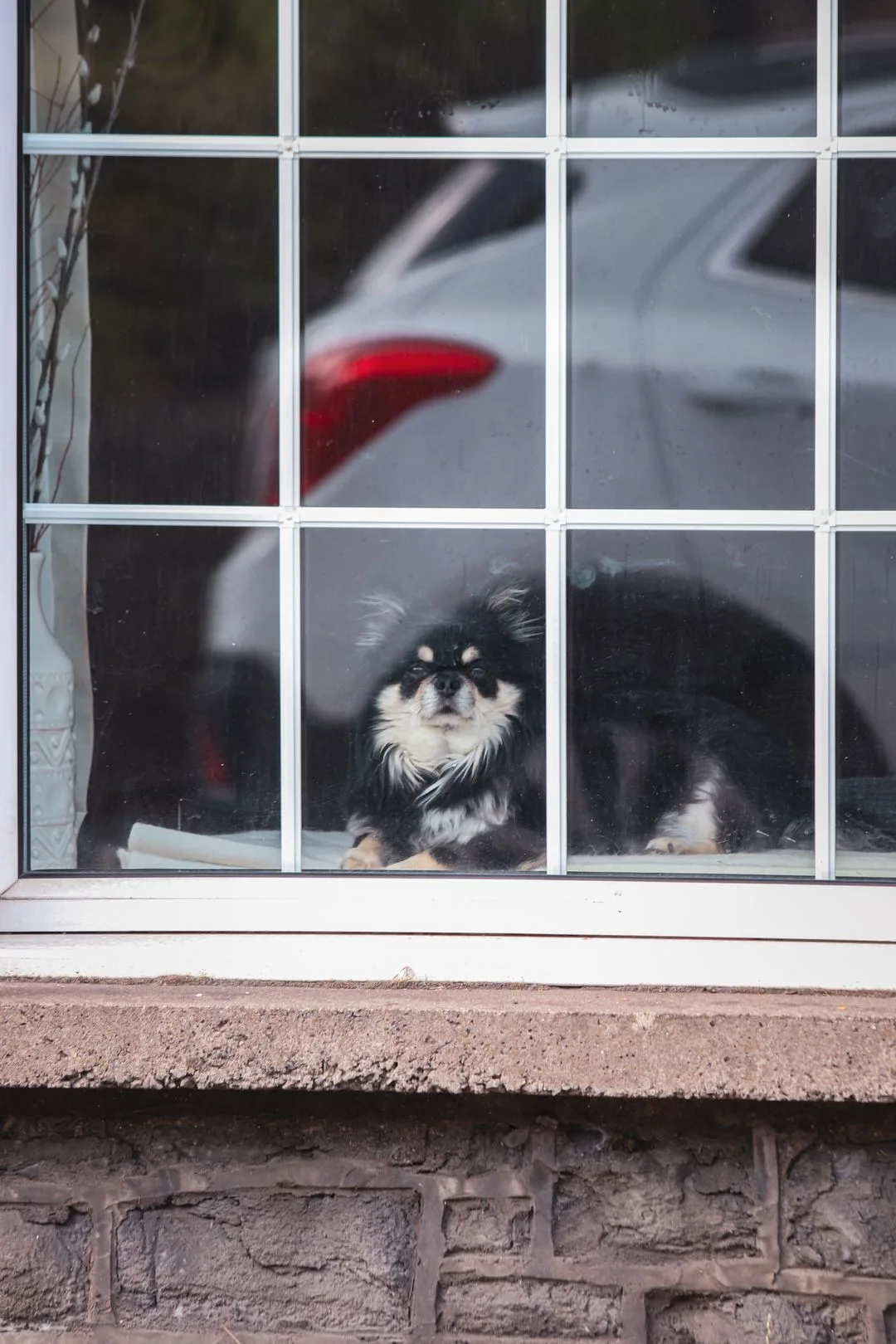
Pull up the adoptable-dogs page for almost any large municipal shelter between Bakersfield and the Mexican border and start scrolling. I do this more often than is probably good for me, and the pattern never changes; page after page of chihuahuas and chihuahua mixes, brown ones, black ones, seniors, puppies, a parade of enormous ears above tiny paws. In some Southern California facilities they are not a breed among many. They are the population.
Meanwhile, a family in Vancouver or Minneapolis can scroll their local listings for weeks and find two. I have written before about where rescue chihuahuas actually come from, and that strange geography of supply and demand is only the visible half of a bigger question. Why does the smallest dog in the shelter system take up so much of it?
Quick answer: Chihuahuas fill shelters in warm-weather regions, California and the Southwest above all, because breed population density, a climate where tiny strays survive and reproduce, and years of overbreeding during the fame boom left supply concentrated where demand had already moved on. Most arrive as strays or economic surrenders rather than behavior cases, and a frightened, undersocialized dog in a kennel often reads as aggressive when the same dog settles quickly in a quiet foster home.
The scale of it, in real numbers
First, the honest backdrop. According to the ASPCA's national shelter statistics, about 2.8 million dogs entered U.S. shelters in 2025; roughly 59 percent of all intake arrived as strays and about 30 percent were surrendered by their owners. Around 320,000 dogs were euthanized that year. The encouraging part is the direction of travel, with euthanasia rates falling from 10 percent in 2019 to 8 percent in 2025. The sobering part is who fills the small-dog kennels while the numbers fall. In big stretches of the South and Southwest, the answer is chihuahuas, over and over.
A popularity boom the breed never asked for
Some of this is old debt coming due. Between the late 1990s and the 2010s, the chihuahua had a run of fame no small breed has matched since; a fast-food mascot, a Beverly Hills movie franchise, a decade of celebrities carrying them through airports like clutch bags. Fame sells puppies, and it sold them by the vanload; backyard breeders and mills cranked out chihuahuas to meet a demand that was never really about the dog. It was about the accessory, to be exact.
An accessory does not bark at the doorbell for ten minutes. A chihuahua does. The gap between the dog people bought and the dog that actually moved in is where surrender begins, and I have read enough intake notes to know the phrases by heart: barks too much, doesn't like my boyfriend, snaps at the kids.
Most of those dogs were never trained, because nobody trains a handbag. The breed's reputation took the blame; we covered what the ankle-biter myth gets wrong, and shelter kennels are where that myth does its worst work, lengthening stays for dogs whose only crime was being loud about their fear.
The geography does half the damage
Here is the part that surprises people who have never followed the pipeline. Chihuahuas concentrate in warm-climate regions, Southern California above all, and warm climates are exactly where a tiny stray can survive long enough to multiply. An unaltered pair of four-pound dogs does not need a big territory or a long season; a vacant lot in Riverside will do. Fifty-nine percent of national intake arriving as strays is not an abstraction there. It is litters, found in carports and drainage ditches, arriving at intake desks in banker's boxes.
Cold-climate cities do not have that feral small-dog engine, which is why the same dog that waits months in Bakersfield gets adopted in days in Portland or Toronto. The transport networks that move dogs north exist because volunteers noticed that arithmetic and refused to accept it; the vans, the route sheets, the overnight handoffs, all of it runs on the difference between one region's surplus and another's demand.
The economics nobody likes to talk about
The last driver is the least cinematic and probably the most important. Most people who surrender a dog are not villains; they are out of money, out of housing, or out of options. The ASPCA's position on keeping pets and people together exists precisely because so many surrenders are resource problems wearing a behavior problem's clothing. A no-pets lease, a vet bill that doubled, a job lost; the dog pays for each of those with a kennel stay. Chihuahuas, cheap to acquire and everywhere, absorb more of that churn than most breeds.
What actually helps
The fixes are not mysterious; they are just unglamorous. Adopt from the crowded end of the map if you can, or from any shelter at all; the ASPCA's adoption resources are a clean starting point, and our own guide to adopting a rescue chihuahua covers what the process really looks like. Consider the seniors; my case for adopting a senior or hospice chihuahua still stands, and those are the dogs the boom left behind.
Foster if you can spare a month; a chihuahua in a quiet living room shows adopters a real dog instead of a shaking blur at the back of a kennel. Support low-cost spay and neuter programs, because every altered stray in a warm climate is a litter that never lands on an intake desk. And before anyone you know buys the parking-lot puppy, hand them our honest briefing on living with this breed. The dogs that stay in homes are the ones whose owners knew what they were signing up for. Hoarding cases account for a share of that intake, and thirty-one chihuahuas removed from one Tempe house in 2022 shows the scale a single address can reach. The coverage sometimes outruns the numbers, as the 2014 Phoenix stray-pack headlines did. Some arrive with nothing but a note, as the puppy found in a Las Vegas airport restroom in 2017 did.
Frequently asked questions
Are shelter chihuahuas damaged or badly behaved?
Mostly, no. The majority arrive as strays or economic surrenders, not behavior cases. Many are undersocialized and frightened in a kennel, which reads as aggression to people who do not know the breed; the same dog in a quiet foster home is usually a different animal within weeks.
Why are so many chihuahuas in California shelters specifically?
Population density of the breed, a climate where tiny strays survive and reproduce, and years of overbreeding during the fame boom. Supply concentrated where demand had already moved on, and the shelter system inherited the difference.
Is a shelter chihuahua a good first dog?
Often, yes, especially an adult whose personality is already visible. Go in with realistic expectations about barking, bonding, and training. Our guide to what owners wish they knew is the homework.
Does adopting one dog actually matter against numbers like these?
To the numbers, barely. To the dog, entirely. And every adoption that goes well quietly recruits the adopter's friends and family into doing the same, which is how the numbers eventually move.
The national statistics are improving year over year, and that progress is real people doing real work: transport drivers, foster homes, intake staff, adopters willing to drive past the pet store. What stays with me is not the data. It is the kennel at the end of the row, and the small brown face in it, ears up, watching the aisle; waiting, the way chihuahuas do, for one particular person to finally show up.


No comments yet
Leave a comment