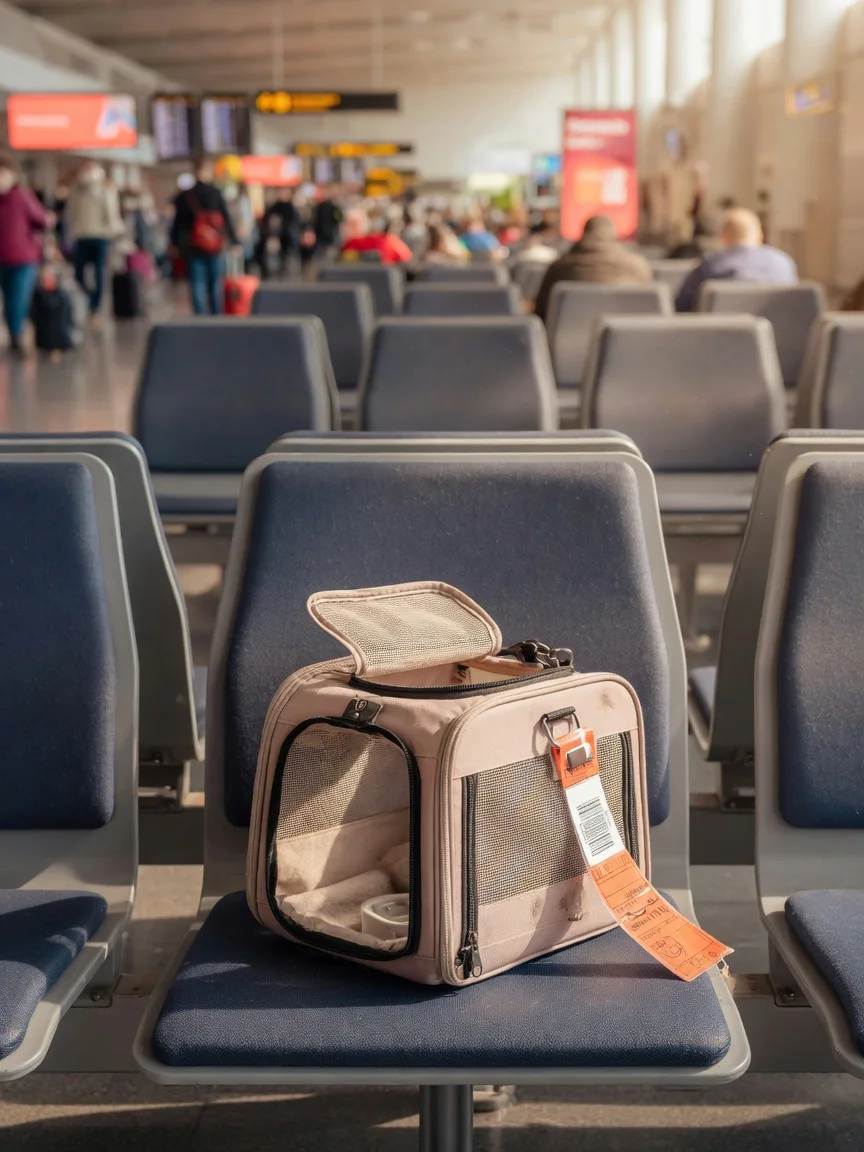
The only account anyone has of how Chewy reached the floor of an airport bathroom is a sheet of paper. In the first days of July 2017, an employee at McCarran International Airport in Las Vegas found a chihuahua puppy roughly three months old, alone in a restroom, with a handwritten note left beside him. The note gave his name and explained, in a few lines, why he had been left behind. Nine years later it is still the whole of the record.
The employee happened to volunteer with a local rescue. According to CBS News reporting on the case, she contacted Linda Gilliam, president of Connor and Millie's Dog Rescue in Las Vegas, and asked whether the group could take him in. It could. The difference between a stray hold and a foster living room was one airport worker with a rescue's number in her phone.
Quick answer: In the first days of July 2017, an employee at McCarran International Airport in Las Vegas found a chihuahua puppy roughly three months old alone in a restroom, with a handwritten note left beside him explaining why. The employee happened to volunteer with a local rescue and contacted Connor and Millie's Dog Rescue, which took him in. The note is the only account anyone has of how he got there, and nine years on it remains the only one.
What the note said, and what it left out
The note was written in the puppy's voice and then slipped out of it. It opens as an introduction from Chewy and shifts partway through into the first person of the woman holding the pen. She wrote that she "couldn't afford me to get on the flight" and that she "didn't want to leave me with all her heart," in the text published by ABC7 in New York. She said she was leaving an abusive relationship. She wrote that her boyfriend had kicked the dog during a fight, that he had a knot on his head, and that he "probably needs a vet."
That is all of it. She did not sign it, did not leave a way to reach her, and has never been publicly identified. Everything else that circulated about her afterward came from readers rather than from reporting.
Three pounds, or four, on July 1, or July 2
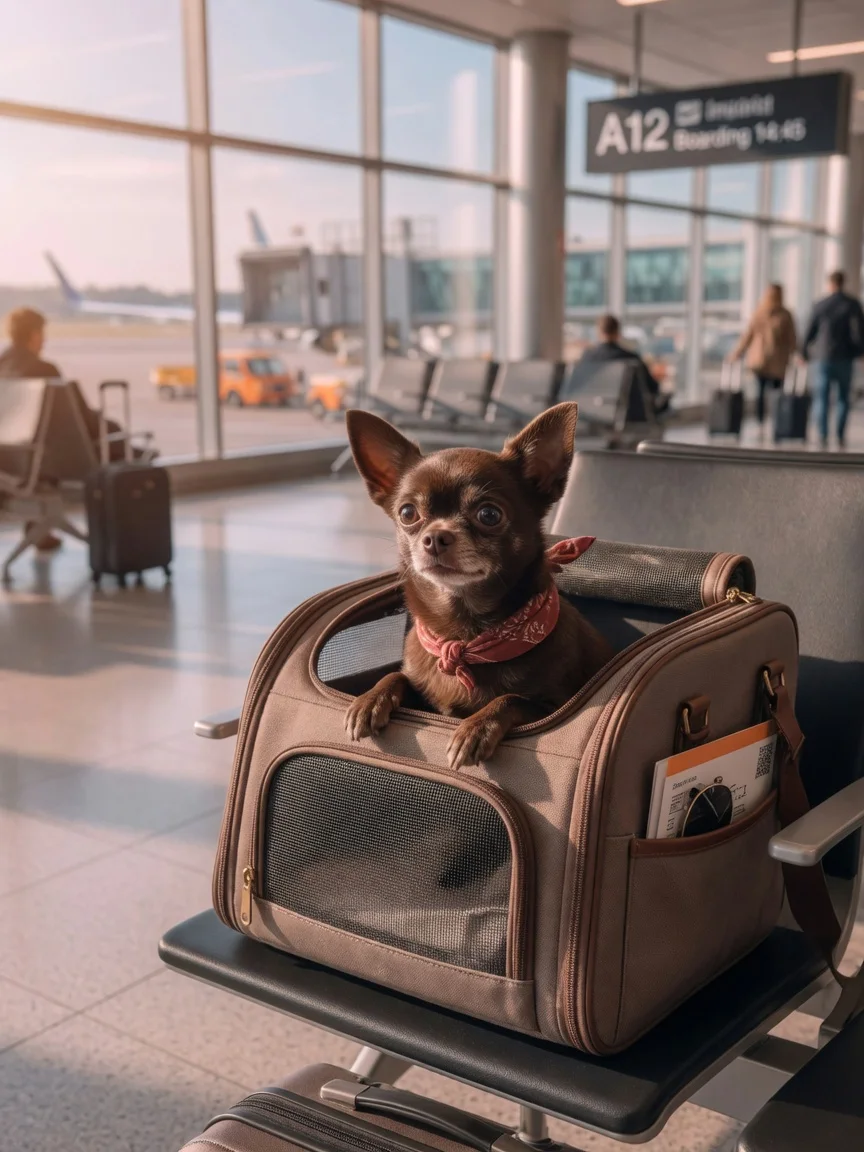
The basic facts are less settled than the story's reach suggests. CBS News reported the rescue on July 1 and described a four-pound chihuahua mix. ABC News placed the discovery on July 2, called him a suspected chihuahua and Pomeranian mix, and listed him at three pounds. By late September the Las Vegas Sun was describing a two-pound chihuahua. He was a very small dog in a very large building. Past that, the numbers move.
None of that is unusual. Weights get taken at different appointments, and breed calls on a mixed puppy are educated guesses. It matters only because the same fog sits over everything else in the case.
What the veterinarians could and could not establish
The note's most checkable claim was medical, and it was checked. Chewy saw an emergency veterinarian soon after the rescue collected him and was later examined at Town Center Animal Hospital in Las Vegas. Darlene Blair, the rescue's administrative director, told ABC News that he came away with a "clean bill of health" and no serious injuries.
His foster's account was less tidy. Patricia Montano, who cared for him that summer, told the Las Vegas Sun in September that he "had a bump on his head and some jaw pain, but is doing better." Both can hold at once; swelling and a sore jaw are consistent with an examination that turns up nothing structural.
What no examination could settle was the note's explanation for the injury. A veterinarian can document a lump. A veterinarian cannot document how it got there. If your own dog turns up with swelling you cannot account for, our guide to an emergency vet visit covers what that appointment looks like.
Nearly a thousand applications and a four-week hold
The public response was immediate and disproportionate. CBS News reported that Connor and Millie's Dog Rescue received close to 1,000 adoption applications within five days and then stopped accepting them. Gilliam said the organization would give the owner four weeks to claim him before placing him, and that any adoption would happen within Nevada. She told CBS News she did not expect the woman to be in a position to come forward. The foster home's location was not disclosed.
Each of those decisions is procedure rather than sentiment. A holding period exists because dogs who look abandoned are sometimes only lost. Withholding a foster address is routine in any case involving a person who might be looking for the animal. Capping applications is a workload calculation; an organization that accepts 1,000 forms has to read 1,000 forms, and the reading is where adoption screening actually happens. Our guides to fostering a chihuahua and adopting a rescue chihuahua cover the two ends of that process.
There is an uncomfortable footnote to those applications. Shelters across the Southwest were not short of chihuahuas in 2017 and are not short of them now, for reasons we have covered in why so many chihuahuas end up in shelters. What Chewy had that the others did not was a note.
On September 25, 2017, the Las Vegas Sun reported that he was going home with a Las Vegas family whose identity was not released. That remains the last verified public update on him.
The barrier the note described is well documented
Take away the airport and the note describes a logistics problem researchers have measured. The Animal Welfare Institute's summary of the Pet and Women Safety Act cites survey findings that roughly 48 percent of battered women delayed leaving a dangerous situation out of concern for a pet, and that 85 percent of domestic violence shelters reported women arriving with accounts of pet abuse.
Congress addressed part of that in the 2018 Farm Bill, signed on December 20, 2018, which created a federal grant program to help shelters house survivors together with their animals and extended protections covering interstate stalking, protection orders, and restitution to cover pets. AWI has maintained a Safe Havens directory of programs that place animals out of an abuser's reach since 2011.
Chewy was left at McCarran about a year and a half before that law passed. Whether his case moved anything in Washington is not knowable. What it did do was make the arithmetic legible to a lot of people at once: a flight, a pet fee, and a dog who does not fit in the budget. Anyone who has priced moving a small dog by air, as our chihuahua travel guide sets out, knows those fees are not trivial for someone leaving in a hurry with what she could carry.
What stays with me is not the thousand applications. It is the choice to write anything at all. Somebody sat in a terminal with a flight to make and a decision already made, and used that time to leave a medical history for a dog she was not taking with her. Most of what she wrote could never be checked. One line of it could: he probably needs a vet. A stranger read that line, made a phone call, and the puppy was in an examination room shortly afterward.


No comments yet
Leave a comment