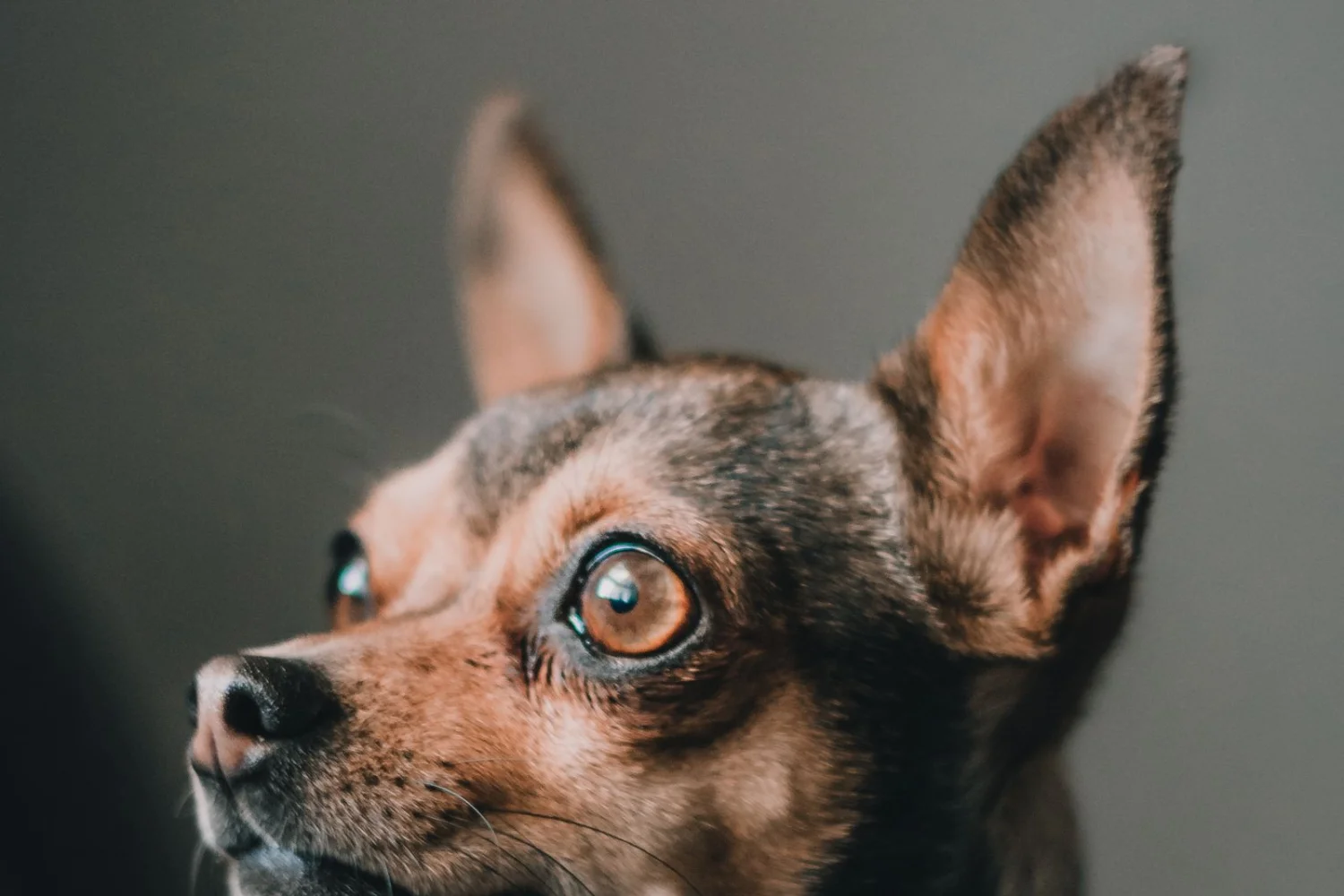
Chihuahua eyes are enormous for the face that carries them, and that is both the charm and the problem. Large, prominent eyes on a dog that lives close to the ground collect dust, scratches, and drafts that taller, deeper-set eyes avoid. Most of what owners notice, a little morning crust, mild tear staining, is cosmetic. Some of it is urgent, and eyes are the one body part where waiting to see is genuinely risky, because a scratched cornea can deteriorate in days.
The rule that organizes this whole article: redness, squinting, pawing, or a suddenly cloudy or bulging eye is a same-day call, every time. Everything else can be sorted calmly. Here is how.
Quick answer: One rule organizes chihuahua eye trouble: redness, squinting, pawing, or a suddenly cloudy or bulging eye is a same-day call, every time. A sudden squint means pain, most often a scratched cornea, and corneal ulcers escalate quickly in prominent-eyed breeds. Mild watery eyes and the rusty tear stains they leave are cosmetic, and what matters is the trend rather than the stain. A bulging or displaced eye, sudden blindness, or an obviously painful red and cloudy eye is an emergency.
Why this breed's eyes need extra respect
The eye is a fluid-filled globe protected by the eyelids, the tear film, and the cornea, the clear front window. The Merck Veterinary Manual has a good plain-English tour of that structure; the practical chihuahua translation is that a prominent eye takes more hits. Scratches from grass and play, irritation from wind and dust, and injuries from rough contact all reach a chihuahua's cornea more easily, which is one of several reasons we recommend screening playmates by size in the owner's briefing.
The common, usually minor stuff
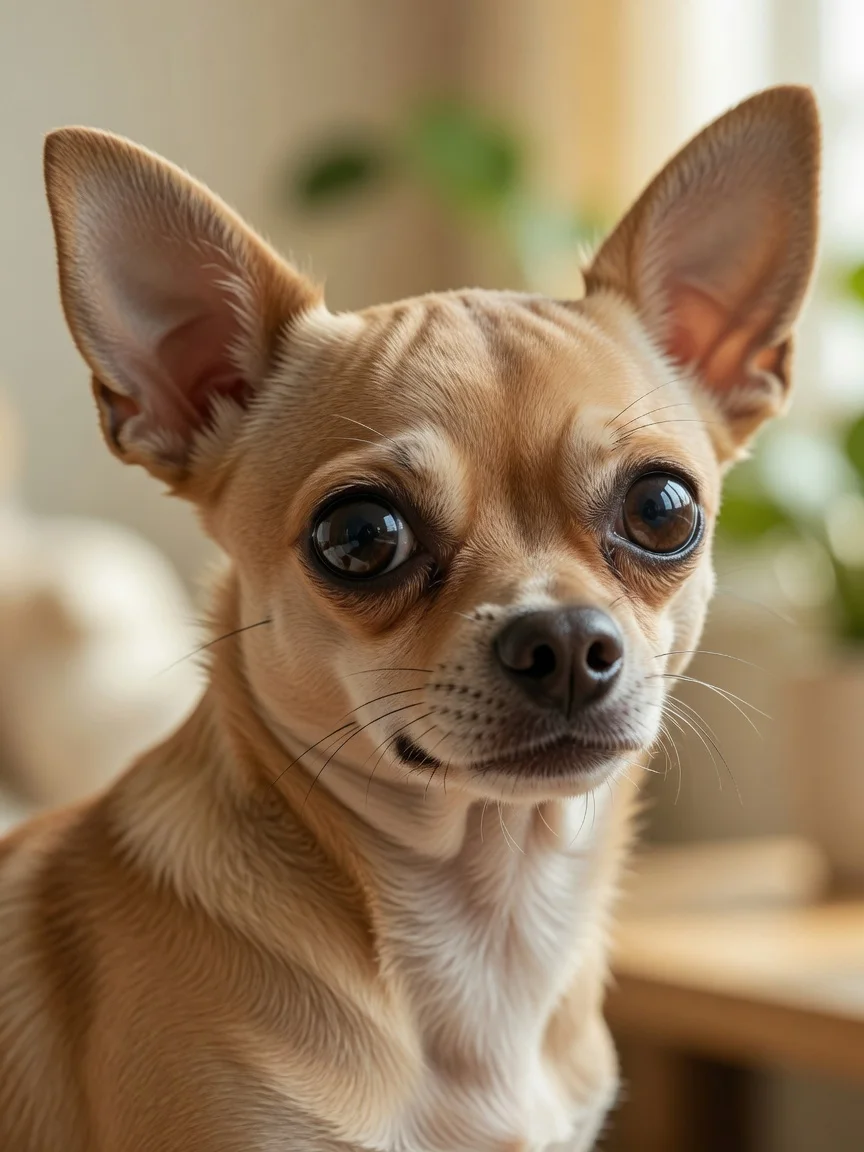
Tear staining. Reddish-brown streaks below the inner corners come from pigments in tears oxidizing on fur, and on light-coated chihuahuas they show dramatically. Staining alone, on a comfortable dog with clear eyes, is cosmetic: keep the area clean and dry with a soft damp cloth daily, and skip the internet remedies; never put anything in the eye that your veterinarian did not hand you. A sudden increase in tearing, or staining plus squinting, moves it from cosmetic to medical, because it can signal blocked tear ducts, irritation, or lash and lid problems.
A little clear discharge or morning crust. Normal housekeeping. Thick yellow-green discharge is not; that pattern suggests infection and earns a same-day call. Whether an eye infection can clear on its own is the wrong bet to make; some do, and the ones that do not can cost sight while you wait.
The conditions worth knowing by name
Corneal ulcers. A scratch or erosion on the clear front window. Signs: squinting, holding the eye shut, tearing, pawing, light sensitivity. Ulcers hurt, worsen fast, and are very treatable early; this is the classic same-day eye problem.
Dry eye, keratoconjunctivitis sicca, meaning the eye stops producing enough tears. It looks paradoxical: a goopy, sticky eye that is actually too dry underneath. Chronic thick discharge and recurring irritation are the tells, a simple tear test diagnoses it, and lifelong medication manages it well.
Cataracts and lens changes. A cloudy, whitish lens in an older dog may be a cataract or may be ordinary age-related haze called nuclear sclerosis, which barely affects vision. Only an exam tells them apart, so cloudiness earns an appointment rather than a guess. Board-certified veterinary ophthalmologists handle the complicated end of this spectrum, and the American College of Veterinary Ophthalmologists is where those specialists are certified.
Glaucoma and the bulging eye. Rising pressure inside the globe. A red, cloudy, visibly enlarged or bulging eye, often with obvious pain, is a true emergency measured in hours, because pressure destroys the optic nerve. And in seniors, gradually failing vision, bumping into furniture, or reluctance in dim light deserves a workup; our senior guide covers how well most dogs adapt when vision fades slowly, which is genuinely comforting, but adaptation is for after the exam, not instead of it.
When to call your veterinarian
Emergency care now: a bulging or visibly enlarged eye, an eye popped from its socket after trauma, sudden blindness, or an obviously painful red-cloudy eye. Same-day call: squinting or an eye held shut, pawing at the eye, yellow-green discharge, a visible scratch or blood, or sudden heavy tearing. Routine appointment: gradually increasing cloudiness, chronic tear staining you want assessed, recurring mild discharge, or slowly changing vision. Home care: daily gentle cleaning of stain-prone areas, trimming long facial hair carefully or having a groomer do it, and never using leftover or human eye drops.
Frequently asked questions
Why does my chihuahua squint?
A sudden squint means pain. A chihuahua squinting one eye most often has a scratched cornea, a stray lash rubbing, or early dry eye, and because corneal ulcers escalate quickly in prominent-eyed breeds, a squint that lasts more than a few hours is a same day veterinary visit, not a wait and see.
Why are my chihuahua's eyes watery?
Mild chihuahua watery eyes usually trace back to wind, dust or allergies, and the overflow is what paints rusty tear stains under the eyes. Watering paired with squinting, redness or pawing signals pain, and discharge thick enough to look like mucus points to infection. Both belong in the vet column above.
Why does my chihuahua's eyes water so much?
Mild tearing suits the breed's prominent eyes and dusty ground-level lifestyle, and shows more on light coats. Sudden heavier tearing, or tearing with squinting or redness, suggests irritation, a scratch, or a duct problem and should be examined the same day.
Are tear stains harmful?
The stains themselves are cosmetic. What matters is the trend: stable light staining on a comfortable dog is a grooming topic, while new or worsening staining is a medical question. Clean daily with plain moisture on a soft cloth and skip additive products unless your veterinarian recommends one.
Will a dog eye infection go away by itself?
Sometimes, but you cannot tell in advance which ones, and the losers of that bet can lose vision. Colored discharge, squinting, or redness earns a same-day veterinary look; eye problems are cheap to treat early and expensive to treat late.
Why are my senior chihuahua's eyes turning blue-grey?
A uniform blue-grey haze in both eyes of an older dog is often nuclear sclerosis, an ordinary aging change with little effect on vision. A white, irregular, or one-sided cloudiness may be a cataract. The two look similar from a couch; an exam distinguishes them in minutes.
Those oversized eyes are the breed's early-warning system in both directions: they get into trouble easily, and they show trouble clearly. Squinting, color change, discharge, or bulging never earns a wait-and-see. Everything else is mostly maintenance, a soft cloth, a good groomer, and a veterinarian who gets a look once a year.

No comments yet
Leave a comment