
The best car for a Chihuahua is not a badge or body style. It is the vehicle that lets you secure a tested restraint, control heat, and travel calmly.
A Chihuahua does not need a giant vehicle. A Chihuahua needs a car that can hold a properly chosen restraint, maintain a safe temperature, provide easy rear-seat access, and carry the supplies a small dog may need away from home.
That is why a fixed list of “best cars” is less useful than a feature checklist. Models, trims, test results, and availability change. The physical needs of a secured carrier do not.
Quick answer: No single car model is best for Chihuahua travel. The right vehicle allows secure installation of a tested restraint, maintains safe rear-seat temperature, offers easy low-effort access, provides smooth quiet ride quality, and includes separate closed storage for supplies. Measure the chosen carrier first, test fit and anchoring in person, verify rear airflow and controls, and score candidates on fit, loading posture, climate, noise, storage, visibility, and cleaning. Safety-critical restraint installation is a pass-or-fail requirement.
Start with the restraint, not the showroom brochure
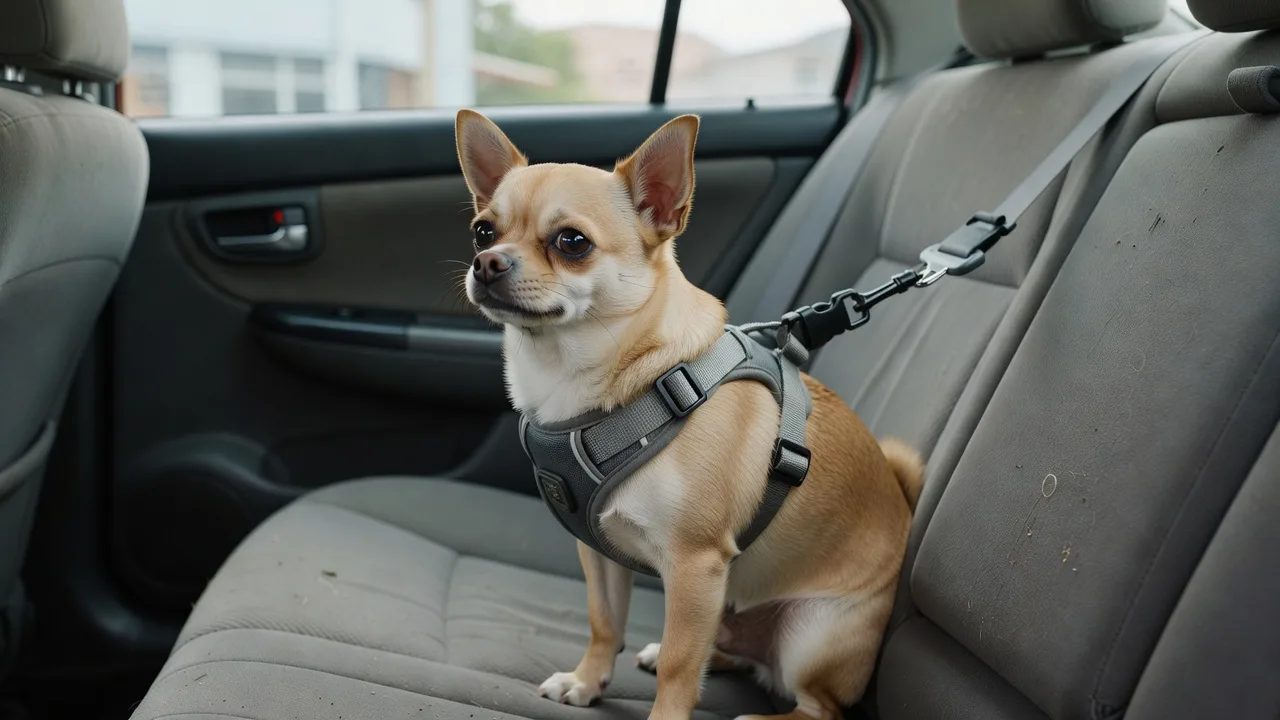
Before comparing vehicles, decide how the dog will ride. A loose Chihuahua can be thrown during sudden braking, distract the driver, or escape when a door opens. The rear seat is usually the practical location for a small dog in a secured carrier or an appropriate travel restraint.
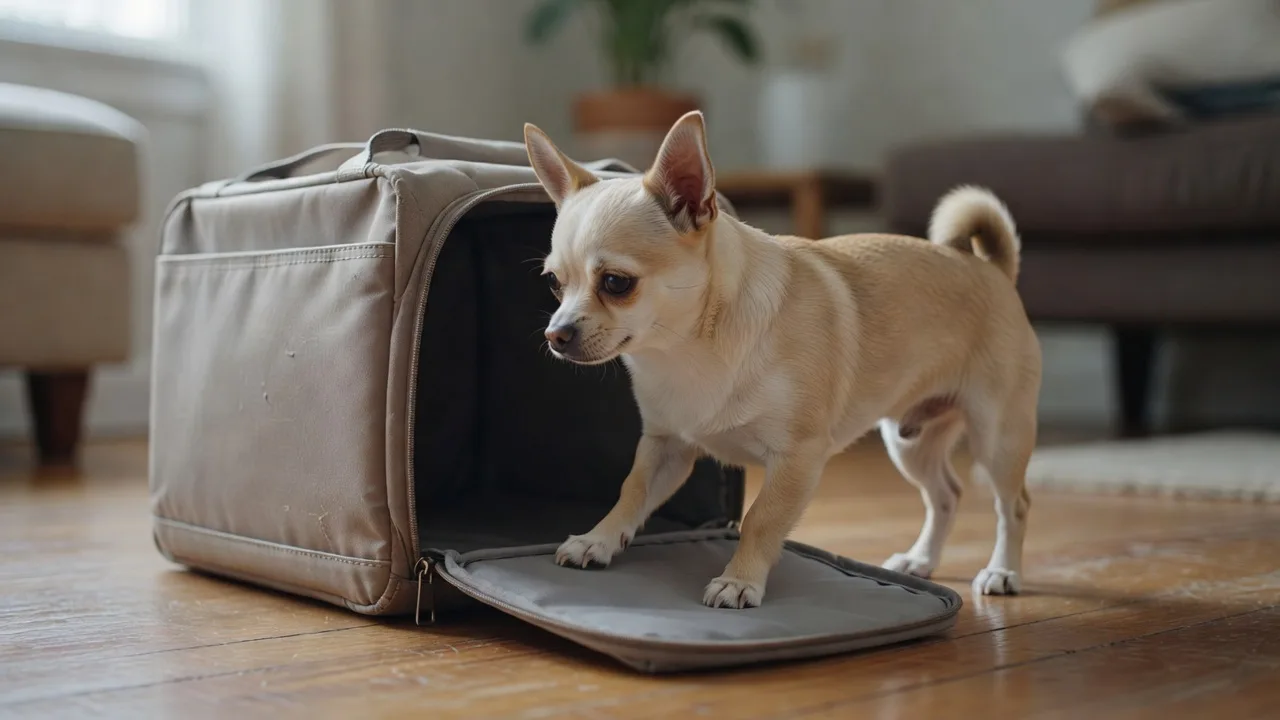
Measure the restraint’s exterior length, width, and height. Then measure the door opening, seat cushion, available belt path, and distance to the front seat in every car you test. A carrier that technically fits but tilts, blocks a buckle, or cannot be anchored according to its instructions is not a good match.
The Center for Pet Safety publishes independent test and certification information for some pet travel products. Certification is product-specific, not a promise that every carrier or harness from the same brand performs identically. Check the exact model, size, instructions, and current status before buying.
Bring the empty carrier to a test drive if the dealer allows it. Install it exactly as you would for travel. Close the doors, move the front seats through their normal range, and confirm that another passenger cannot accidentally release the buckle or crush the carrier.
Favor low, uncomplicated rear-seat access
Chihuahuas are small enough to be carried, but owners still benefit from a wide door opening and a manageable step-in height. It is easier to place a secured carrier on a stable seat when the door opens broadly and the roofline does not force the handler to twist.
Low access matters even more for an older dog, an owner with limited mobility, or a Chihuahua recovering from illness. A heavy carrier lifted at an awkward angle creates risk for both dog and person.
Check what happens in a narrow parking space. Can you open the rear door far enough to insert the carrier without tipping it? Can you reach the belt or anchor point? Can you unload the dog on the curb side instead of into traffic?
Sliding rear doors can be convenient, but they are not automatically safer. Hinged doors can work well when the opening is generous. Evaluate the complete movement, not the marketing label.
Test climate control where the dog will actually sit
Dashboard comfort does not guarantee rear-seat comfort. Sit in the back while the vehicle is running and check airflow around the intended carrier location. Look for rear vents, independent temperature control, and controls that are easy to reach without taking attention from the road.
Never treat climate control as permission to leave a dog in a parked car. The ASPCA warns that vehicles can become dangerously hot, and a mechanical system can fail or switch off. A Chihuahua should not be left alone in a parked vehicle, even for a short errand.
Tinted glass and sunshades may reduce glare, but they do not replace active temperature management. The carrier also needs ventilation; do not bury it under luggage, coats, or a blanket.
For cold-weather travel, warm the cabin and provide bedding that does not block airflow or interfere with restraint hardware. A Chihuahua shivering in a draft needs a change in conditions, not a conclusion that small dogs simply “run cold.”
Ride quality and noise deserve a real test
A vehicle that pitches, vibrates, or transmits sharp road noise may make travel harder for a dog. Take the test route over the kinds of roads you use: city bumps, highway joins, steep ramps, or gravel. Listen from the rear seat.
Watch for loose cargo areas, rattling seat hardware, or subwoofers close to the carrier. A quiet, predictable cabin can help a dog that is being gradually acclimated to travel. It will not cure motion sickness or fear, but it removes avoidable stressors.
If your Chihuahua drools, vomits, pants heavily, or panics in the car, ask a veterinarian about motion sickness or anxiety before assuming a different vehicle will solve the problem. Practice with short, calm trips and reward-based acclimation.
Look for storage that cannot become a projectile
Water, food, medication, a leash, cleaning supplies, a blanket, and emergency records all need a place. Closed compartments or properly secured cargo are better than loose objects on a parcel shelf or rear seat.
The American Kennel Club recommends preparing identification and travel supplies before a trip. For a Chihuahua, add a spare harness, a recent photograph, microchip details, and any temperature-sensitive medication instructions.
Avoid stacking bags around the carrier. Leave a clear route to the dog and enough room to remove the restraint quickly in an emergency. If the vehicle has a cargo barrier, verify that it does not interfere with airbags, seat operation, or the carrier’s installation.
Use a seven-point comparison sheet
Score each candidate vehicle from one to five on:
- exact restraint fit and approved attachment;
- rear-door opening and loading posture;
- rear-seat airflow and temperature control;
- ride smoothness and cabin noise;
- secure, separate storage;
- visibility and curb-side unloading;
- ease of cleaning without slippery covers.
Reject a vehicle if the restraint cannot be installed correctly, even if the total score is high. Safety-critical fit is a pass-or-fail condition, not a preference to average away.
The best car is the one that works as a system
A good setup combines vehicle, restraint, driver habits, temperature management, and a dog who has been prepared for travel. No single feature can compensate for an unsecured carrier or a dog left in a parked cabin.
Compare current specifications, confirm product certifications, install everything according to the manufacturer’s instructions, and let the Chihuahua’s real travel behavior inform the final choice. That process will outlast any model-year ranking.
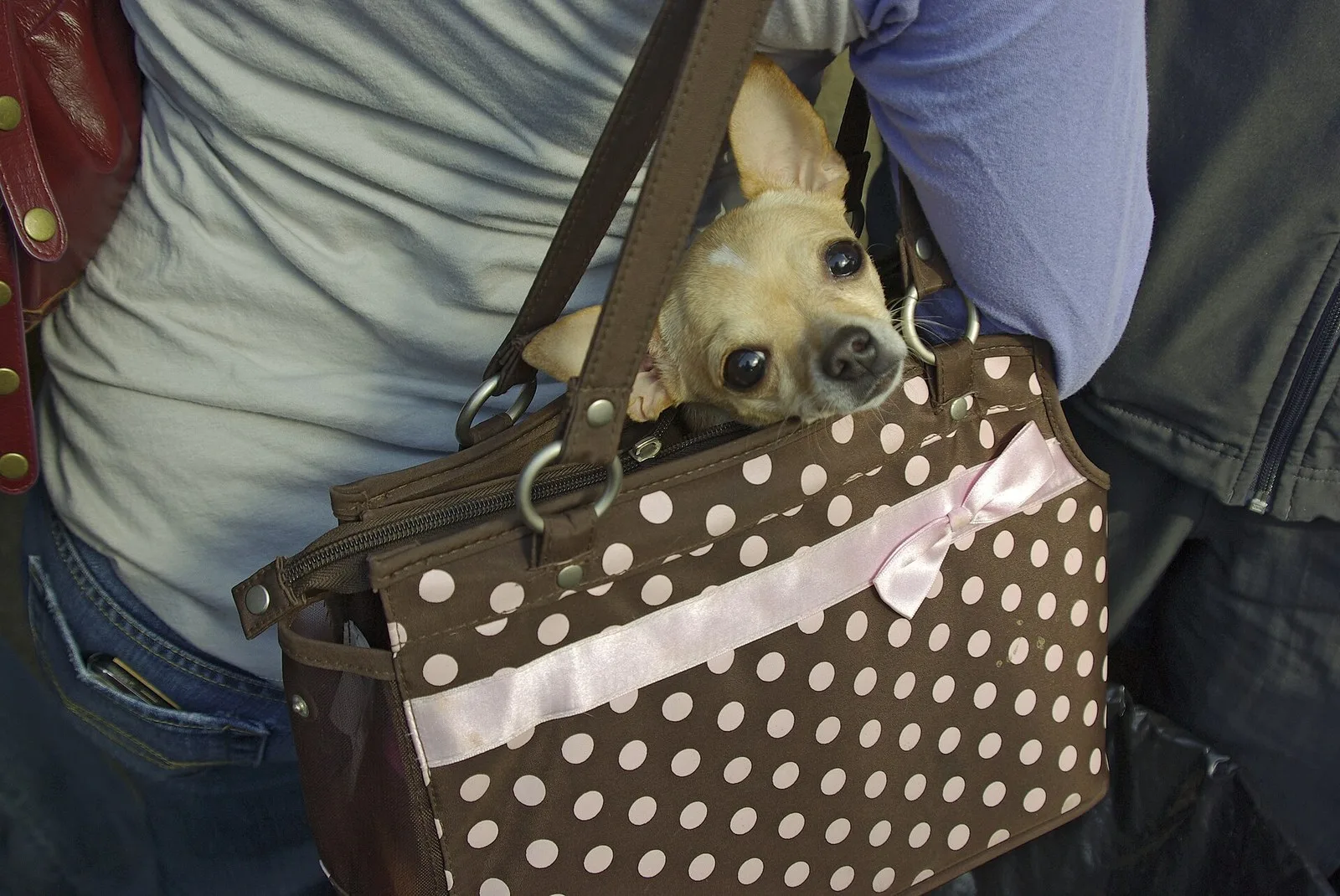
Featured photograph: KanaArima / Wikimedia Commons (CC BY-SA 3.0), via Wikimedia Commons. It is an illustration and does not depict the animals described in this article.



No comments yet
Leave a comment