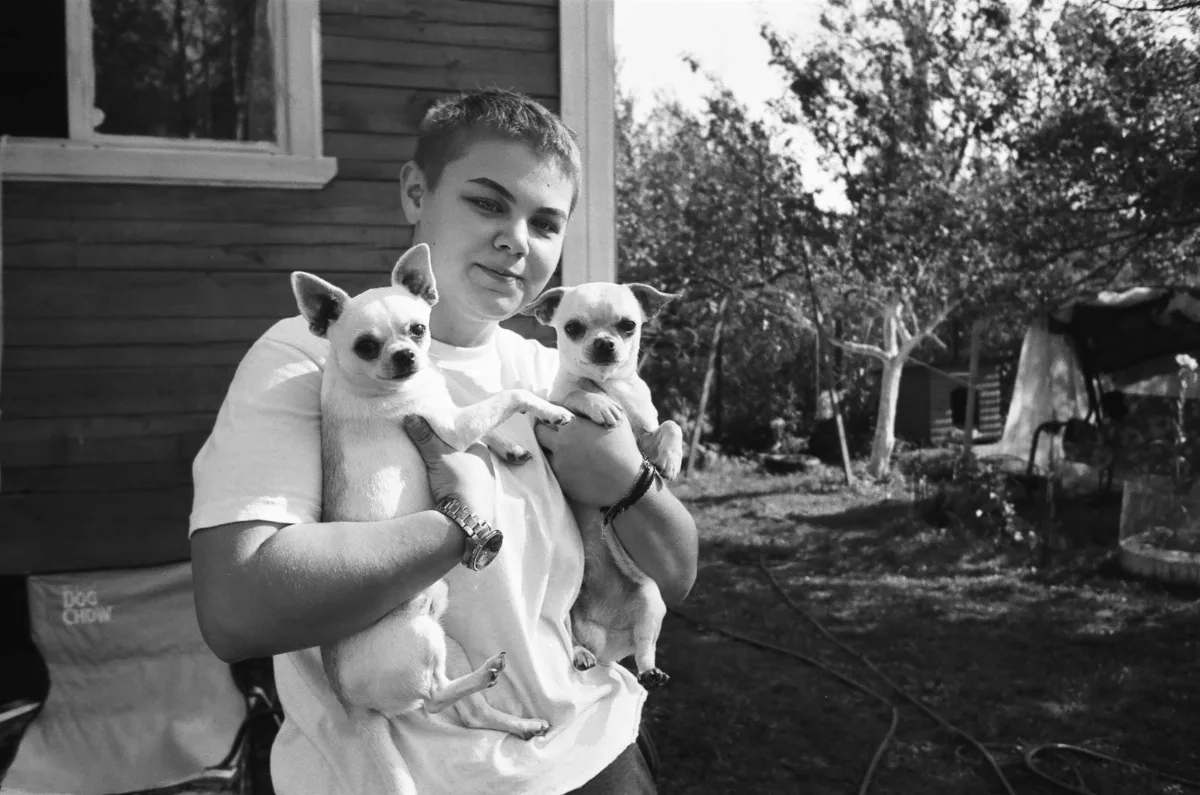
The floors are porcelain tile. That is an odd detail in the house of a hardwood flooring contractor, which is what Bobby Humphreys did for a living in Boonsboro, Maryland, before the dogs began arriving in numbers. Tile is what you install when you expect accidents, and when there are enough residents that mopping becomes a shift. By January 2024, according to a Modern Dog Magazine feature by Sheri Radford, the house held 99 chihuahuas and one cat named Mowgli.
Humphreys is a former competitive bodybuilder, and the visual contrast is most of why the story traveled: a very large man on a floor covered in four-pound dogs. ABC's Localish unit ran a segment on him in March 2020. The operation, Big Guy, Littles World, has a paper trail: IRS records compiled by ProPublica list the sanctuary with a 501(c)(3) determination dated December 2019.
Quick answer: Bobby Humphreys, a hardwood flooring contractor and former competitive bodybuilder in Boonsboro, Maryland, runs a chihuahua sanctuary called Big Guy, Littles World out of a house floored in porcelain tile, which is what you install when you expect accidents and enough residents that mopping becomes a shift. The visual contrast, a very large man on a floor covered in four-pound dogs, is most of why the story travelled; the operation itself has a documented paper trail.
The winter the house emptied out
Published accounts date the break to the end of 2016. His wife of 17 years filed for divorce and moved out, and about a week later he injured a shoulder in the gym badly enough to need reconstructive surgery. He had spent that marriage as a big-dog owner; the couple kept Rottweilers, and by his own account he had made a running joke of men who walked small dogs.
In April 2017 a friend named Connie asked him for a temporary favor. She was moving somewhere that would not accept dogs and needed a place for her chihuahua, Lady, who had a reputation for disliking people and men in particular. Humphreys agreed without enthusiasm. Within a few hours of arriving, by the account he has given consistently since, Lady climbed into his lap and stayed there.
None of that is unusual to anyone who has fostered. What he did next was.

From one borrowed dog to a house full
He went looking for a chihuahua of his own, and the search became the problem. Scrolling classified listings, he kept finding dogs in conditions that made a purchase feel closer to an extraction: sick ones, pregnant ones, dogs offloaded by backyard breeders who had finished with them. He kept them. In October 2018 the house stopped being a man with a lot of dogs and formally became Big Guy, Littles World Sanctuary.
The counts across the coverage move quickly, and the gaps are worth noticing rather than smoothing over. An account published in February 2019 put the household at 37 dogs; a local Maryland television report, filed before the nonprofit determination came through, described more than 30; five years later Modern Dog counted 99.
Some dogs arrived with documented injuries, including one named Lucy, who the magazine reported came in with broken ribs and was believed to have been used as a bait dog. Histories like that are rarely verifiable after the fact, which is the honest thing to say about most of what shows up at a rescue's door.
"I've never experienced the love from an animal that you get from a Chihuahua," Humphreys told Modern Dog.
What a sanctuary commits to that a rescue does not
The distinction matters more than most readers assume. A placement rescue takes a dog in, stabilizes it, and moves it along to an adoptive home; the entire model depends on turnover, which is why fostering is the most useful thing most people can offer and why adoption is the point of the exercise. A sanctuary keeps them. Every dog admitted is a commitment measured in years of food, dentals, bloodwork, and eventually hospice, with no adoption fee at the far end to offset any of it.
Scale compounds that arithmetic in ways that are easy to underestimate from outside. The Modern Dog feature described roughly 30 of the dogs on specialized feeding and a small team providing care around the clock, funded through donations and a product line. Chihuahuas are a demanding population to hold at that volume: dental disease, luxating patellas, and the accumulating medical load of senior and hospice dogs arrive on a rolling basis rather than all at once.
There is also a line here that the animal welfare field takes seriously. The ASPCA defines animal hoarding as housing more animals than a person can adequately care for, and lists the markers that separate it from legitimate work: refusing visitors, declining to disclose animal numbers, continuous intake regardless of conditions, and treating established organizations as adversaries.
The Global Federation of Animal Sanctuaries works the same question from the other direction, accrediting facilities against 26 sets of operations and animal-care standards. Accreditation is voluntary and most small American sanctuaries never seek it, so its absence proves nothing on its own; what the standards provide is a checklist of the questions worth asking.
What the public record shows, and what it does not
The reporting on Humphreys is warm and built largely from his own account, which is normal for feature coverage and worth naming anyway. The documentary record is thinner. The ProPublica database holds a single Form 990-EZ for the organization, covering fiscal 2018 and processed in April 2021, reporting $728 in contributions and no compensation to its president; the same entry notes that the organization does not appear in the IRS's most recent list of tax-exempt groups. Its own website describes the mission as temporary and at times indefinite sanctuary for neglected, abandoned, and abused chihuahuas, paid for by donations and merchandise sales.
None of that answers the question a careful donor would ask, which is what conditions inside the house look like now. I could not find an independent inspection or audit in the published coverage, and the absence of one is not evidence in either direction. It is simply the limit of what can be established from a distance, and the reason our guide to choosing a chihuahua rescue leans on unglamorous questions: veterinary references, intake and euthanasia policies, and whether you are welcome to visit.
What the story is finally about, underneath the before-and-after of a bodybuilder and his lap dogs, is supply. There were enough discarded chihuahuas within reach of one house in western Maryland that a man who was not looking to start a rescue operation assembled one anyway, largely out of classified ads, and that says more about why chihuahuas fill American shelters than it does about him. The dog who started it was never even his. She was a favor for a friend, dropped off temporarily in the spring of 2017, and she is the reason the floors are tile.

No comments yet
Leave a comment