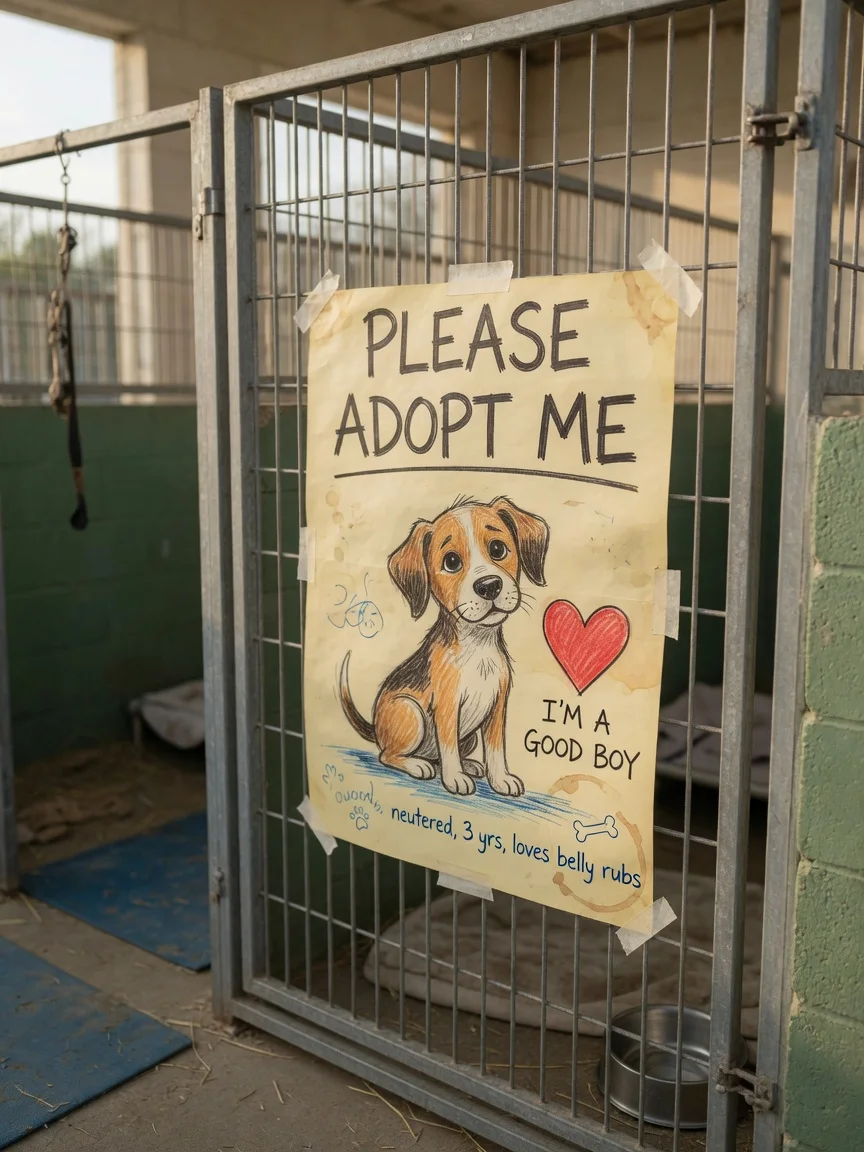
On December 9, 2014, a staff member at a private nonprofit shelter in Milpitas, California, published a piece of writing designed to talk people out of adopting one of her dogs. The headline on the Humane Society Silicon Valley blog read "A Full Disclosure Blog: Three Reasons You DON'T Want To Adopt Eddie The Terrible." The subject was a chihuahua mix of roughly thirteen pounds, and the post opened with a question rather than a sales line: "How Does So Much Naughty Exist In Such A Small Dog?"
The dog had been in the shelter's care for fifteen months, ABC News reported on December 18 of that year, describing him as a two-year-old chihuahua. Within about a week of the post going up, he was placed.
Quick answer: On December 9, 2014, a staff member at Humane Society Silicon Valley in Milpitas, California published a blog post designed to talk people out of adopting one of her own dogs, headlined as three reasons you do not want to adopt Eddie the Terrible. The subject was a chihuahua mix of roughly thirteen pounds who had been in the shelter's care for fifteen months. He was placed within about a week of the post going up.
The three reasons, in the shelter's own order
Reason one was other dogs. On leash, the listing said, Eddie went "zero to Cujo in .05 seconds" at the sight of one, and then it added the qualifier most adoption profiles leave out: he had never actually attacked a dog. Reason two was people. He was uneasy around children and around some adults, which the shelter stated plainly while also noting he had never bitten anyone. Reason three was the crate. He would not sleep in one. He wanted furniture, a bed, and a person in it, and he wanted company on his own schedule.
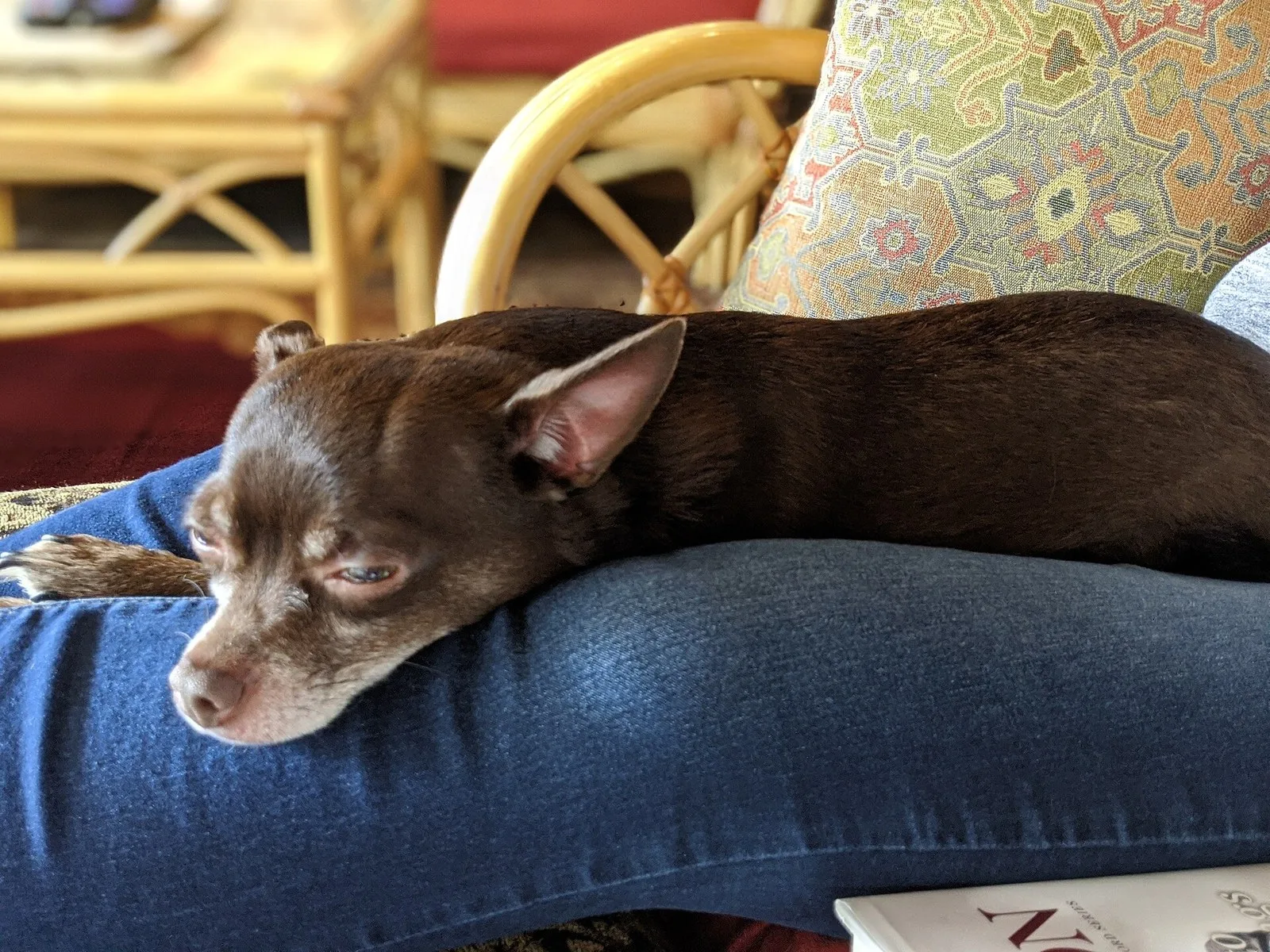
The post also recorded what worked. He was housebroken and loyal, he played fetch, and he walked well on leash as long as no other dog came into view. The entry was credited to Finn Dowling, a spokesperson for the shelter, who in HuffPost's December 14 coverage described the person the shelter was looking for: "Somewhere out there is someone whose life will be better with Eddie, someone that he'll make laugh every day and someone whose lap he'll keep warm."
That is a narrow specification. Writing it narrowly was the strategy.

What fifteen months in a kennel actually costs
Long stays are not neutral time. A leash-reactive small dog housed in a shelter passes other dogs in aisles and doorways many times a day, which means the building rehearses the exact behavior keeping him in it. The ASPCA's position statement on shelter dog behavior assessments makes a related point from the other direction: formal assessments have not proven accurate at predicting aggression after adoption, false positives are common, and an organization's goal should be to identify adoptable dogs and move them into homes quickly rather than hold them while collecting more data.
None of that makes a behavior report useless. It makes any single in-kennel snapshot a partial picture, and it explains how a dog can look impossible in a kennel and unremarkable in a living room. Small dogs carry an extra problem, which is that their reactivity is easy to laugh at and easy to leave untrained. We have written about what the ankle-biter reputation gets wrong and about why so many chihuahuas end up in shelters to begin with. A fifteen-month stay is one of the ways that reputation charges interest.
Disclosure as a placement method
The listing ran against the reflex of most adoption marketing, which is to lead with the softest description available. Withholding known behavior does not remove the behavior. It moves the discovery into the adopter's living room, where it can become a return or a second surrender.
Placement organizations have been shifting toward the opposite habit for years. Adopters Welcome, published by Humane World for Animals, formerly the Humane Society of the United States, argues for replacing pass-fail applications with open conversation on the reasoning that a frank exchange about what a person actually wants places more animals and keeps them placed. Eddie's post was that conversation, printed in advance and left where anyone could read it.
The filtering worked in both directions. A reader with a resident dog, a toddler, or firm rules about dogs on the bed reached the third paragraph and moved on, which is what the shelter needed them to do. Our guide to adopting a rescue chihuahua covers the same exchange from the adopter's side, and how to choose a chihuahua rescue covers what to ask an organization before anyone signs anything.
The couple who read the warnings and came anyway
The people who answered were Deborah and Randolph Espinoza, a retired couple with no children and no other pets, according to ABC News. Deborah Espinoza told the network that the deciding moment was an ordinary one: "When I saw his face, that's when I said, 'Wow, that is a cute dog.'" CBS News in San Francisco reported on December 16 that he had found a home.
Carol Novello, then president of Humane Society Silicon Valley, told ABC News that the shelter considered him "perfectly imperfect and all he really needed was the right family." The household matched the listing item by item. No resident dog to lunge at, no children to avoid, no argument about the crate, and two people at home to supply the company he demanded.
What the campaign showed, and what it did not
In its own account of the campaign, entered for a Shorty Award the following year, the shelter reported more than 126,000 YouTube views, more than 87,000 blog views, and coverage reaching over five million viewers through Good Morning America and Inside Edition. The same entry describes the dog as a two-year-old whose shelter name had been Teddy before staff rebranded him for the campaign, a detail the news coverage did not carry.
A good deal stays unrecorded. The published accounts give no exact adoption date, do not explain how he entered the shelter system in the first place, and do not follow the household past that December. Whether the leash behavior improved, whether the couple did any training, and how long he lived are not in the record. A viral week documents a placement, not a life.
The post is still online, three reasons deep, arguing against the dog it placed. A chihuahua waited fifteen months while being described at his best, then went home within a week of being described at his worst, to the one household the description was ever going to fit. Adoption is not the end of that work, and the first week home is rarely tidy, but the arithmetic of that December still holds up.



No comments yet
Leave a comment