
The scene repeats in living rooms everywhere a transport van or shelter lobby empties out: the paperwork is signed, the crate door opens, and a very small dog declines to come out of it. New adopters tend to read that moment as a verdict on themselves. Rescue workers read it as a schedule.
A dog who has cycled through a shelter, maybe a foster home, maybe a five-hundred-mile transport, has been through more address changes in a month than most dogs see in a lifetime, and the first week in your home is not the beginning of your life together so much as the end of her journey. This guide covers what that week usually looks like with a chihuahua, and how to keep from accidentally making it longer.
Quick answer: Expect a rough arc of days to decompress, weeks to learn your routine, and a few months to settle fully, with wide variation by dog and history. A dog who will not come out of the crate is not rejecting you; rescue workers read that as a schedule rather than a verdict. A day of picking at food in a new home is common stress behavior, so keep food, schedule, and location consistent rather than offering a buffet. Introduce calm visitors one at a time once she approaches you voluntarily.
Before she arrives: one small room
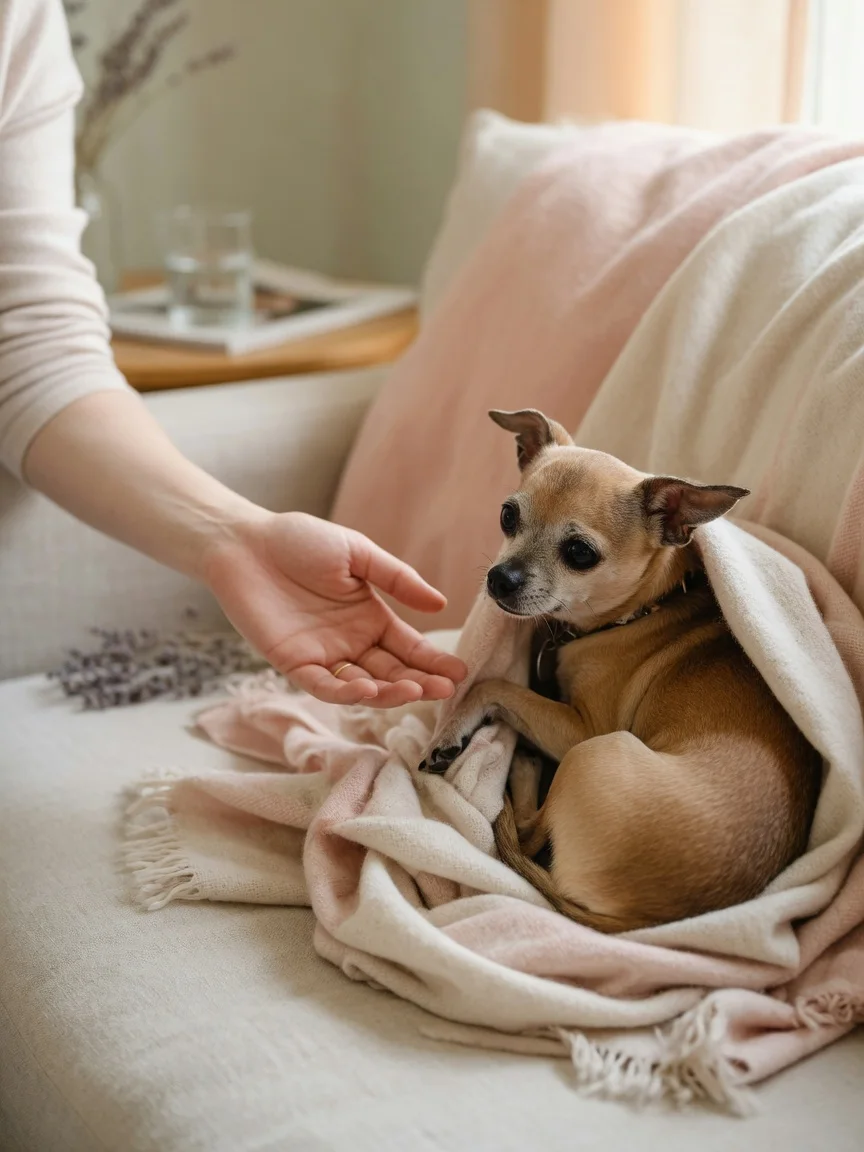
The standard advice from placement organizations, including Best Friends Animal Society's new-dog guidance, is to shrink the world first: one quiet room or a pen, a bed with a blanket she can burrow into, water, and a couple of low-stakes toys.
For a chihuahua add two items with outsized returns: a covered bed or crate, because hiding is how this breed self-soothes, and a barrier plan for the door, because a frightened four-pound dog fits through gaps that would stop any other breed. Skip the welcome party entirely. The visitors, the extended family, the neighbor who loves dogs: week two, at the earliest.
The first days: decompression is the job
Shelter and rescue staff often describe adjustment in rough thirds: days to stop panicking, weeks to learn the routine, months to fully settle. The numbers vary by dog; the sequence rarely does. In the first days, success looks unglamorous. She eats, ideally the same food the rescue was feeding, switched gradually later per our feeding guide.
She drinks. She learns where the potty spot is because you take her there on a boring, predictable schedule and pay generously for results; assume the house-training counter has reset to zero regardless of what the paperwork says, and treat accidents as information rather than defiance.
She watches you from the bed you gave her, and you resist the urge to close the distance. With a shy chihuahua, the fastest route to a dog on your lap is to stop auditioning for it: sit on the floor nearby, read something, let treats appear when she approaches, and let her write the timeline. Our fearful-dog guide covers the slower version of this curve when the fear runs deeper.
The middle of the week: routine becomes trust
Dogs settle on rhythm, and rescues most of all: meals, potty trips, a short quiet walk once she is wearing the harness you fitted per the harness guide, lights out at a consistent hour. Keep the outings brief and the world small; the full neighborhood tour, the pet store, the dog park all wait until she reliably orients to you at home.
If there are resident pets, run introductions late in the week and formally: barriers first, sniffing under doors, short supervised meetings on neutral ground, per the pacing in our multi-dog guide. Children in the home get the same briefing rescue volunteers give: sit low, no grabbing, let the dog come to you, per the rules in our kids guide.
The appointments you book anyway
Two calls belong in week one even when everything is going well. The first is a veterinary visit, both to establish care and to catch what shelter medicine, working at volume with limited histories, can miss; bring whatever records came with her.
The second is to the rescue itself if anything looks off: reputable organizations expect questions after placement, and the ones worth adopting from, per the ASPCA's adoption resources and our own adoption guide, would rather hear from you in week one than at a surrender counter in month six. Update the microchip registration while you are at it; it is a five-minute task that undoes the single most common way adopted dogs stay lost.
Frequently asked questions
How long does it take a rescue chihuahua to adjust?
Expect a rough arc of days to decompress, weeks to learn your routine, and a few months to settle fully, with wide variation by dog and history. Progress is rarely linear; a bold day followed by a hidden-under-the-bed day is normal traffic, not a setback.
My new rescue chihuahua will not eat. Should I worry?
A day of picking at food in a new home is common stress behavior. Keep the food, schedule, and location consistent, skip the buffet of alternatives, and call a veterinarian if a dog this small refuses food beyond a day or shows other symptoms; at four pounds the margins are thin, per our not-eating guide.
Should I let my rescue chihuahua sleep in my bed the first week?
Start with her own bed or crate in your bedroom: nearby enough to reassure, separate enough to keep the routine flexible while you learn her habits. The bed-sharing decision, and its house rules, can come later per our sleep guide, once house-training and trust have a foundation.
When can I introduce my rescue to friends and other dogs?
People: once she approaches household members voluntarily, usually after several days, one calm visitor at a time. Dogs: late in week one at the earliest, barriers first, neutral ground, short sessions. Every introduction that goes well at her pace buys three that would have gone badly at yours.
By the end of a good first week the accomplishments fit on an index card: she eats, she potties on schedule, she has claimed a bed, and she has started crossing the room on her own. That card is the whole foundation. The dog who did those four things will spend the next decade doing the rest.



No comments yet
Leave a comment