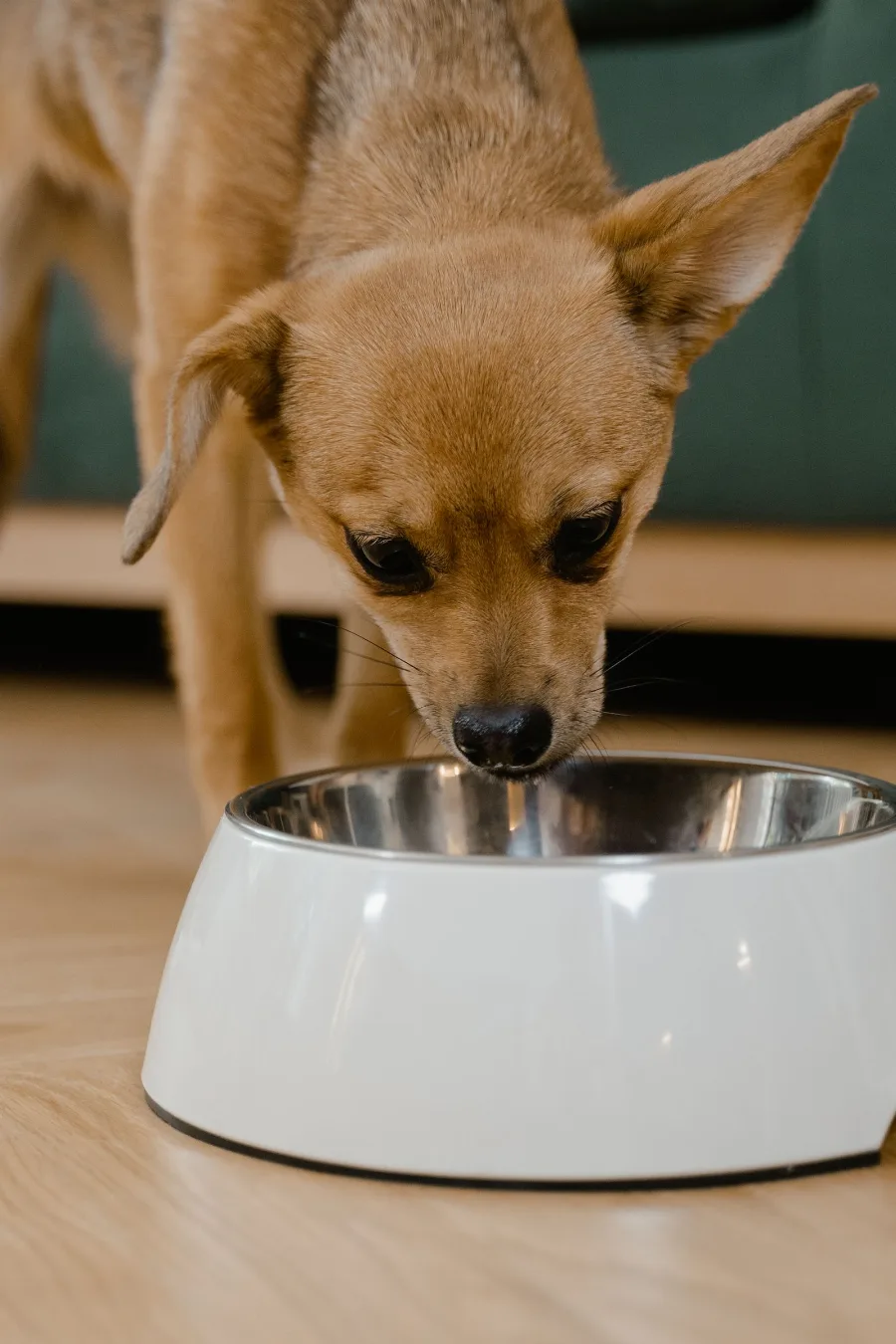
Feeding a chihuahua comes down to three questions: how much (your dog's daily food intake), how often, and what. The answers are less complicated than the pet-food aisle suggests, but they are not the same answers a labrador gets, because a dog this small runs on portions measured in tablespoons and has almost no reserve when meals go wrong. This guide covers the numbers, the schedule by age, and how to choose a food without relying on the marketing, with the danger list and the safe-sharing list living in their own guides: foods toxic to chihuahuas and what chihuahuas can eat.
Quick answer: Most adult chihuahuas eat roughly a quarter to three quarters of a cup of dry food a day, split into two meals, or three smaller ones for the tiniest dogs; puppies need four or more small meals. The number on the bag is a starting point rather than a verdict, since metabolism, age, and activity adjust it. Wet and dry both work provided the label carries an AAFCO complete-and-balanced statement for the right life stage. Picky eating is usually a curriculum the household taught.
How much: feed the body condition, not the bowl
Most adult chihuahuas eat somewhere around a quarter to three quarters of a cup of dry food per day, split into meals, but the honest answer is that the number on the bag is a starting point, not a verdict. Feeding guides printed on packaging are calculated for a generic dog of that weight; your dog's metabolism, age, and activity adjust it up or down. The American Kennel Club's feeding guidance puts body condition at the center: you should feel ribs easily under a thin fat layer, see a waist from above, and see a belly tuck from the side.
If those checks fail in the soft direction, portions shrink. At this size the margins are small in absolute terms: a few extra kibbles a day, every day, is how a four-pound dog becomes a five-pound dog, and our weight guide covers the recovery plan. Treats count inside the daily total, not on top of it, and the working ceiling is ten percent of calories, a budget the resident beggar will spend however you let her, per the begging guide.
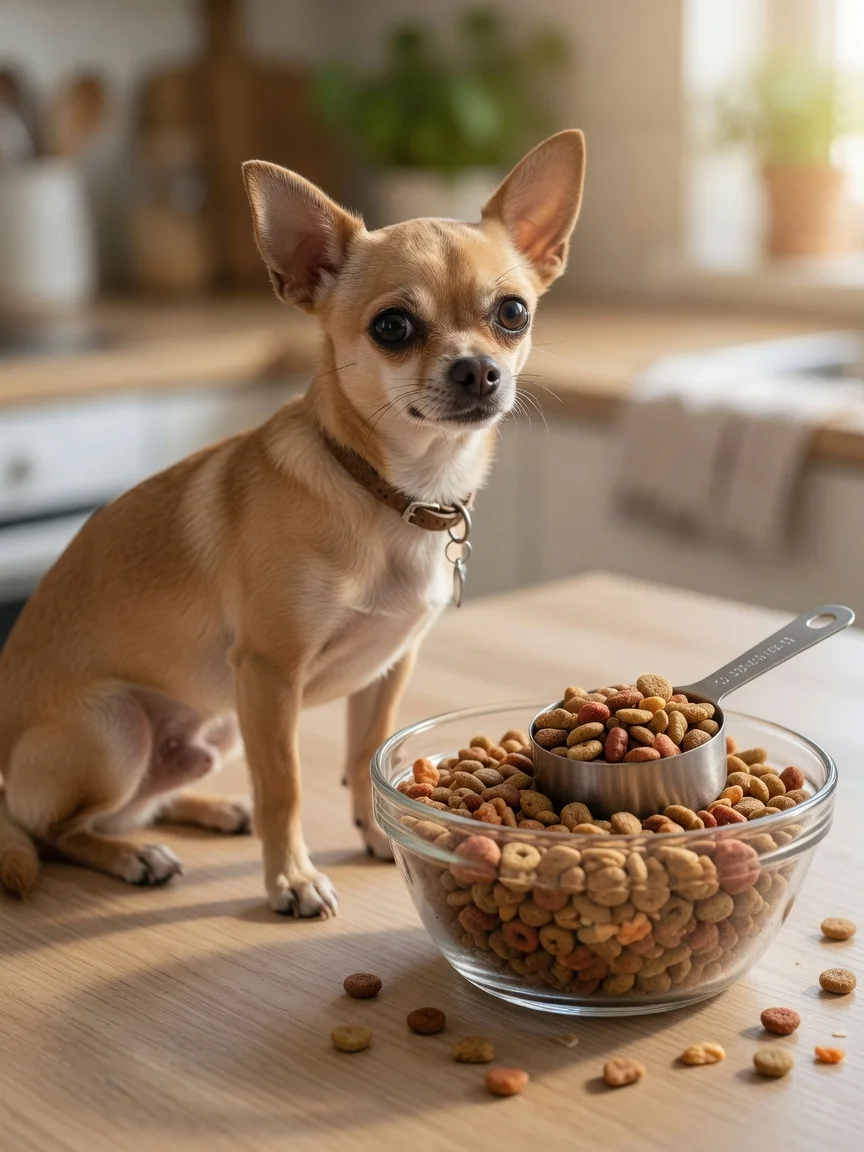
How often: the schedule by age
Adult dogs generally do well on two meals a day, morning and evening, per the AKC's guidance on meal frequency, and most adult chihuahuas fit that pattern. Many owners of very small or very food-motivated dogs split the same daily total into three smaller meals instead, which suits a stomach the size of a walnut and keeps blood sugar steadier across the day.
What a chihuahua should not do is graze from an always-full bowl: free feeding makes portions unknowable and turns the first sign of appetite loss, often the earliest sickness signal this breed gives, into something you notice a day late. Our not-eating guide explains why a skipped meal in a dog this size earns attention quickly.
Puppies are a different regime. Toy-breed puppies need small, frequent meals, four or more a day in the early months, specifically to hold off hypoglycemia, the low-blood-sugar crash the AKC's puppy feeding guidance flags as a real risk in the smallest breeds. Meals step down gradually, four to three, then three to two, across the first year, and our blood sugar guide covers the warning signs every chihuahua puppy household should know cold. Teething complicates the middle months, and the teething guide has the softened-kibble workaround.
What: choosing a food without the marketing
This site does not rank brands. The durable selection rules fit in one paragraph. Pick a food whose label carries an AAFCO nutritional adequacy statement for your dog's life stage, puppy or adult, which is the line that says the recipe is complete and balanced rather than a topper. Pick a small-breed formula when you can, less for the recipe than for the kibble size: standard kibble is genuinely hard work for a chihuahua jaw, and dental disease is this breed's most common health problem, per the dental guide.
Senior dogs, dogs with medical conditions like diabetes, and pregnant dogs need their food chosen with a veterinarian rather than a review site. And switch foods over a week or so, mixing old and new in shifting ratios, because an abrupt change is the most common self-inflicted cause of the digestive chaos covered in our stool guide.
Storage, the step everyone skips
Dry food goes stale and its fats oxidize once the bag opens, faster in heat and light, and a chihuahua works through a large bag slowly. Buy small bags even though the unit price stings, keep the food in its original bag inside a sealed container rather than dumped loose, and store it cool and dry. Wet food keeps covered in the refrigerator for a couple of days once opened. If a normally reliable eater starts refusing a bag that has been open for weeks, suspect the bag before suspecting the dog. If the grain-free question is what brought you here, the unfinished FDA investigation pointed at pulses high in the ingredient list rather than at grain.
Frequently asked questions
How much should a chihuahua eat per day?
Roughly a quarter to three quarters of a cup of dry food across the day for most adults, adjusted to the individual dog. Start from the bag's guide for her weight, then let body condition steer: ribs easy to feel, visible waist, belly tuck. Treats live inside that total at no more than ten percent of calories.
How many times a day should a chihuahua eat?
Two meals a day works for most adults, and three smaller meals suit many of the tiniest dogs better. Puppies need four or more small meals daily in the early months to prevent low blood sugar, stepping down to the adult schedule across the first year. Skip free feeding entirely.
Is wet or dry food better for chihuahuas?
Both work when the label carries an AAFCO complete-and-balanced statement for the right life stage. Dry food is convenient and stores well; wet food helps reluctant drinkers and tired jaws. Many households feed dry with a spoon of wet on top, which also gives medication somewhere to hide, per the medication guide.
Why is my chihuahua such a picky eater?
Usually because the household taught her that holding out produces something better, a curriculum the begging guide covers. Rule out the medical causes first if pickiness is new, since appetite change is an early sickness signal in this breed, then fix the economics: measured meals, fifteen minutes on the floor, bowl up until the next meal.
Portions by body condition, meals on a schedule, a label with the right statement, and a bag stored like it matters: that is the entire feeding operation. The dog will lobby for amendments daily. The program works best unamended.



No comments yet
Leave a comment