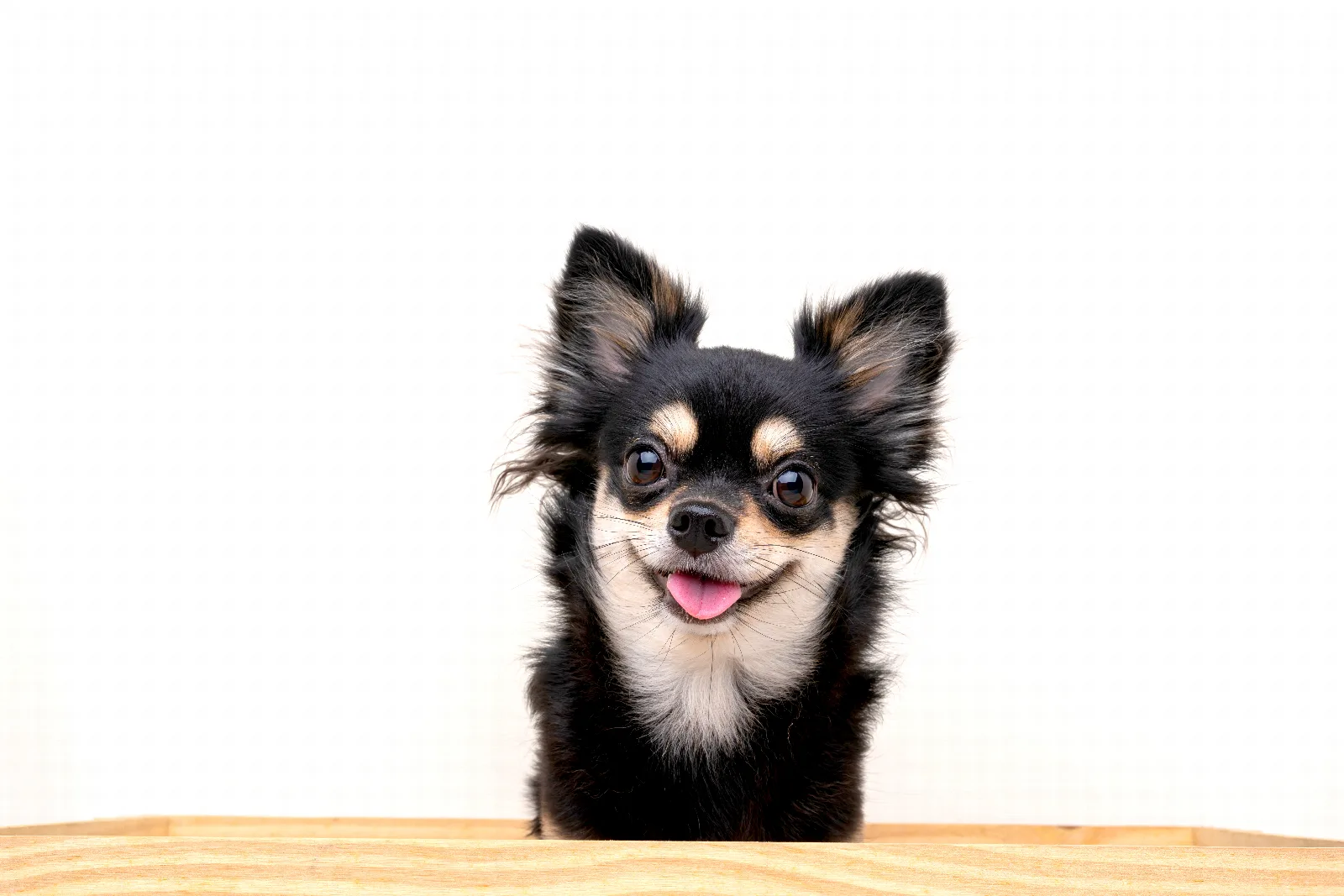
Every chihuahua owner eventually meets the moment: a course of pills from the clinic, a dog with a jeweler's nose and a lawyer's suspicion, and day three of finding the tablet spat behind the couch, licked clean of its disguise. Medicating a tiny dog is a genuine skill, and it matters more here than in most breeds, because at four pounds a missed course is a real treatment failure and a dosing mistake has no cushion at all.
Here is the toolkit, from diplomacy to technique, plus the safety rules that turn out to be the most important part of the whole subject.
Quick answer: Hide the pill in a pea-sized portion of xylitol-free peanut butter, cheese, plain chicken, or pill-pocket paste, delivered inside a decoy sequence of unloaded treats, and confirm with your clinic that food is allowed alongside that drug. Only crush a tablet with your veterinarian's explicit yes, since some lose their function or protection when crushed. If it keeps failing, escalate method rather than force. A dropped human pill is a poisoning until proven otherwise.
First, shrink the problem at the clinic counter
Before any wrestling: ask two questions when the medication is prescribed. Can it be given with food, and does it come in another form? Many drugs can be compounded into flavored liquids or tiny chews sized for toy breeds, and for a chronic medication that single question can buy years of peace.
Ask whether the pill may be crushed or split, because some formulations must not be, coatings and slow-release designs stop working when broken, and never make that call yourself. And confirm the timing rules, with food or empty stomach, so the plan you build below is the right plan.
The food gambit, done properly
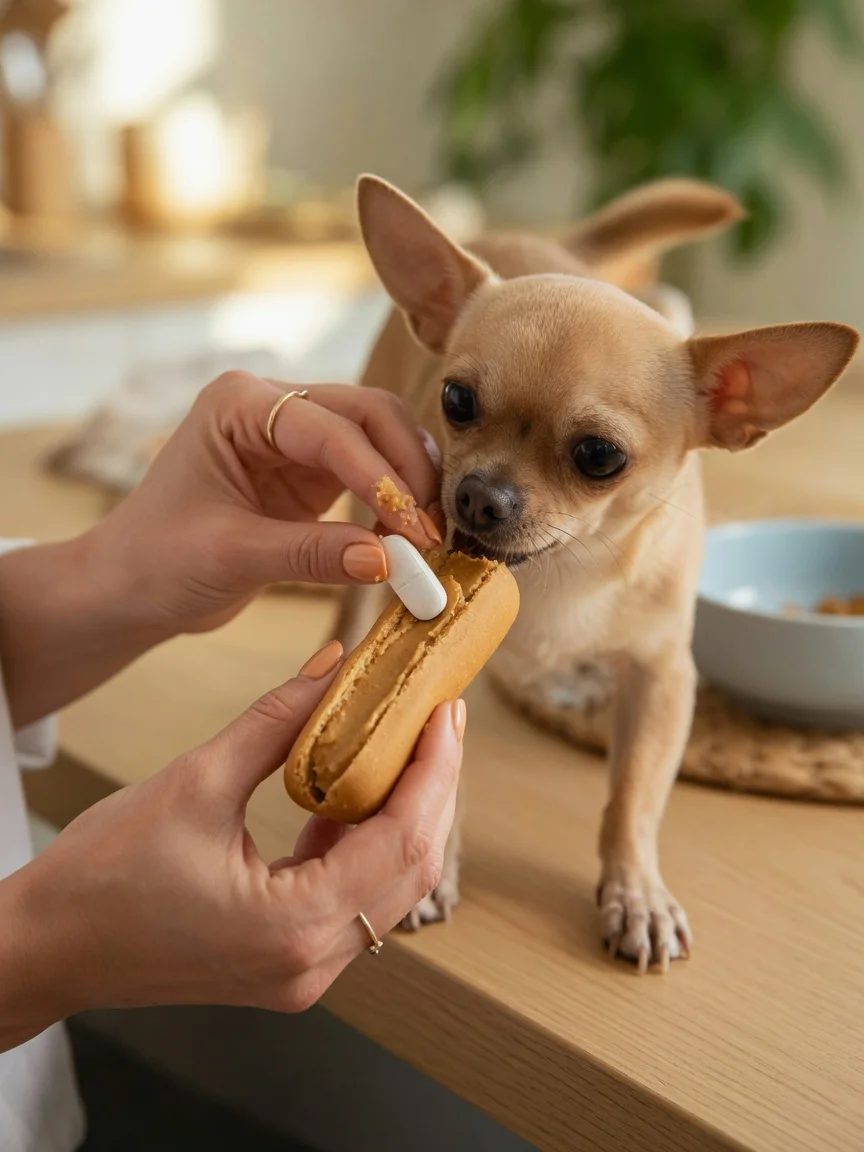
Hiding a pill works when the portion is pea-sized, strong-smelling, and part of a con. The classic sequence is the decoy run: two or three treat-morsels with nothing in them, delivered fast, then the loaded one in the rhythm, then one more empty as a chaser, because a dog waiting for a follow-up swallows rather than inspects.
Soft options that work at this size: a smear of xylitol-free peanut butter, a pinch of cheese or plain chicken, a bit of pill-pocket paste. The non-negotiable check: peanut butter must be xylitol-free. Xylitol, a sweetener in some brands, is severely toxic to dogs, and a chihuahua-sized dose of the wrong brand is an emergency, not a footnote. Read the label once, write the safe brand on the jar, done.
Then verify. Chihuahuas are the undisputed champions of cheeking a pill and depositing it later, so watch the swallow, and casually check the floor and her favorite corners for a minute. A dog who beats the food gambit three times running is telling you to switch methods, not to escalate portions; our appetite guide also matters here, because a sick dog with no appetite defeats food-hiding entirely and needs the direct route or a different formulation.
The direct route, gently, at this scale
For pills, the technique the American Kennel Club's pilling guide describes works on a chihuahua with one adjustment: everything smaller and calmer. One hand steadies the head from above, thumb and finger at the corners of the jaw; the other lowers the front of the jaw, places the pill far back on the tongue's center, closes the mouth, and rewards a swallow, which a gentle throat stroke or a quick nose lick usually confirms.
Be brief, be matter-of-fact, and end every attempt, successful or not, with something pleasant, because there are many doses in a course and your dog is keeping score. A pet piller, a soft plastic dispenser, spares fingers and aims better; ask the clinic to demonstrate.
For liquids: syringe tip into the cheek pouch, at the side of the mouth, dosed slowly with pauses to swallow. Never squirt down the center of a tilted-up throat, that is the aspiration recipe, and never chase a struggling dog with a syringe; split the dose calmly instead. Eye drops and ear meds follow one rule each: approach from behind the eyeline rather than head-on, and reward extravagantly.
The safety spine: storage, drops, and the no-sharing rule
This half matters more than technique. Store all medication, human and pet, in closed cabinets, never on counters or nightstands, because chihuahuas eat dropped and found pills, and human medications, painkillers above all, are lethal at this body size in single-tablet quantities. When a pill drops, crate or remove the dog first, then hunt the pill. The reflex order matters; you will not beat her to the floor.
Never share medication between pets or adjust a dose yourself, weight math on a four-pound dog is clinical work, and a dose that suits the neighbor's beagle is an overdose here. Finish every course unless the clinic says stop, even when she seems cured on day four. And if you suspect she got a dropped or wrong pill, that is an immediate call to the clinic or a pet poison hotline with the packaging in your hand.
When to call your veterinarian
Emergency care now: suspected ingestion of human medication or a dropped pill, or collapse, tremors, or vomiting after any dose. Same-day call: repeated vomiting of medication, a course you physically cannot get into the dog, or a missed-dose pileup you are unsure how to resume. Routine appointment: requesting compounded or alternative formulations, or a demonstration of pilling technique. Monitor at home: appetite and behavior through every course, with anything odd noted and mentioned; our vomiting guide covers the commonest medication side effect from the other side.
DIY pill pockets: an easy homemade recipe
Commercial pill pockets work fine, but homemade pill pockets cost pennies and take three ingredients. Mix one tablespoon of smooth peanut butter (xylitol free, always read the label), one tablespoon of flour and a teaspoon of water into a stiff dough. Roll pea sized balls, press a hole into each with a chopstick, and refrigerate them for up to a week. Drop the pill in, pinch shut, and serve one empty decoy first so the loaded one disappears just as fast.
For the dog that outsmarts peanut butter, a DIY pill pocket cut from a cube of plain cooked sweet potato or a pinch of cream cheese works, and sensitive stomachs usually tolerate a rice flour version.
Frequently asked questions
What can I hide my chihuahua's pill in?
Pea-sized portions of xylitol-free peanut butter, cheese, plain chicken, or pill-pocket paste, delivered inside a decoy sequence of unloaded treats. Confirm with your clinic that the medication may be given with food first, and always verify the swallow.
Can I crush the pill into her dinner?
Only with your veterinarian's explicit yes. Some pills lose their function or protection when crushed, some taste so bitter they poison the whole bowl's reputation, and a partially eaten dinner means a mystery dose. Compounded liquid is usually the better answer to a pill that will not go down.
My chihuahua keeps spitting the pill out. What now?
Escalate method, not force: the decoy-sequence gambit, then the direct placement technique or a pet piller, then a phone call about flavored compounding. Three failures is data, and the clinic has seen every version of this dog.
What if my chihuahua eats a dropped human pill?
Treat it as poisoning until told otherwise: secure the dog, identify the medication, and call your veterinarian or the ASPCA Animal Poison Control Center at (888) 426-4435 immediately with the packaging in front of you. At chihuahua size, waiting to see is the one wrong answer.
Medicating a chihuahua is a negotiation you win with strategy, brevity, and cheese. The techniques above cover the willing and the stubborn alike; the storage and no-sharing rules cover the scenarios nobody plans. Both halves together are what a full course, safely delivered, actually looks like.

No comments yet
Leave a comment