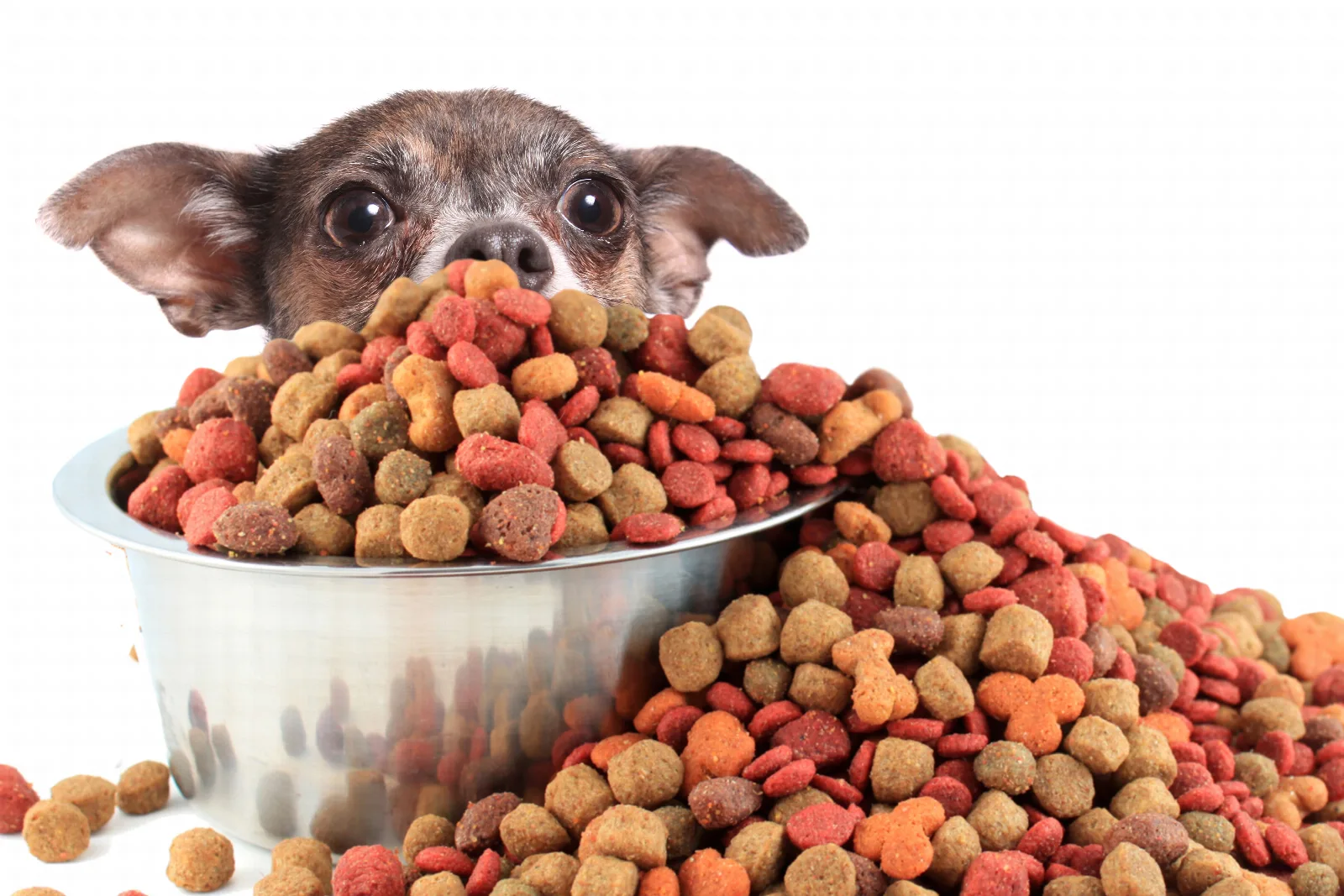
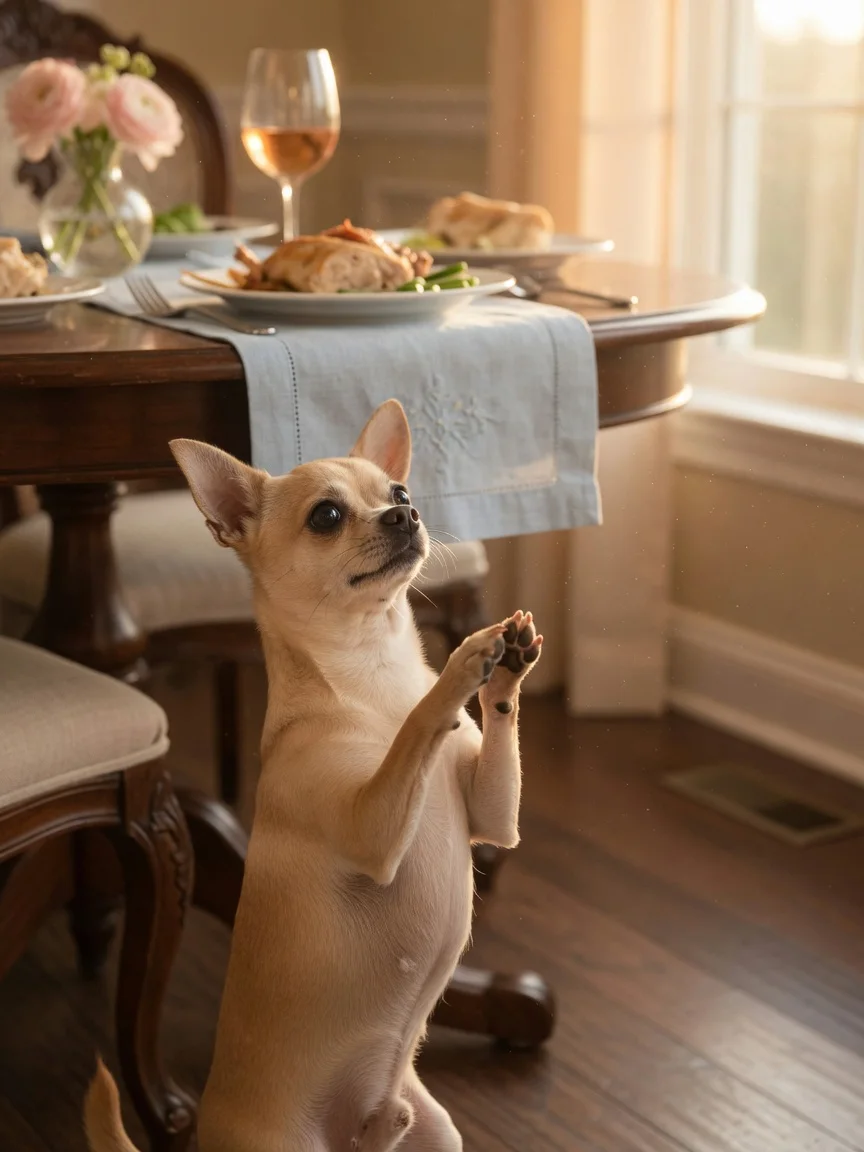
Chihuahua begging is the most professionally produced performance in dog ownership: the locked stare, the single trembling paw, the sigh of an animal who has, apparently, never once been fed. It works because the production values are spectacular and because somebody at your table has been funding it, possibly you, probably also the grandparent wing. The fix is not hardness of heart; it is closing the box office while paying the dog, generously, for a better show two feet away.
Quick answer: Begging is a straight reinforcement story, and intermittent funding, the occasional weak-willed Tuesday, builds the most persistent performers of all. Stop all payment from the table, from every human, permanently, and give her a paid mat station with a food toy during meals instead. Approved extras still go in her bowl away from the mealtime theatre, budgeted into the day's calories. Sudden, genuine ravenousness is a symptom pattern rather than a personality upgrade, and deserves a veterinary look.
Why the show runs, and what it costs
Begging is a straight reinforcement story: eyes met crust, crust arrived, behavior got funded, and intermittent funding, the occasional weak-willed Tuesday, builds the most persistent performers of all, the same slot-machine math as the whining guide. The costs are less funny than the show. Table food is the single biggest lever on chihuahua weight, where one rich scrap is a meaningful slice of a four-pound day's calories, the arithmetic our weight guide runs in full.
The table is also where the genuinely dangerous items live, chocolate, grapes, onion-heavy dishes, anything sweetened with xylitol, at doses that matter enormously at this size. And rich, fatty scraps are classic pancreatitis fuel, the ugly end of the gut-trouble spectrum from our vomiting guide. A dog who never eats from the table is protected from all three by one household habit.
The protocol: close the box office, open a better venue
Rule one: the table pays nothing, ever, to anyone's hand. Not once a week, not the last bite, not when she does the paw. Every exception is a season renewal for the show. This is a treaty every human signs, guests included, and the one-line brief for visitors is the same as ever: ignore the performance, however good it gets. Expect the extinction burst, the Oscar-worthy final week, and hold the line through it; the household that survives the encore owns a table-manners dog for a decade, per the reward-based framework in the AVSAB position statements.
Rule two: pay a better job at mealtimes. A dog needs something to do while you eat, so hire her: a mat or bed placed a polite distance from the table becomes the paid position. Teach it off-hours with the place-training steps from our first-cues guide, then deploy at dinner with a stuffed food toy or licking mat issued as the meal begins. She dines at her station while you dine at yours; everybody eats, nobody performs. For committed performers, a baby gate during the retraining weeks is honest management, not banishment.
Rule three: keep people-food in the diet only on your terms. The goal is not that she never tastes chicken; it is that chicken never comes from a plate, a hand at the table, or the performance. Safe extras go in the bowl or the food toy, away from the table, budgeted inside the treat allowance. The distinction dogs learn is not chicken versus no chicken; it is table versus station, and they learn it fast when the geography is consistent, a pattern the ASPCA's behavior resources lean on across half their catalog.
When begging is a symptom
The standard triage rule applies here too. A dog whose food obsession arrives suddenly, or ramps up alongside weight loss, thirst, or bathroom changes, is not performing; ravenous appetite has a medical differential, from parasites to the metabolic conditions in our diabetes guide, and it earns an exam before a training plan. Likewise the senior who begins raiding and begging out of character. The healthy performer begs at plausible hours with theatrical skill; the symptom begs around the clock with an edge of desperation, and the difference is worth a veterinary conversation.
When to call your veterinarian
Same-day call: a successful table raid involving chocolate, grapes, xylitol-sweetened anything, or an unknown quantity of rich food, per the emergency playbook. Routine appointment: sudden ravenous appetite, appetite changes with weight or thirst changes, or the diet-planning conversation for a reformed beggar. Training territory: the stare, the paw, the sigh, and the entire touring production, which the closed-box-office protocol retires within a few consistent weeks.
Frequently asked questions
How do I stop my chihuahua begging at the table?
Stop all payment from the table, from every human, permanently, and give her a paid mat station with a food toy during meals. Survive the dramatic final week of the old show, and the new arrangement becomes the house normal within a month.
Is it ever OK to give my chihuahua table scraps?
Safe foods, yes; from the table, no. The winning distinction is geographic: approved extras go in her bowl or food toy away from mealtime theater, budgeted into her daily calories. She keeps the chicken; the table loses the show.
Why is my chihuahua suddenly so hungry all the time?
Sudden, genuine ravenousness is a symptom pattern, not a personality upgrade: parasites, metabolic conditions, and medication effects all sit on the list, especially with weight or thirst changes alongside. Book the exam first; retrain the theater after the bloodwork clears.
The begging only works on my partner. What now?
Then the show has exactly one funder, and the treaty conversation is with them, not the dog. Every intermittent payer resets the clock for the whole household; the fix is a signed-by-everyone rule plus the mat station, which gives the soft-hearted human something legal to give.
Begging is a brilliant performance staged for a paying audience, and the kindest review you can write is a career change: close the table's box office, fund the mat-and-food-toy residency, and let her keep the drama for the one venue where it still pays, the training session.



No comments yet
Leave a comment