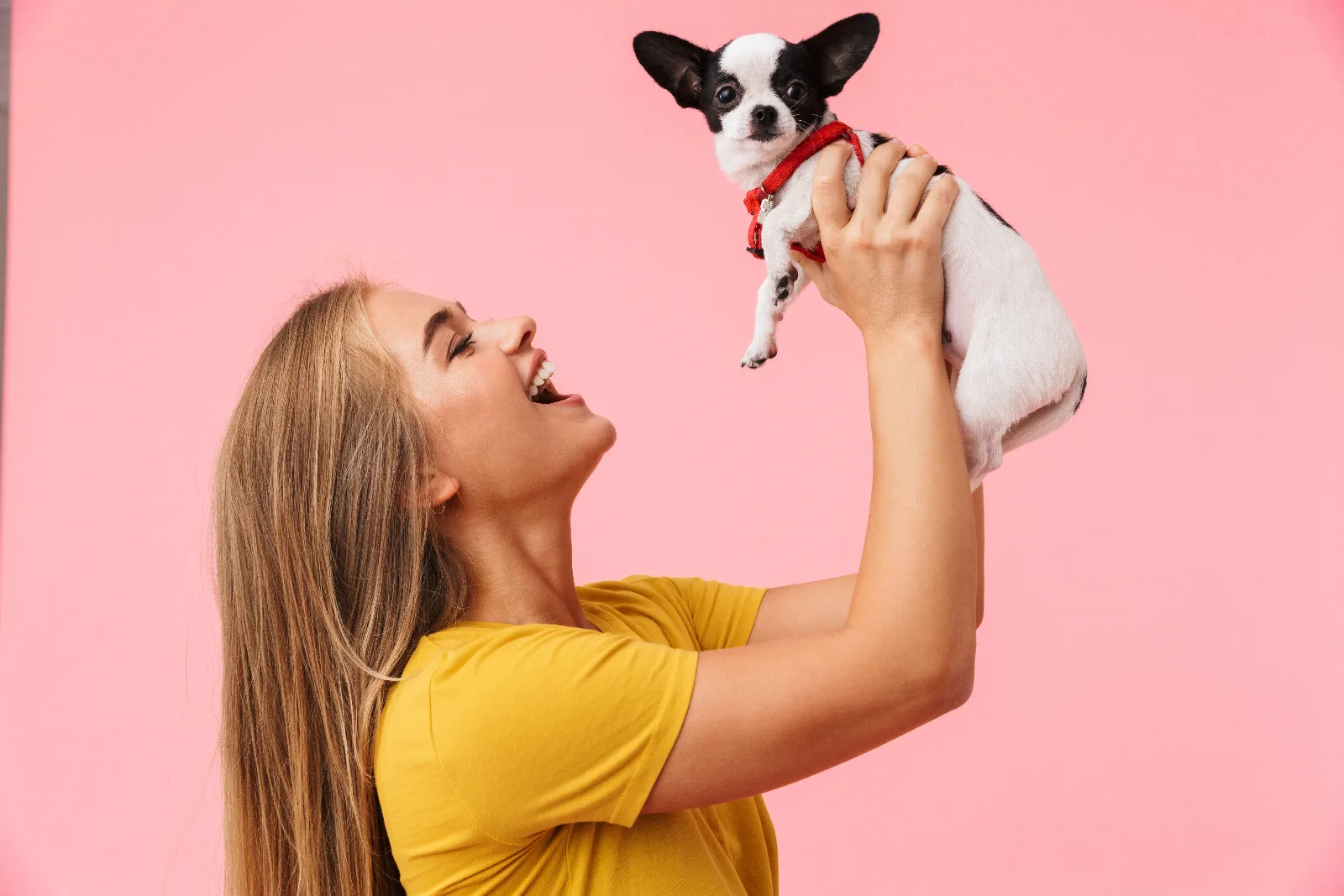
Owners ask does my chihuahua love me with a sincerity no retriever owner ever musters, partly because the breed's reputation runs to drama and partly because its affection dialect is easy to misread. So here is the translation guide: the signals that genuinely mean attachment, the ones that mean something else wearing affection's costume, and the two consent questions, kisses and being held, that decide whether the cuddling is mutual or merely tolerated.
Quick answer: Attachment in dogs shows up in elections rather than gestures: she follows you between rooms, settles where you settle, greets you with loose wiggles, sleeps in contact, and relaxes visibly faster when you are present. Soft staring is bonding and information-gathering; hard staring with a stiff body is a warning instead, and means something else entirely. The famous one-person preference is habit more than destiny, and it usually follows whoever runs the food, the training, and the adventures.
The love signals, decoded
The choice of you. Attachment in dogs is measured less in gestures than in elections: she follows you between rooms, settles where you settle, and relaxes faster when you are present. The breed votes with its whole body, the phenomenon our velcro guide maps, and the vote is the love letter.
The soft stare. Long, loose-faced eye contact between bonded dogs and their people is genuine social bonding behavior, and it feels exactly like what it is. Note the adjective: soft. A hard, still stare with a stiff body is dog for back off, which is why the whole face gets read, not just the eyes.
Contact engineering. The lean against your shin, the chin rest on your ankle, the pressed-against-you sleep, and the between-your-legs bunker from our sleeping guide: contact sleeping and casual touch are pack-family behavior, and a dog who chooses touch is telling you where she files you.
The greeting festival, the sigh, and the exposed belly. The full-body wiggle at your return, squeaks included, is attachment out loud. The contented sigh as she settles against you is the quiet version. The rolled-over belly is trust, with a footnote: in a relaxed, wiggly dog it is an invitation; in a tense one it is appeasement, please do not escalate, and the difference is the rest of the body. Licking, the breed's signature kiss, carries real affection along with its other agendas, itemized in our licking guide.
And yes, she reads you back. Dogs are demonstrably skilled at reading human emotional cues, tone, posture, expression, and chihuahuas, professional student-of-you animals, are at the top of the class; the sulking act after you scold and the appearing-at-your-elbow act on your bad days are the same skill pointed both ways. The behavior science behind all of this lives in resources like the ASPCA's behavior library, minus the greeting-card language.
The two consent questions
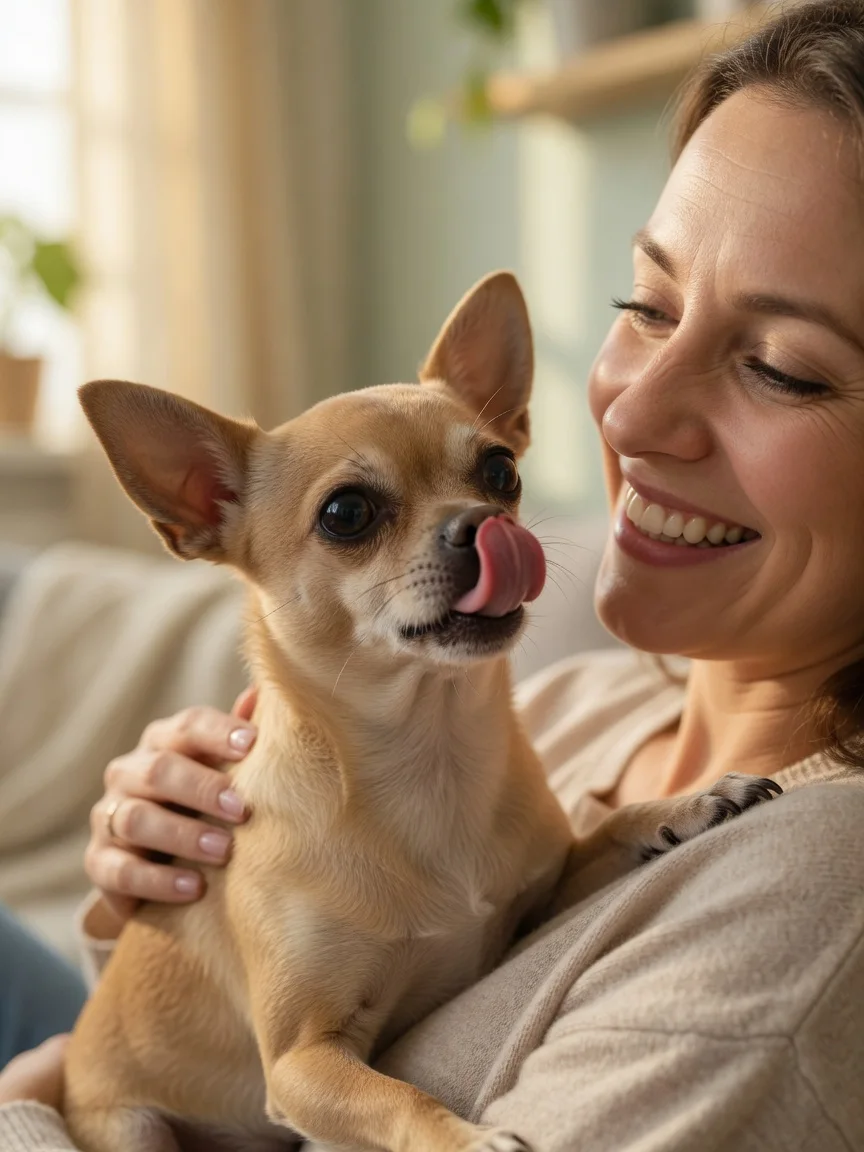
Do chihuahuas like kisses? Your face pressed to hers is primate affection, not canine, and dogs split on it: some lean in and reciprocate, others tolerate with lip-licks, turned heads, and whale eye, which is polite dog for please stop. Read her answer and honor it, and teach children that faces stay out of dog faces as a blanket rule, per the bite-prevention math in our biting guide.
Do chihuahuas like being held? Many love it, on their terms; none love being grabbed. The winning system is invitation-based: a pick-up cue, a proper two-hand lift, chest and rear supported, never armpit-scooping, and setting her down the moment she asks with wiggles or pushes. A dog whose transport consent is respected asks to be held more, not less, which is the general rule of this entire section wearing its practical clothes. A dog who suddenly stops tolerating touch she used to enjoy is a medical flag, pain hides there, per the watch-for guide.
When affection language is actually stress language
Three impostors are worth naming. Constant clinginess with panting and pacing is anxiety, not devotion, especially when it spikes around departures, the territory of our separation anxiety guide. Guarding you from your partner or other pets is possession wearing romance's costume, the subject of our jealousy guide. And sudden velcro behavior in a previously independent dog, like sudden withdrawal in an affectionate one, is a health question first; dogs move toward or away from their people when they feel unwell, and either change of baseline earns attention.
When to call your veterinarian
Same-day call: a dog who yelps or stiffens at touch she used to seek, or sudden withdrawal from all contact. Routine appointment: marked baseline changes in affection either direction, especially in seniors. No call needed: the lean, the stare, the sigh, the shadow, and the entire wiggling greeting festival, which are working exactly as designed.
Frequently asked questions
How do I know my chihuahua loves me and is happy?
Look for elections and ease: she chooses your room, greets you with loose wiggles, sleeps in contact, eats well, plays, and relaxes visibly in your presence. Happy is a baseline, not a trick; a dog who is calm, curious, and affectionate on an ordinary Tuesday is telling you everything.
Why does my chihuahua stare at me?
Soft staring is bonding and information-gathering, you are the schedule, the weather, and the treat forecast in one face. Hard staring with a stiff body is a warning to respect, and staring at you then at the cupboard is neither love nor threat; it is a work order.
Do chihuahuas really bond to just one person?
They famously favor a primary person, usually whoever runs food, training, and adventures, but one-person is habit more than destiny: when other household members take over meals, walks, and games, the portfolio diversifies. The fix for a one-person dog is employment, not jealousy.
Does my chihuahua know when I am sad or angry?
She reads your tone, posture, and face with genuine skill, and responds to both, which is why she appears at your elbow on hard days and makes herself scarce mid-argument. What she cannot do is connect your anger to something she did an hour ago, the guilty look is appeasement to your signals, not confession.
The love was never in question; only the dialect was. She writes it in lean and stare and shadow, edits it with consent when you listen, and files you, permanently, under safe. Read it back to her in walks, warmth, and respect for the small body's opinions, and the conversation runs happily for fifteen years.

No comments yet
Leave a comment