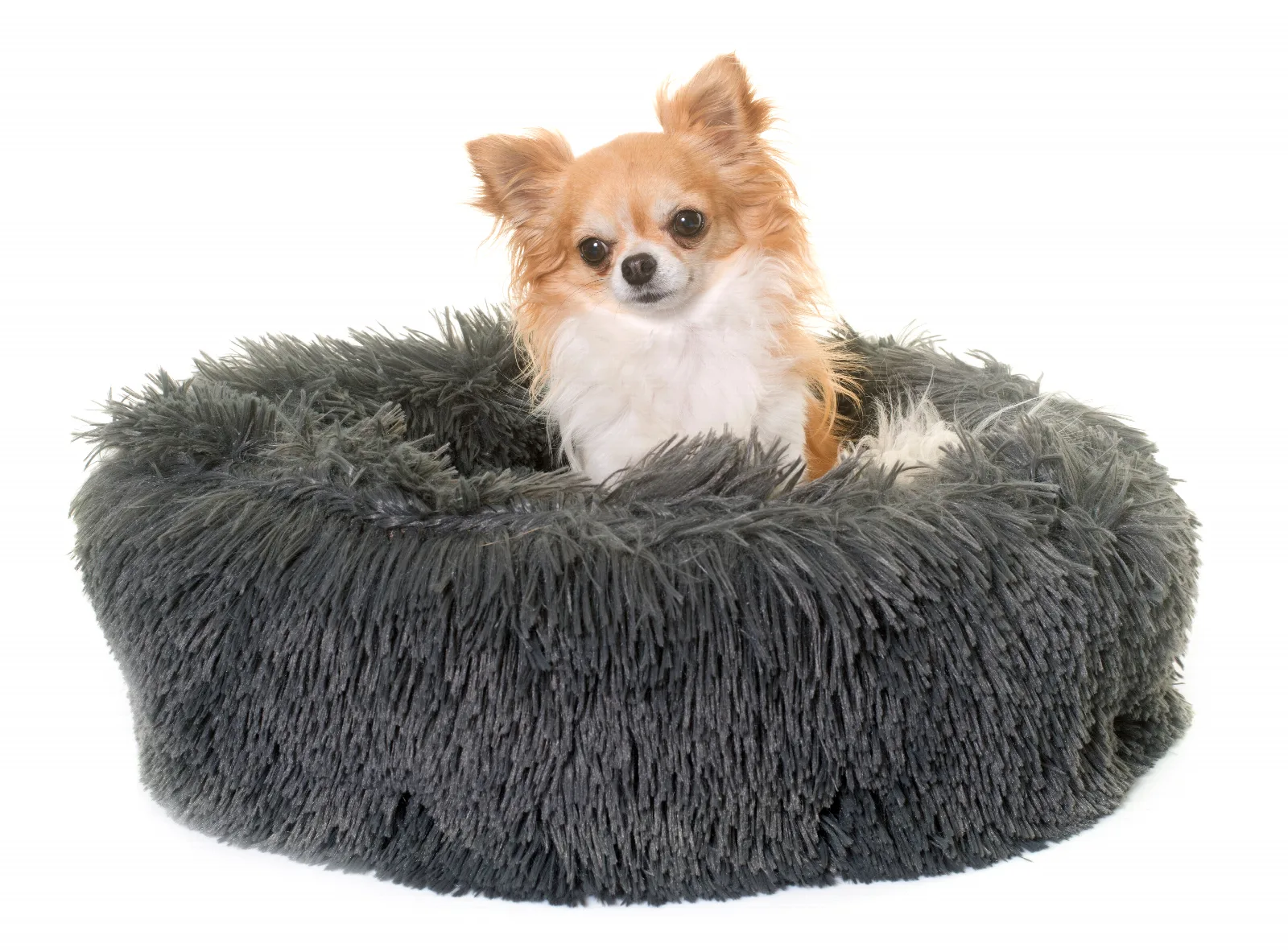
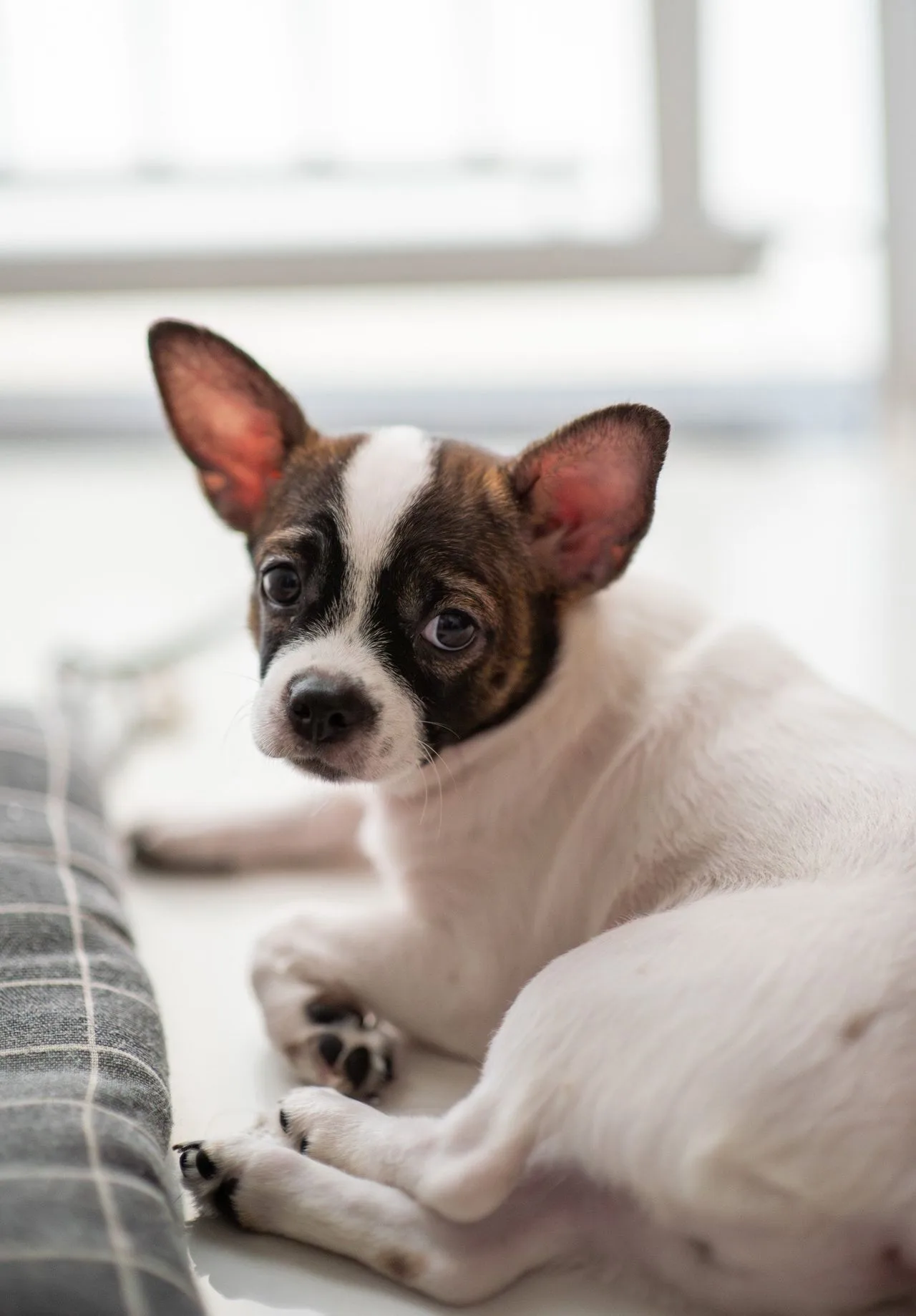
Somewhere tonight, several million chihuahuas will conduct the same survey of the available bed, an acreage of pillow, a warm human shoulder, an entire second half of a queen mattress, and file into the canyon between their person's legs like it is assigned seating. The short answer to why: it is the warmest, most walled, most you-scented location in the house. The longer answer says something nice about your relationship and something practical about your options.
Quick answer: Warmth, security, and attachment, in that order: the channel between your legs is the warmest, most walled, most you-scented spot in the house, and sleeping there in full contact means she trusts you. It is harmless mutual comfort unless your own sleep suffers. To move her, beat the valley at its own game with a warm, walled bed on or beside yours, treats for settling there, and calm, boring returns every time she relocates.
The three-part appeal of the leg valley
Heat, first and always. Human legs are two long radiators, and the channel between them holds a microclimate a tiny, fast-cooling dog can feel from across the room. The same physics drives the breed's blanket obsession, covered in our burrowing guide, and it is why the habit intensifies every winter.
Walls, second. Dogs sleep best with something at their back, and the valley offers pressure on both sides, a den made of person. For an animal this size, enclosed beats exposed every night of the week; deep sleep requires not being on watch, and walls stand the watch for her.
You, third and fondest. Dogs are contact sleepers by heritage; puppies sleep in piles, and many adults keep the preference for sleeping against packmates. Choosing your legs specifically, over all other warm walled options, is attachment behavior: full-contact trust from a species that only sleeps deeply where it feels safest, a theme the ASPCA's behavior resources treat as the ordinary social fabric of living with dogs. It pairs with the daylight shadowing described in our velcro chihuahua guide: same bond, nighttime edition.
One myth to retire on the way past: the spot has nothing to do with dominance or guarding you from your partner. A dog between your legs is seeking warmth and safety, not annexing territory; the growl-at-partner problem, where it exists, is a separate, trainable issue with its own playbook.
Keep it or move it: both are legitimate
If everyone sleeps fine, there is nothing to fix; enjoy one of the breed's better perks. The habit earns intervention only when it costs someone sleep, pins you into positions your knees regret, or creates friction in a shared bed. The relocation plan is kindness plus payroll, never punishment.
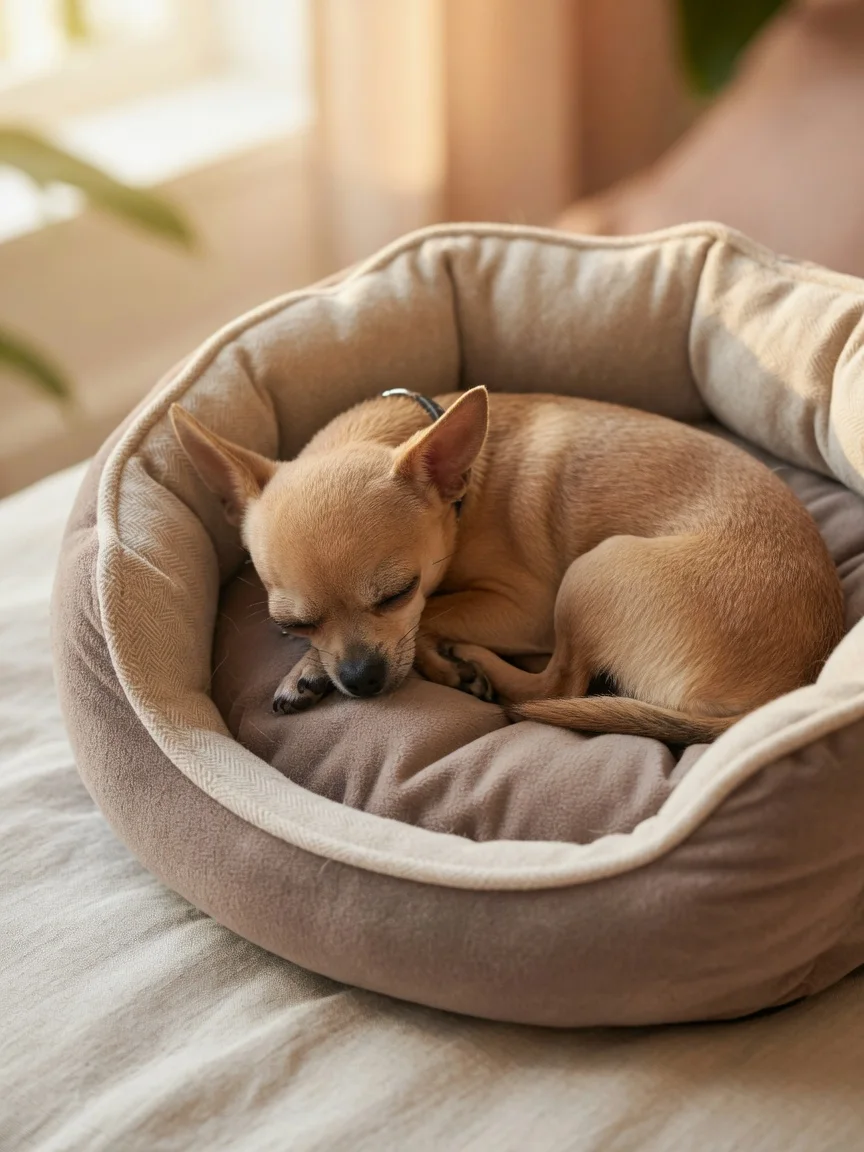
Build a rival worth choosing. A small covered or bolster bed on the mattress beside you, or a warmed bed beside the bed, attacks the actual motivators: warmth and walls, minus your legs. A safe pet-heating pad or a warmed microwavable disc under the blanket does more persuading than any command.
Pay the new address. Introduce the spot with treats at bedtime, reward settling there, and return her calmly and boringly each time she recolonizes the valley, then reward the resettle. The first nights involve repetition; the currency is consistency, per the reward-based approach the AVSAB position statements endorse for exactly this kind of everyday habit change.
Mind the descent. Any dog sharing tall furniture needs safe geometry: a ramp or steps beat a four-pound dog leaping off a bed twenty times her height, a point our kneecap guide makes clinically. The wider bed-sharing decision, including the research on human sleep quality, gets its own treatment in the bed-sharing guide.
When the habit changes meaning
As ever, read changes rather than the habit. A dog who suddenly must be in contact at all times, pants and paces at night, or cannot settle anywhere may be anxious or uncomfortable rather than affectionate; sudden clinginess is one of the quiet ways pain and illness announce themselves. New nighttime restlessness in a senior, in particular, is a veterinary conversation, not a training project.
When to call your veterinarian
Same-day call: night restlessness with panting, pacing, or crying, or a sudden inability to get comfortable in any position. Routine appointment: a marked new spike in contact-seeking, especially in a senior or alongside appetite or energy changes. Training territory: the classic, lifelong leg-valley preference of a relaxed dog, which is yours to keep or relocate as bedroom politics require.
Frequently asked questions
What does it mean when my chihuahua sleeps between my legs?
Warmth, security, and attachment, in that stack: the spot is the warmest walled location in the house, and she trusts you enough to sleep in full contact. It is a compliment with excellent insulation.
Is it bad to let my chihuahua sleep between my legs?
Not inherently; if your sleep and hers are fine, it is a harmless mutual comfort. Consider a change if you sleep restlessly, if turning over becomes a hostage negotiation, or if she leaps off the bed unsupervised; falls, not affection, are the real risk in the arrangement.
How do I get my chihuahua to sleep in her own bed?
Beat the valley at its own game: a warm, walled bed on or beside yours, treats for settling there, calm boring returns each time she relocates, and a week of consistency. You are not banning contact; you are moving the den six inches.
Why does my chihuahua burrow down there under the covers?
Same drives, plus roof: warmth, pressure, and enclosure make the covered leg valley the five-star suite. The safety notes, breathable bedding and the check-before-you-flop rule, live in our burrowing guide and apply doubly when the den is your duvet.
The leg valley is the whole breed in one habit: a heat-seeking, wall-loving, person-devoted animal solving three needs with one parking spot. Keep it if you love it, relocate it kindly if you must, and take the compliment either way.

No comments yet
Leave a comment