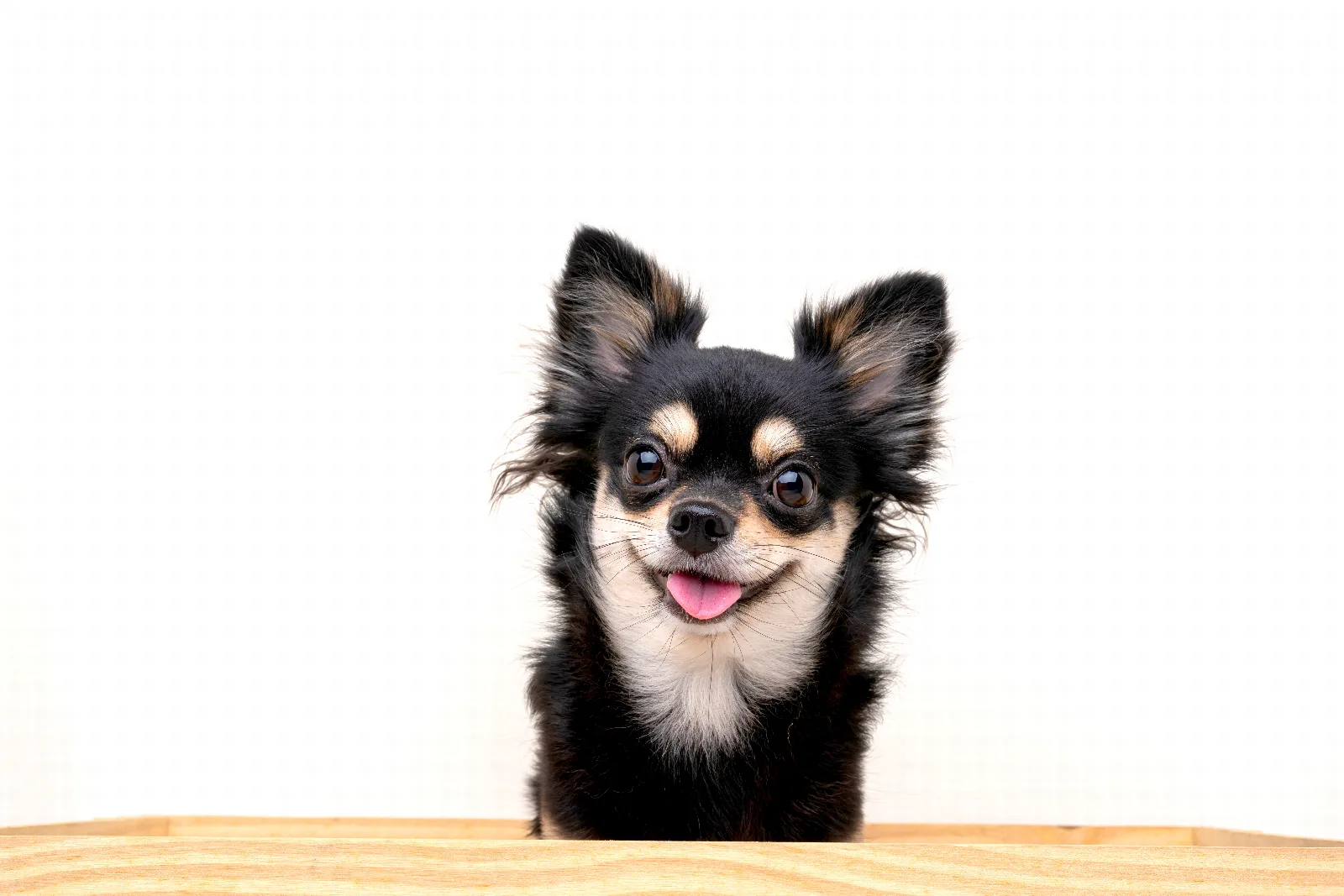
Chihuahuas arrive from the factory with a full vocal register: the whine, the whimper, the squeak, the moan, the theatrical sigh, and the air-raid yelp. Owners tend to ask one question, how do I make it stop, when the useful question comes first: which sound is this? Because one of these vocals is a reinforcement loop you are funding, several are emotions worth addressing at the source, and one is a medical flag that outranks everything else on this page.
Quick answer: Sort the sound before trying to stop it. A sharp yelp when your chihuahua is picked up, touched along the back or neck, or landing off furniture is pain until proven otherwise, and in this breed the shortlist is specific: slipping kneecaps, neck and back trouble, and dental pain. That one earns a same-day exam. Attention and food whining is a different animal, a reinforcement loop you are funding, and it ends when every human stops paying it and rewards a silent sit-to-ask instead.
The medical flag first: the yelp
A sharp yelp when your chihuahua is picked up, touched along the back or neck, or landing off furniture is pain until proven otherwise, and in this breed the shortlist is specific: slipping kneecaps, covered in our patellar luxation guide, neck and back trouble, and dental pain.
Random yelps with no touch at all, especially repeated, belong on the same list. This is not a training topic; it is a same-day call, and the sooner it is examined the cheaper it usually is. The rest of this article assumes a dog whose yelp has been ruled out or never appeared.
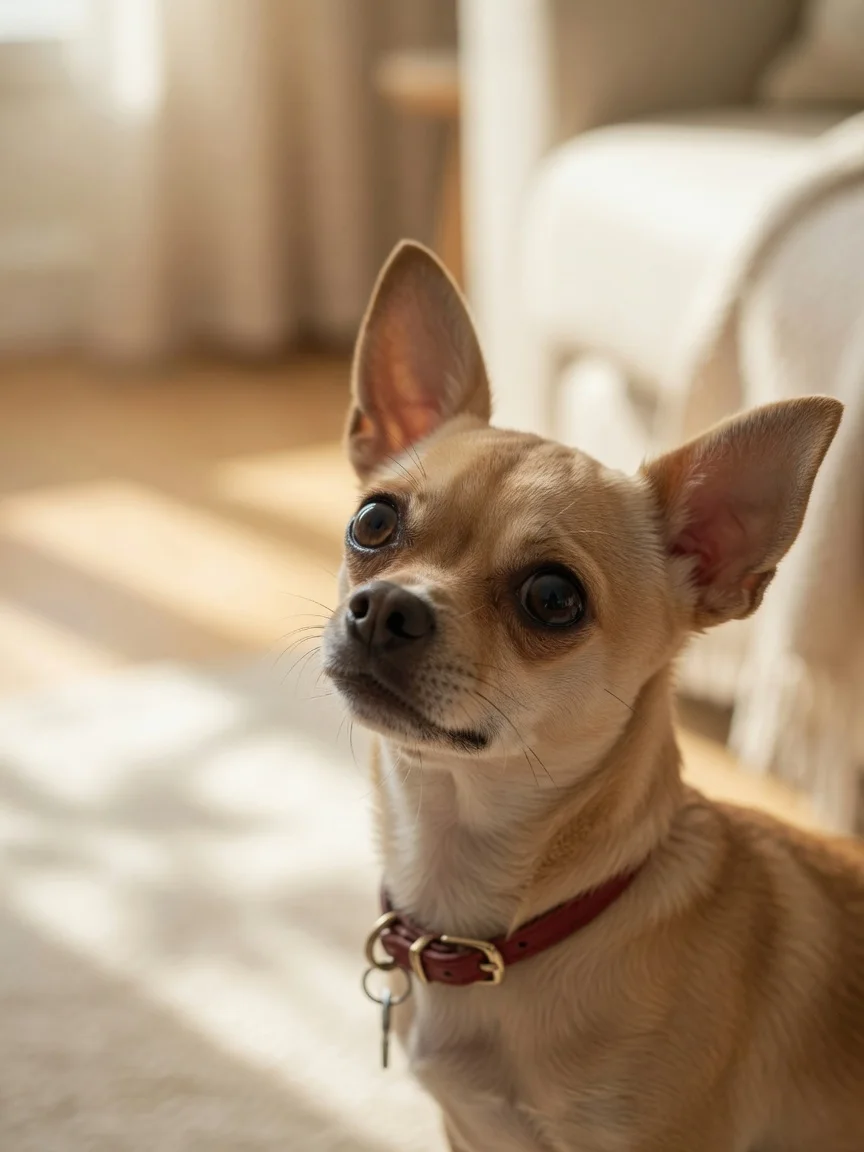
The demand whine, and who is paying for it
The classic chihuahua soundtrack, deployed at the dinner table, the couch edge, the bedroom door, is a straightforward economic instrument. Whining produced attention, laps, or chicken at some point; behavior that pays repeats; and a breed this attentive learns payment schedules with terrifying speed. The ASPCA's whining guide sorts the types, and the demand variety has a two-part fix.
Part one: the whine stops paying, completely, from every human, because intermittent payouts train the most persistent gamblers. Part two: quiet gets rich. Reward silence before the whine starts, teach a sit-to-ask default for everything she wants, and pay that generously. Expect an extinction burst, the louder final offer, before the habit fades; the household that survives that week wins the year, per the reward-based framework in the AVSAB position statements.
The emotional vocals
Excitement squeaking at greetings and before walks is arousal overflow: harmless, shrinks when arrivals are kept boring and the leash goes on only once four paws are on the floor. Stress whimpering, paired with lip-licking, pacing, or hiding, is information about the environment, fireworks, visitors, the vacuum, a new baby, and it is addressed with distance and comfort rather than discipline; our fearful-dog guide carries that plan.
Alone-time crying is its own subject with its own article, the home-alone guide, and continuous vocalizing during absences is one of the panic markers in the separation anxiety guide. And the moan-groan as she settles into a blanket is, delightfully, nothing: contentment audio, the small-dog equivalent of the sigh you make sitting down after a long day.
Night crying: the puppy edition
A new puppy crying at night is not manipulating you; she is a baby animal alone for the first time in her life. The plan: a crate or pen beside the bed for the early weeks, so she can hear and smell you; a warm, den-like setup, per the burrowing guide; a late potty trip and calm settling routine; and boring, minimal-interaction responses to genuine night needs. Puppies who learn nights are safe stop announcing them, usually within a couple of weeks, and the bedside arrangement can then migrate wherever the household prefers.
When to call your veterinarian
Same-day call: yelping when lifted or touched, random repeated yelps, crying paired with shaking, hiding, appetite loss, or any bathroom change, or a sudden increase in vocalizing in a senior, where discomfort and cognitive change lead the list. Routine appointment: a dog whose whining resists the payment-freeze plan for weeks, since low-grade discomfort hides behind stubborn behavior more often than owners expect. Training territory: the demand whine, the excitement squeak, the settling moan, and the puppy's first noisy nights.
Frequently asked questions
Why does my chihuahua cry when I pick her up?
Treat that as pain first, every time: kneecaps, back, neck, or somewhere subtler. Book a same-day exam and change how she is lifted meanwhile, one hand under the chest, one supporting the rear, no scooping by the armpits. If the clinic clears her, then a handling-comfort training plan takes over.
How do I stop my chihuahua whining for attention and food?
Freeze all payment for the whine, from every human including the soft-touch one, and pay silence and a sit-to-ask instead. Ride out the loud week where she tests the new economy. Consistency is the entire mechanism; one lapse funds another month.
Why does my chihuahua whine while carrying a toy around?
A quirk with several benign drivers: comfort-seeking, arousal with nowhere to put it, and in unspayed females sometimes hormonal nesting behavior after a heat. If it is seasonal, intense, and paired with nest-building, mention it at the clinic; otherwise it is one of the breed's stranger charms.
Do chihuahuas cry actual tears when sad?
No; dog emotion comes out as sound and body language, not weeping. Watery eyes are a medical matter, covered in our eye guide, and worth a look if staining or discharge comes with them.
The register sorts cleanly once you listen for type: pain gets the clinic, feelings get the fix at the source, contentment gets to stay, and the demand whine gets a hiring freeze. What remains is what the breed intended all along: a small dog with opinions, expressing them at a volume the household actually chose.

No comments yet
Leave a comment