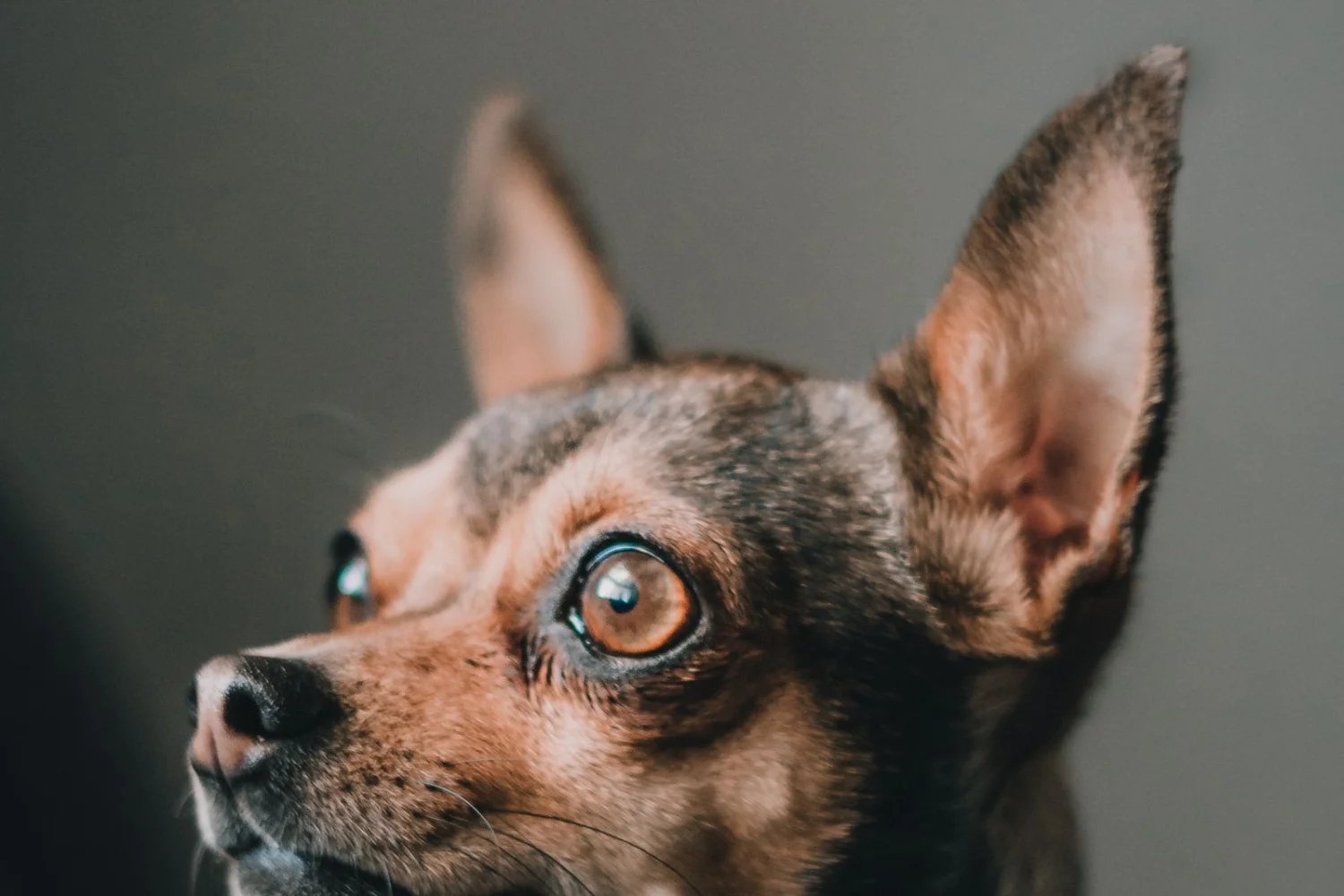
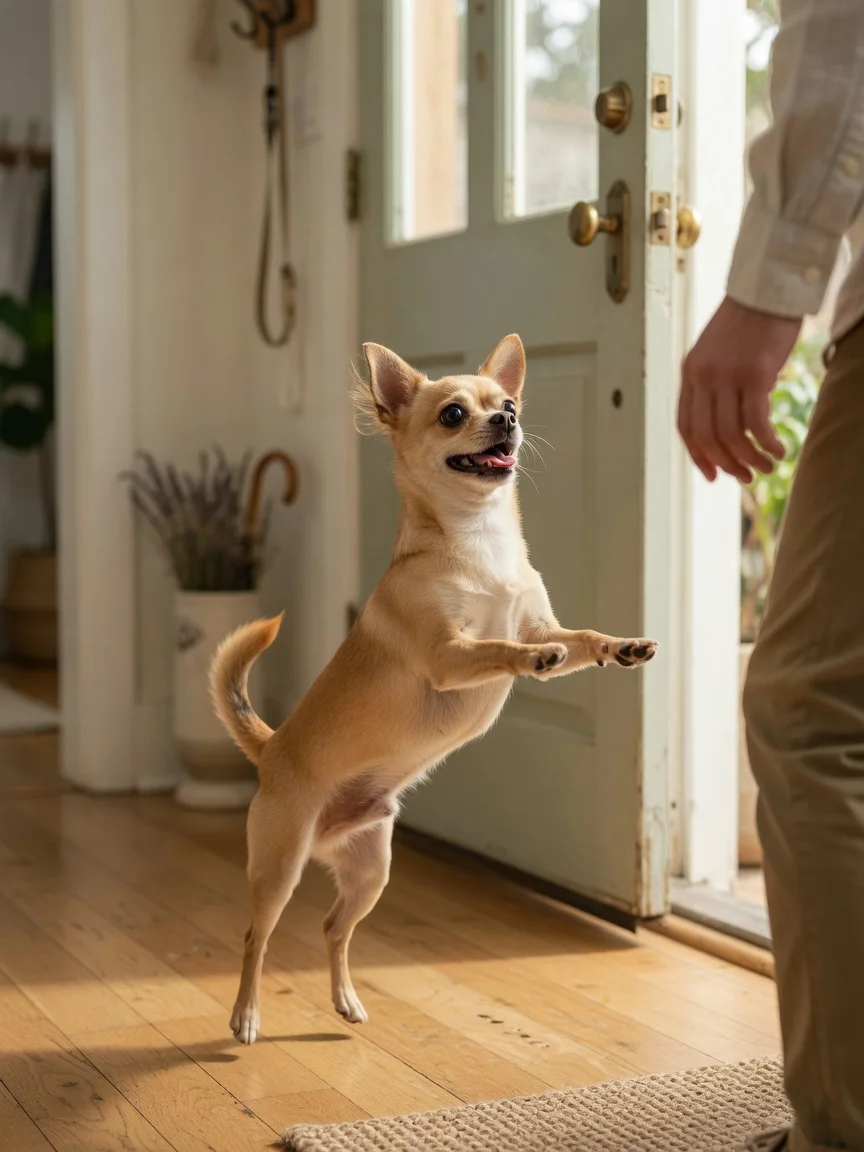
Nobody minds when four pounds of enthusiasm bounces off a shin, which is exactly why the habit exists: chihuahua jumping gets laughed at, cooed over, and picked up, a payment plan no dog on earth would decline. The case for retraining it anyway is threefold: guests in tights and toddlers underfoot mind more than you do, a dog who orbits at ankle height gets stepped on, and, the quietly medical reason, a lifetime of spring-loaded vertical leaps is exactly the workload this breed's kneecaps did not order. Here is the fix, which is cheerful, food-based, and mostly about paying a different behavior.
Quick answer: Jumping is greeting behavior aimed at the only part of you she can reach, funded by the oldest reinforcement loop in dog ownership: jump, get attention. Even pushing and scolding pay it. Move the wages to four-on-the-floor and a sit, be boring until paws land, and manage guests with a leash or gate plus a treat jar at the door. Never knee a chihuahua, which is a real injury risk at this size, and remember that repeated vertical leaps load the breed's vulnerable kneecaps.
Why she jumps, and why yelling misses
Jumping is greeting behavior aimed at the only part of you she can reach, amplified by the oldest reinforcement loop in dog ownership: jump, get attention. Even the annoyed response, pushing, scolding, the knee-block folklore, is attention, and to an excited dog it reads as the game continuing. The ASPCA's behavior resources file jumping under exactly this heading: a paid behavior that fades when the payroll moves, not when the volume rises. So the plan has two halves, and both are about wages, per the AVSAB's reward-based standards.
The four-on-the-floor economy
Half one: jumping stops paying, from everyone. When she jumps, you become architecture: no eye contact, no hands, no words, turn slightly and wait. The moment all four paws hit the floor, the lights come back on, attention, a treat delivered low, the greeting she was after. Timing is the entire skill; pay the floor within a second and she connects the dots in days. And the household treaty matters more than technique, because one person who pays the jump keeps the habit on retainer for everyone.
Half two: teach a better greeting and make it rich. A sit-for-greeting, built from the sit in our first-cues guide, turns arrivals into a paid position: walk in, wait for the sit, pay at floor level, greet warmly. Deliver all greeting-time treats at chihuahua altitude, since treats held at chest height are a jumping invitation with a wage attached. For the dog who mostly wants up, teach an invitation system: jumping never earns a lift, but a sit followed by your pick-up cue does, which keeps laps in the economy without keeping the pogo.
The guest protocol
Guests are jackpot machines with poor discipline, so manage the scene while training runs: leash on before the door opens, or a baby gate buying distance, and a treat jar by the door with a one-line brief, ignore her until she sits, then treat from the jar, low.
Rehearse with your most obedient friend before trusting the general public, and keep arrivals boring from your side too, the same emotional-thermostat rule as the home-alone guide's exits. For toddlers and frail visitors, the leash is not optional; a bounced chihuahua and a knocked toddler are both preventable with three feet of management.
The kneecap footnote that is not a footnote
Repeated vertical jumping, on people, off sofas, at counters, is real load on the breed's signature joint problem, patellar luxation, and on long spines generally; our patella guide carries the clinical detail. Retraining greetings to floor level is therefore a joint-protection program wearing a manners costume, and it pairs with the ramp-and-steps furniture policy from the bed guide. A dog who suddenly stops jumping she used to do, or yelps on landing, flips this article's premise: that is a same-day veterinary question, not a training win.
When to call your veterinarian
Same-day call: yelping on jumps or landings, a skip-hop gait after jumping, or sudden reluctance to jump at all. Routine appointment: the kneecap conversation at the annual exam for any enthusiastic jumper. Training territory: the greeting pogo itself, which the four-on-the-floor economy retires in two to four consistent weeks.
Frequently asked questions
Why does my chihuahua jump on everyone?
Because greeting faces is the goal, ankles are what she can reach, and jumping has been paid in attention since puppyhood. Move the wages to four-on-the-floor and a sit-for-greeting, and the same enthusiasm reroutes itself within weeks.
Should I knee my dog or push her off when she jumps?
No: at chihuahua size a knee is a genuine injury risk, and pushing reads as play, paying the exact behavior you are fining. Being boring until paws land, then paying the floor, outperforms every physical correction and carries none of the risk.
How do I stop jumping on guests specifically?
Manage first, train second: leash or gate at the door, treat jar and one-line script for visitors, pay the sit at floor level, and rehearse with cooperative friends. Guests undo training only when they are allowed to; the jar and the script make compliance easy.
Is jumping bad for chihuahuas physically?
Repeated vertical leaping and hard landings load the breed's vulnerable kneecaps, so floor-level greetings, ramps for furniture, and invitation-based pick-ups are joint protection as much as manners. A dog who yelps on jumps or suddenly declines them needs the clinic before the training plan.
Jumping is enthusiasm with a bad payment plan. Freeze the old wages, fund the sit, arm the guests with the jar, and the greeting stays exactly as delighted, four paws lower and one set of kneecaps safer.

No comments yet
Leave a comment