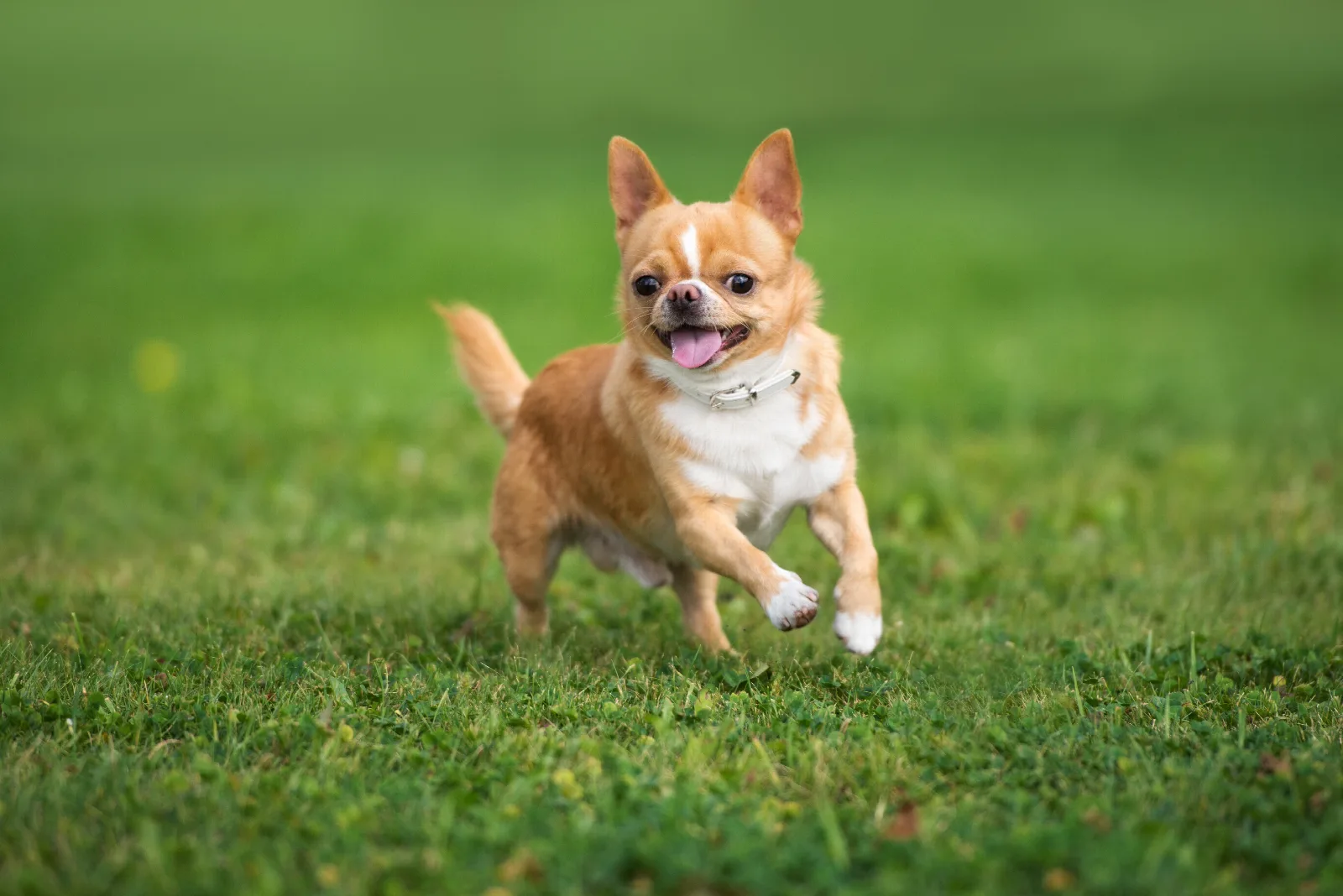
Nobody is born knowing how to walk on a string attached to their chest, and nothing in a chihuahua's four pounds makes the lesson optional: the difference between a daily joy and a daily wrestling match is a week or two of actual teaching. Here is the whole course, from hardware to loose leash, plus the three classic chihuahua walk problems, the puller, the planter, and the sidewalk critic, each with its fix.
Quick answer: Leash pressure belongs on the chest and never the neck, because the small-dog windpipe is soft enough that collar pulling contributes to the goose-honk cough of tracheal collapse. Most healthy adults thrive on twenty to forty minutes a day split into two outings, with sniffing counted as exercise. Pulling persists because it has always worked, and red-light green-light reverses the payout quickly at chihuahua strength. A dog who sits down and refuses needs diagnosis first: cold, fear, soreness, and negotiation each have different fixes.
Hardware first, and it is a harness
The collar-versus-harness question has a clinical answer in this breed: leash pressure belongs on the chest, never the neck, because the small-dog windpipe is soft enough that collar pulling contributes to the goose-honk cough of tracheal collapse, as the Merck Veterinary Manual's tracheal chapter lays out and our harness guide covers in full.
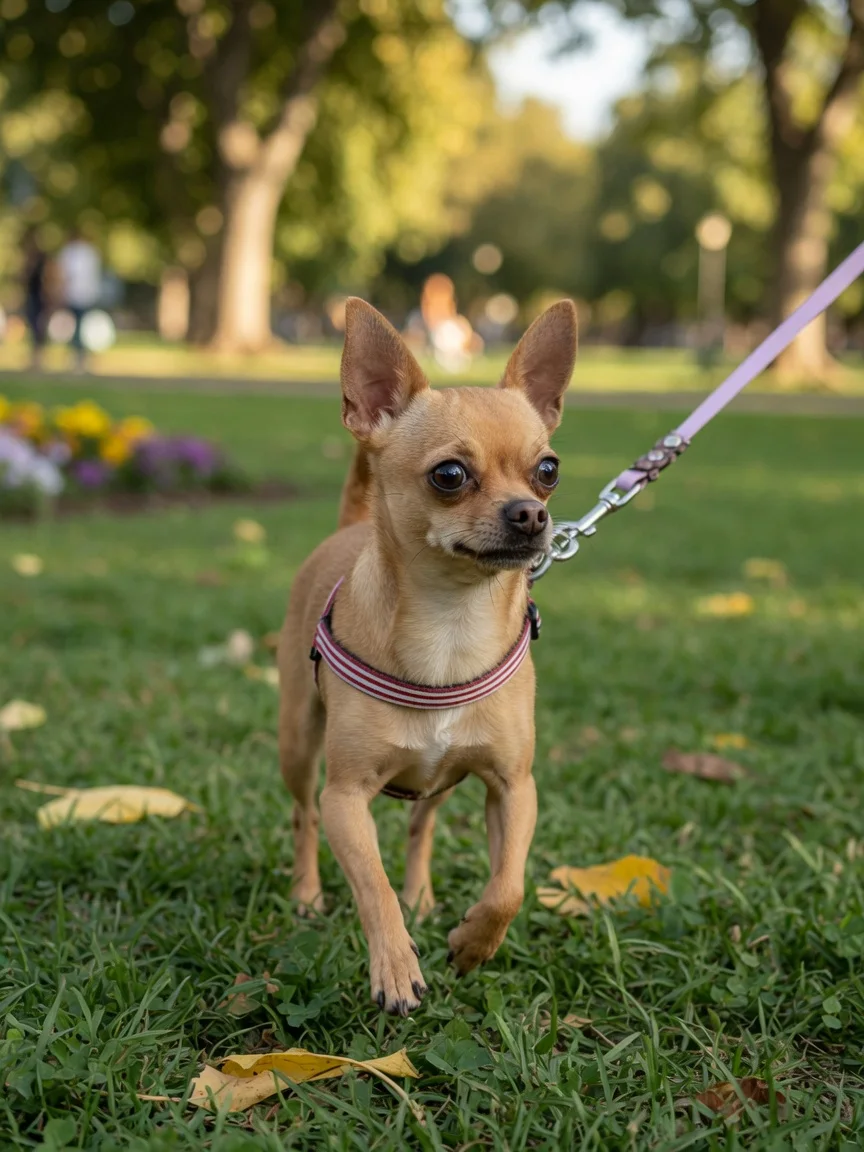
Fit a Y-front or step-in harness snug enough to slip two fingers under, pair it with a light four-to-six-foot leash, and skip retractable leashes for training entirely; they teach pulling for a living. Introduce the harness indoors like a trick: harness appears, treats rain, harness on for a minute, more treats, off, done. Two days of that and the harness predicts joy instead of octopus wrestling.
The loose-leash game
Loose-leash walking is one rule taught two ways. Green light: when the leash is slack and she is roughly with you, treats arrive at your seam, at chihuahua altitude, delivered low so she is not leaping for wages. Start indoors down a hallway, then the yard, then the quiet end of the street, paying every few steps at first and stretching the interval as she gets the job.
Red light: the instant the leash tightens, you stop, become furniture, and wait; slack returns, walking resumes. No yanking, no leash pops, ever, per the AVSAB's reward-based standards, and no lectures; the leash itself teaches that tight equals stationary and slack equals the world continues. Chihuahuas, being small, reach the end of a leash fast and learn this rule equally fast when the humans are consistent.
Let the walk be a walk, too: sniffing is not dawdling, it is the entire point from the dog's side, the mental workout that makes a fifteen-minute chihuahua walk worth an hour of marching. Build in sniff time on purpose and the pulling shrinks on its own.
The planter: when four paws say no
The chihuahua who stops and refuses to move is communicating, and dragging her teaches only that the leash is a winch. Decode first: Cold? This breed votes against winter sidewalks honestly, per our temperature guide; a sweater changes many verdicts. Scared? New routes, loud roads, and big-dog yards produce freezes; retreat to an easier route and rebuild range gradually, the confidence work from our fearful-dog guide.
Tired or sore? Tiny legs cover four strides to your one, and a dog who plants late in walks or after jumps may be asking about her knees, our patella guide's territory. Or simply negotiating? The dog who plants only on the homeward leg is telling you the walk pays better than the couch; a treat scattered ahead, a cheerful jog cue, and shorter loops fix the standoff without a tug of war.
The sidewalk critic and the big-dog question
Barking and lunging at passing dogs is fear economics at leash length, covered fully in our aggression guide; the walk-sized version is distance plus cheese, cross early, feed through the pass, shrink the gap over weeks. And uninvited big-dog contact is a genuine safety matter at this size: body-block cheerfully, ask owners to leash up, and pick her up decisively when a loose dog approaches, without drama and without apology. A four-pound dog's chauffeur is allowed to make executive decisions.
When to call your veterinarian
Same-day call: coughing or honking on leash pressure even in a harness, collapse or wobbliness on walks, or a planted dog who also limps or yelps. Routine appointment: exercise tolerance that shrinks over weeks, or paw, nail, and pad issues that make sidewalks unpleasant. Training territory: pulling, planting, greeting chaos, and critic duty, all of which respond to the games above inside a few consistent weeks.
Frequently asked questions
How long should I walk my chihuahua?
Most healthy adults thrive on twenty to forty minutes daily, split into two outings, with sniffing counted as exercise; puppies and seniors scale down. Watch the dog rather than the clock: a chihuahua who finishes walks cheerful and naps well is getting the right dose.
Why does my chihuahua pull when she is so small?
Because pulling has always worked: tight leash, forward progress. The red-light green-light rule reverses the payout, and at chihuahua strength the retraining is fast once every walker in the household enforces the same physics.
My chihuahua refuses to walk and just sits down. What do I do?
Diagnose before training: cold, fear, soreness, or negotiation each have different fixes, from a sweater to an easier route to a vet check to a treat tossed ahead. The one universal rule is no dragging; a winched dog learns to hate the leash, not to walk on it.
Are retractable leashes OK for chihuahuas?
Not for training, and honestly not great after: they teach constant tension, they fail at exactly the wrong moments, and thin cords tangle tiny legs. A light fixed leash for streets and a long line for sniffy field time cover everything the retractable promised, safely.
A trained walk is the best daily medicine this breed has: exercise, sniff-work, confidence, and one-on-one time in a single fifteen-minute package. Fit the harness, play the two-light game, respect the planter's message, and the leash stops being equipment and becomes an invitation.

No comments yet
Leave a comment