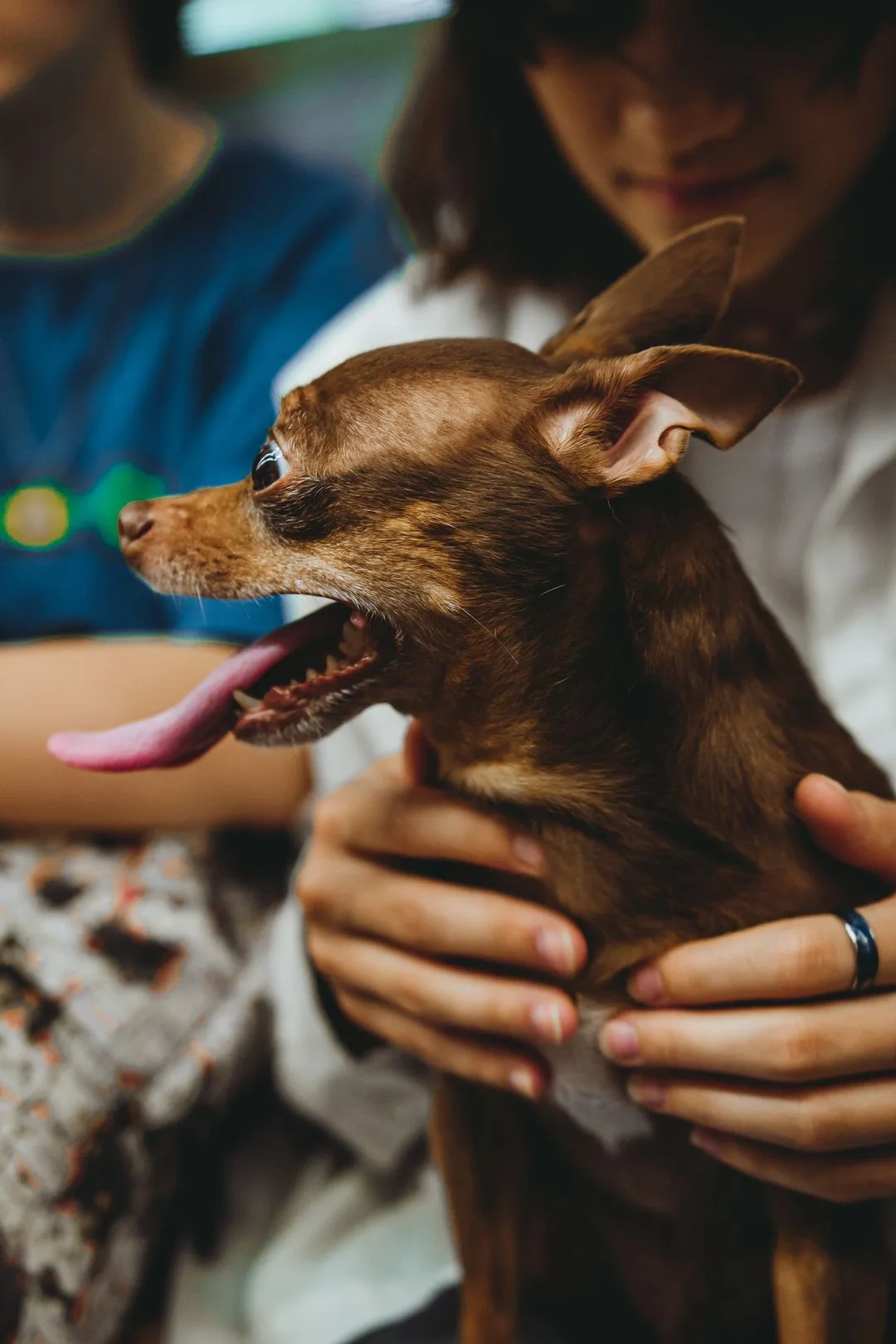
Ask the internet and the chihuahua is dogdom's resident villain: the ankle piranha, the purse shark, the four-pound rage machine. Ask a behavior professional and you get a different answer: chihuahuas are not born meaner than other dogs. What they are is small, expressive, frequently under-trained, routinely frightened by a world scaled for giants, and famously excused from the rules every Labrador has to follow. Stack those five facts and you get the reputation. Unstack them, which is what this article is for, and you usually get a different dog.
Quick answer: Chihuahuas are not born meaner than other dogs. Nearly everything labeled chihuahua aggression is defensive, barking, lunging, and snapping to make a frightening thing move away, from a two-kilogram dog whose earlier warnings were ignored in a world scaled for giants. Stranger aggression is almost always fear plus a learned strategy, and the fix is distance plus food rather than correction. Guarding you or the couch is a different flavor with its own protocol, built on invitation-based access.
Where the reputation actually comes from
Fear does most of the shouting. Nearly everything labeled chihuahua aggression is defensive: barking, lunging, snapping to make a scary thing move away. Now run the world from four pounds: every stranger is a moving building, every toddler an unpredictable crane, every big dog a genuine mortality question. A frightened dog with no exit learned long ago that a loud offense buys space. That is not character; it is strategy, and it is trainable, as the ASPCA's aggression overview lays out across breeds of every size.
The double standard does the rest. A growling shepherd gets a trainer; a growling chihuahua gets a chuckle and an Instagram caption. Behaviors that would trigger intervention at seventy pounds get rehearsed daily at four, and rehearsed behavior becomes the dog.
Add the carry-everywhere habit, which removes her chances to negotiate the world on her own feet, and skipped socialization, because she was small enough to just scoop up instead, and the file writes itself: undersocialized, over-protected, fluent in threat display, and rewarded for it since puppyhood. Our temperament guide covers how unfair the resulting stereotype is to the breed's actual, sunny baseline.
Two footnotes complete the picture. Pain, because small dogs with sore knees and bad teeth get grabbed exactly where it hurts, and any sudden aggression in a previously easy dog is a veterinary question first. And guarding, of laps, sofas, food, and favorite people, which is its own specific pattern with its own fix, touched on in our jealousy guide.
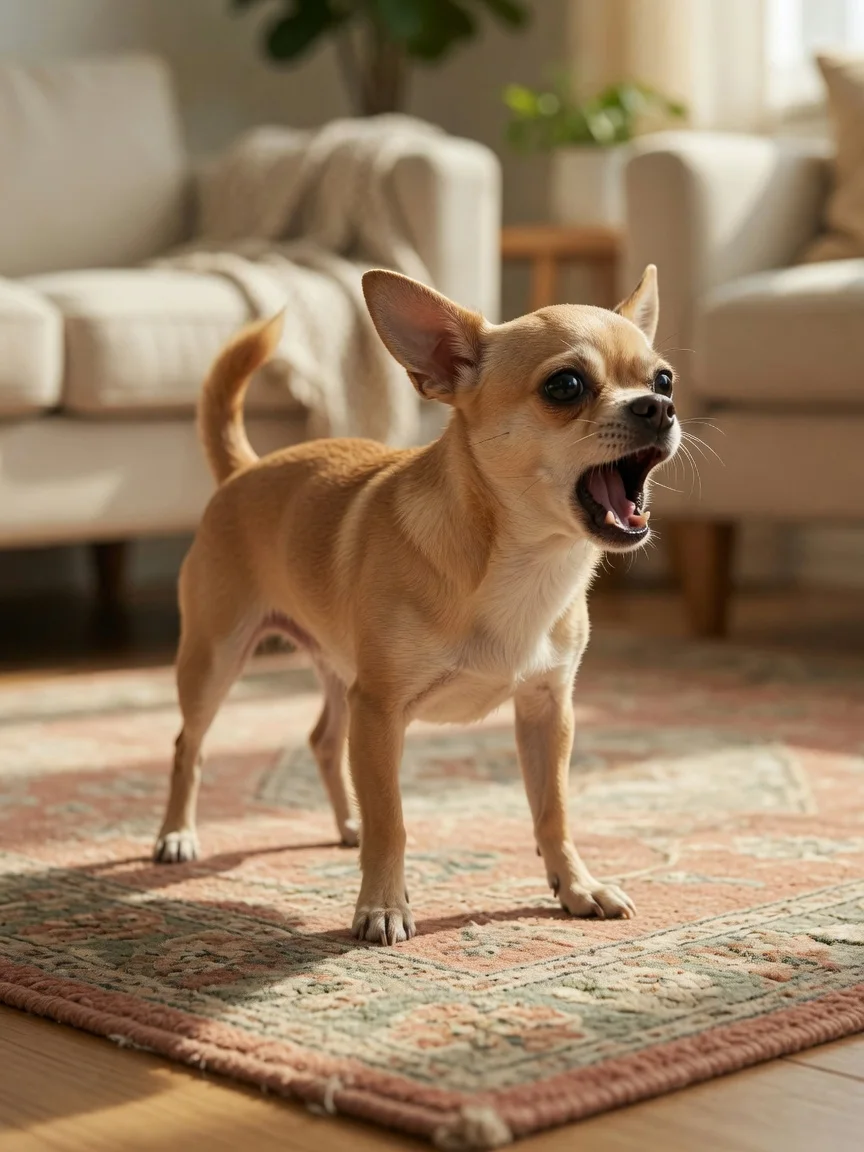
The retraining plan
Map the triggers first. A week of notes: who, what distance, what response. Strangers reaching, other dogs, the doorbell, being picked up, nail trims. Precision here makes everything after it cheaper.
Work under threshold with food. The core technique is counterconditioning: the trigger appears at a distance where she notices but stays rational, wonderful snacks rain, the trigger leaves, snacks stop. Repeat until the scary thing predicts cheese, then close the distance a step at a time. This is slow the way compound interest is slow, and it is the method with the evidence behind it, per the AVSAB position statements on humane behavior work.
Retire the punishments. Yelling, leash pops, scruffing, and shock teach a frightened dog that the trigger also makes her person dangerous, which deepens the fear and, critically, silences the warning growl, manufacturing the no-warning biter; the growl rule gets the full treatment in our biting guide. Nothing in the modern evidence supports dominance theater, and the professional consensus against it is not close.
Give her feet and choices. Ground time on a harness, sniffy walks, the option to walk away from attention, and a carry policy reserved for genuine hazards rather than all of life. Confidence is built on the floor, not in the handbag. Pair it with proper, gradual socialization at her scale, and with the household-wide consistency that turns rules into habits: one standard, every human, including the one who thinks it is funny when she snarls at your brother.
When the plan needs backup
Bites that connect or break skin, escalation across weeks, guarding that puts family members at risk, or a fear so global that under-threshold distances do not exist in your house: those cases deserve a professional, and the right kind, a reward-based trainer or veterinary behavior specialist via your clinic's referral. Aggression work is the single worst place for punishment-based quick-fix promises, so screen hard and walk away from anyone selling dominance.
When to call your veterinarian
Same-day call: sudden aggression in a previously soft dog, aggression tied to being touched somewhere specific, or any behavior change alongside limping, appetite, or energy shifts; pain is the most missed cause on this whole page. Ask for a referral: connecting bites, escalation, or stalled progress. Training territory: the barking, lunging, stranger-danger package of a physically healthy dog, which the plan above shrinks week by patient week.
Frequently asked questions
Why are chihuahuas so mean?
They are not mean, they are small. Most of what reads as a mean or angry chihuahua is defensive behavior from a two kilogram dog whose earlier warnings got ignored. Growling, snapping and lunging are distance-keeping signals, and they fade when the dog stops needing them, which is exactly what the retraining plan above builds.
Are chihuahuas naturally aggressive?
No. They are naturally small, alert, and attached, and frequently under-trained and over-excused, which manufactures defensive behavior that reads as aggression. Well-socialized, fairly-treated chihuahuas are affectionate, comic, and famously devoted; the villain edit is environmental, not genetic.
Why is my chihuahua aggressive toward strangers?
Almost always fear plus a learned strategy: shouting makes the giant recede. The fix is distance plus food, strangers at easy range predicting snacks, closing gradually, with strangers instructed to ignore her rather than loom and reach. Reaching over a frightened chihuahua's head is how most stranger bites are manufactured.
How do I stop my chihuahua attacking my other dog or guests on the couch?
That flavor is usually guarding, of you, the throne, or both, and it has a specific protocol: invitation-based couch access, off-cues that pay, and the good things arriving from the person she guards against. Our jealousy guide runs the full plan, and escalation earns professional help.
Can an aggressive chihuahua be rehabilitated?
The overwhelming majority improve substantially with trigger mapping, under-threshold counterconditioning, punishment retired, and consistency, on a timeline of weeks to months. The earlier the work starts and the fewer bites ever get rehearsed, the better the odds, which is the argument for starting this week rather than after the next incident.
The angriest chihuahua on your street is, in nearly every case, the most frightened animal on it, performing the only act that has ever worked. Take the fear seriously, pay the calm generously, and the villain costume comes off to reveal what the breed actually ships with: a comedian with a bodyguard complex and a heart three sizes too big for the chassis.

No comments yet
Leave a comment