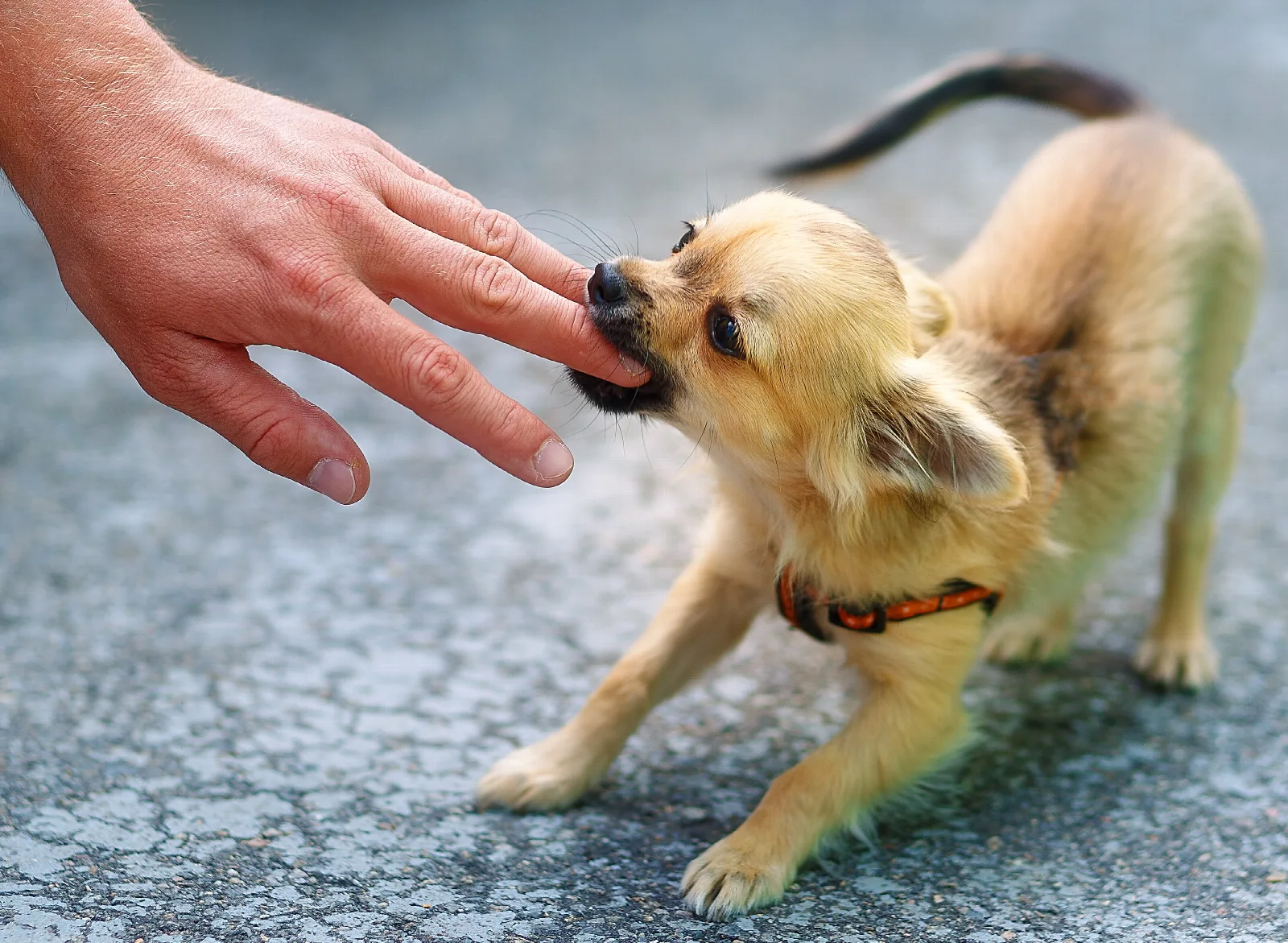
Chihuahua teeth are small; the question they raise is not. The first move in any biting problem is diagnosis, because a mouthy puppy, an ankle-ambushing adolescent, and a dog who snaps when reached for are three different animals needing three different plans, and the plan for one makes another worse. Here is how to tell them apart and fix each, without the punishment that reliably deepens all three.
Quick answer: Diagnose the type first, because three different problems look alike and the plan for one makes another worse: play mouthing from a loose, wiggly puppy; arousal nipping at ankles, triggered by movement; and fear snapping when a dog is reached for. Never punish a growl, which is the warning system, since punishing it produces a dog who skips straight to the bite. Mouthing and arousal nipping respond quickly, while fear biting takes patient counterconditioning.
First, which bite is it?
Play mouthing: loose, wiggly body, grabby mouth during games and greetings, worst in puppies and adolescents, especially through the teething months covered in our teething guide. Arousal nipping: the famous ankle strike, triggered by movement, running children, departing feet, vacuum cleaners, from an excited dog, not a frightened one.
Defensive biting: stiff body, hard stare or whale eye, a growl or air-snap when someone reaches, grabs, lifts, or corners her, escalating to contact when warnings are ignored. And one medical impostor: pain biting, the previously soft dog who suddenly snaps when touched somewhere specific, which is a same-day veterinary question before it is ever a training one.
Plan one: the mouthy puppy
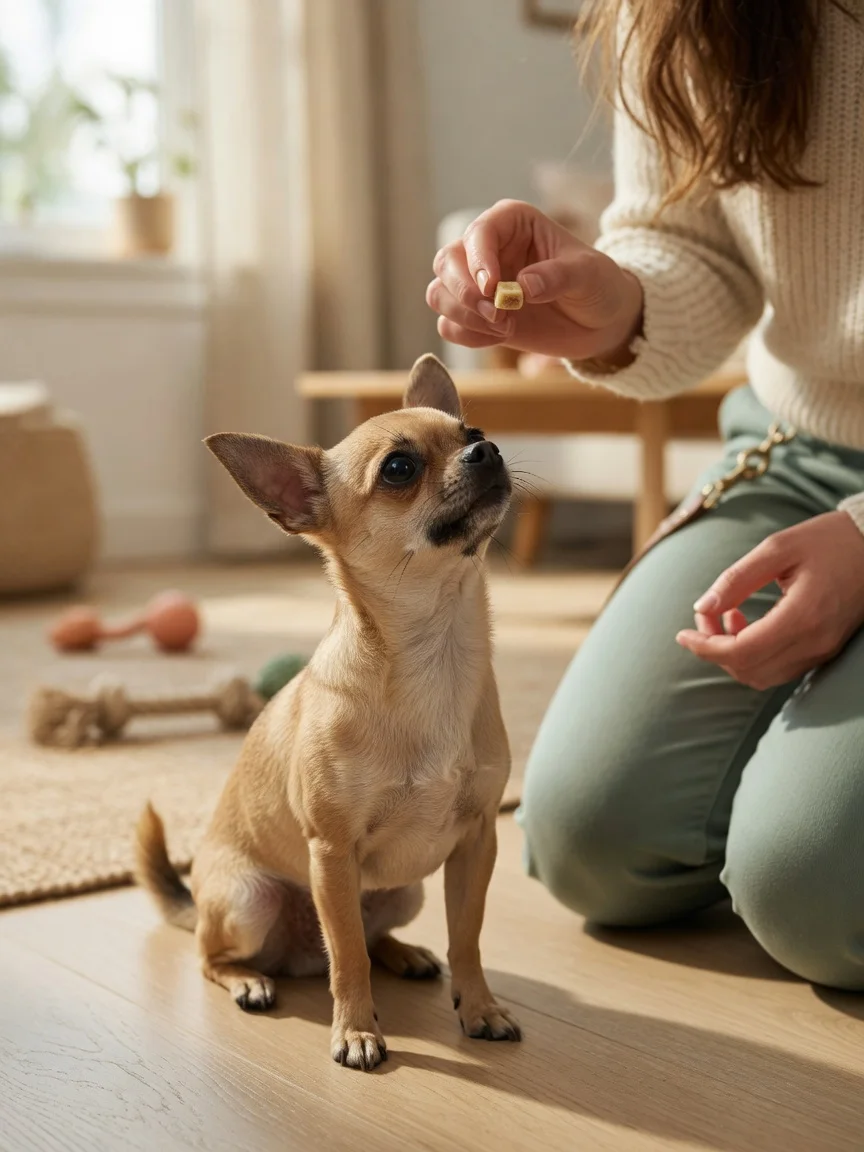
Puppies learn bite pressure from consequences that end fun rather than start fights. When teeth touch skin: a calm marker like too bad, all play and attention stops for ten seconds, then the game resumes with a toy in the middle. Teeth on toy, game continues; teeth on skin, game pauses.
Hundreds of boring repetitions, every human in the house playing by the same rule, and no rough hand-wrestling games that teach the opposite lesson. The ASPCA's mouthing guide lays out the same structure for adult dogs who never learned it. What has no place here: snout grabs, scruffing, yelling, or old-school alpha theater, which teach a puppy that hands are dangerous, the exact opposite of the goal.
Plan two: the ankle striker
Movement-triggered nipping is arousal with a steering problem, so give it steering. Manage first: no unsupervised mingling with running children while training is underway. Then teach an incompatible habit: movement means look at me and sit pays jackpot. Practice at walking speed, then jogging, then kids-being-kids speed, paying generously at each stage.
Add a legal chase outlet, a flirt pole or tossed toy on cue, so the chase circuitry has a paycheck that is not a sock full of ankle. Adolescents grow out of the worst of it only when the alternative habit is already installed; that is what the practice buys.
Plan three: the defensive biter, and the growl rule
Here is the centerpiece of this entire article: never punish a growl. A growl is the smoke alarm, the dog's polite notification that she is overwhelmed. Punish it and you do not fix the fear, you silence the alarm, manufacturing the dog who bites without warning.
The humane sequence instead, consistent with the AVSAB position statements: honor the warning by giving space; map the triggers, being reached for, lifted, handled at nail time, approached while eating; then change the emotion under each trigger with distance and food, pairing the scary thing at an easy intensity with great snacks and quitting while you are ahead, session after session.
Handling problems respond especially well to cooperative-care training, teaching the dog to opt in to grooming and lifting for payment. The deeper fear-repair work lives in our fearful-dog guide, and the breed-wide context, why so many chihuahuas learned to shout first, in our aggression guide.
Small dog, real rules
Two chihuahua-specific notes. First, take it seriously even at four pounds: tiny bites still injure children and seniors, and the laughing-it-off habit is how small-dog biting gets rehearsed into permanence. Second, protect the dog from the situations that manufacture bites: unsupervised toddlers, surprise grabs from above, and being passed hand to hand at parties. Children and chihuahuas can be excellent together with two rules enforced: dogs are stroked, not carried, and a dog who walks away gets to leave.
When to call your veterinarian
Same-day call: sudden biting in a previously soft dog, biting focused on one body area being touched, or any bite alongside signs of illness; pain is the great impostor here. Professional help: bites that break skin, escalating frequency, or defensive biting around food and resting spots; ask your clinic for a referral to a reward-based professional. Training territory: puppy mouthing, ankle arousal, and early-stage defensive warning signs, all of which respond to the plans above run with boring consistency. Biting is one entry in a wider pattern, and our overview of chihuahua behaviour problems starts where every plan should, with ruling out pain.
Frequently asked questions
How do I stop my chihuahua puppy from biting my hands?
End the fun for ten seconds every time teeth touch skin, restart with a toy in the middle, and ban wrestling games. Consistency from every human is the entire trick, and teething chews take the edge off the hardware upgrade happening in her mouth.
Why does my chihuahua bite ankles?
Movement flips an arousal switch and the closest moving parts are at ankle height. Manage the trigger scenes, teach movement-means-sit for jackpot pay, and give the chase drive a legal toy outlet. It is enthusiasm with bad aim, not malice.
Should I punish my chihuahua for growling?
No, and this is the most important answer on the page: the growl is the warning system. Punish it and you get a dog who skips straight to the bite. Give space when she growls, then retrain the trigger underneath it with distance and food.
Can an adult chihuahua be trained out of biting?
Usually, yes, once the type is diagnosed and the matching plan runs long enough: mouthing and arousal nipping respond quickly, fear biting takes patient counterconditioning, and pain biting resolves with the veterinarian. Skin-breaking or escalating bites deserve professional hands on the case early.
Biting is information about age, arousal, or fear, delivered through the only tool a dog carries. Diagnose which message you are getting, run the matching plan, keep every growl legal, and the teeth go back to their day job of dismantling kibble.


No comments yet
Leave a comment