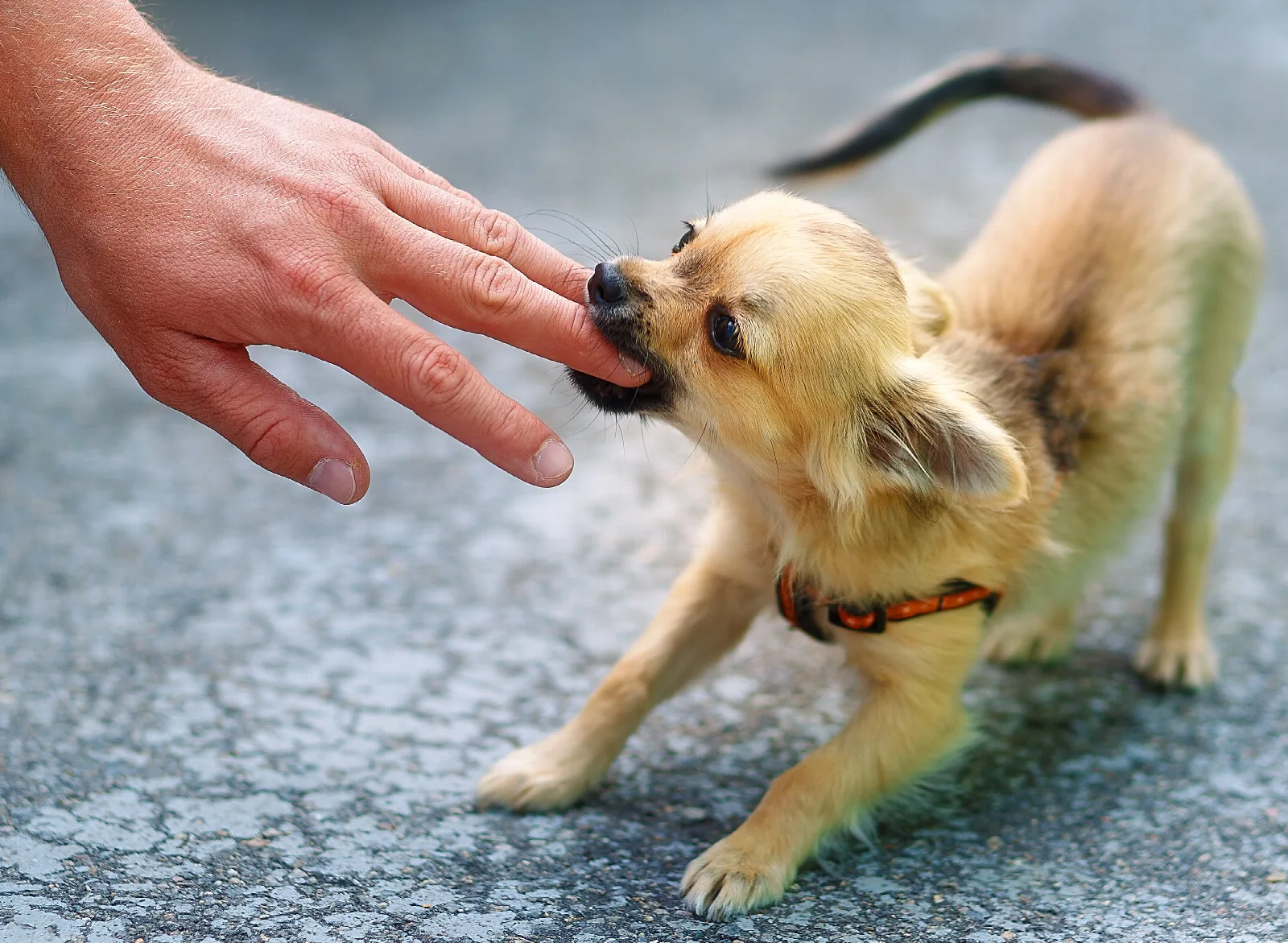
Somewhere around four months old, your chihuahua puppy will decide that everything you own is a chew toy, including the hand that feeds her. This is teething, it is temporary, and it is survivable with the right supplies. But this breed adds a twist worth the whole article: chihuahuas, more than almost any other dog, fail to shed the baby teeth they are supposed to lose, and those stubborn leftovers quietly set up the dental disease that haunts the breed for life. The chewing phase manages itself. The double-fang check is where an owner earns their keep.
Quick answer: Chihuahua puppies erupt 28 needle-sharp baby teeth at roughly three to six weeks, begin losing them from about twelve to sixteen weeks as the 42 adult teeth push through, and are typically finished by six or seven months. The breed-specific catch is retained baby teeth, especially the fangs: one still present at seven months crowds the adult tooth and accelerates gum disease, so book a veterinary look rather than waiting it out. Never pull a loose tooth yourself.
The timeline
Baby teeth, twenty-eight of them, erupt between roughly three and six weeks, needle-sharp by design. From about twelve to sixteen weeks they begin falling out as the forty-two adult teeth push through, and the whole changeover typically wraps by six or seven months. During the swap you may find a tiny tooth on the floor, spot a little blood on a toy, or notice nothing at all, since puppies swallow most of them harmlessly.
The signs of active teething: chewing with new intensity and worse judgment, drooling, tender-mouthed eating, occasionally an off day or a mildly warm puppy, and the play-biting that every set of visiting hands will report. Behavior-wise this is also prime training season; the bite-inhibition work in our puppy training timeline runs on exactly the same calendar.
Relief that works, and what to skip
Offer better targets. Soft rubber puppy chews sized for a toy breed, a rope toy, or a clean washcloth with a corner dampened and chilled in the freezer, cold on sore gums is the whole trick. Rotate a few so novelty stays on your side, and redirect every ankle and finger ambush to a toy, calmly and repetitively, hundreds of times, because that is simply the job in month four.
Skip the hazards. Antlers, hooves, bones, and rock-hard nylon chews crack teeth, and a chihuahua's teeth are the smallest and least replaceable in dogdom; the veterinary rule of thumb is that a chew you would not want bounced off your own kneecap is too hard for a puppy mouth. Ice cubes are borderline for this size; frozen-damp cloth is gentler. And keep human numbing gels out of the project entirely: benzocaine and its relatives are not safe for puppies, and if the mouth seems painful enough to medicate, that is a clinic call, not a pharmacy run.
The breed twist: retained baby teeth
In the ordinary script, each adult tooth dissolves the root of the baby tooth above it and takes its place. In chihuahuas the script flops constantly: the baby tooth, most famously the pointed canine fang, stays put while the adult tooth erupts alongside it, producing the breed's signature double fang.
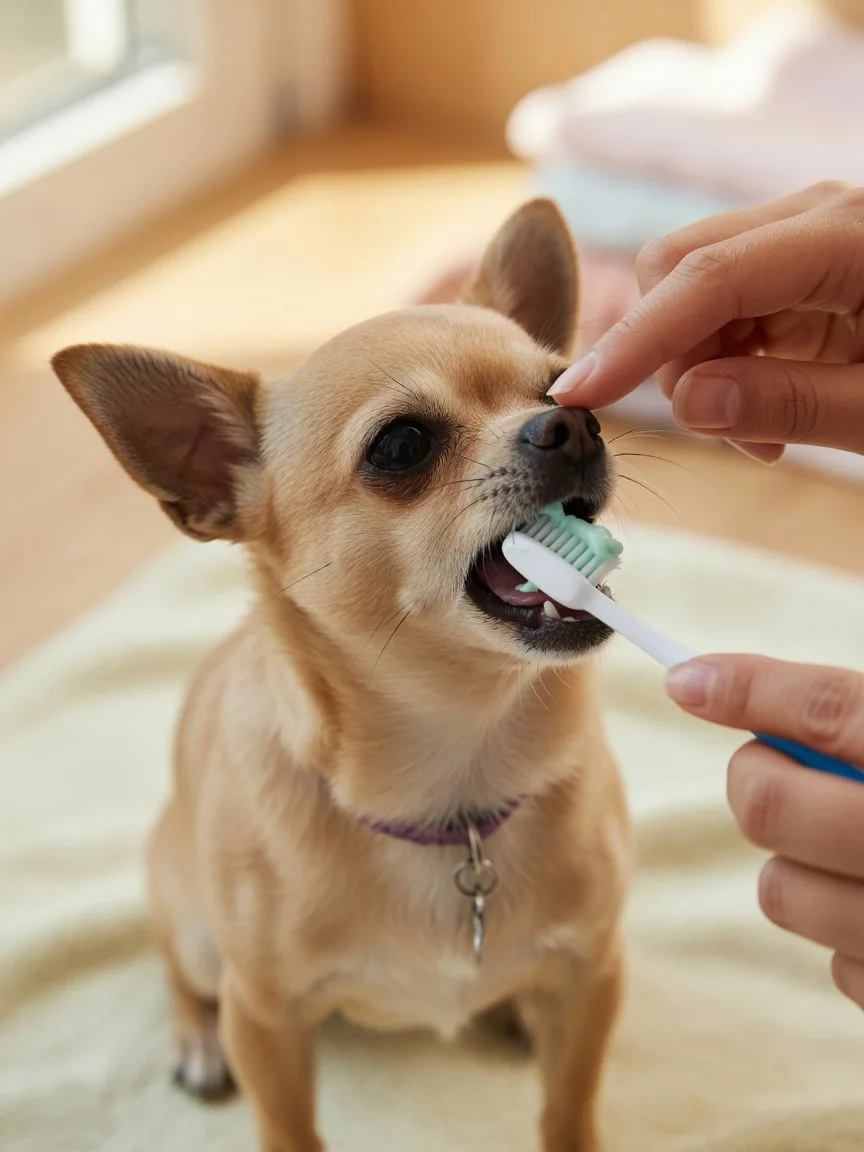
The VCA guide to retained deciduous teeth lays out why this is more than cosmetic: two teeth in one slot trap food and plaque, push the adult tooth out of position, and fast-forward the gum disease that already arrives early in small mouths, the disease our dental care guide exists to slow.
The owner's move is a weekly ten-second mouth peek from four months onward, lips lifted, counting fangs. Two fangs per side, top and bottom, where there should be one is a finding for your veterinarian, not a wait-and-see. The standard fix is extraction of the retained tooth, very commonly scheduled alongside the spay or neuter anesthesia so one procedure covers both, and done promptly it usually spares the adult tooth's alignment entirely. The anesthesia questions that raises are honest ones, and they get the full treatment in our anesthesia guide.
When to call your veterinarian
Same-day call: a puppy who stops eating, paws at a bleeding mouth that does not settle, or has a broken tooth with exposed dark center. Routine appointment, soon: double fangs or any baby tooth still standing past about six or seven months, an adult tooth erupting crooked, or breath that smells genuinely foul in a puppy. Monitor at home: ordinary chewing mania, small floor-teeth, flecks of blood on toys, and the weekly fang count that makes this whole article work.
Frequently asked questions
When do chihuahuas stop teething?
The adult set is typically complete by six to seven months, and the frantic chewing eases around then too, tapering rather than switching off. Chewing that stays destructive past teething age is a training and enrichment topic more than a dental one.
My chihuahua is seven months old and still has both fangs. Is that normal?
Common in this breed, but not something to leave alone: a retained fang crowds the adult tooth and accelerates gum disease. Book a veterinary look; extraction, often bundled with the spay or neuter anesthesia, is the routine fix.
Can I pull a loose baby tooth myself?
No. A genuinely ready tooth leaves on its own with a chew session, and wobbly-but-anchored teeth have roots that can snap and stay behind, which trades a free problem for a surgical one. Point it out at the clinic instead.
What chew toys are safe for a teething chihuahua?
Soft rubber puppy toys scaled to a tiny mouth, rope toys, and the frozen-washcloth trick. Skip antlers, hooves, bones, hard nylon, and anything sized for the labrador next door; too-large and too-hard are the two ways chews break tiny teeth.
Teething is a season, and it passes. The fang count is the part with a legacy: one ten-second weekly peek through month seven, one well-timed extraction if the breed's favorite glitch shows up, and the adult teeth get their fair start in a mouth that will need every one of them for fifteen years.



No comments yet
Leave a comment