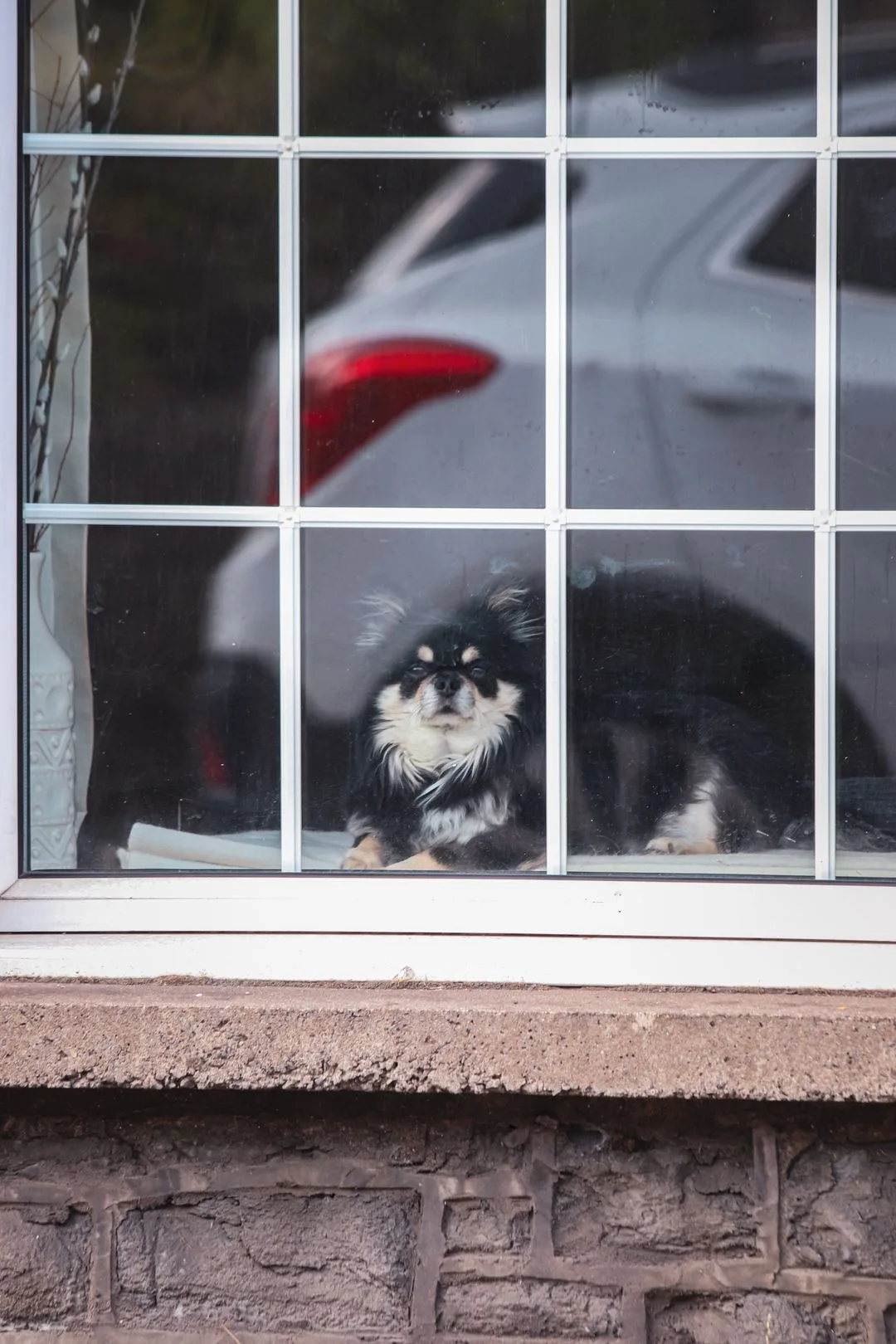
The practical question first, because it is usually asked while looking at a work schedule: a healthy adult chihuahua, with the right setup, can manage a typical workday stretch of alone time, with four to six hours sitting comfortably and longer days wanting a midday break, a potty solution, or both. Puppies and seniors run on much shorter clocks. The interesting part is not the number, though; it is the setup and the training that make the number true, and the one condition, real separation anxiety, that no amount of hours-math fixes.
Quick answer: A healthy adult chihuahua with the right setup manages a typical workday, with four to six hours sitting comfortably and eight possible when a midday break, a potty answer, and enrichment are in place. Bladder capacity sets the hard ceiling: adults are commonly put at six to eight hours, and puppies at roughly their age in months plus one, treated as a maximum rather than a target. A full workday suits a pen or room with a potty option better than a closed crate.
The clock, by age
Bladder capacity sets the hard ceiling. For puppies, the AKC's potty training timeline gives the standard rule of thumb, age in months plus one, in hours, and frames that number as a maximum rather than a comfortable default: a three-month-old is a two-to-four-hour animal at best, and young puppies also need midday food, per the blood sugar arithmetic in our hypoglycemia guide.
Healthy adults manage a longer stretch, commonly put at six to eight hours, though asking for the top of that range daily is unkind even where it is physically possible. Seniors drift back down, and any medicated, unwell, or kidney-compromised dog runs on the clinic's clock, not the chart's. House-training reality matters too: a dog left beyond her limit is not having accidents, she is being set up to fail, which is worth remembering before blaming the dog.
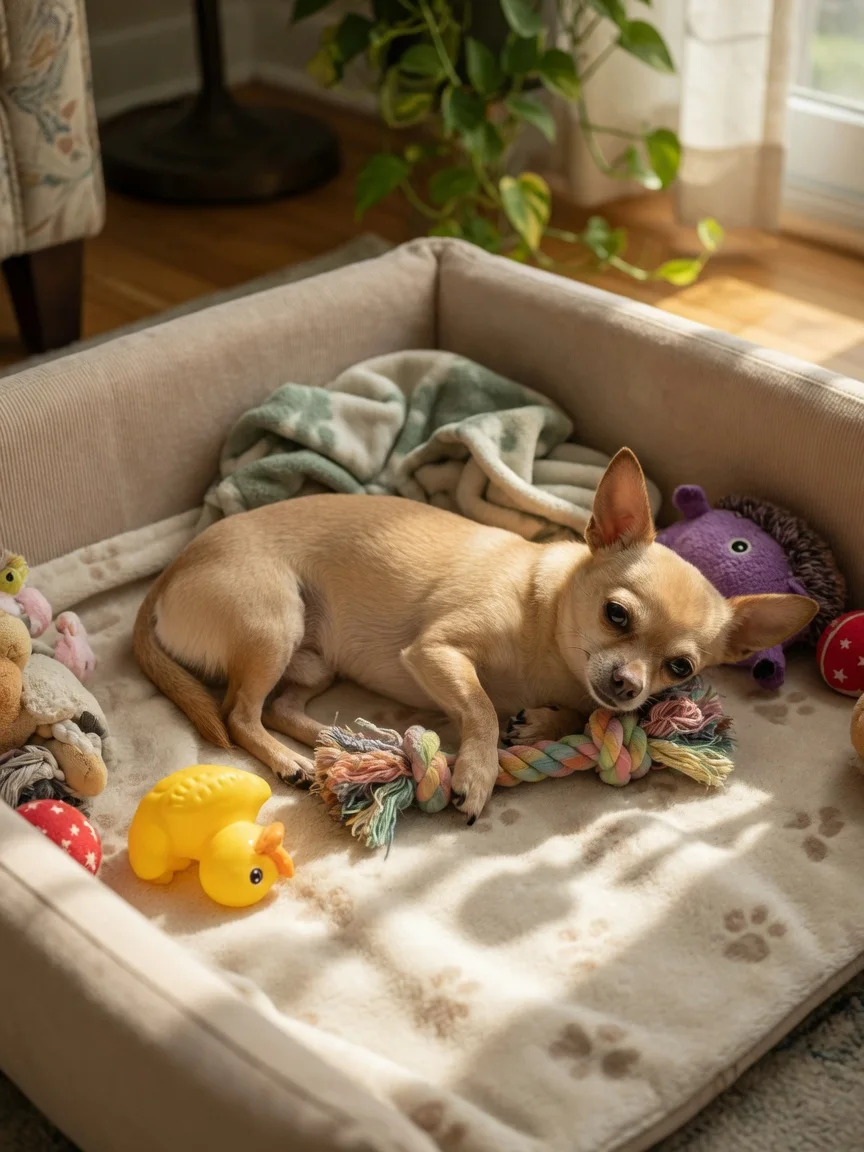
The alone-time setup
A safe zone. A puppy-proofed room or exercise pen beats free run for most chihuahuas: fewer patrol duties, fewer chewable hazards, a den bed to burrow into, and a defined potty answer. For long days that answer is a pad or turf tray, and the training for it lives in our apartment potty guide.
Water, warmth, and weather. Water always; a draft-free setup in winter, per the temperature guide; and shade plus ventilation in summer.
Something to do. Boredom is the engine of most alone-time mischief, so pay the hours: a stuffed food toy or licking mat deployed at departure, a foraging box, a rotated toy so novelty survives. A sniffy walk before you leave buys more calm than a frantic fetch session, and calm is the goal state.
Boring exits and returns. Long emotional goodbyes teach the dog that departures are a big deal. Keep leaving and arriving low-key, greet after the first minute of calm, and the emotional temperature of the whole routine drops within weeks.
A camera if you want certainty. Ten minutes of footage answers the question owners argue about most: what she actually does all day. The usual answer, after the first act, is sleep.
Build the hours gradually
Alone-time is a trained skill, not a default setting, and chihuahuas, professionally attached as described in the velcro guide, benefit from being taught it on purpose. The program is short absences first, seconds to minutes for a puppy or a new rescue, returning before distress starts, then stretching the duration in irregular steps so the dog never learns a countdown.
Pair every departure with the good stuff, the stuffed toy that only exists when you leave, and fold in fake departures, keys jingled, coat on, nobody leaves, until the cues stop meaning anything. A dog who can settle alone for an hour scales to an afternoon far more easily than one thrown from constant company into a nine-hour Monday, which is precisely the transition that breaks dogs every September.
Boredom or separation anxiety: the line that matters
Mischief and anxiety get confused constantly, and the plans differ completely. Boredom looks like opportunism: a raided bin, a chewed slipper, an unbothered dog asleep when you return. It responds to enrichment, exercise, and management. Separation anxiety looks like panic: vocalizing that continues for long stretches, destruction focused on doors and exit points, drooling, pacing, refusal to touch the treasured food toy until you return, or soiling from an otherwise reliable adult. The ASPCA's separation anxiety guide draws this distinction carefully, walks through the lookalike problems to rule out, and cautions that punishment can make things much worse, because the behaviors are distress responses, not disobedience.
True separation anxiety is a panic condition needing a structured behavior plan, often with veterinary involvement, built on the reward-based methods the AVSAB position statement on humane training recommends. If your footage shows panic rather than pastime, skip the gadget aisle, start that conversation with your veterinarian, and work through our separation anxiety guide. A second dog, incidentally, is not the standard cure; company sometimes helps and sometimes just gives you two anxious dogs, a decision our second-chihuahua guide weighs properly.
When to call your veterinarian
Same-day call: suspected ingestion of something chewed during alone time, or sudden house-soiling with other signs of illness. Routine appointment: new accidents from a reliable adult, since bladder infections and other medical causes outrank rebellion; any alone-time panic pattern, to build the behavior plan and rule out contributors; and the age-transition conversations for puppies and seniors. Training territory: the setup, the gradual hours, the boring exits, and the enrichment payroll above.
Frequently asked questions
How long can a chihuahua hold its bladder?
Adults: commonly put at six to eight hours, with less asked routinely being kinder. Puppies: roughly their age in months plus one, in hours, treated as a maximum. Seniors and medical cases: shorter, on the clinic's guidance. Exceeding the clock produces accidents by design, not disobedience.
Can a chihuahua be left alone for 8 hours?
A healthy, trained adult with the full setup, safe zone, potty answer, water, enrichment, can manage it, though a midday break from a walker or neighbor upgrades the day meaningfully. Puppies and seniors cannot, and no dog should start at eight hours cold; build to it.
Do chihuahuas get separation anxiety more than other breeds?
They are strongly people-oriented, which raises the stakes, but attachment alone is not anxiety. Most chihuahuas learn happy solitude when it is taught gradually. The diagnosis rests on panic signs, vocal marathons, exit-point destruction, refusal to eat while alone, not on breed reputation.
Should I crate my chihuahua while I am at work?
A crate suits short absences for crate-loving dogs; a full workday wants the larger pen-or-room setup with a potty option, with the crate open inside it as the den. The test is simple: the space must allow water, stretching, and a legal toilet for the duration you are actually gone.
Alone time is a skill you install, not a hardship you impose: a safe zone, a paid-out food toy, exits kept boring, hours built in steps, and a camera to settle the arguments. Do the setup once, and the workday becomes what it should be for a well-run chihuahua: a long nap with snacks.

No comments yet
Leave a comment