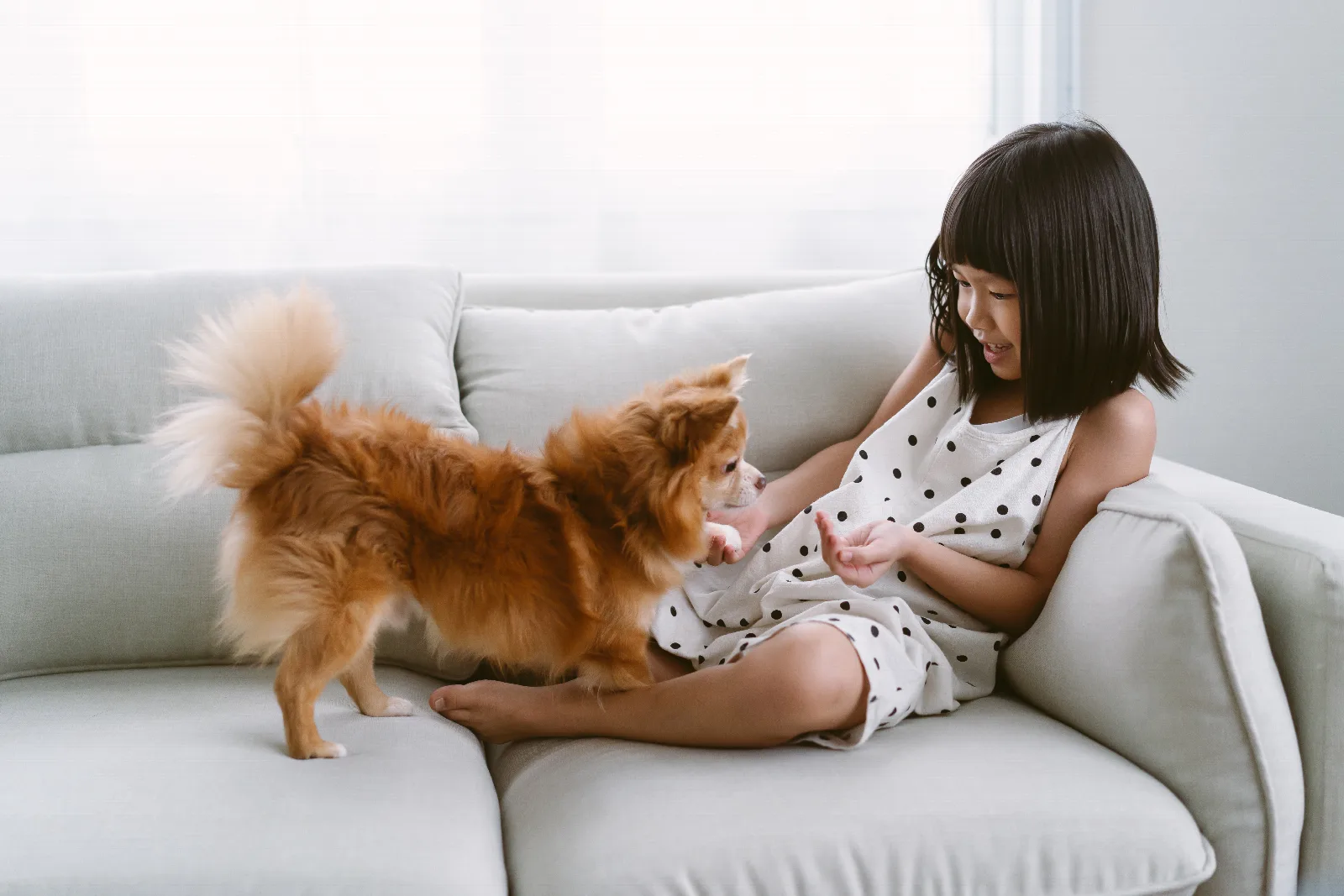
Chihuahuas learn fast. That sentence surprises people who mistake untrained for untrainable, but the breed's attentiveness is elite; what most chihuahuas lack is not brains, it is five minutes a day of someone teaching them anything. This article is that five minutes, organized: the four starter cues, sit, stay, come, and shake, taught with food, patience, and the small-dog adjustments that make the difference between a frustrated session and a career.
Quick answer: Chihuahuas learn fast, and what most of them lack is not brains but five minutes a day of someone teaching them. Four adjustments make it work at four pounds: rice-grain treats, because a session of ordinary ones is half a day's calories; get low or lift the dog onto a sofa rather than looming over her; start indoors two steps away; and pay every single arrival on recall, generously. You can start at any age, from an eight-week puppy to an adult rescue.
The ground rules at chihuahua scale
Four adjustments before the first rep. Treats are rice-grain sized, because a training session's worth of ordinary treats is half a day's calories at four pounds, arithmetic our weight guide takes seriously. Get low or lift the classroom: looming over a tiny dog reads as pressure, so teach sitting on the floor, or with the dog on a sofa or raised platform for your own spine's sake.
Sessions run five minutes, two or three a day, ending while she still wants more. And nothing is ever pushed, pulled, or forced: no pressing bottoms into sits, no yanking, per the reward-based consensus in the AVSAB position statements. Food lures do everything hands used to do, better.
Sit: the gateway cue
Hold a treat at her nose, lift it slowly up and slightly back over her head; as the nose follows, the rear folds. The instant it touches down, mark with a cheerful yes and pay. Ten smooth reps, then fade the lure: same hand motion, empty hand, treat from the other hand after.
Add the word sit just before the motion once the motion is reliable. Within days you have a dog who sits at a word, and sit becomes the please of household life: sits for dinner, sits for the leash, sits for doors, the sit-to-ask economy from our whining guide.
Stay: duration, then distance, then distraction
Ask for a sit, hold an open palm out, wait one second, mark and pay. Build to three seconds, then five, then ten, before you ever move a foot. Then one step back and return, then two, always returning to pay rather than calling her out of the stay.
The three Ds, duration, distance, distraction, get trained one at a time; stacking them is how stays break. Release with a clear word like okay every time, so the end of the stay is always yours to declare. A solid stay is the breed's best safety feature after the recall, and it doubles as the settle-on-a-mat skill from our independence work.
Come: the cue you never, ever poison
Recall is taught as the best deal in the house. Start two steps away indoors: say her name plus come, sound delighted, and pay arrival with the best treat in the pouch. Add distance, then rooms, then a long light line in the yard, per the progression in the American Kennel Club's recall guide. Two laws protect it forever.
First: never call her to anything she dislikes, nail trims, baths, scoldings, the end of park time; go collect her for those instead. Second: pay every single recall for the first year, and richly at random forever. A four-pound dog near roads, hawks, and big-dog parks needs a bulletproof recall more than any retriever ever will; it is cheap insurance built one delighted rep at a time.
Shake: the crowd-pleaser with a secret job
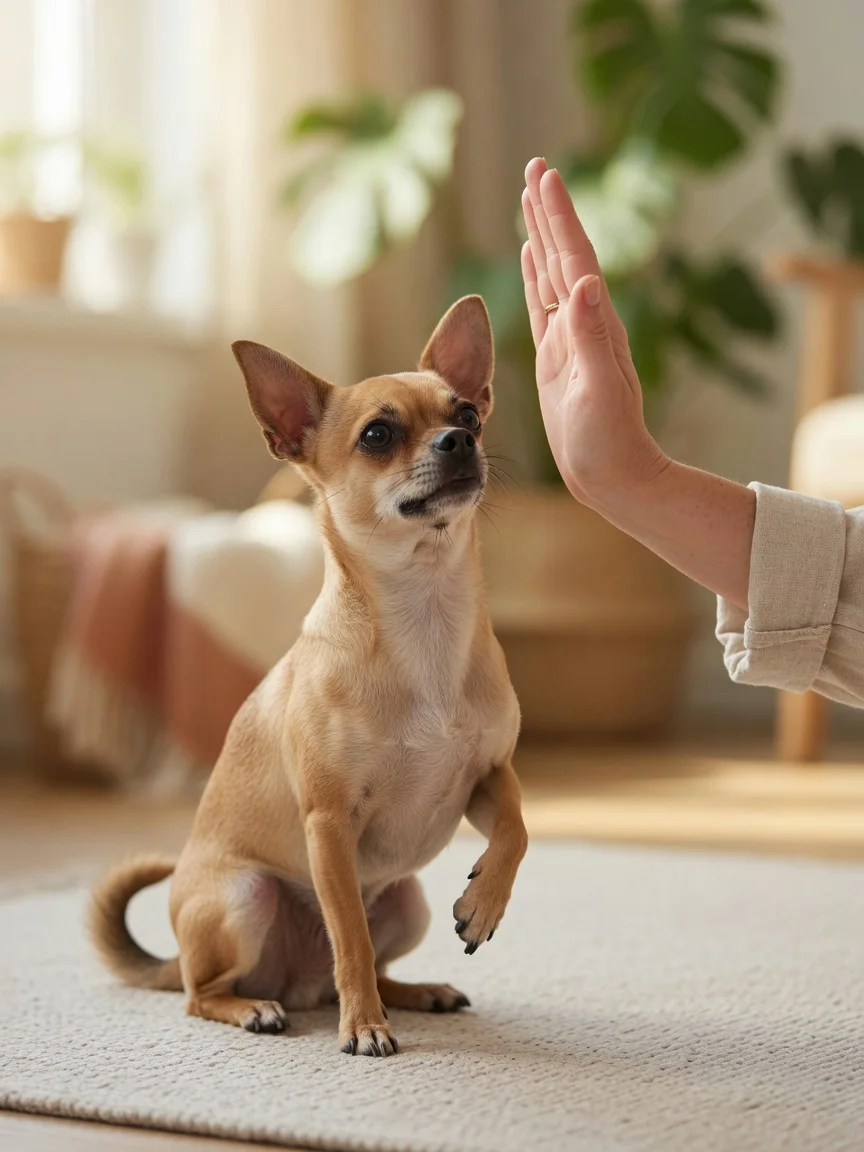
Hold a treat in a closed fist at chest height; most chihuahuas will eventually paw at it. The instant a paw touches your hand, mark and pay. Repeat until the paw offer is quick, then add the word shake, then an open flat hand. Beyond the party trick, shake quietly teaches her that having paws handled pays, which is a down payment on drama-free nail trims, the cooperative-care thread from our handling work.
When training stalls
A dog who will not take treats is over threshold, too stressed or distracted to learn; move somewhere easier. A dog who quits mid-session got sessions that are too long or pay that is too dull. A dog who sits at home and never at the park just needs the cue retrained in each new place, which is normal dog learning, not defiance. And a dog who suddenly cannot sit or refuses stairs and jumps may be uncomfortable, not stubborn: kneecaps and backs come first, per the watch-for guide.
When to call your veterinarian
Same-day call: refusal or yelping on sits and jumps that used to be easy, which reads as pain until examined. Routine appointment: a training-age puppy who seems unable to focus at all, worth a general check before assuming temperament. Training territory: everything else on this page, five minutes at a time.
Frequently asked questions
How do you train a dog to come when called?
Start indoors, two steps away. Say the name, then the cue, once, in a happy voice, and pay every single arrival with something worth running for. Add distance before distraction, move to a long line outdoors, and never call the dog to anything unpleasant. How to train a dog to come reliably is really the art of staying the best option in the room, which the come section above walks through step by step.
At what age can I start training my chihuahua?
Day one, whatever the age: eight-week puppies learn sit with lures beautifully, and adult rescues learn just as fast with a little confidence-building first. The five-minute, all-reward format suits every age; only the treat budget and patience settings change.
My chihuahua ignores me unless I have food. What now?
Food starts the conversation, then becomes a paycheck rather than a bribe: fade lures to empty-hand signals fast, keep rewards coming from pockets and counters rather than the luring hand, and mix in life rewards, praise, play, the leash going on. Random-but-real payment builds the dog who works on faith.
How do I get a reliable recall at the park?
Train it like the safety equipment it is: indoors first, then yard on a long line, then quiet outdoor spots, paying magnificently every time and never calling her to anything unpleasant. Off-leash freedom comes only after hundreds of paid successes, and in unfenced areas, a long line is honest insurance for a dog this size.
Should kids train the chihuahua?
Yes, supervised, and it is one of the best things for both parties: children make excellent lure-and-reward trainers under an adult's coaching, and dogs generalize obedience to small humans. Keep sessions short, keep the no-force rule absolute, and let the child own one cue as theirs.
Four cues, five minutes a day, rice-grain wages, and a strict no-force policy: that is the entire curriculum. The breed brings the brains and the attention; you bring the chicken and the consistency, and somewhere around week three you discover you own one of the smallest well-trained dogs in dogdom.

No comments yet
Leave a comment