
Start with the reframe that changes everything: separation anxiety is not a training failure, a protest, or revenge for leaving. It is panic, the canine equivalent of a phobia, and the dog exhibiting it has as much choice in the matter as a person mid panic attack. That single fact explains why punishment always backfires here, why gadgets alone disappoint, and why the fix is a gradual retraining of the emotion itself. This is the companion piece to our home-alone guide: that one builds ordinary alone-time skills; this one is for the dog already past that line.
Quick answer: Separation anxiety is panic, the canine equivalent of a phobia, not protest or revenge for leaving, which is why punishment backfires and gadgets alone disappoint. Film a ten-minute absence to tell it from boredom: boredom naps, patrols, and raids the bin, while panic vocalizes continuously, works the exits, drools, and will not touch food. Treatment is graduated sub-threshold absences over weeks to months. A second dog usually does not fix it, because the attachment is to you specifically.
Confirm it is actually separation anxiety
Three steps before any protocol. Film an absence. Ten minutes of camera footage separates the bored opportunist, who naps, patrols, and raids, from the panicker, who vocalizes continuously, paces, drools, scratches at exits, or will not touch a stuffed food toy until you return. The ASPCA's separation anxiety guide lists the signature signs, and exit-focused destruction plus nonstop vocalizing are the classic pair.
Rule out medical contributors with your veterinarian: pain, urinary issues, and cognitive change in seniors all masquerade as anxiety. Check the confounds: under-exercised, under-occupied dogs and dogs never taught alone-time can look anxious without the panic; the home-alone setup fixes those. What remains is the real thing, and it responds to the plan below.
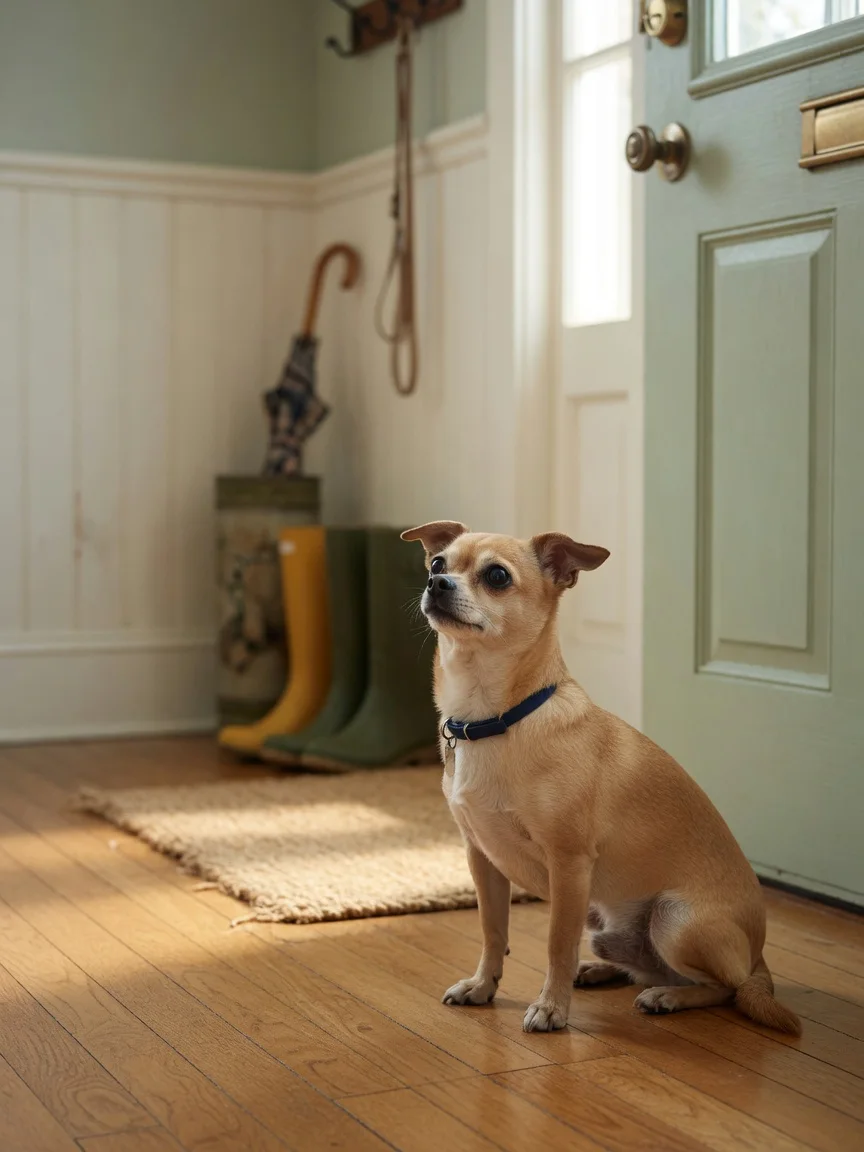
The plan: shrink the panic, never trigger it
Step one: stop rehearsing panic. Every full-blown episode strengthens the fear, so during training the dog should simply not experience long absences: a family member, sitter, daycare, or a schedule rearranged for a few weeks. This is the step people skip and the reason plans fail; you cannot desensitize on Tuesday what gets re-traumatized on Wednesday.
Step two: find the threshold. With your camera, find the absence length she tolerates calmly. For a genuine panicker that may be thirty seconds, sometimes just you touching the doorknob. That number, however humbling, is the starting line.
Step three: graduated departures. Practice absences below threshold, several a day, returning before distress starts, and stretch the duration in irregular steps: one minute, three, two, five, four, eight. Irregular matters, because a predictable escalation teaches a countdown, and a countdown breeds anticipatory panic. Progress is measured in calm sessions, not calendar days, and a bad day means dropping back, not pushing through.
Step four: defuse the departure cues. Keys, shoes, coat, bag: each has become a panic starting-gun. Pick them up randomly through the day and go nowhere, until the props stop predicting anything. Meanwhile keep real exits and returns boring; the emotional temperature you set at the door is contagious.
Step five: build independence inside the house. A dog who shadows you room to room, per our velcro guide, is practicing dependence all day. Reward settling on a mat while you move around, then briefly out of sight, then longer. Calm-on-a-mat is the same muscle as calm-when-alone, trained at zero stakes.
Step six: talk to your veterinarian about medication without embarrassment. For moderate to severe cases, anti-anxiety medication is not a shortcut or a failure; it lowers the panic floor enough for training to work, exactly as it does in human phobia treatment. This is mainstream veterinary behavior practice, consistent with the humane framework in the AVSAB position statements, and the dogs who get it typically progress faster and suffer less.
What makes it worse
Punishment, first and always: a dog punished for panic damage learns the owner's return is also frightening, which deepens the problem and adds a new one. Crating a panicking dog, second: confinement turns fear into frantic escape attempts and real injury risk; crates are for dogs who find them safe, not cages for fear.
Getting a second dog, third: occasionally it helps, often it does nothing, and sometimes you simply own two anxious dogs; our second-dog guide treats that decision with the caution it deserves. And gadget-first thinking, last: cameras and puzzle toys are excellent supports for this plan, and worthless substitutes for it.
When to call your veterinarian
Promptly: at the start, to rule out medical drivers and discuss whether medication belongs in the plan, and any time a senior develops new anxiety, which has its own medical differential. Professional trainer or behavior specialist: when panic is severe, progress stalls for weeks, or self-injury has occurred; ask your clinic for a referral to a qualified, reward-based professional, and treat anyone selling punishment-based quick fixes for panic as disqualified on arrival. Training territory: everything in the plan above, run patiently, with the camera as your honest scorekeeper.
Frequently asked questions
How do I know if my chihuahua has separation anxiety or is just bored?
Film a short absence. Boredom naps, wanders, and raids the bin; panic vocalizes continuously, works the exits, drools, and refuses food until you return. The distinction decides the plan, so spend the ten minutes before spending the ten weeks.
How long does separation anxiety training take?
Weeks to months, honestly, scaling with severity and how well panic-rehearsal is prevented during the program. Steady sub-threshold practice beats heroic pushes every time, and medication, where appropriate, shortens the road rather than lengthening it.
Should I crate my chihuahua for separation anxiety?
Not as a containment fix for panic; confined panickers hurt themselves. A crate helps only for the dog who already loves it as a den, door open or closed, and even then the training plan, not the box, does the therapeutic work.
Will getting another dog cure her separation anxiety?
Usually no; the attachment is to you, not to canine company in general. A second dog occasionally comforts a mild case and just as often complicates a household mid-treatment. Run the training plan first; adopt because you want another dog, not as a prescription.
Separation anxiety is the hardest common behavior problem precisely because it is not behavior at all; it is emotion. Protect her from rehearsing the fear, retrain the alone-time feeling in patient slices, use every humane support your veterinarian offers, and let the camera show you the day she simply naps through your absence, which is the quiet finish line this whole plan points at.



No comments yet
Leave a comment