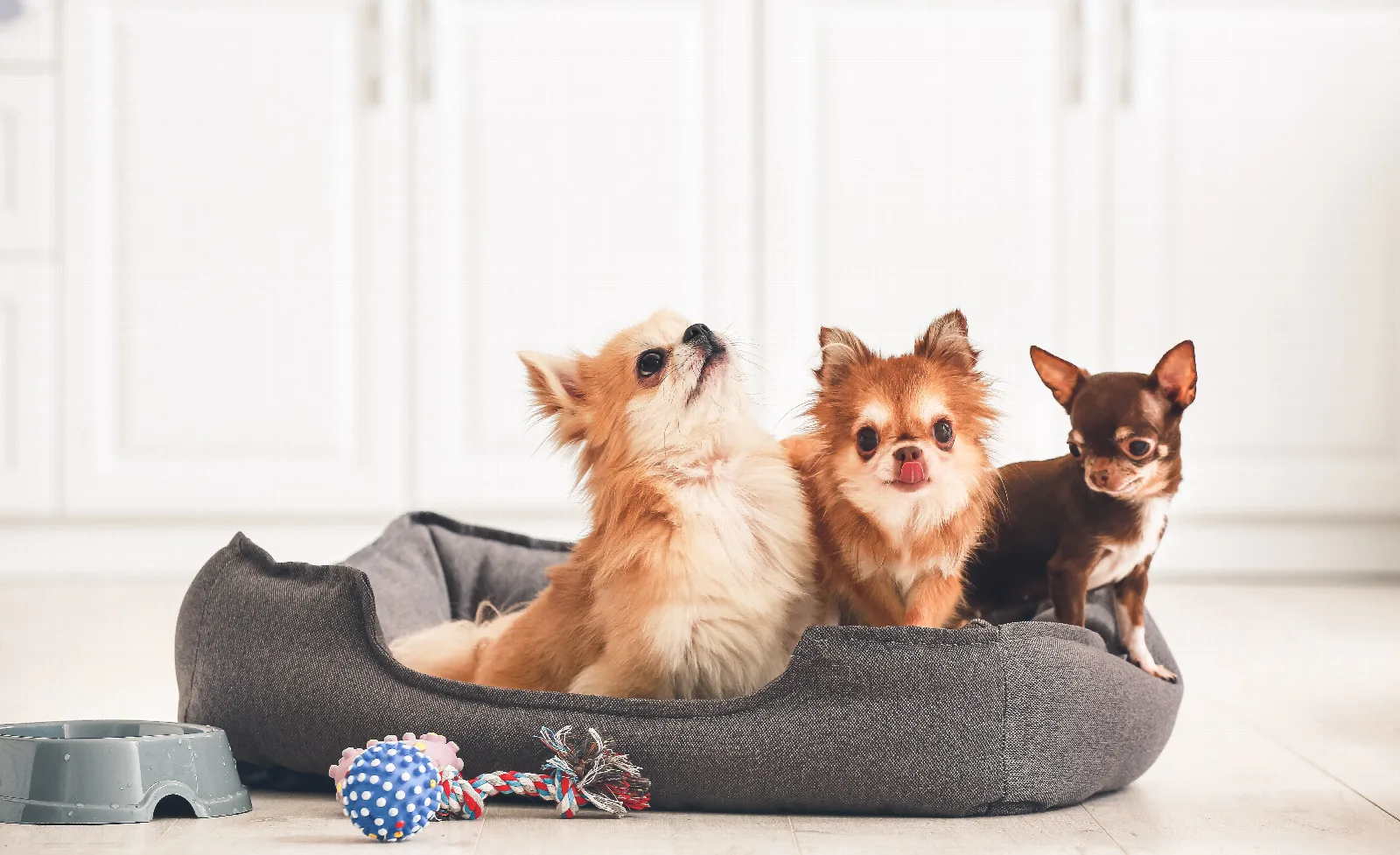
The short answer first: chihuahuas lick a lot because licking works. It is affection and appeasement language they learned before their eyes opened, it tastes interesting, it soothes them, and, crucially, it reliably makes their favorite humans squeal, laugh, and pay attention. A behavior that gets paid that well does not fade on its own. The longer answer sorts licking into its real categories, including the two or three that are health messages rather than love letters.
Quick answer: Chihuahuas lick because licking works: it is affection and appeasement language learned before their eyes opened, human skin tastes salty, the act itself releases calming chemistry, and it reliably earns attention. Face licking is a compliment, biologically speaking, and can be redirected guilt-free if you would rather it stopped. The exception worth acting on is constant paw licking, which is a health signal rather than a habit, with allergies, irritants, sore skin, and pain leading the list.
What licking does for the dog
Licking starts as biology. Mothers lick puppies to clean and comfort them; puppies lick their mothers' faces to solicit care. Adult dogs keep the vocabulary: licking a familiar face or hand is a blend of greeting, affection, and mild social appeasement, roughly I like you, we are friends, please be nice. Layer on the practical: human skin is salty and, around mealtimes, delicious, and the act of licking itself releases calming chemistry, which makes it a genuine self-soothing tool during stress or boredom.
Then comes learning history, which is where chihuahuas excel. Every lick that produces attention, in a breed that studies its person with the intensity described in our velcro chihuahua guide, is a rep in a training program the dog is running on you. Behavior science calls the loop reinforcement: lick, reaction, repeat. Big-eyed lap dogs are simply better funded than most, and the ASPCA's behavior library puts owner-reinforced habits near the center of most everyday behavior questions for good reason.
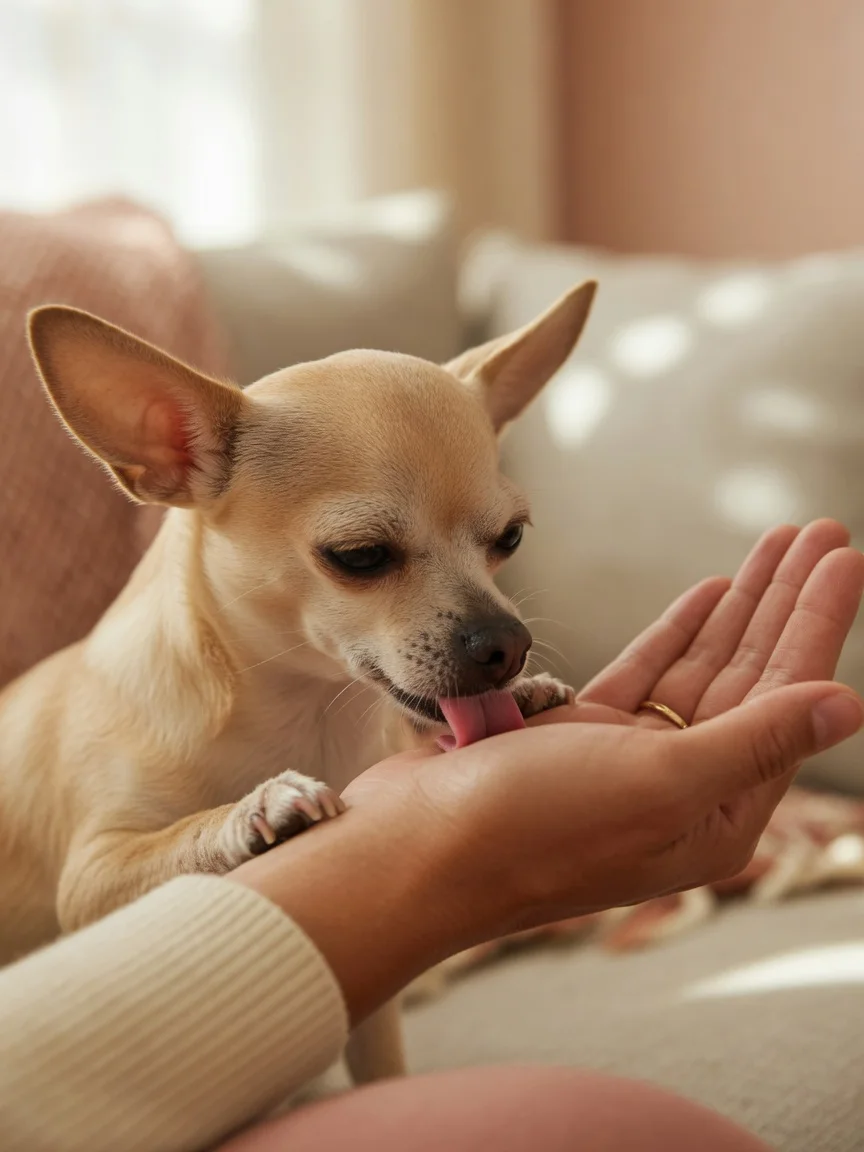
When licking is a message for the vet, not the trainer
Three patterns route out of training territory. Paw licking, persistent and focused, usually means itch, allergy, a sore spot, or an irritant, the territory of our skin guide, and it earns a veterinary look before any behavior plan. Rear-end licking beyond quick hygiene, especially with scooting, suggests anal gland or parasite trouble, covered in the parasite guide.
And a sudden spike in licking anything, air, floors, lips, at odd hours, can signal nausea or pain. The rule I give every client: new, intense, or targeted licking is a health question first; only the familiar, social, aimed-at-you licking is a training question.
Dialing it down without punishing it
You do not need to accept a nightly face wash to keep the affection. The humane sequence, consistent with the AVSAB's position on reward-based methods, has three steps.
Stop paying the behavior. When the licking starts, go quietly boring: stand, turn, or gently set the dog beside you, no scolding, no drama, because to an attention economy even irritation is currency. Timing matters more than intensity; the boring response has to be reliable.
Pay a competing behavior instead. Decide what you want at greetings and cuddle time, sitting close, a chin rest on your leg, a toy in the mouth, and reinforce that generously the instant it happens. Dogs repeat what works; give the affection a better-paying job.
Give the tongue a legal outlet. A smear of xylitol-free peanut butter or wet food on a textured licking mat gives ten calm minutes of the exact activity, on a surface you chose. It doubles as settle-time enrichment for the under-stimulated lickers, and boredom is behind more licking than most owners suspect.
Guests get the same system plus management: leash or lap distance at greetings, reward four-on-the-floor calm, and brief the guest not to squeal, which is easier said than done with a chihuahua performing at full charm.
When to call your veterinarian
Same-day call: licking paired with vomiting, refusal to eat, or obvious distress, which can signal nausea or pain. Routine appointment: persistent paw or rear-end licking, licking that targets one body spot, bald or stained patches under the tongue traffic, or any licking spike that arrived with a life change. Training territory: the classic face-and-hands social licking of a healthy, relaxed dog, which the plan above will politely shrink.
Frequently asked questions
Why does my chihuahua lick my face so much?
Affection and appeasement language, a pleasant salty taste, and a long payment history of laughs and attention. It is a compliment, biologically speaking. If you would rather bank the compliment elsewhere, redirect the greeting to a sit or a chin rest and pay that instead.
How do I stop my chihuahua licking guests?
Manage first: greet on leash or from your lap at a small distance, reward calm before the tongue deploys, and coach guests to stay low-key. Then teach a competing greeting behavior at home where rehearsal is cheap. Consistency across visitors is the whole trick.
Why does my chihuahua lick his paws constantly?
Treat that as a health signal, not a habit: allergies, irritants, sore skin, and pain lead the list. Book a veterinary check before any training plan; behavior work on top of an itch fails, and deserves to.
Are dog licks really kisses?
Close enough for daily use. Licking a beloved face carries genuine affection and social bonding, even if it also carries hopes about your sandwich. Enjoy it, or redirect it, guilt-free either way.
Licking is a conversation your chihuahua is holding with you, and the tone is almost always friendly. Read the exceptions, stop bankrolling the excess, pay the behavior you prefer, and the conversation continues at a volume everyone likes.

No comments yet
Leave a comment