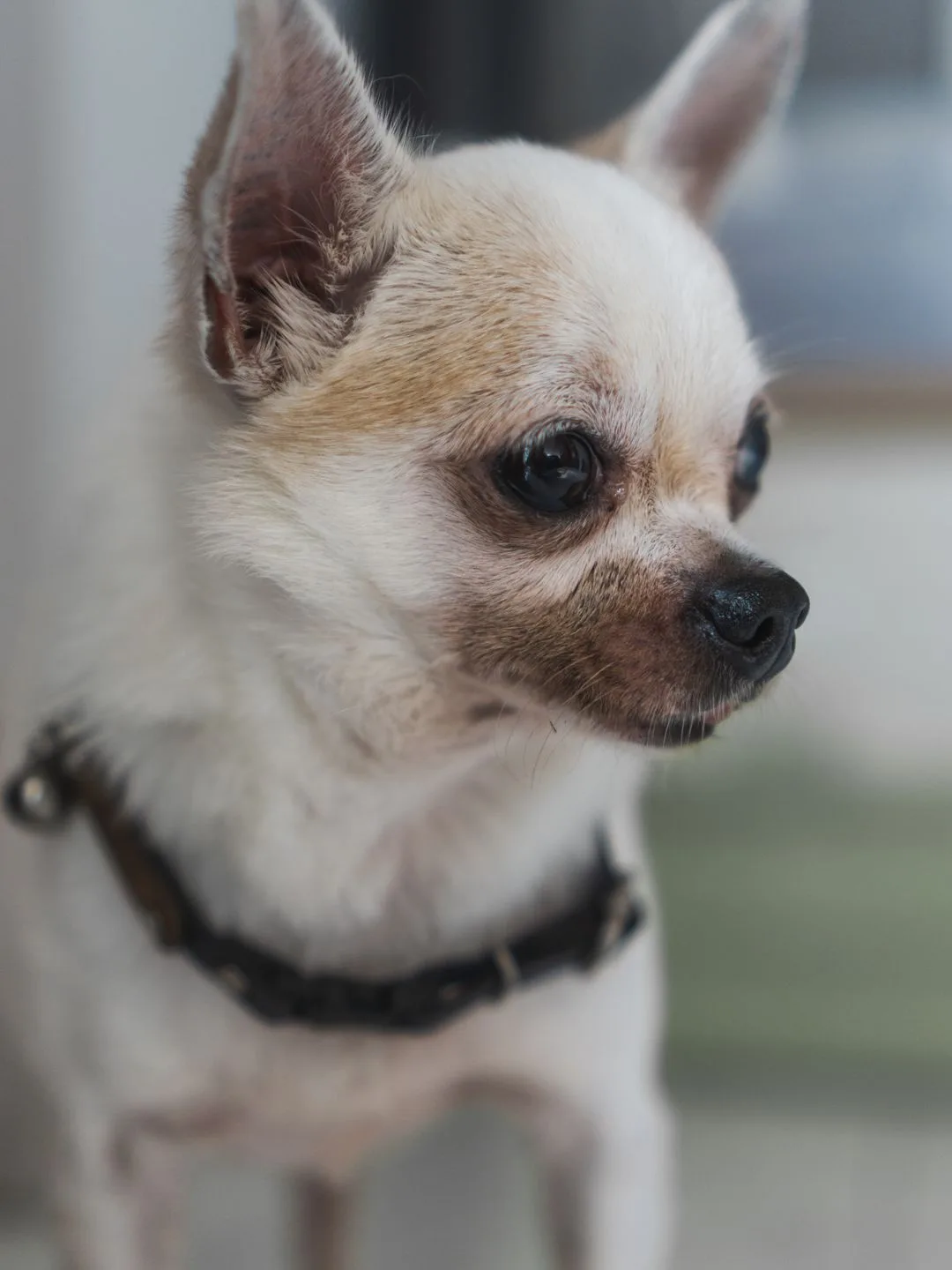
Skin problems are the complaint veterinarians see most, and they are also the one organ system owners can actually inspect on the couch. A chihuahua that scratches more than usual, develops a bald patch, or smells different is handing you information. The skill is knowing which findings are grooming matters, which are parasite arithmetic, and which need a clinic.
One orienting fact first: healthy chihuahua shedding is real but modest, heavier in spring and fall, and never produces bald spots. Thinning to bare skin, redness, sores, or constant scratching is never just shedding. That single distinction sorts most of the worry.
Quick answer: Healthy chihuahua shedding is modest, heavier in spring and fall, and never produces bald spots, so thinning to bare skin, redness, sores, or constant scratching is never just shedding. Rule out fleas properly first, because a single bite can sustain weeks of itching in an allergic dog. Patchy loss with itching suggests parasites, allergies, or infection, while symmetrical thinning without itching points toward hormonal causes. Do not reach for human anti-itch creams, since dogs lick treated skin.
Start with the itch, because the itch has a shortlist
Fleas top the list every time. Even indoor chihuahuas get them, one flea can keep an allergic dog scratching for weeks, and the classic pattern is chewing at the rump and tail base. Part the fur and look for the insects themselves or flea dirt, black specks that smear rust-red on a damp tissue. The American Veterinary Medical Association's external parasites guide covers fleas, ticks, and mites; the practical takeaway is that year-round prevention prescribed by your veterinarian is cheaper than any outbreak, and every pet in the house needs it, not just the itchy one.
Allergies come second. Dogs express allergies through their skin more than their noses. Environmental allergens like pollens and dust mites typically cause paw licking, face rubbing, ear trouble, and belly redness, often seasonal at first; food allergies look similar but stay year-round. Diagnosing which is which is genuinely a veterinary project, and food trials only mean anything when run strictly under guidance. Resist the urge to rotate store-bought diets on a hunch; it muddies the trail.
Mites and infections fill out the list. Mange mites, ringworm, which is a fungus rather than a worm, and bacterial or yeast infections all produce itching, redness, odor, or patchy hair loss, and they are diagnosed with simple in-clinic tests rather than guesswork. Yeasty skin has a distinctive corn-chip smell; greasy coat plus that smell is worth mentioning verbatim at the clinic.
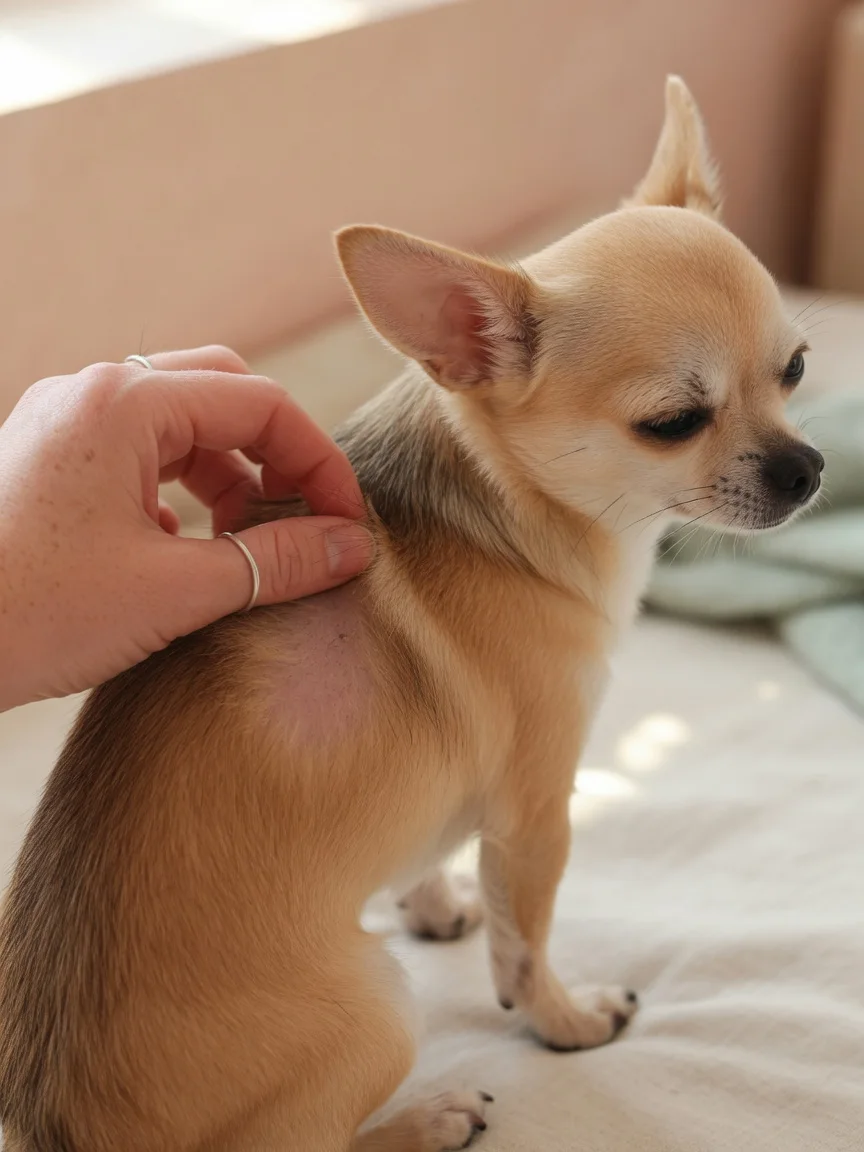
Hair loss without much itching
Not all bald patches itch. Hormonal conditions, low thyroid among them, thin the coat symmetrically along the flanks and often come with weight gain or lethargy; bloodwork finds them. Some chihuahuas carry color-dilution alopecia, a genetic coat-follicle condition seen in blue and other dilute-coated dogs, where the coat thins permanently in the diluted areas; it is managed rather than cured, and it is one reason to be skeptical when rare colors are marketed at premium prices. Pattern baldness on ears and chest also occurs in the breed and is cosmetic. The Merck Veterinary Manual's skin section is a solid plain-English reference for how much the skin and coat reflect what is happening inside the dog.
Hot spots and the overnight sore
A hot spot is a patch of skin the dog has licked and chewed raw, sometimes in hours, usually on top of some initial itch. They are painful, spread fast, and respond quickly to proper treatment, so a moist, angry, spreading sore is a same-day call rather than a home project. Whatever you do, skip the human creams and sprays; dogs lick, and several common human topicals are not meant to be eaten.
The home routine that keeps skin boring
Year-round parasite prevention; bathing that is occasional and gentle, with a dog shampoo, since over-bathing dries small-dog skin; a brush appropriate to coat length once or twice a week, which distributes oils and gives you an inspection pass; and a complete, consistent diet, because coat quality is a nutrition readout.
Supplements such as fish oil can help some dogs, at doses your veterinarian sets. Slot the whole thing into the daily routine and skin care mostly runs itself; the weekly brush doubles as the early-warning scan that catches problems while they are small, the same logic as the checks in our watch-for guide.
When to call your veterinarian
Same-day call: a spreading raw sore, sudden intense scratching that will not stop, facial swelling or hives, or any skin problem in a dog that also seems unwell. Routine appointment: itching that persists past a couple of weeks despite parasite prevention, recurring ear or paw trouble, bald patches, odor or greasiness, or coat thinning with weight or energy changes. Monitor at home: ordinary seasonal shedding, the occasional scratch, and mild dryness after a bath. Bring notes: when it started, where on the body, diet, and what prevention the dog is on.
Frequently asked questions
Why is my chihuahua so itchy but has no fleas?
Fleas are still worth ruling out properly, since one bite can sustain weeks of itching in an allergic dog and the insects are easy to miss. After that, environmental and food allergies are the leading suspects, followed by mites and skin infections. Persistent itching deserves a diagnosis rather than a shampoo carousel.
Do chihuahuas shed a lot?
Moderately. Both coat types shed year-round with spring and fall peaks; the short coat's shed is bristly, the long coat's fluffier. Weekly brushing keeps it manageable. Bald patches, thinning, or redness are beyond shedding and belong at the clinic.
Why is my chihuahua losing hair in patches?
Patchy loss with itching suggests parasites, allergies, or infection; symmetrical thinning without itching points toward hormonal causes; and thinning limited to dilute-colored areas in a blue or similar coat suggests color-dilution alopecia. Each has a different test and a different plan, which is exactly why patchy hair loss earns an exam.
Can I use human anti-itch cream on my dog?
No. Dogs lick treated skin, and several human topicals are harmful when swallowed. If the itch is bad enough that you are reaching for a cream, it is bad enough for a veterinary visit, where the treatment will be both safe and aimed at the actual cause.
Skin tells the truth early and in plain sight. Run your hands over the whole dog once a week, know what her normal coat feels and smells like, and treat departures from that normal as information. Most of what you will ever find is a flea, a dry patch, or nothing at all; the routine is what guarantees the exceptions get caught in week one instead of month three.




No comments yet
Leave a comment