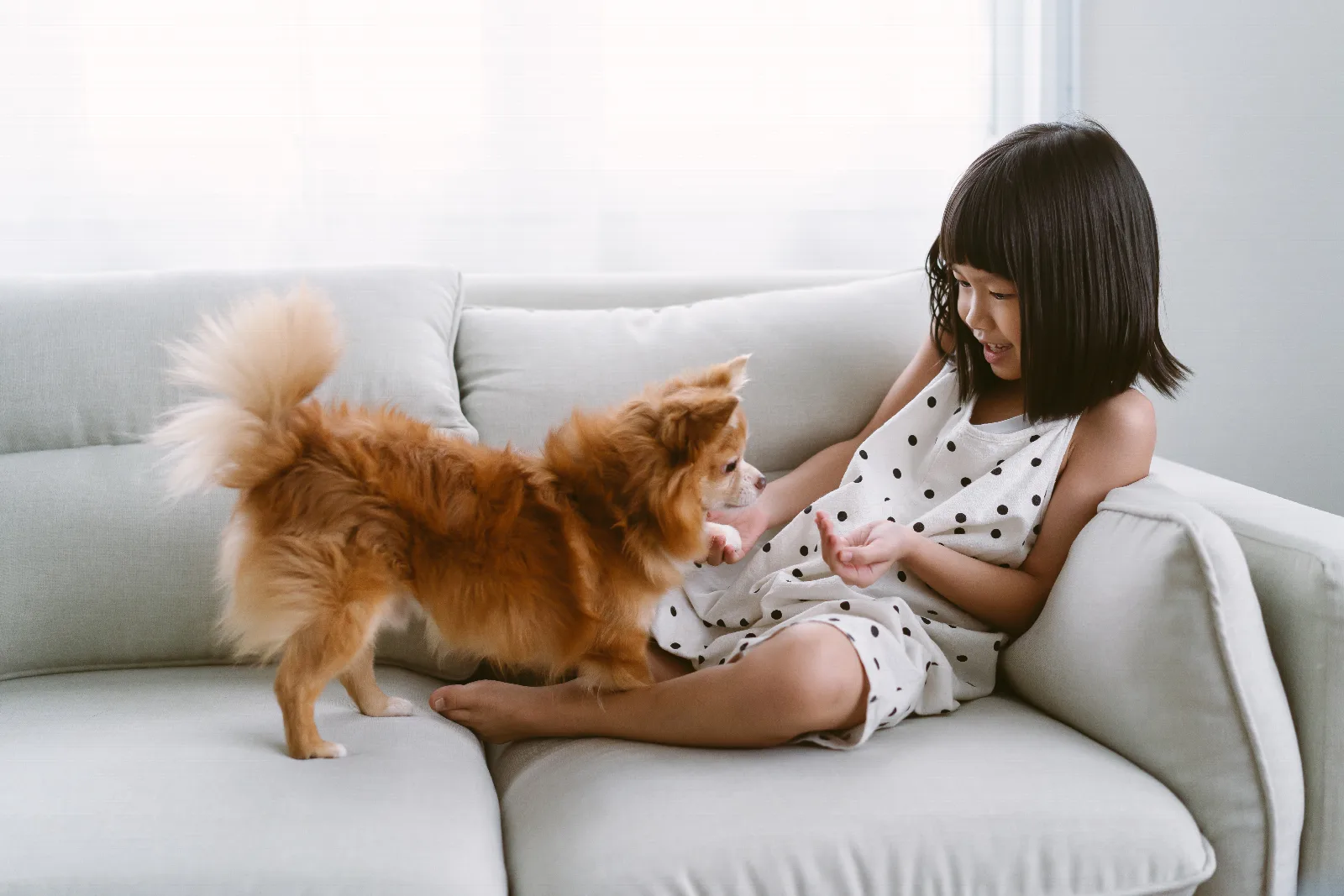
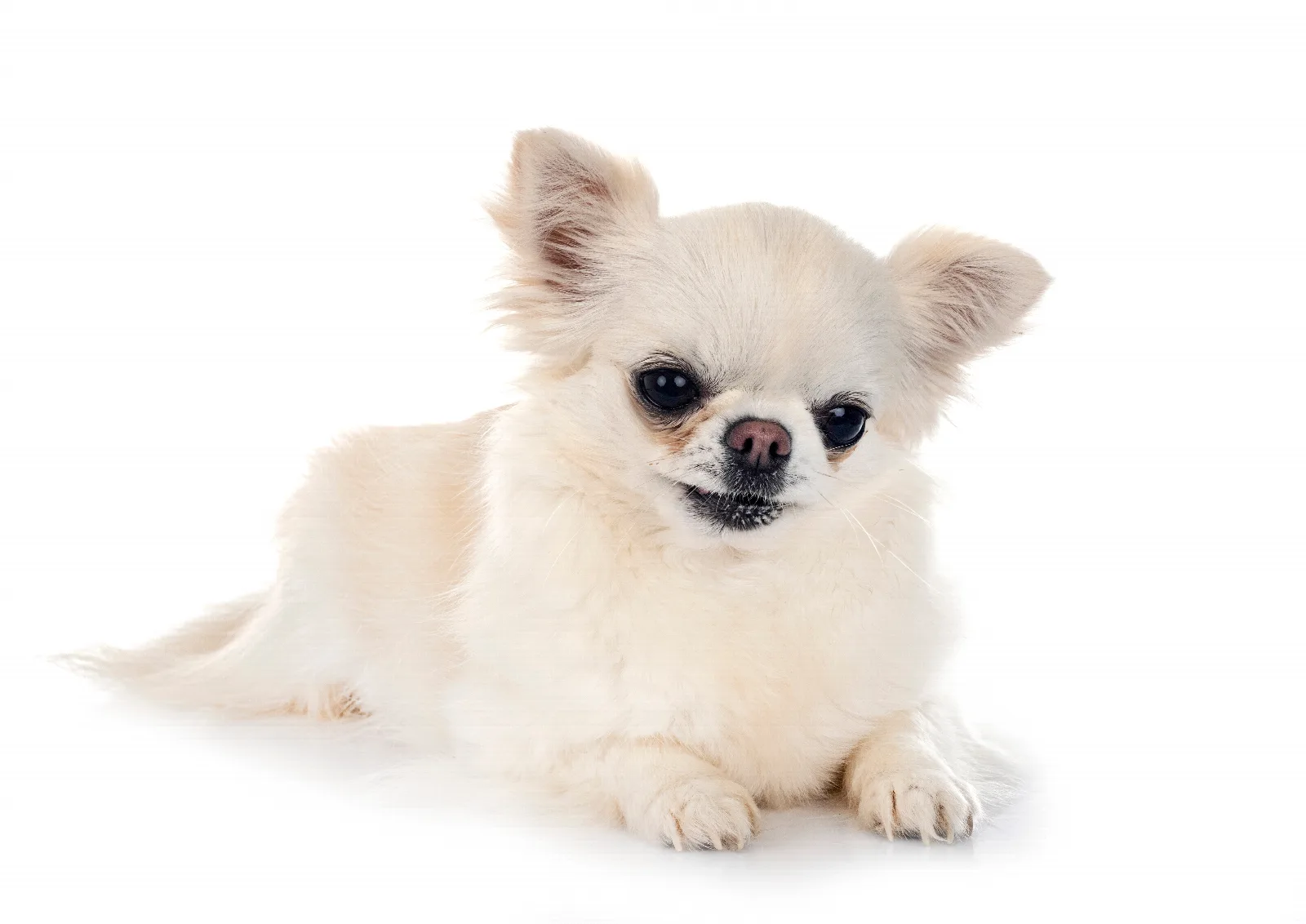
The chihuahua appears on worst-dogs-for-kids lists with monotonous regularity, and the listicles have the risk exactly backward. In a household with small children, the party in genuine danger is the four-pound dog: droppable, steppable, squeezable, and equipped with exactly one defense, the teeth that put the breed on the list in the first place. Get that reframe right and the whole question sorts cleanly, because chihuahuas and children are not a bad pairing; they are a pairing with a fragile member and a management manual. Here is the manual.
Quick answer: The listicles have the risk backward: in a household with small children the party in genuine danger is the four-pound dog, which is droppable, steppable, and equipped with one defense. With school-age children who can follow handling rules, chihuahuas are genuinely good family dogs. With toddlers, the pairing is high-risk in both directions and needs strict separation by default, baby gates, supervised-only contact, and a child-free zone of the dog's own.
The verdict, by age of child
Babies and toddlers: hardest mode. Toddlers grab, fall, and move like unguided cranes; a chihuahua reads that as threat and physics reads it as crush risk. Households survive this stage on strict separation-by-default, baby gates, supervised-only contact, the dog's own child-free zone per our den logic, and it is honest to say many behaviorists would point a toddler household toward a sturdier breed or a later start.
School-age children: the sweet spot. A child old enough to follow rules is old enough to be excellent chihuahua staff: gentle play, training games per our cues guide, where children make superb lure-and-reward trainers, and the mutual devotion the breed does better than nearly anything. This is where the great chihuahua-and-kid stories live.
Teenagers: full partnership, and frequently the dog's chosen person, to the family's mild offense.
The five house rules
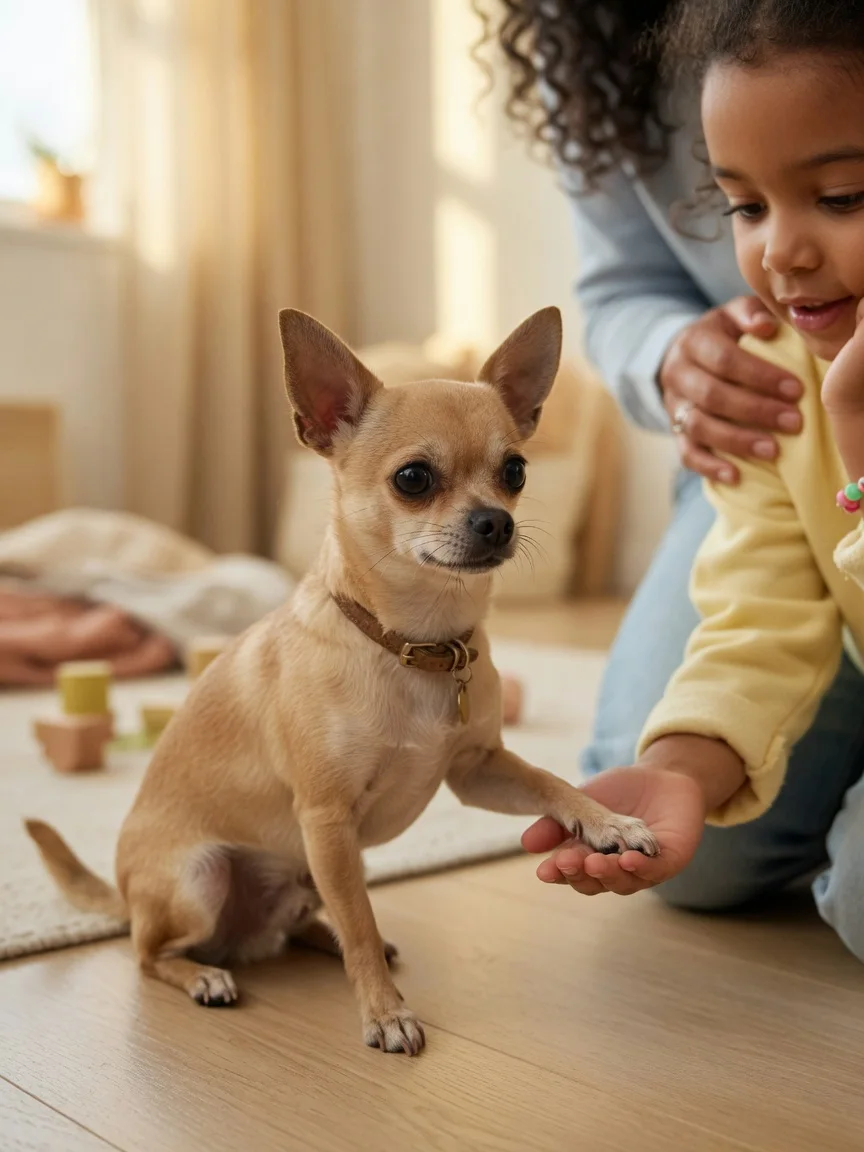
One: supervision, always, for the under-eights, no exceptions for good days. Two: dogs are stroked, not carried; child-carried chihuahuas are the breed's leading fall injury, and the invitation-based holding system from our consent guide is taught to children as law. Three: the dog can always leave, and a retreat is never chased; a dog with an exit rarely needs her teeth.
Four: faces stay out of dog faces, the single highest-yield bite-prevention rule in existence, per our biting guide. Five: sleeping, eating, and hiding dogs are off-limits, which children absorb happily when framed as the dog's bedroom rights. Households that run these five report the pairing working beautifully; households that laugh at them supply the listicle anecdotes, a selection effect the AVMA's family-pet guidance would recognize instantly.
The baby-preparation note
A chihuahua meeting a new baby runs the same architecture as our jealousy guide, started months early: baby sounds and gear paired with treats, routines shifted in advance so the baby does not take the blame, the dog's resources and refuge preserved, and never one unsupervised second, which is a rule about all dogs and all infants everywhere. Done properly, the breed's usual verdict on the new arrival is intense supervisory interest followed by appointment of self as crib sentry.
If the dog has already growled or snapped
Plenty of families arrive at this question after something has already happened, so here is the part the prevention lists skip. Do not punish the growl. A growl is the dog telling you, clearly and without injury, that she has run out of other options. Punish it and you do not remove the feeling, you remove the warning, and the next report is a bite that arrived "with no warning at all". Thank the growl, end the interaction calmly, and treat it as information about what needs to change.
Then change something structural rather than asking the dog to tolerate more. Nearly every household growl traces back to one of four things: the dog had no exit, she was picked up by a child, she was disturbed while sleeping or eating, or a face came down into hers. Each has a fix in the five rules above, and the fix is environmental, not disciplinary.
Escalate to a professional when the growling repeats after the setup has genuinely changed, when the dog stiffens or snaps without a growl first, or when anyone in the house has been broken-skin bitten. Ask your veterinarian to rule out pain first, because a dog who has started objecting to handling may simply hurt, and dental disease and luxating patellas are both common and both easy to miss. If the dog gets a clean bill of health, a credentialed behaviorist is the next call, and the earlier that call happens, the shorter the work.
Frequently asked questions
Are chihuahuas good family dogs?
With school-age children and the five rules enforced, genuinely yes: devoted, playful, and durable in spirit if not in skeleton. With toddlers, the pairing is high-management, and honesty says some families should wait a few years or pick sturdier, per the age-by-age verdict above.
Why do chihuahuas end up on worst-breeds-for-kids lists?
Because unmanaged fragility produces defensive snapping, and defensive snapping produces listicles. The breed's bad reputation with children is largely the management manual unread: the same dog under the five rules is a famously good companion for respectful kids.
Will my chihuahua be jealous of the new baby?
Expect disrupted-routine behavior more than soap-opera jealousy, and prepare months ahead: pair baby signals with good things, shift schedules early, and keep her refuge and resources intact. The full protocol lives in the jealousy guide, and it works as well for cribs as for partners.
Can my child walk or train the chihuahua?
Train, yes, supervised, and children are often the best treat-timers in the house. Walk, only with an adult until the child can genuinely manage the leash and the world, since the dog end of the leash weighs four pounds and the world contains loose retrievers.
A fragile dog, a manual of five rules, and the best odds in dogdom of a child growing up adored at close range: that is the honest chihuahua-and-kids verdict. Enforce the manual, and the worst-breeds listicle loses its favorite anecdote to a better genre, the kid asleep on the sofa under four pounds of appointed guardian.

No comments yet
Leave a comment