
The internet's chihuahua-facts industry runs on recycled listicles of escalating length, ten facts, twenty-five, fifty-five, in which perhaps six items survive contact with a reference book. This is the audited edition: fifteen facts, each verified, each linked to the full story elsewhere on this site, and each chosen because it changes something about how you see the animal currently supervising you.
Quick answer: The genuinely verified chihuahua facts are better than the recycled listicles: the breed's paperwork is pre-Columbian, since Techichi companion dogs lived in Mesoamerica a thousand years before European contact; the molera, a soft spot on the skull, is normal rather than a defect; the breed standard accepts any colour; and the widely quoted bite-force PSI figure is fabricated. Fourteen to sixteen years is routine, longer with lean weight and dental care.
The history shelf
1. The breed's paperwork is pre-Columbian. Small companion dogs, the Techichi, lived in Mesoamerican civilization a thousand years before European contact, making the chihuahua's the deepest continuously American breed story going, per our origins guide. 2. The name is a place. The Mexican state of Chihuahua, where nineteenth-century visitors met and exported the little dogs; the AKC registered its first, a dog named Beppie, in 1908.
3. She was never bred to work. No herding, hunting, or ratting résumé exists: the ancestral job was companionship, which explains, per the AKC breed page, essentially the entire temperament. 4. The small-size gene is older than the sofa. A key body-size variant in chihuahuas traces back to ancient wolves rather than modern toy breeding: she is running very old firmware at very small scale.

The anatomy shelf
5. Many carry a soft spot, and it is normal. The molera, a fontanel like a human baby's, is a breed-recognized trait rather than a defect, per our molera guide and the Chihuahua Club of America. 6. Officially there are exactly two types. Smooth coat and long coat, full stop; every teacup, micro, and premium label is marketing, per our types guide.
7. Every color is legal. The standard accepts any color or marking whatsoever, which makes rare-color pricing dogdom's most audacious surcharge, per our colors guide. 8. The famous bite-force statistic is fabricated. No study has measured chihuahua bite force; every viral PSI figure traces to nothing, per our myths audit. 9. The ears are multitools. Radar, radiator, and mood semaphore in one oversized accessory, per our ears guide.
The living-specimen shelf
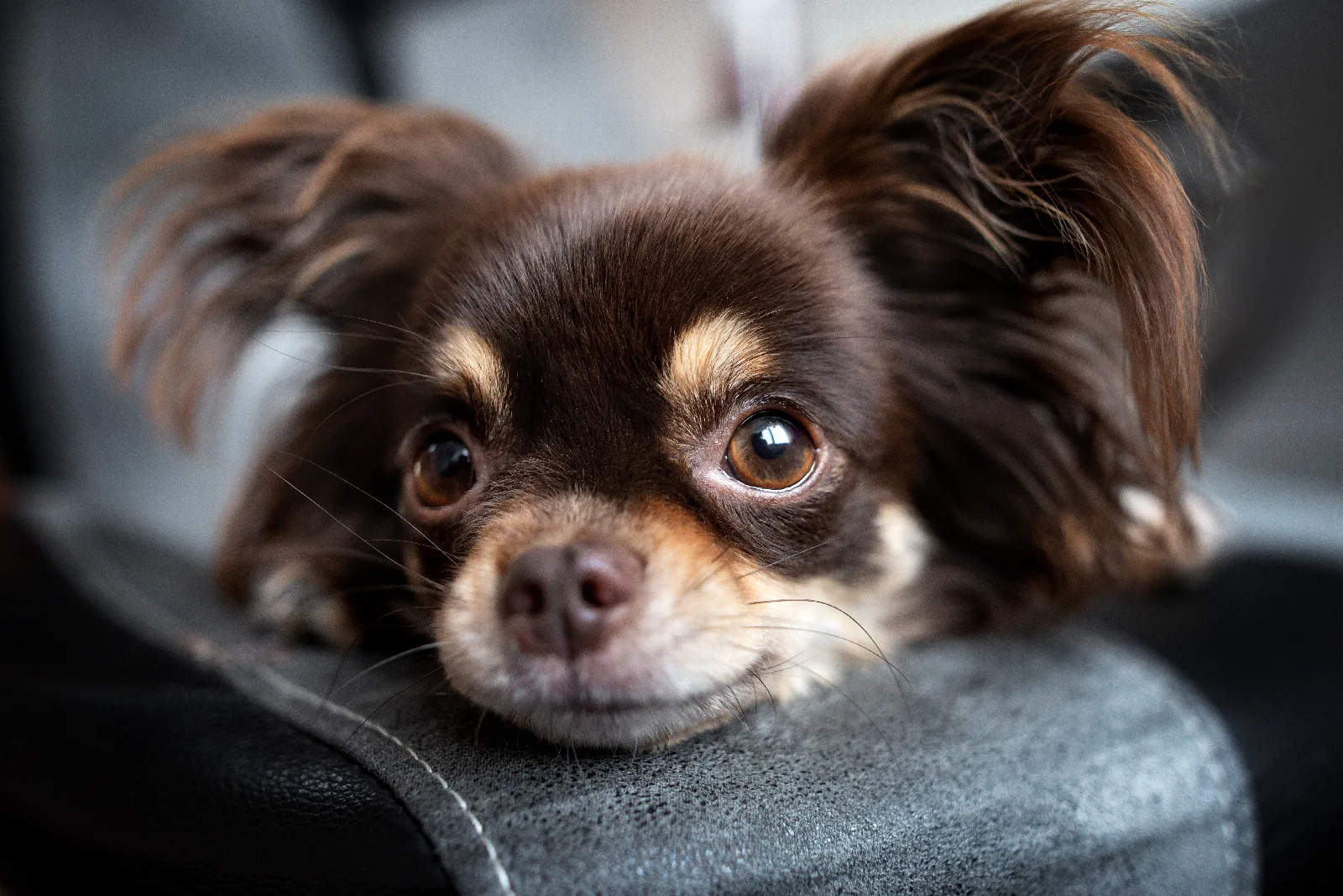
10. She is the smallest recognized breed on earth, show ceiling six pounds, and simultaneously owns one of the longest lifespans in dogdom, fourteen to sixteen years routinely, per our lifespan guide: maximum dog-years per pound, mathematically unbeatable. 11. The devotion is structural, not sentimental. A millennium of companion selection built the velcro attachment and the one-person specialization, per our velcro guide; loyal is not a compliment here, it is a specification. 12. The protective instinct is genuine and unscaled. Chihuahuas alert, guard, and interpose like dogs twenty times their size, which is temperament working as designed and physics left unread, per our aggression guide.
13. The intelligence rankings measured the wrong thing. Mid-table at taking orders, elite at reading and managing humans, per our intelligence guide. 14. Litters are tiny. One to three puppies is standard issue, with the whelping stakes that implies, per our litters guide. 15. She is among the most surrendered dogs in America, a sobering closer: popularity plus fragility plus misunderstanding keeps shelters full of the breed, per our rescue desk, which is the fact most worth doing something about.
Fun facts about chihuahuas
The rapid-fire shelf, for settling arguments. Fun facts about chihuahuas: it is the smallest recognized breed in the world; the breed carries one of the biggest brains relative to body size in all of dogkind; a chihuahua named Miracle Milly holds the record for shortest dog at under ten centimeters; puppies are born with a soft spot like human babies; and the breed has appeared on everything from ancient Mexican pottery to Hollywood red carpets. The rest of the interesting facts about chihuahuas on this page come with their receipts attached. The questions owners actually type at two in the morning are stranger than any listicle, and we answered the oddest of them straight. The breed also has a long run at one unlikely title, which the World's Ugliest Dog Contest and its chihuahua winners covers, rules and all.
Frequently asked questions
What is the most surprising chihuahua fact?
By reader reaction: the fabricated bite-force statistic, followed closely by the molera being normal and the pre-Columbian paperwork. The breed's genuine facts reliably outperform the invented ones, which is not something every listicle subject can claim.
Are chihuahuas really loyal and protective?
Structurally so: companion-selected for a millennium, they attach hard, favor one person, and run full-scale guarding software on four-pound hardware. The loyalty needs no training; the protective theatrics benefit from the aggression guide's management.
How long do chihuahuas live?
Fourteen to sixteen years routinely, longer with lean weight and dental care, the two levers the health library keeps pulling. Smallest breed, longest runway: the best value proposition in dogdom, dryly speaking.
What is the rarest thing about the breed?
Honestly, its history: no other breed combines pre-Columbian roots, a normal skull fontanel, an any-color standard, and a wolf-era size gene in one animal. The rare-color and teacup rarities sold online are inventions; the actual rarities came standard.
Fifteen entries, zero recycled inventions, and a subject that never needed embellishing: the smallest dog in the world, carrying the oldest American paperwork, the biggest per-pound personality, and, in point fifteen, the strongest claim on your next trip to the shelter.


No comments yet
Leave a comment