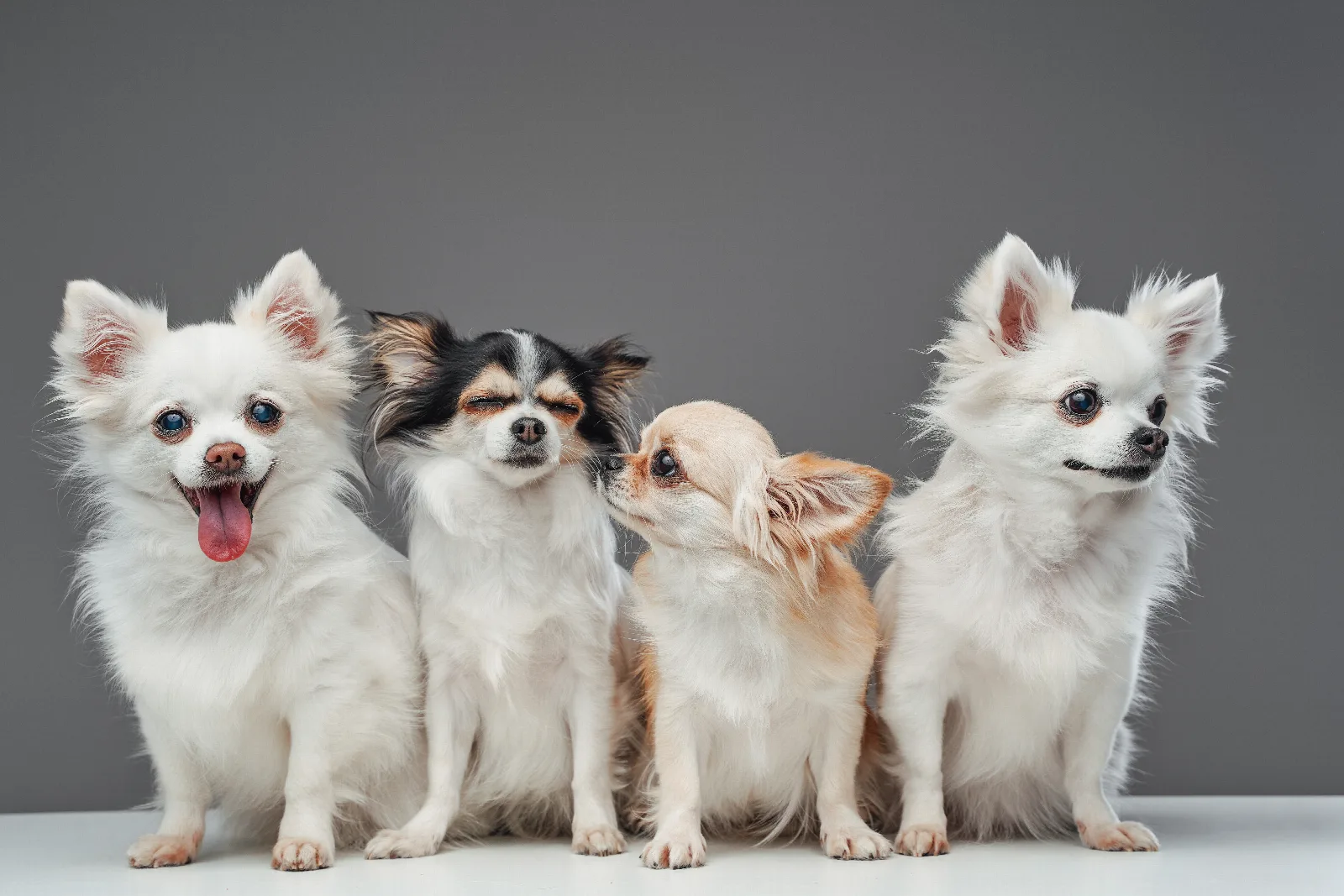
The chihuahua's color chart is one of the most permissive in all of purebred dogdom, and the sentence that matters most comes straight from the rulebook: the AKC breed standard accepts any color, solid, marked, or splashed. Any. Which makes the thriving market in rare chihuahua colors one of dog commerce's more impressive achievements: charging a premium for entries on a list where everything was already allowed. Here is the actual palette, the genetics in plain language, and the two coats that genuinely carry fine print.
| Color / pattern | Status | Note |
|---|---|---|
| Fawn, cream to red | Legal, common | The breed's postcard color |
| Black-and-tan, chocolate, white, black | Legal, common | Fill most of the census |
| Sable, brindle, splash, tan-point | Legal markings | Standard accepts any marking |
| Solid white, solid black | Legal, less common | Scarcer, never worth a surcharge |
| Blue (dilute) | Legal | Footnote: color dilution alopecia in some dilute coats |
| Merle | Contested | Some registries abroad refuse it; never breed merle to merle |
Quick answer: The AKC breed standard accepts any color, solid, marked, or splashed, which makes the thriving market in rare chihuahua colors a marketing achievement rather than a genetic one. Fawn is the breed's postcard color, with black-and-tan, chocolate, cream, white, black, and their combinations filling most of the census; solid white and true solid black are among the least common. Blue is simply dilute pigment, though colour dilution alopecia is worth knowing about, and double-merle breeding risks serious eye and hearing defects. Color does not affect personality.
The palette, from common to less common
Fawn, in every shade from pale cream to deep red, is the breed's postcard color, with black-and-tan, chocolate, cream, white, black, and their combinations filling most of the rest of the census. Markings run the standard dog vocabulary: solid coats, two-tone coats, sable shading where dark tips overlay a lighter base, brindle striping, spotted-on-white splash patterns, and the tan-point pattern that puts eyebrows and boots on a darker dog. Every one of these appears in both coat varieties from our types guide, and none of them, not one, affects temperament, which is set by the machinery in our socialization guide rather than by pigment.
Less common, and therefore the marketing department's favorites: solid white, solid black, lavender-ish dilute chocolates, blue, and merle. Less common is doing real work in that sentence: it means you will meet fewer of them at the park, and it means precisely nothing about quality, health-positive traits, or value, a point the Chihuahua Club of America makes in its guidance against color-based marketing. The rare-color surcharge is the same product as the teacup surcharge next aisle over: scarcity theater.
The two colors with actual footnotes
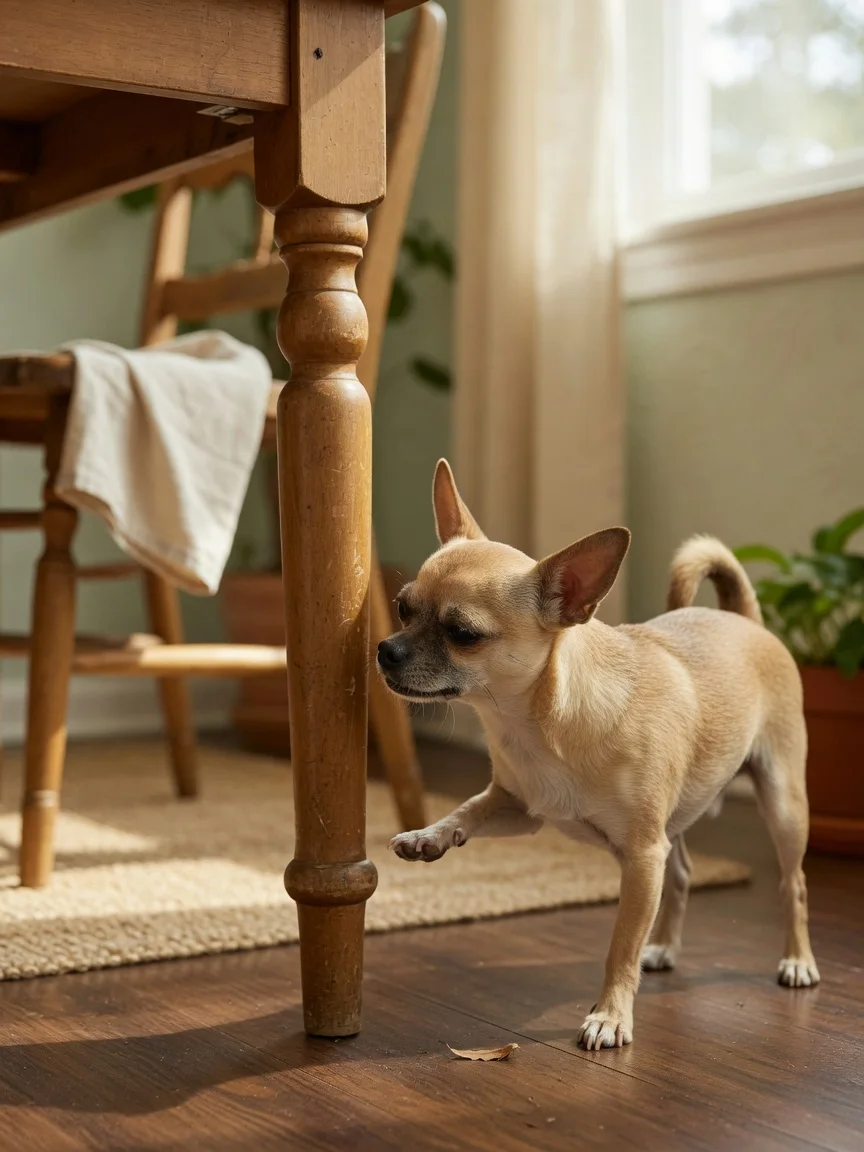
Blue, a dilute gray produced by a recessive gene acting on black, is a perfectly legal, frankly handsome coat with one clinical association worth knowing: color dilution alopecia, a follicle condition in some dilute-coated dogs that thins the coat in the diluted areas, covered in our skin guide. Not every blue dog gets it, it is managed rather than cured, and its existence is exactly why paying extra for blue is paying extra for a modest health question mark.
Merle, the marbled swirl pattern, is the genuinely serious footnote. The merle gene arrived in the breed's gene pool recently enough that its presence is debated among breed historians, several kennel clubs abroad refuse to register merle chihuahuas at all, and the genetics demand respect: breeding two merles together produces double-merle puppies at real risk of serious eye and hearing defects.
A single merle from a tested, competent breeder can be a healthy dog; a merle sold at a premium by anyone who cannot explain the double-merle rule is a walking advertisement for finding a different seller. When registries disagree, name it and choose accordingly, which is the entire Nathan method in one sentence.
Reading color like a breeder, not a buyer
Three practical notes. Puppy coats shift: many chihuahuas lighten, darken, or reveal sabling as the adult coat arrives, so buy the dog, not the eight-week-old paint job. Noses, eye rims, and pads track coat genetics, chocolate and dilute dogs wear self-colored rather than black points, which is standard-legal and occasionally alarms first-time owners for no reason.
And in the show ring, color is nearly weightless: judges reward structure, movement, and the head we covered in the head-shapes guide, with color preference explicitly absent from the standard. The only party that ever cared what color your chihuahua is was the invoice. Not every striking pattern is genetic, either: Poppi's mullet stripe is very likely dye, which raises its own safety questions.
Frequently asked questions
What is the rarest chihuahua color?
Solid white and true solid black are among the least common, with clean merles and dilutes behind them. Rare here means statistically infrequent, not valuable or superior; the standard accepts every color equally, and a rare-color price premium tells you about the seller, not the dog.
Are blue chihuahuas unhealthy?
Blue itself is just dilute pigment, and many blue dogs live entirely ordinary lives. The one association worth knowing is color dilution alopecia, a manageable coat-thinning condition some dilute dogs develop, which is a reason to skip the blue surcharge, not a reason to avoid a blue dog you otherwise love.
What is wrong with merle chihuahuas?
A well-bred single merle can be healthy; the dangers are double-merle breeding, which risks serious eye and hearing defects, and the pattern's contested history in the breed, which is why some registries abroad reject it. The screen is simple: a merle seller who cannot explain merle-to-merle risks has failed the interview.
Do chihuahua colors affect personality or price?
Personality, no, there is no evidence linking pigment to temperament in this or any breed. Price, only artificially: color premiums are marketing, and ethical breeders price on health testing and care, not paint. The correct cost of a rare color is zero extra dollars.
Every color, honestly weighted: that is both the standard's position and this column's. Pick the dog whose body and temperament check out, let the coat be the lottery ticket it is, and enjoy owning the one breed where the entire crayon box is, officially and forever, correct.

No comments yet
Leave a comment