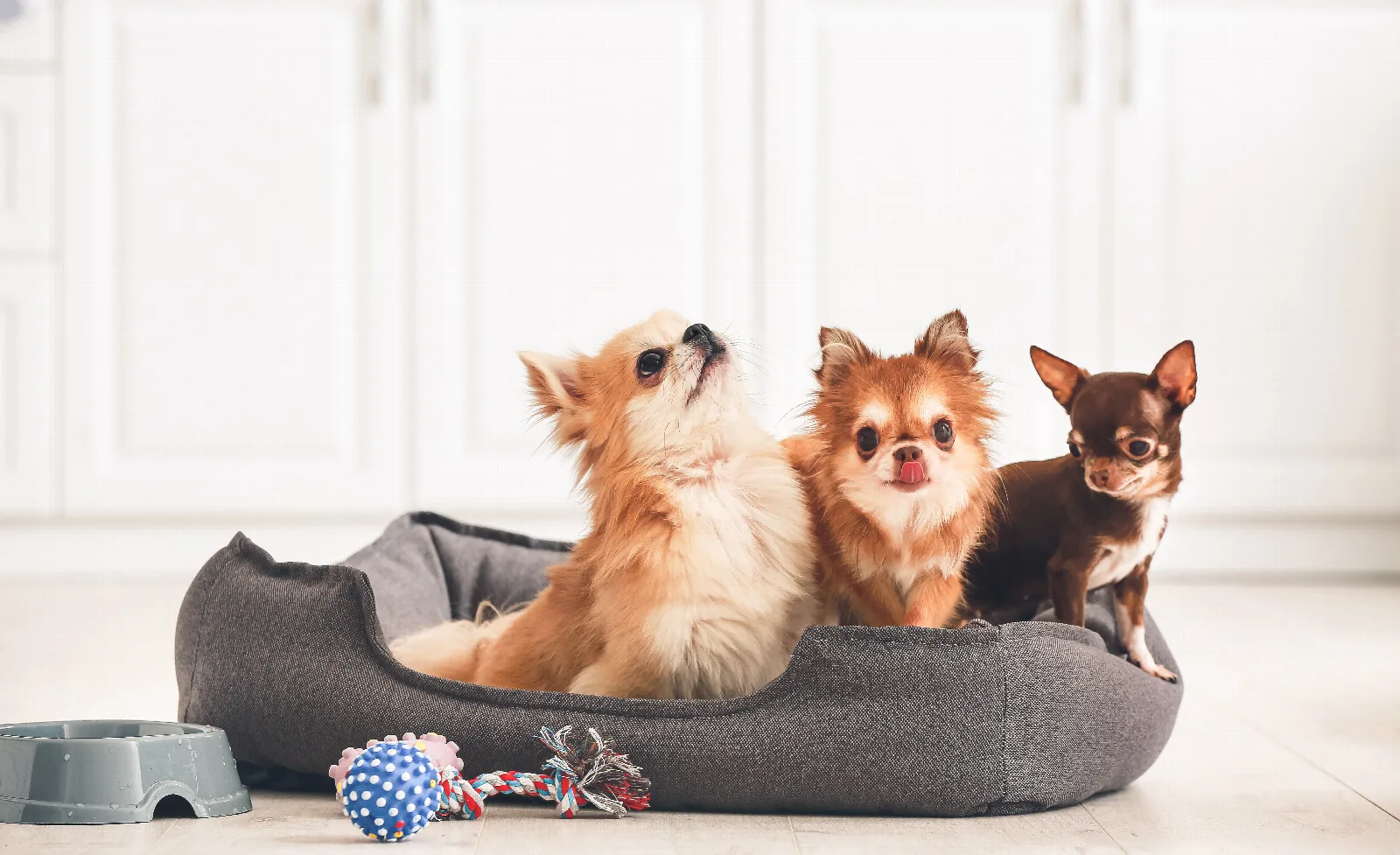
The internet will happily sell you thirteen types of chihuahua, with pictures. The registries that actually define the breed recognize two. The gap between those numbers is where descriptions, nicknames, and outright sales inventions live, and sorting a label into its correct bin is the most useful five minutes of homework a prospective owner can do, not least because one of the fake types comes with real welfare consequences.
| Label | What it is | Note |
|---|---|---|
| Smooth coat | Official variety | Glossy, close-fitting; recognized by AKC |
| Long coat | Official variety | Soft, fringed; same dog underneath |
| Apple head / deer head | Descriptions | Head styles, not varieties |
| Fawn, blue, merle… | Colors | A blue chihuahua is a chihuahua wearing blue |
| Teacup, micro, pocket | Marketing labels | No registry recognizes them; welfare red flag |
| Chiweenie, chug, chorkie | Mixes | By definition not a type of chihuahua |
Quick answer: The registries that actually define the breed recognize exactly two varieties: smooth coat and long coat. Everything else, teacup, micro, mini, pear head, deer head, is a description, a nickname, or a sales label, and the thirteen-types listicles are counting coats, colors, head shapes, and sizes as though they were separate breeds. Teacup is the one that matters, because breeding deliberately below the healthy size floor stacks real health risks. Coat variety and head style do not predict temperament.
The official answer: two coats, one breed
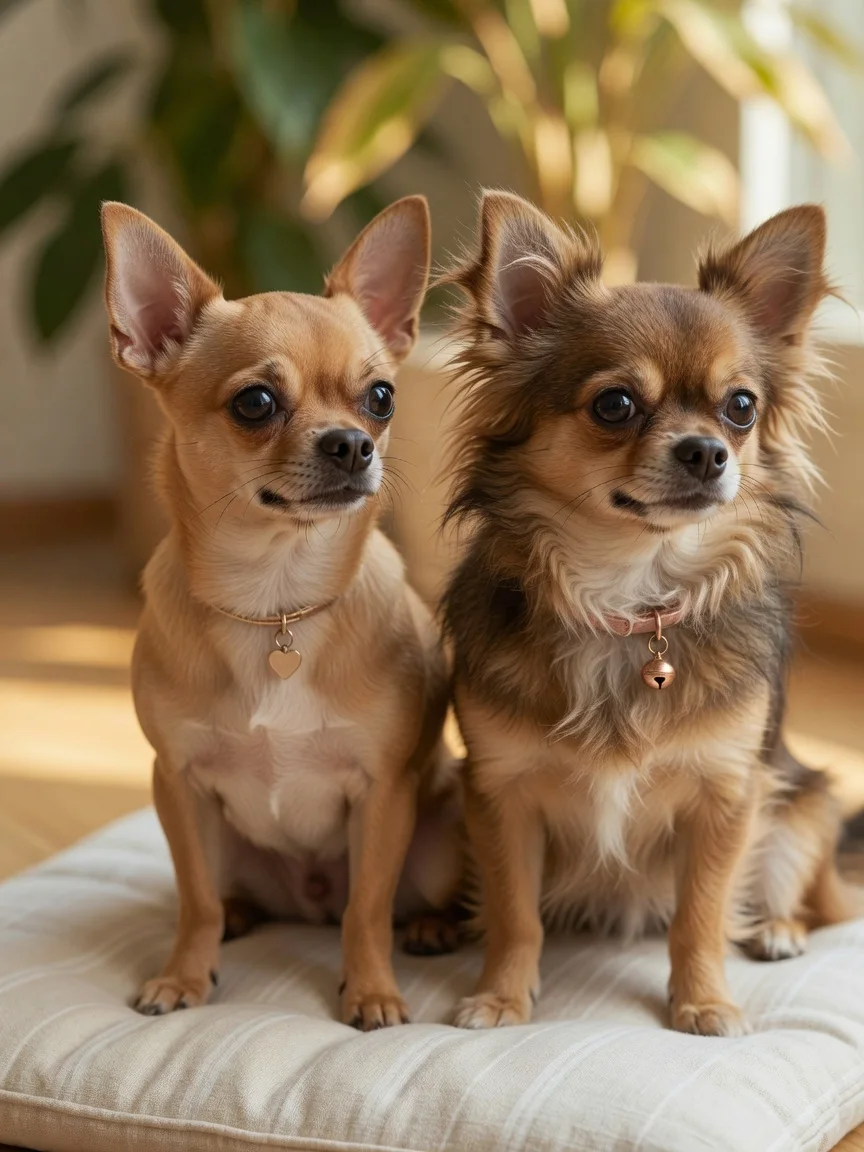
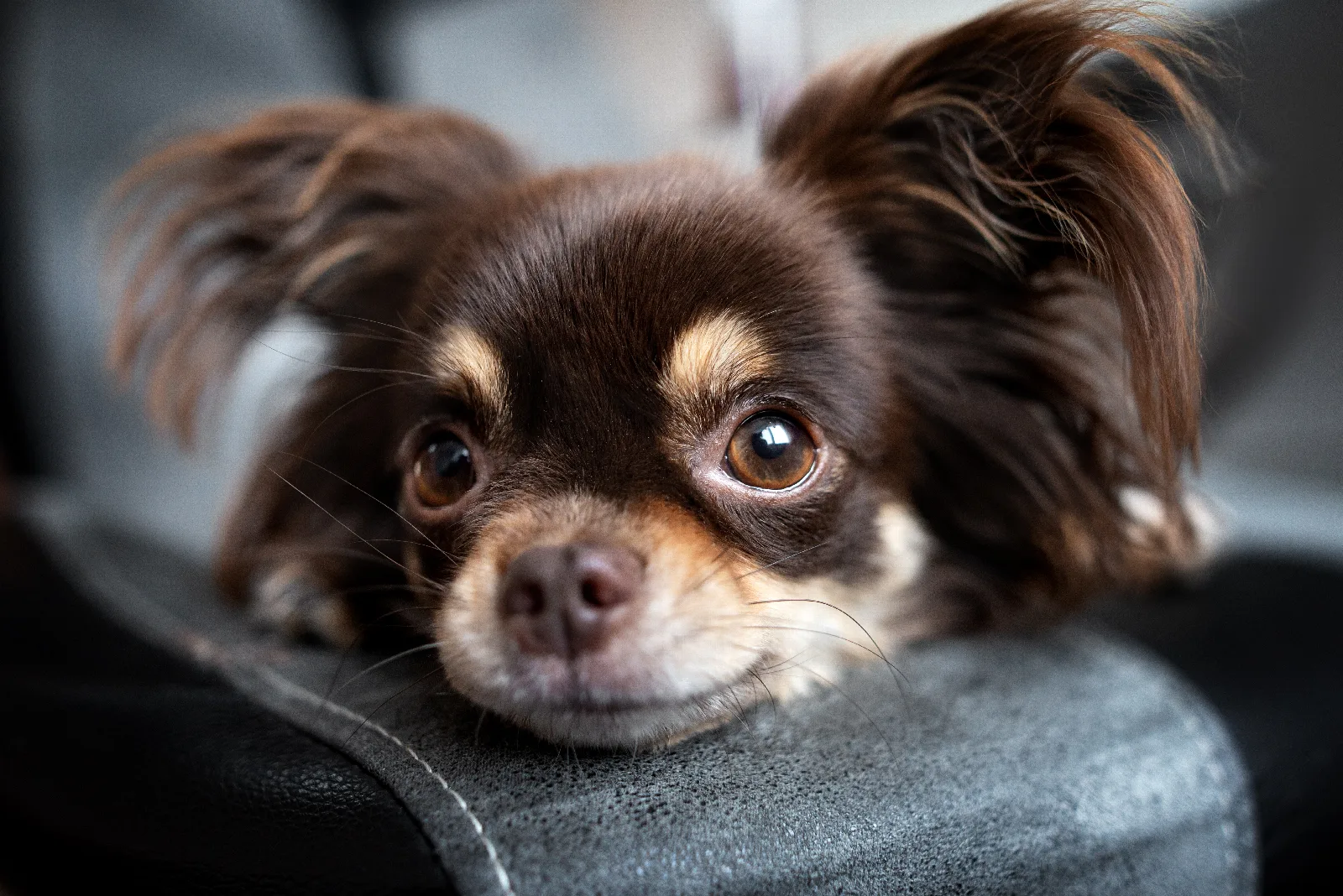
Per the AKC breed standard and the Chihuahua Club of America, the breed comes in exactly two varieties: the smooth coat, glossy and close-fitting, and the long coat, soft and flat or slightly wavy with fringed ears, feathered legs, and a plumed tail, the variety our long-haired guide covers in full.
Same dog underneath, same size range, same temperament spread; the varieties are even shown together at most levels. Both coats can occur in one litter, and every color and marking in the book is legal in both, per our colors guide. That is the complete official taxonomy. Everything below this paragraph is unofficial.
The descriptions: real variation, informal labels
Apple head and deer head describe skull-and-build styles within the breed, one of them borrowed from the standard's own language, and they earn their own full treatment in our head-shapes guide. Useful words; not varieties. Fawn, blue, merle, and the rest are colors, not types, however often listicles promote them to categories; a blue chihuahua is a chihuahua wearing blue.
And the size range itself, from petite two-pounders to sturdy seven-pound tanks, is ordinary within-breed variation: the standard sets a weight ceiling of six pounds for the show ring and no floor, and pet dogs healthily overshoot the ceiling all the time.
The marketing bin, and the one that matters
Teacup, micro, mini, pocket: no registry recognizes any of these, and the CCA has been explicit that such labels are marketing rather than variety. Here is where Nathan drops the dry tone for a paragraph, because the label does damage. Breeding for extreme tininess concentrates the breed's fragilities: harder hypoglycemia, per our blood sugar guide, more fragile bones, tougher anesthesia, more molera-and-hydrocephalus complications, and, bluntly, runts sold at premium prices to owners who were told small equals special.
A responsibly tiny chihuahua exists, some healthy dogs are simply petite, but a seller leading with teacup as a product tier is advertising either ignorance of the breed or indifference to it, and both are disqualifying. The full buyer's-screen conversation lives in our pre-adoption guide.
And the mixes are not types either: chiweenies, chugs, chorkies, and the rest of the portmanteau aisle are crosses with their own charms and their own upcoming articles, but a chihuahua mix is by definition not a type of chihuahua, whatever the flea-market sign says.
How to read any chihuahua label in ten seconds
Ask two questions. Does the term appear in a breed standard? Then it is official: smooth coat, long coat, and the apple-dome head language. Does it describe something you can see, head style, color, size, without claiming special status or special pricing? Then it is honest description. Anything left over, anything rare, exclusive, teacup, or premium, is a price tag wearing a lab coat, and the correct response is the one the breed itself would give: a small, skeptical stare. Plenty of dogs labelled chihuahua are something else entirely, and the lookalike breeds guide covers the Russian toy, the min pin, and the rest of the neighbourhood.
Frequently asked questions
How long do teacup chihuahuas live?
Usually a shorter life than a standard chihuahua. Teacup is a marketing label for dogs bred below the healthy size floor, and the same extreme sizing that makes them tiny raises the odds of hypoglycemia, heart trouble and fragile bones. Estimates for teacup chihuahua life expectancy commonly run 7 to 12 years, against the mid teens for a well bred standard build.
How many types of chihuahua are there really?
Officially two: smooth coat and long coat, per the AKC and the breed's parent club. The thirteen-types listicles are counting coats, colors, head shapes, sizes, and marketing terms as separate categories, which is how you turn one breed into a taxonomy with a slideshow.
Is a teacup chihuahua a real breed or variety?
No registry recognizes teacup anything; it is a sales label for very small individuals, and breeding deliberately for extreme tininess stacks health risks the breed already carries. A small healthy chihuahua is lovely; a teacup price premium is a red flag about the seller.
Which type of chihuahua is the best pet?
Coat variety and head style do not predict temperament, so the honest answer is whichever individual dog suits your grooming tolerance and your household: smooths shed short hair year-round, long coats need weekly brushing and shed the same total, and both run the full personality range. Meet the dog; ignore the label.
Can two coat types appear in one litter?
Yes; the long-coat gene is recessive, so two smooth parents carrying it can produce long-coated puppies, and mixed litters are routine. It is one more reason coats are varieties rather than separate types, and a nice pub-quiz fact for the next person who insists their long coat is a rare breed.
Two coats, one standard, a spectrum of heads, colors, and sizes, and an entire cottage industry of invented categories on top: that is the field guide. The dog, characteristically, has never read any of it, and remains the same excellent animal under every label the internet prints.

No comments yet
Leave a comment