
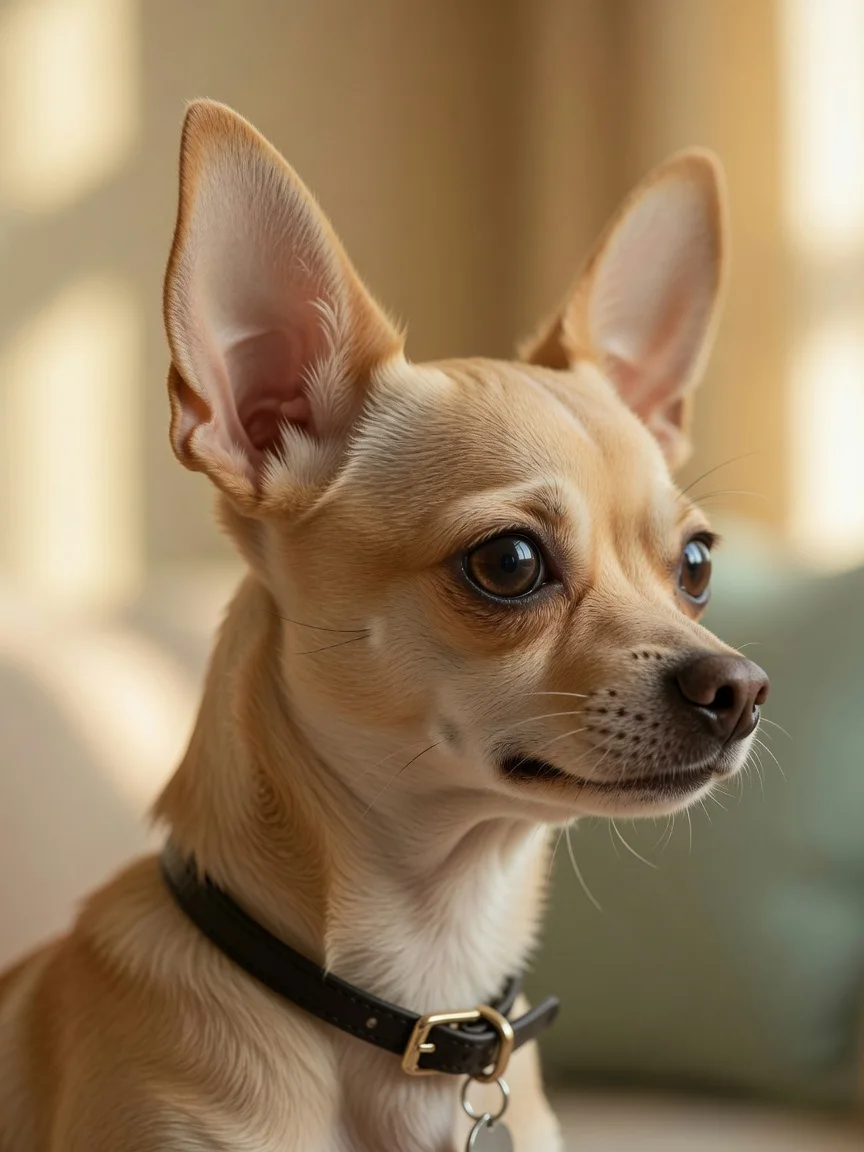
Proportionally, the chihuahua carries some of the largest ears in dogdom: two oversized antennae on a four-pound chassis, permanently tuned to the refrigerator. The breed standard demands them, large, erect, flaring toward the sides when relaxed, and evolution had reasons before the show ring had opinions. This is the anatomy-quirks tour: what the ears are for, when they stand up, what floppy means, and the two smaller mysteries, the protruding tongue and the aging ear, that share the same real estate.
Quick answer: The breed standard demands large, erect ears that flare toward the sides when relaxed, and the anatomy earns its keep: big pinnae gather sound efficiently, so a dog already out-hearing humans by a wide margin becomes the household's early-warning system. Ears usually stand between two and six months, with temporary flopping during teething part of the normal script, and ears still down after teething may simply stay relaxed for life.
Three jobs, one accessory
Radar. Big pinnae gather sound, and dogs already hear frequencies and volumes far beyond ours; mount that hardware on a small, historically underfoot animal and you get the household's early-warning system, capable of detecting a cheese wrapper through two closed doors. The breed's watchdog reputation is, anatomically, well earned.
Radiator. Ears are thin, blood-rich panels, and in warm climates they shed heat, a useful feature in a breed forged in Mexico, per our origins guide. The panel works both directions, which is one more reason winter is personal for this breed, as the cold guide lays out; frostbite likes ear tips precisely because they are radiators.
Semaphore. Ears are mood flags: forward and tall means interested, swiveled means tracking, pinned flat means frightened or appeasing, and reading them alongside the rest of the dog is half the fluency taught across our behavior library. A breed that communicates this loudly with its ears is doing you a courtesy; the flags are enormous on purpose, so to speak.
The ear timeline, and the floppy question
Puppies are born with folded ears that stand as cartilage stiffens, typically finishing between two and six months, teething included, and it is entirely normal for ears to stand, flop during the tooth-swap weeks, and stand again. Both up is standard; the one-up-one-down adolescent phase is the breed's best comedy period and usually resolves on its own.
A small share of chihuahuas keep soft or floppy ears for life, more often in larger or deer-built dogs, per our head-shapes guide. In the show ring, broken-down ears are penalized; on the sofa, they are a cosmetic footnote on a perfectly healthy dog, and the internet's taping-and-supplement folklore mostly monetizes impatience. Ears that never stand hurt nothing but pageant odds.
The neighboring quirks: the blep and the aging ear
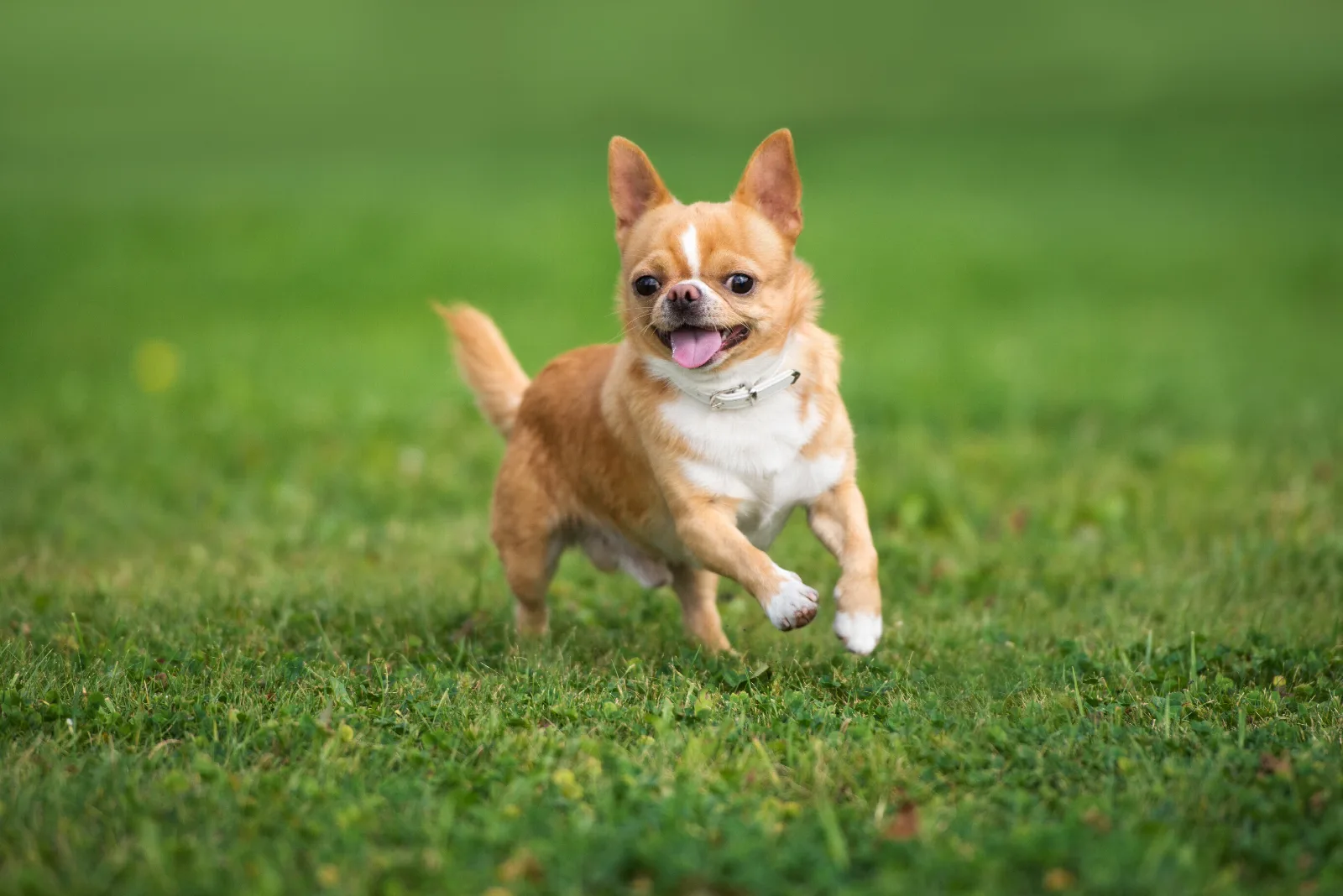
The protruding tongue. A tongue tip poking out at rest, the blep, is usually mechanical: a relaxed jaw, a tongue slightly oversized for a small mouth, or, commonly in this breed, missing teeth leaving the tongue unfenced, the downstream consequence of the dental story in our dental guide. A lifelong blep is charm; a new one, especially with drooling, mouth-pawing, or eating changes, is a dental exam request, and a tongue that hangs fully out with distress belongs to the emergency list.
The aging ear. Hearing loss creeps into many senior chihuahuas: the dog who sleeps through arrivals, startles when touched, or has gone conveniently deaf to known cues may be genuinely deaf to them. The home screen is easy, a sound made out of sightline while she is calm, and the veterinary version is easier still to request at a senior checkup. Deaf and hearing-impaired chihuahuas adapt brilliantly to hand signals and vibration cues, startle-proofing, approach within sightline and touch gently, becomes the house rule, and the wider senior playbook lives in our senior guide.
When to call your veterinarian
Same-day call: ear pain, head tilt, loss of balance, or an ear canal that smells or discharges, infection and mite territory per the parasite guide. Routine appointment: new tongue protrusion with mouth signs, suspected hearing decline, or recurrent ear scratching. No call needed: the satellite dishes themselves, the teething-era flop cycles, the lifelong blep, and every mood the semaphore flies.
How to clean your chihuahua's ears
Ears this large collect dust, wax and the occasional grass seed, so a weekly look belongs in the routine. Clean only when you can actually see discharge or smell an odor, though: over-cleaning irritates the canal, and plenty of chihuahuas go months needing nothing at all. When an ear does need it, you will want a vet-approved ear cleaning solution and cotton pads. Never push cotton swabs into the canal, and skip alcohol or peroxide, which sting and dry the skin.
The best way to clean a dog's ears is unglamorous. Fill the canal with solution, massage the base of the ear for twenty seconds until you hear a soft squelch, then step back and let the dog shake. Wipe whatever surfaces with a cotton pad and stop at the depth your finger reaches naturally. If the ear smells yeasty, looks red or hurts to touch, do not wash it. Those are infection signs, and they belong to your veterinarian, not the bottle.
Frequently asked questions
When do chihuahua ears stand up?
Usually between two and six months, with temporary flopping during teething part of the normal script. Ears still down after teething may stay relaxed for life, a cosmetic outcome penalized only in the show ring, and taping folklore rarely changes what cartilage has decided.
Why does my chihuahua stick her tongue out?
Relaxation, a compact mouth, or missing teeth leaving the tongue unfenced, in roughly that order of frequency. A lifelong blep is harmless; a new one alongside drooling or eating changes earns a dental look, since tooth loss is the breed's most common tongue-release mechanism.
Do big ears mean better hearing?
Bigger pinnae gather sound efficiently, and dogs at large out-hear humans by a wide margin in range and sensitivity; the chihuahua's dishes put her comfortably at the alert end of an already alert species. It is why she announced the delivery van before the doorbell agreed.
How do I know if my chihuahua is going deaf?
Sleeping through arrivals, ignoring known cues, startling at touch: run the out-of-sightline sound test, then confirm at a checkup. Hearing-impaired chihuahuas do beautifully with hand signals and gentle-approach house rules; the adjustment is mostly the household's, and it is small.
Radar, radiator, and mood flag, standing atop the smallest chassis in dogdom: the ears are the breed's most honest equipment, always on, always broadcasting. Learn to read the semaphore and she becomes, quite literally, the easiest dog in the world to hear coming and to understand on arrival.


No comments yet
Leave a comment