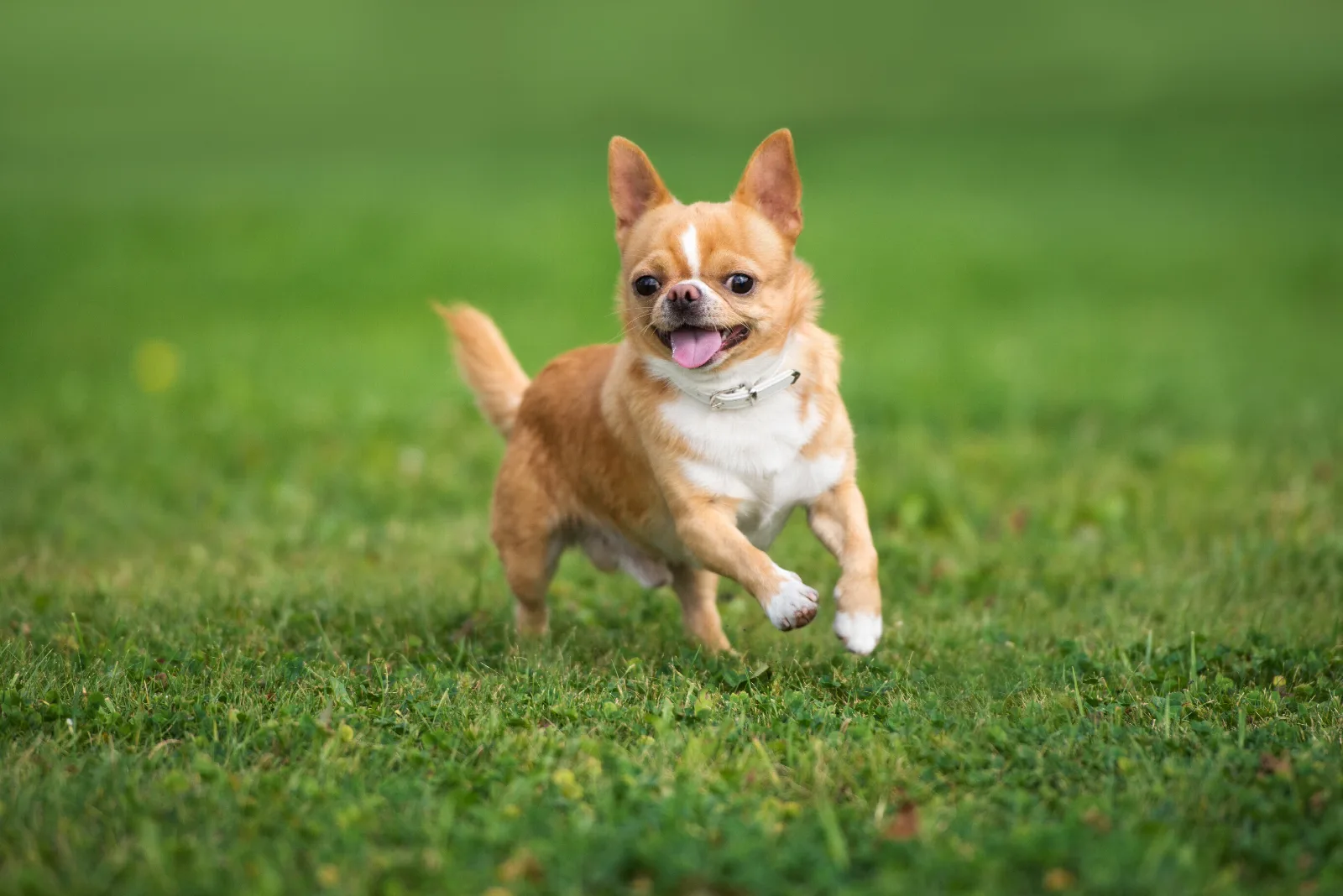
Every breed accumulates tall tales; the chihuahua, being dramatic, accumulated a full mythology. She is said to sprint like a tiny greyhound, bite with a force the internet quotes to the exact PSI, believe herself to be a mastiff, and see ghosts. This column audits claims for a living, so let us run the docket: one myth is half true, one is a fabricated statistic wearing a lab coat, one is real psychology with a proper name, and one is, regrettably, unfalsifiable.
Quick answer: A fit chihuahua sprints somewhere in the low-to-mid teens of miles per hour, with athletic individuals a little higher in short bursts, and no formal records exist because nobody times them seriously. The bite-force PSI figures circulating online are fabricated or misattributed; no credible study has measured it. The dog does not think she is a big dog, she runs standard dog confidence without a size patch, reinforced wherever bluster pays.
Speed: genuinely quicker than you think
Honest figure first: nobody runs timing gates on chihuahuas at scale, so precise records do not exist. The defensible range, from small-dog racing events and the general physics of stride, puts a fit chihuahua's sprint somewhere in the low-to-mid teens of miles per hour, with athletic individuals flirting higher in short bursts.
For scale, that is far off a greyhound's forty-plus and comfortably ahead of the average owner in slippers, which is the comparison that actually matters at the open gate, per our escape guide. The build helps: light frame, quick stride rate, and a turning radius the size of a dinner plate, which is why the zoomies look faster than the stopwatch would say. Exercise notes for the speedster live in the walking guide, and the honking-after-sprints caveat in the breathing guide.
Bite force: the case of the invented PSI
The internet confidently reports chihuahua bite force at anywhere from one hundred to a frankly hilarious three thousand PSI, and here is the reference-desk truth: no credible published study has measured chihuahua bite force, and the viral numbers trace to nothing. Bite-force research exists for larger dogs, where jaw muscle mass and skull leverage, the two variables that generate force, dwarf anything a four-pound skull can assemble.
A chihuahua bite is sharp, genuinely capable of puncturing skin, and absolutely worth taking seriously for the behavioral reasons in our biting guide, and it is mechanically modest, full stop. As for the grim companion search, fatal dog attacks are tracked, they overwhelmingly involve large breeds, and the chihuahua's contribution to that ledger is essentially a rounding error of freak circumstances. Take the teeth seriously as communication; retire the PSI trading cards.
The big-dog complex: real, and it has a name
The chihuahua squaring up to a labrador is not confused about her size; she is running normal dog social software without a size-adjustment patch, plus the fear economics our aggression guide unpacks: bluster works, so bluster persists. Behavior folk sometimes file it under small dog syndrome, which is less a diagnosis than a description of owners laughing at behavior they would train out of a shepherd. The practical rule stands regardless of her self-image: the human referees all mixed-size encounters, because confidence is not a crumple zone, and the AKC breed page's terrier-like temperament note is a personality feature to manage, not a physics upgrade.
Night vision and ghosts, briefly
Dogs, chihuahuas included, see far better than humans in dim light, courtesy of rod-heavy retinas and the reflective tapetum that makes the eyes glow in photos; full darkness defeats them like anyone else. As for staring into empty corners at 2 a.m.: she is hearing and smelling things below your sensory floor, per the hardware tour in our ears guide. The mundane explanation covers the evidence. The other explanation is between you and your corner. If you want to see the sprint in person, the annual chihuahua races run sixty-foot heats, though nobody is timing them seriously. One record does exist, if a narrow one: the fastest five metres on front paws, set by a two-pound part-chihuahua.
Frequently asked questions
How fast can a chihuahua actually run?
Roughly the low-to-mid teens in miles per hour at a sprint, athletic individuals a touch more, with no formal records because nobody times them seriously. Quick enough to beat your reflexes at an open door, which is the operationally relevant statistic.
What is a chihuahua's bite force in PSI?
Unmeasured: no credible study exists, and every viral number, one hundred, five hundred, three thousand, is fabricated or misattributed. Mechanically the bite is modest; behaviorally it still deserves the respect and training coverage of the biting guide.
Do chihuahuas really think they are big dogs?
They run standard dog confidence without a size patch, reinforced wherever bluster pays. It reads as delusion and works as strategy, and the management burden is the owner's: referee mixed-size play, always, because the attitude is writing checks the chassis cannot cash.
Can chihuahuas see in the dark?
In dim light, far better than you, courtesy of standard canine night-adapted eyes; in true darkness, no. The midnight corner-staring is ears and nose at work on signals below human thresholds, which is either reassuring or worse, depending on your relationship with the corner.
Faster than assumed, weaker of jaw than advertised, exactly as confident as legend holds, and equipped with senses that make the haunted-corner routine forgivable: the audited chihuahua loses her fake statistics and keeps every ounce of the swagger, which was always the true source of the mythology anyway.




No comments yet
Leave a comment