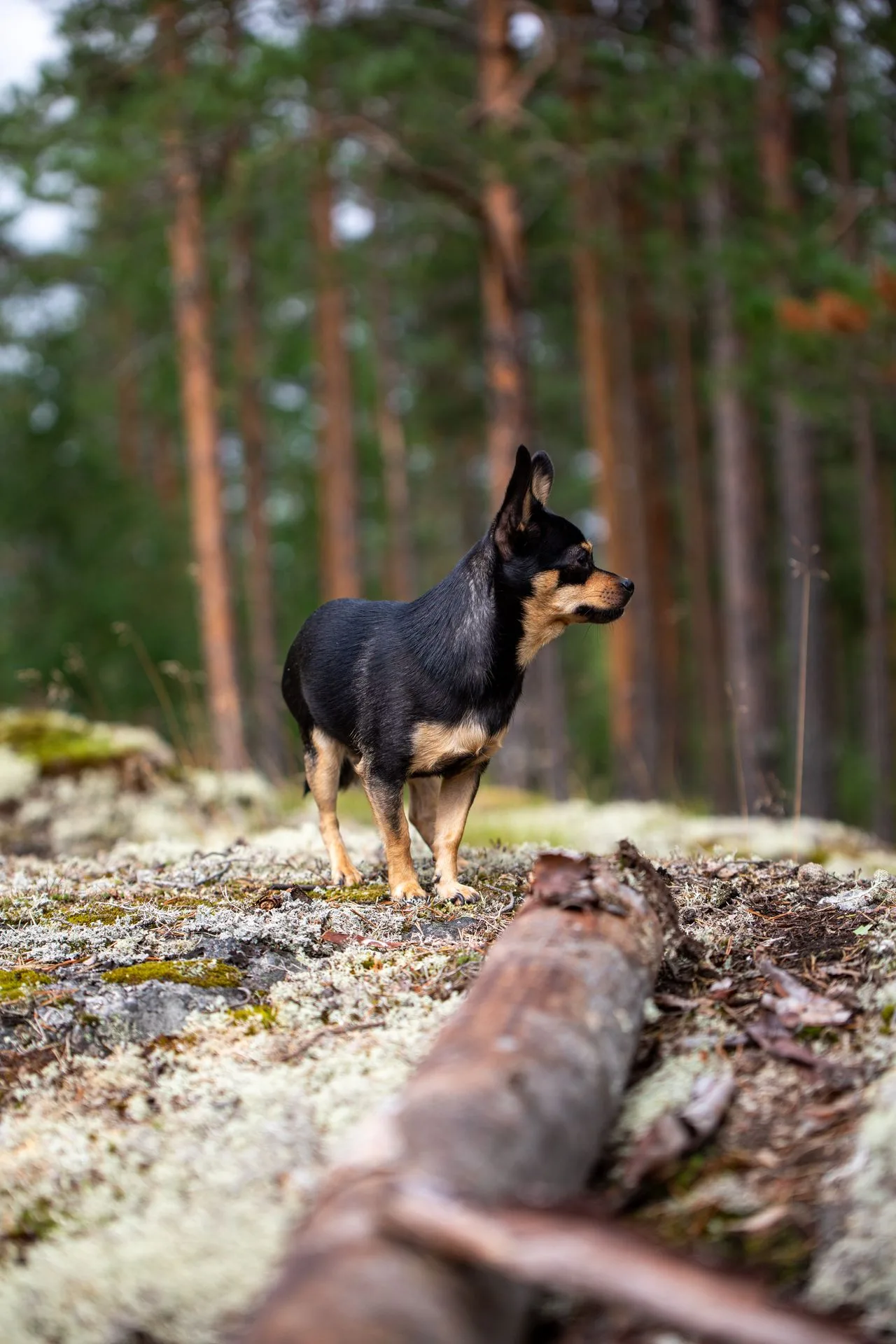
The phrase run away flatters the situation: chihuahuas rarely pack a bag and leave. They bolt through a startled-open door, squeeze a fence gap the width of your fist, or panic out of a harness at a firework, and then a four-pound animal with a twelve-inch view of the world is loose among traffic, weather, and predators that genuinely factor at her size. Escape is a bigger emergency for this breed than almost any other, which is why this article is half psychology and half carpentry.
Quick answer: Chihuahuas bolt rather than roam: they panic out of a harness, squeeze a fence gap the width of your fist, or shoot through a startled-open door, and panic leads the four drivers. The risk is severity rather than frequency, because a loose four-pound dog meets traffic, weather, and predators that genuinely factor at her size. Train an airlock and a paid sit-and-wait at every exterior door, with a release word as the only ticket through. A GPS tracker supplements the tag and microchip, but it locates rather than prevents.
Why she bolts
Four drivers cover nearly every case, per the taxonomy in the American Kennel Club's run-away guide. Panic leads for chihuahuas: fireworks, thunder, a backfiring truck, a lunging big dog, and a small prey animal's wiring says flee first, orient later; the seasonal version is the whole subject of our fireworks guide.
Opportunity is second: the door held open for groceries, the gate the landscaper forgot, the moment of chaos at arrivals that our door protocol below exists for. Under-stimulation third: a bored dog with an unfunded energy budget patrols for entertainment, and the fix is the enrichment payroll from our chewing guide. And hormones fourth: intact dogs of both sexes roam for romance with impressive determination, one more entry on the neuter-conversation ledger from our pregnancy guide.
The carpentry: audit like a four-pound inspector
Walk your fence line at chihuahua height, literally crouch, and hunt gaps: under-gate clearances, decorative fence patterns, the space where pickets meet the house, eroded dirt channels. The rule of thumb is brutal at this size: a gap that admits her skull admits her.
Check that gates self-close and latch, brief every service visitor, and treat the garage as a door, because it is one. Balconies and stair rails are chihuahua-sized exits too, and the yard itself gets the unattended rule: a dog this size is supervised outdoors, always, both for escapes and for the hawk-and-coyote arithmetic that small-dog owners in many regions live with.
The training: doors, recalls, and the harness check
The door protocol. Teach a paid wait at every exterior door: sit, door opens a crack, closes, pay; build to open doors with the release word from our first-cues guide being the only ticket through. Pair it with management during the training weeks, a baby gate or exercise pen creating an airlock at the main entrance, so deliveries and guests stop being escape lotteries.
The recall insurance. A bulletproof, magnificently paid come is the difference between a fifteen-second scare and a missing-dog poster, and it is built exactly as the first-cues guide lays out: hundreds of happy reps, never called to anything unpleasant, jackpots forever. Add the emergency variant: one special word, used almost never, paid with a whole handful when it is, kept loaded for the day the gate stands open.
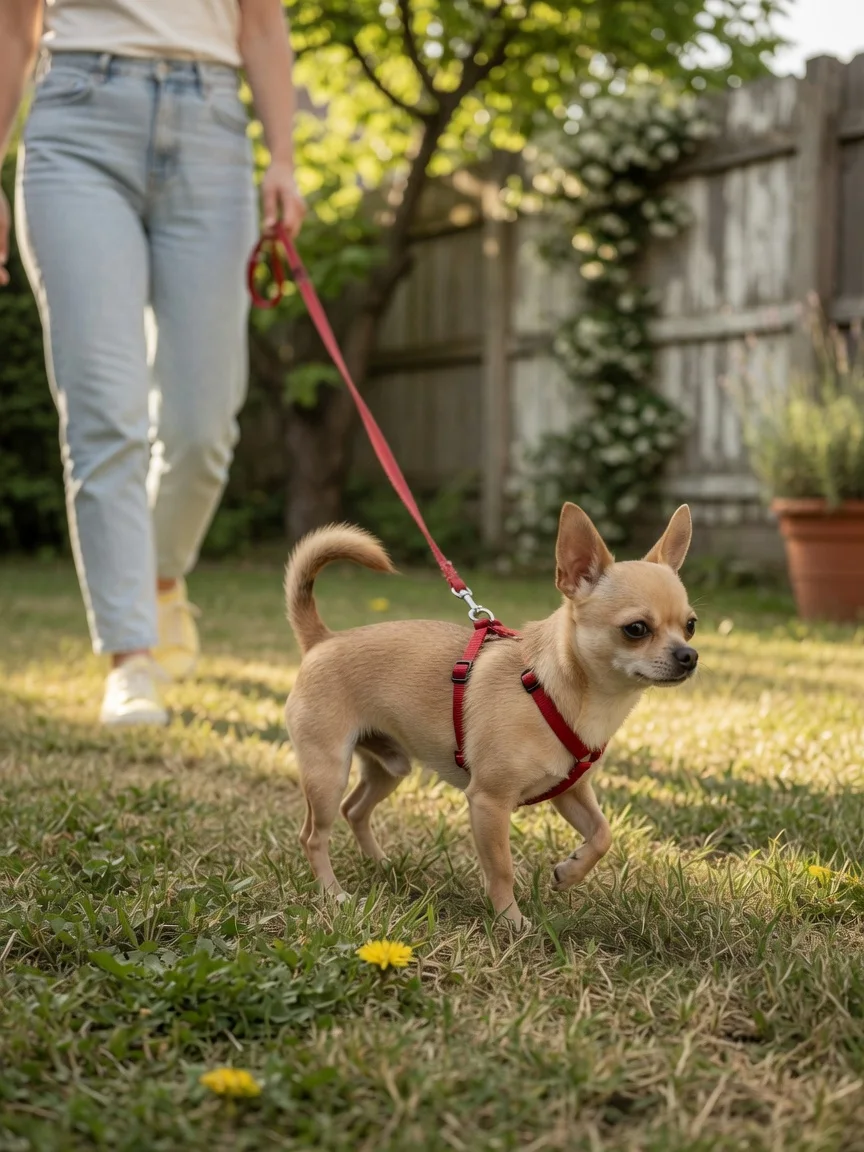
The hardware check. A back-slipping chihuahua can reverse out of a loose harness in one twist; the two-finger fit audit from our harness guide is escape prevention as much as comfort. And the identification stack is non-negotiable at this size: collar tags with a current phone number worn at all times, plus a microchip whose registration actually lists your current details, the piece most owners forget after moving.
If she gets out anyway: the first hour
Do not chase; a chased dog runs, and a panicked chihuahua outruns your reflexes in any hedge. Drop low, open your arms, and use the happy recall voice with the jackpot word; many bolters circle back to a calm, crouching owner within minutes. Leave the gate open and familiar-smelling items, her bed, your worn shirt, near it.
Recruit neighbors to look under porches and cars, where frightened small dogs wedge themselves, and get word out fast to local lost-pet networks and shelters with a clear photo. Most escaped chihuahuas are recovered close to home and early; the first hour is worth ten of the third day, which is precisely why the prevention above is the real article.
When to call your veterinarian
Same-day call: any returned escapee, even one who seems fine, since small dogs hide trauma, cars, and altercations behind adrenaline, and any escape that involved a fall or a bigger animal. Routine appointment: the microchip scan-and-registration check at the next visit, and the roaming conversation for intact dogs. Training territory: the door protocol, the recall program, the fence audit, and the boredom payroll, which together retire the Houdini act. What is waiting outside matters as much as the gap in the fence, and the predator safety guide covers coyotes and raptors at chihuahua scale. The best-documented bolt of the lot ended on a bridge catwalk: a chihuahua loose on the Bay Bridge in 2016.
Frequently asked questions
Do chihuahuas run away a lot?
They bolt more than they roam: panic and open doors beat wanderlust in this breed, which loves its base camp. The risk profile is severity, not frequency, because a loose chihuahua faces traffic and predators at a scale bigger dogs do not. Prevention carries almost all the weight.
Will my chihuahua come back if she escapes?
Often yes, especially to a calm, crouched, happy-voiced owner and an open gate with familiar smells; panicked dogs frequently circle home once the scare fades. Never chase, deploy the jackpot recall, and start the neighbor-and-network search immediately rather than waiting to see.
How do I stop my chihuahua bolting out the door?
An airlock while you train, a paid sit-and-wait at every exterior door after, and a release word as the only ticket through. Two weeks of rehearsal converts the door from a starting gun into a cue to sit, and the baby gate covers human error forever.
Is a GPS tracker worth it for a chihuahua?
As a supplement, sure, with the honest caveats: trackers are only as good as their battery and fit on a tiny harness, and they locate rather than prevent. The tag, the current microchip registration, the fence audit, and the recall remain the load-bearing layers; the tracker is a nice roof.
Escape prevention at this size is mostly humility about physics: fist-wide gaps, grocery-laden doorways, and one bad firework are the whole threat model. Audit low, train the door, fund the recall, keep the tags current, and the four-pound Houdini retires into what she prefers anyway, a warm lap with a view of the properly latched gate.

No comments yet
Leave a comment