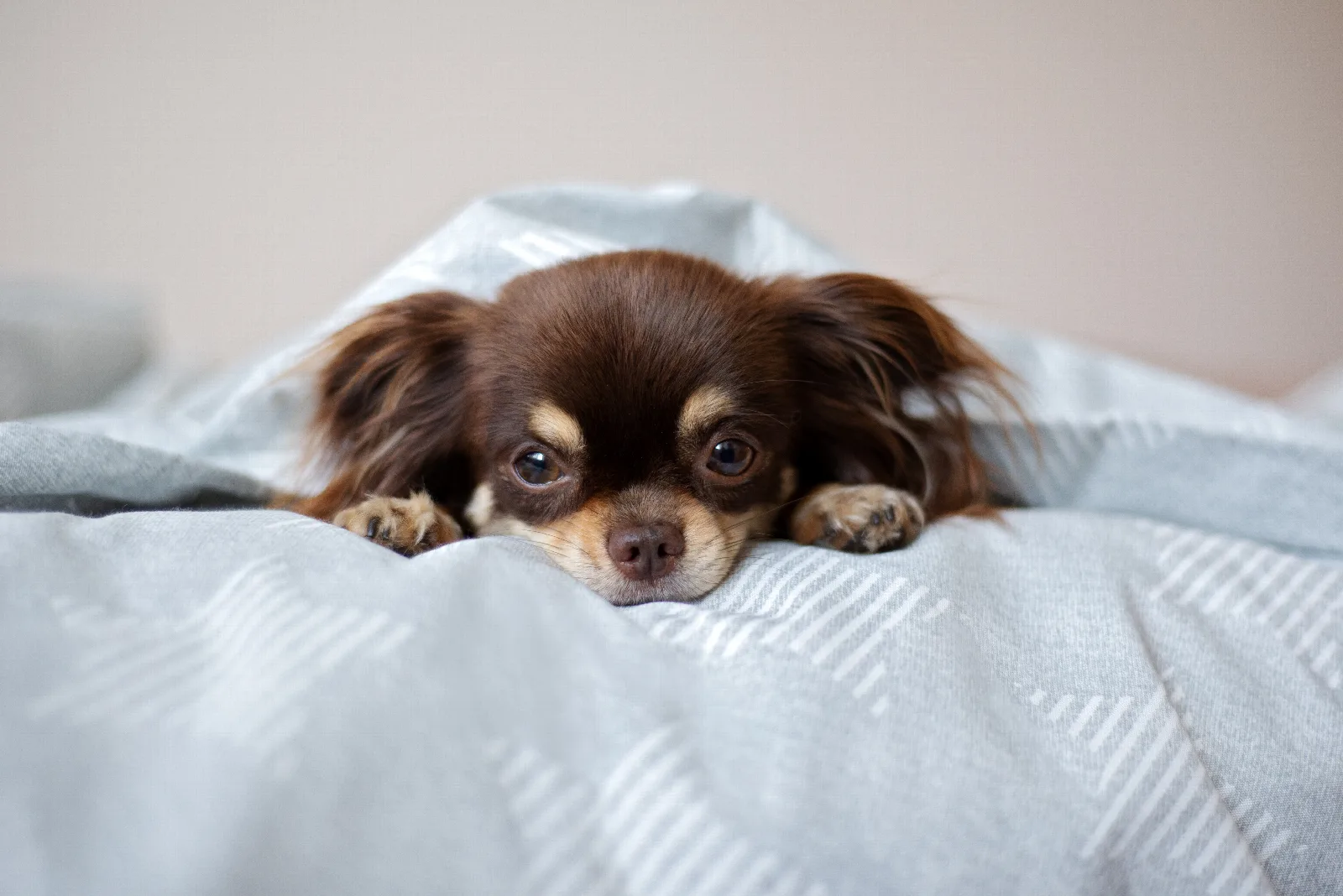
Every New Year and every fireworks season, the same four pounds of dog turns into a trembling, panting, hiding crisis, and every year the same myth makes it worse: the idea that comforting a frightened dog rewards the fear. Retire that one first. Fear is an emotion, not a behavior; you cannot reinforce an emotion by soothing it, any more than a hug teaches a frightened child to fear thunder. Comfort freely. Then run the actual plan, which has a night-of half and an off-season half, and the off-season half is the one that eventually fixes it.
Quick answer: Comforting a frightened dog does not reward fear, because fear is an emotion rather than a chosen behavior, so comfort freely. Build a bunker: an interior room away from windows, a covered bed or blanket cave, curtains closed, lights on to mask flashes, and sound masking running before the first bang. Nothing from the human medicine cabinet, and store-bought calming products only after a veterinary once-over. Off-season sound training at whisper volume, raised in tiny steps, is what fixes it long-term.
Night-of: manage the evening like weather
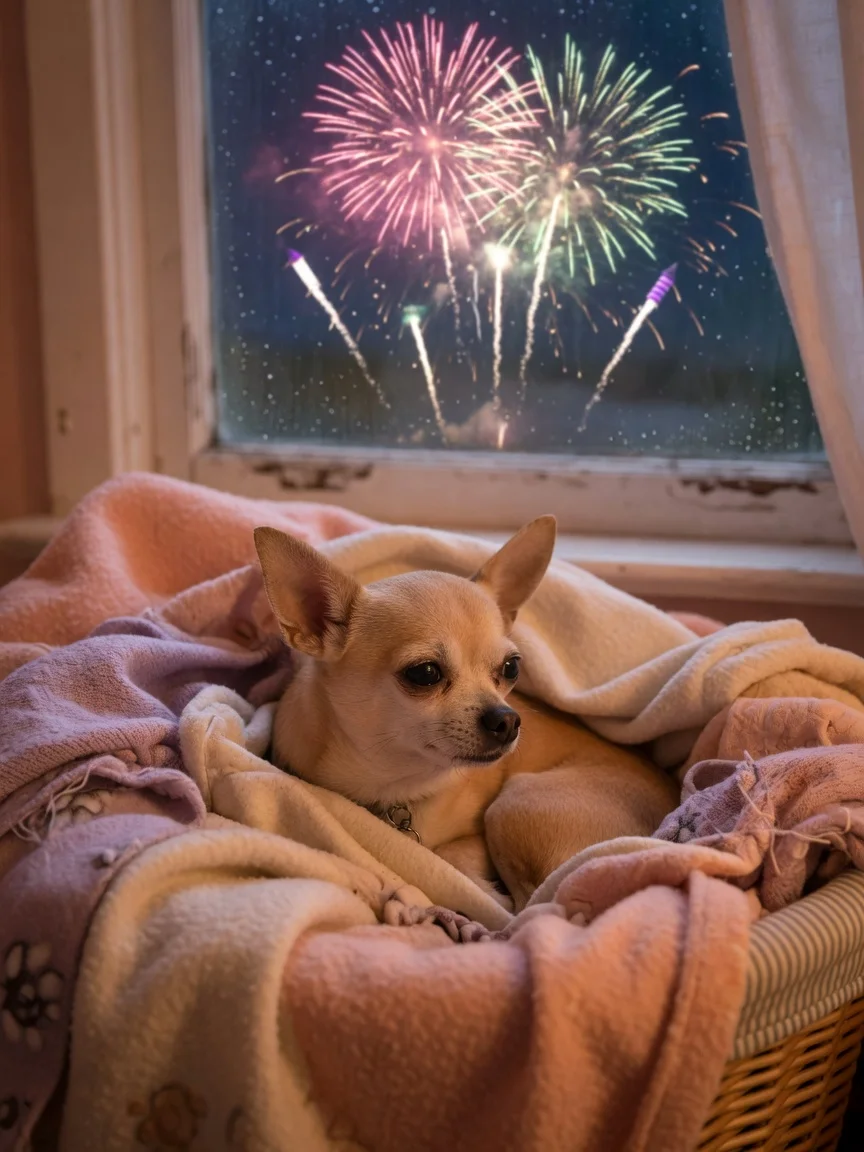
Build the bunker. Her den instinct is your ally: an interior room away from windows, the covered bed or blanket cave from our burrowing guide, and free access to her chosen hideout, under your bed included. Curtains closed, lights on to mask flashes, and sound masking running before the first bang: fans, television, or steady music at conversational volume.
Schedule around the noise. Dinner, water, and the final potty trip happen before dusk on known fireworks nights, on leash even in fenced yards, because a panicked bolt through a gap is the signature small-dog disaster of every fireworks holiday, exactly the scenario in our running-away guide. The AVMA's fireworks guidance leads with the same point: more pets go missing around fireworks holidays than almost any other time, and ID tags plus a current microchip registration are the cheap insurance.
Be the thermostat. Stay home if she is a known panicker, act bored and normal, comfort when she seeks it, and run a food program through the noise: a long-lasting stuffed toy or licking mat during the barrage pairs bangs with good things, which is training even on the worst night. Pressure wraps and snug shirts help some dogs; supplements and calming chews are a your-veterinarian conversation rather than a checkout-aisle gamble, because doses and evidence vary wildly at four pounds.
Use the medical option without shame. For genuine panic, drooling, escape attempts, injury risk, self-soiling, modern event medications exist, work well, and are kinder than an annual night of terror. That is a pre-season veterinary conversation, per the humane framework in the AVSAB position statements, and it pairs with, not replaces, everything above.
Off-season: the actual cure
Noise fear responds to the same desensitization machinery as everything else in this library, run when the sky is quiet. Play recorded fireworks or thunder at barely-audible volume while wonderful things happen, dinner, play, a licking mat, and end while she is still relaxed. Raise the volume across sessions by increments so small she never tips into fear; drop back the moment body language tightens.
Weeks of this, started months before the season, converts most mild and moderate cases and takes the edge off severe ones, and the mat-settle skill from our independence work gives her a trained calm posture to do it in. Storm fear adds pressure and static components sound files cannot fake, so storm dogs often plateau lower; the bunker-plus-medication combination covers the difference honestly.
One more off-season job: audit the general anxiety picture. A dog who panics at fireworks and also startles at doors, trembles at new places, and hides from guests is running a broader fearfulness program, and the whole-dog confidence work in our fearful-dog guide outranks any single-trigger fix.
When to call your veterinarian
Before the season: for the medication conversation if last year involved panic, and for the supplement audit if the checkout aisle is calling. Same-day call: any fireworks-night injury, a dog who bolted and returned, since small dogs hide trauma, or panic that includes vomiting or diarrhea beyond the evening. Training territory: the bunker, the thermostat act, the food program, and the off-season volume work, which is where this problem actually gets solved.
Frequently asked questions
Should I comfort my chihuahua during fireworks?
Yes, freely: soothing a frightened dog does not reward fear, because fear is an emotion, not a chosen behavior. Calm voice, contact if she seeks it, and a boring confident manner from you all help. What actually feeds the fear is the noise, not your kindness.
Why do fireworks affect my chihuahua so badly?
Dog hearing is far more sensitive than ours, the bangs are unpredictable by design, and a small prey-sized animal is wired to treat unexplained explosions as emergencies. Add the breed's tremble-prone expressiveness and you get dramatic presentations of a completely ordinary canine fear.
What can I give my chihuahua to calm her down?
Nothing from the human cabinet, ever, and store-bought calming products only after a veterinary once-over, since evidence and dosing vary. For real panic, prescription event medication is the honest, humane answer, arranged before the season rather than during the barrage.
How do I stop my chihuahua being scared of fireworks permanently?
Off-season sound training: recordings at whisper volume paired with dinner and play, volume raised in tiny steps over weeks, always below the fear line. Most dogs improve substantially; the rest get the bunker-and-medication combination, which turns the worst night of the year into a manageable one.
Fireworks night is weather: you cannot cancel it, you can only be ready. Bunker built, potty done early, tags on, food program running, thermostat set to bored, and the real fix scheduled for the quiet months, at whisper volume, with cheese.

No comments yet
Leave a comment