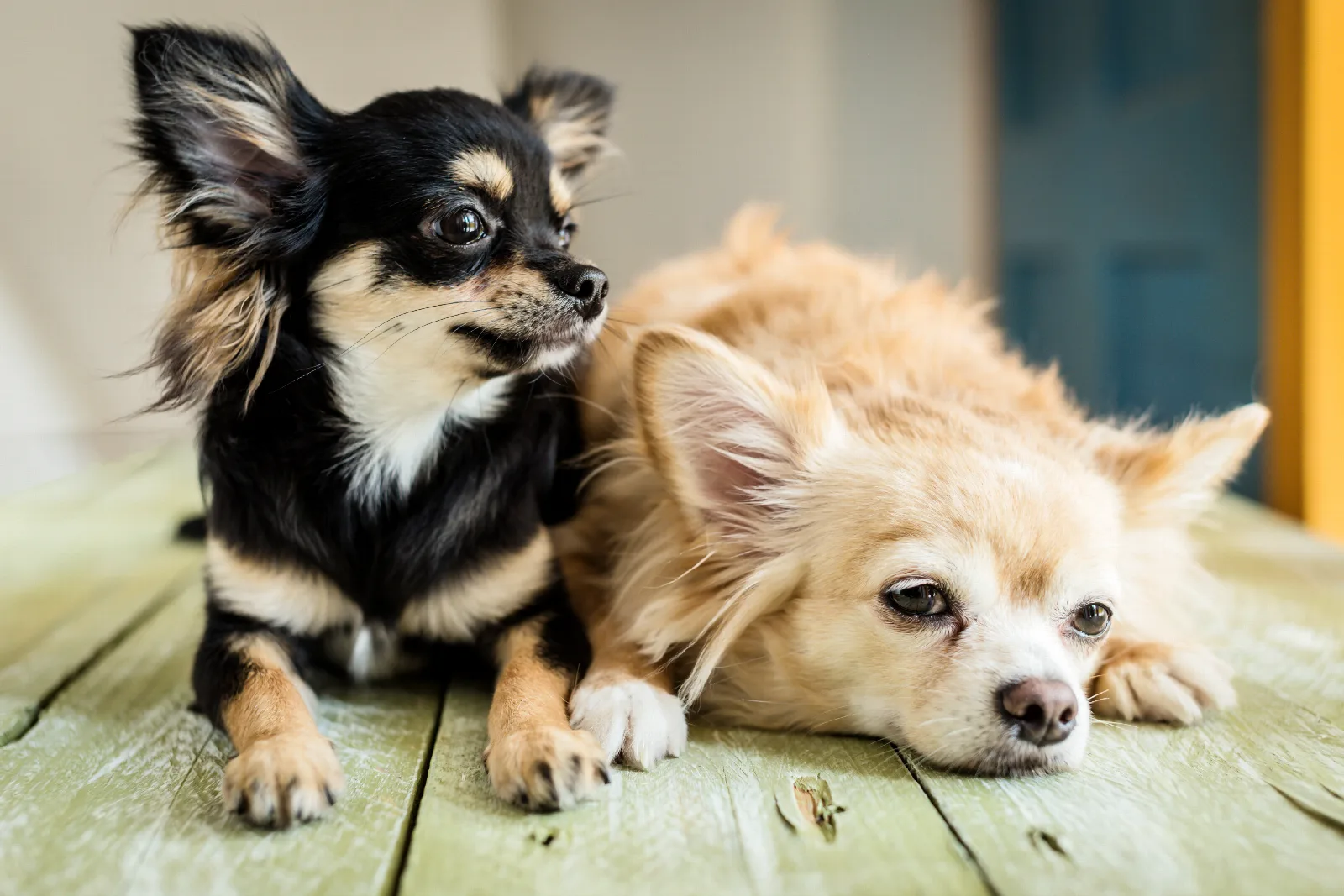
Few behaviors mortify owners faster, and few are less deserving of the drama. Humping, mounting in the clinical register, is ordinary dog behavior with a long list of unremarkable drivers, most of which have nothing to do with anything the guests are smirking about. It shows up in males and females, neutered and intact, puppies and seniors. The fix is neither punishment nor embarrassment management; it is figuring out which driver you have and giving the energy a better job.
Quick answer: Mounting is ordinary dog behavior with a long list of unremarkable drivers, and it turns up in males and females, neutered and intact, from puppies to seniors. Arousal overflow leads by a distance, meaning general excitement rather than the specific kind, followed by play, stress, and habit. Neutering reliably reduces only the hormone-driven share in intact males. Manage the trigger, interrupt calmly, and pay a better behavior instead.
What humping actually is
The driver list, laid out in the ASPCA's guide to mounting: arousal overflow leads by a mile, meaning general excitement, not the specific kind, spilling out during play, greetings, and chaotic household moments; play behavior between dogs, part of normal wrestling grammar when both parties keep consenting; stress displacement, the fidget-spinner version, deployed when a dog is overwhelmed and needs somewhere to put the feeling; habit, once any of the above has paid off in attention or sensation; hormones, a genuine factor in intact males around female scent; and occasionally a medical driver, covered below. What it is not, in modern behavior science, is a dominance campaign; that reading has been retired, per the AVSAB position statements, and it mostly produced punishments that made anxious humpers more anxious.
One diagnostic habit makes the whole plan work: note when it happens. Humping at greetings and zoomies hour is arousal. Humping the same pillow every evening is habit. Humping when visitors overwhelm the living room is stress. The trigger tells you which lever to pull.
The plan
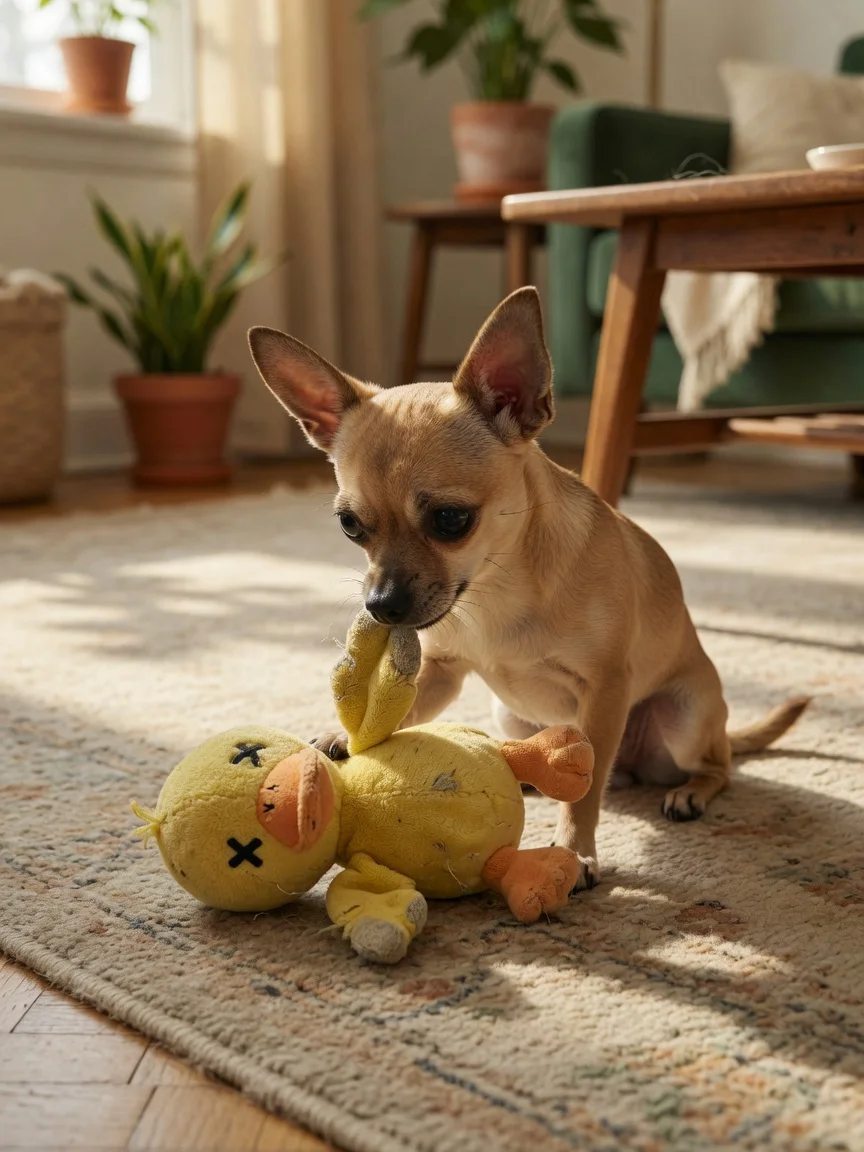
Interrupt early and cheerfully. The tell usually precedes the act: the clamp-on posture, the fixed look at the target cushion. Interrupt there with a light voice, never a scolding, and cue something incompatible, a sit, a toy grab, a recall to you, then pay it well. You are not punishing the humping; you are hiring the alternative.
Manage the arousal spikes. If greetings are the trigger scene, greet on leash with calm rules and pay four-on-the-floor; if play sessions boil over, build in short settle breaks before the overflow point. Dogs practice whatever state they spend time in, and arousal management is upstream of every behavior it fuels.
Retire the audience. Laughter, phone cameras, and dramatic shrieks are all payment, and chihuahuas read a room brilliantly. Brief the household and the guests: the response to humping is boring redirection, nothing else.
Fund the energy budget. Under-exercised, under-occupied dogs hump more, chew more, bark more, and generally freelance more; the walks, sniffing, and food-puzzle payroll from our chewing guide shrinks this habit from the same direction. For dog-to-dog humping at play, referee consent: if the other dog objects, the session gets a break, every time, which is ordinary good playground governance either way.
Have the neuter conversation honestly. In intact males, neutering reduces sexually motivated mounting in a good share of dogs, and does little for the arousal, stress, and habit varieties, which is most of them. It is a legitimate part of the plan for an intact dog, discussed with your veterinarian on its own merits, and it is not a guaranteed off-switch; the training above carries the rest regardless.
The medical checks
A short but real list hides behind mounting-adjacent behavior: urinary tract infections, skin or allergy irritation in the nether regions, and in intact dogs, hormone-driven conditions. The flags: sudden onset in an adult, humping paired with genital licking, scooting, urinary accidents, or straining, and any obsessive, can't-be-interrupted quality. Those route to your veterinarian first, because behavior plans aimed at discomfort fail and deserve to; it is the same triage rule as our licking guide, and it pairs with the accident differential in our marking guide.
When to call your veterinarian
Same-day call: humping with straining, urinary accidents, blood, or obvious discomfort. Routine appointment: sudden-onset mounting in a settled adult, obsessive intensity, licking or scooting alongside, or the neuter discussion for an intact dog. Training territory: the ordinary arousal, play, habit, and party-trick varieties, which the interrupt-redirect-payroll plan retires in a few consistent weeks.
Frequently asked questions
Why does my female chihuahua hump?
Because mounting is not really about sex most of the time; it is arousal, play, stress, or habit, and all of those are unisex. The plan is identical: spot the trigger, interrupt early, pay an incompatible behavior, and manage the exciting scenes.
How do I stop my chihuahua humping guests' legs?
Manage the greeting: leash or lap at arrivals, calm rules, pay for four paws down, and brief guests to be boring rather than shrieking or laughing. The leg-humping habit is mostly an arousal-plus-audience production, and it closes when both funders pull out.
Will neutering stop my chihuahua from humping?
It reliably reduces the hormone-driven share in intact males and often does little to arousal, stress, and habit mounting, which is the majority. Worth discussing with your veterinarian for its own reasons; just pair it with the training rather than expecting an off-switch.
Should I let my chihuahua hump her pillow?
A private pillow habit in an otherwise relaxed dog is low-stakes, and many households reasonably ignore it. Redirect if it bothers you, and pay attention only if it turns obsessive or arrives with licking, scooting, or urinary signs, which move it from quirk to symptom.
Humping is arousal with poor aim and, occasionally, a symptom wearing a costume. Rule out the medical short list, spot your dog's trigger, hire a better behavior at that exact moment, and the household's most embarrassing party trick quietly leaves the repertoire.

No comments yet
Leave a comment