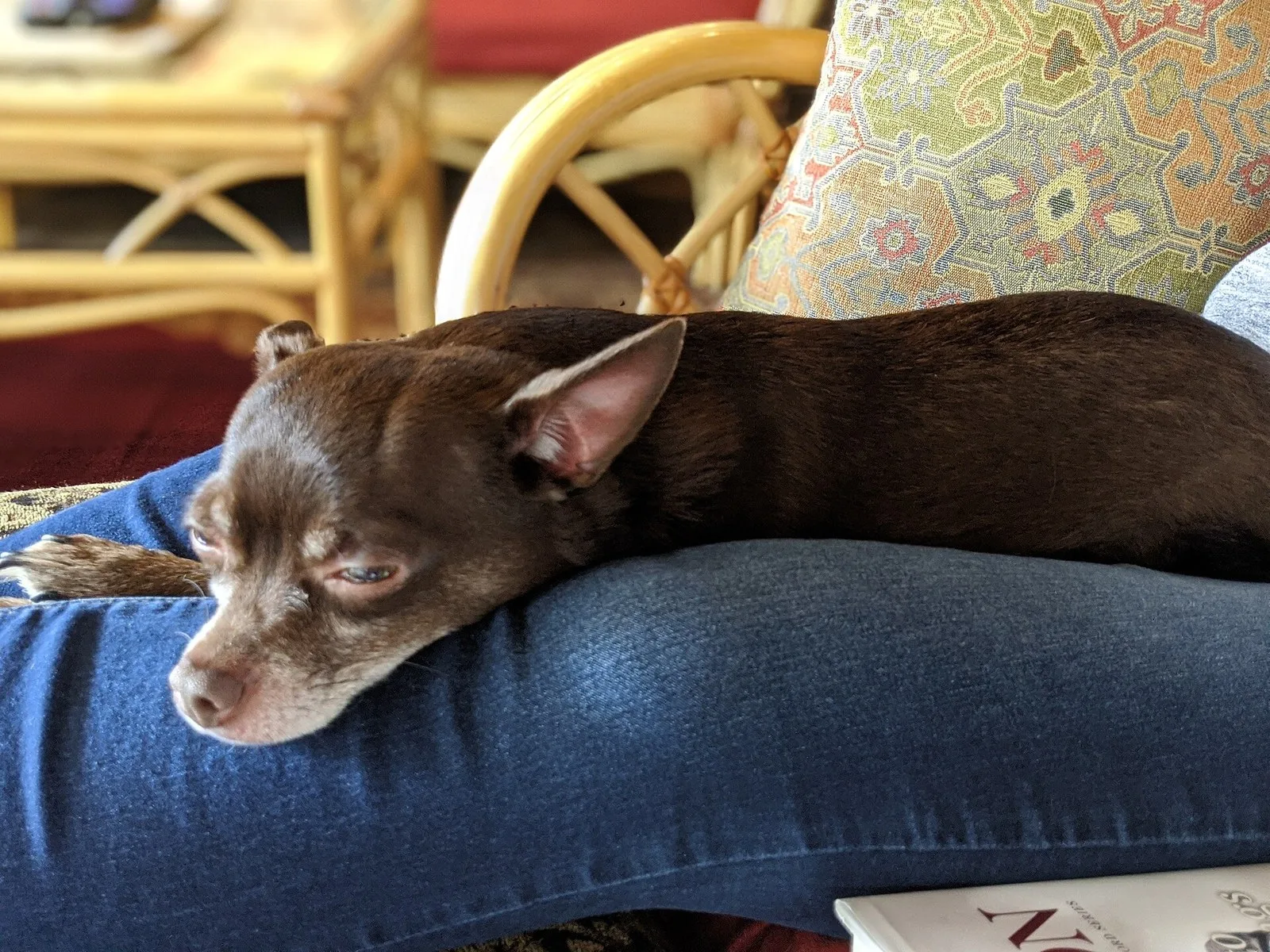
The globe-trotting dog behind the generic slug could not be identified. This guide focuses on what makes Chihuahua travel safe, lawful, and comfortable.
A tiny dog in a designer carrier can make international travel look effortless. The photograph never shows the weeks of paperwork, carrier training, route decisions, veterinary preparation, and backup planning that should come first.
No single globe-trotting dog could be reliably matched to the claim as it circulates. Rather than invent an influencer profile, this article gives Chihuahua owners a plan they can verify for their own route.
Travel rules change, sometimes with little notice. Always confirm the destination, transit country, return country, transport company, and accommodation directly before paying.
Quick answer: No. Safe travel with a Chihuahua requires verifying every border, stop, and transport rule in advance through official government and airline sources such as USDA APHIS and the CDC. Owners must train the dog to accept its carrier weeks ahead, schedule veterinary documents within required windows, carry layered identification, avoid temperature extremes, maintain familiar food and water routines, and cancel if the journey poses medical or stress risks to the individual dog.
Start with the complete route
Write every border and stop in order, including airport transfers and the journey home. A country used only for a connection may still impose animal rules, especially if the dog leaves the secure transit area.
For travel involving the United States, USDA APHIS provides destination-specific animal import and export information, while the CDC publishes dog-entry requirements. Other countries have their own veterinary authorities.
Check microchip type and timing, rabies vaccination, parasite treatment, laboratory tests, health certificates, endorsements, import permits, quarantine, minimum age, breed restrictions, and arrival points.
Do not assume an airline employee, travel agent, or social post replaces government confirmation. Save the official page and take a dated copy of the rule.
Call the carrier before booking
Airlines set their own pet policies within legal requirements. Cabin space may be limited by flight, aircraft, fare, route, seat, and carrier dimensions. A reservation for the person does not automatically reserve the Chihuahua.
Ask whether the dog may travel in cabin, the total carrier weight limit, approved materials, under-seat dimensions, check-in procedure, fees, required forms, temperature embargoes, and restrictions on connections.
Request written confirmation. Then recheck when the aircraft or schedule changes.
Cargo transport presents additional risks and standards. Discuss it with the veterinarian and airline rather than assuming that small size makes every route acceptable. The International Air Transport Association directs travelers to contact the airline and follow live-animal container requirements.
Train the carrier at home
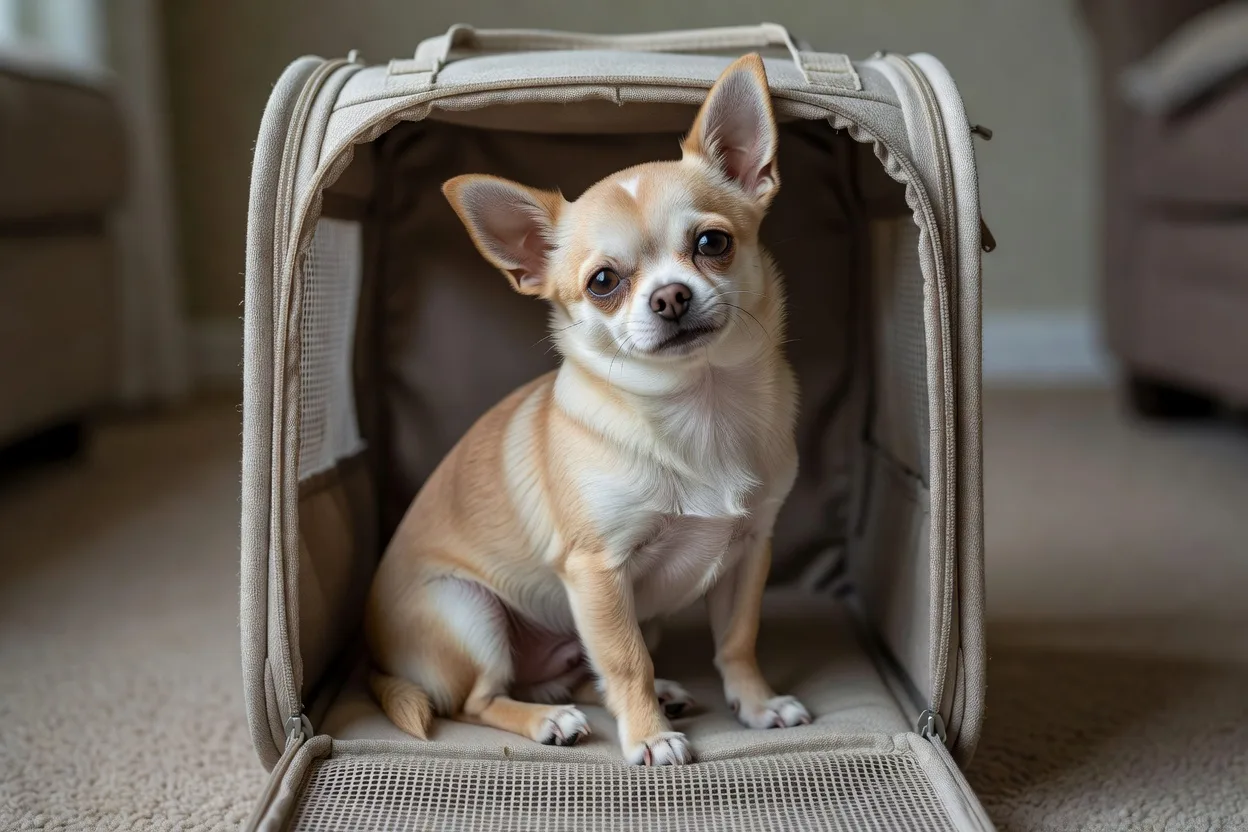
The carrier should become a familiar resting place weeks before departure. Leave it open with comfortable bedding and reward voluntary entry.
Progress from seconds with the door open, to short closures, lifting, walking, vehicle sounds, and quiet trips. Keep sessions brief enough that the Chihuahua remains willing to return.
The dog must be able to stand, turn, and lie naturally within the applicable rules. Ventilation, secure fasteners, leak resistance, and escape prevention matter more than fashionable appearance.
Do not introduce a new carrier at the terminal. A panicked dog may scratch, overheat, vocalize, refuse water, or escape during inspection.
Schedule veterinary preparation early
Tell the clinic the entire itinerary and dates. Some documents must be issued within a specific window; some vaccines or tests require waiting periods.
The visit should address health, medications, motion sickness, anxiety, temperature tolerance, dental or heart conditions, and whether the dog is fit for the planned journey.
Do not give sedatives, supplements, or human medication without a veterinarian’s route-specific advice. Sedation can affect balance, breathing, temperature regulation, and the ability to respond during transport.
Carry medication in original labeled packaging with extra supply for delays. Keep essential doses and records with you, not in checked luggage.
Build identification in layers
Confirm that the microchip registration contains current international contact details. Add a secure collar or harness tag with a phone number reachable during the trip.
Carry recent photographs from several angles, proof of ownership, microchip number, vaccination record, permit documents, and veterinary contacts in paper and secure digital form.
Place identification on the carrier without exposing unnecessary personal information. Include a local contact at the destination if possible.
A tracker may help locate luggage or a carrier, but it does not replace a microchip, and battery or radio rules may apply.
Protect a Chihuahua from temperature and escape
Chihuahuas can become cold quickly, but heavy clothing inside a warm terminal can also contribute to overheating. Use removable layers and monitor breathing, gum color, posture, and alertness.
Never leave the dog in a parked vehicle. Secure the carrier or a crash-tested restraint during road travel. A loose Chihuahua can be injured in a sudden stop and can escape when a door opens.
At security screening, ask for a private room if removing the dog from the carrier in a public area feels unsafe. Use a well-fitted harness and leash before any door opens.
Know the nearest veterinary emergency clinic at the destination and along long road routes.
Keep food, water, and toileting predictable
Avoid a sudden diet change. Pack enough familiar food for the journey plus delays, subject to customs restrictions. Some countries limit meat-based pet food, so verify what may cross the border.
Offer water according to the veterinarian’s advice and the dog’s needs. Do not intentionally dehydrate a Chihuahua to avoid toilet breaks.
Practice the surface or toileting setup likely to be available. Some dogs refuse busy airport relief areas. Absorbent pads can provide a backup when permitted, but they do not eliminate the need for breaks.
Bring waste bags, wipes, a spare liner, and a sealed way to store soiled material.
Give yourself permission to cancel
A legal trip can still be wrong for an individual dog. Reconsider when the Chihuahua is medically unstable, panics in confinement, cannot tolerate the route, faces extreme weather, or would endure multiple risky transfers.
A qualified sitter, trusted caregiver, or veterinary boarding arrangement may be kinder. Confirm emergency authority, medication instructions, contacts, and return delays in writing.
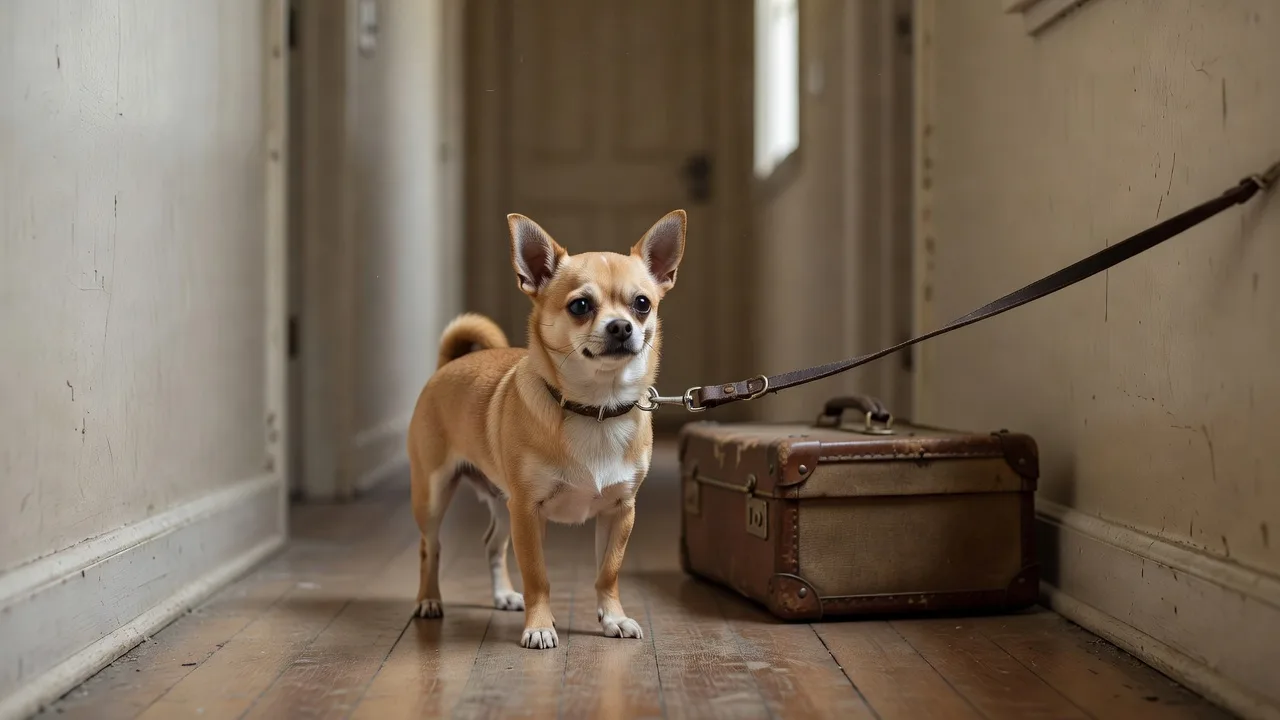
The licensed images in this package are illustrations. No influencer media was downloaded because no original identity or rights chain was verified.
Successful travel is not measured by the number of countries in a caption. It is measured by a Chihuahua arriving safely, remaining comfortable, and having a reliable way home.
Featured photograph: ChihuahuaLover95 / Wikimedia Commons (CC BY-SA 4.0), via Wikimedia Commons. It is an illustration and does not depict the animals described in this article.



No comments yet
Leave a comment