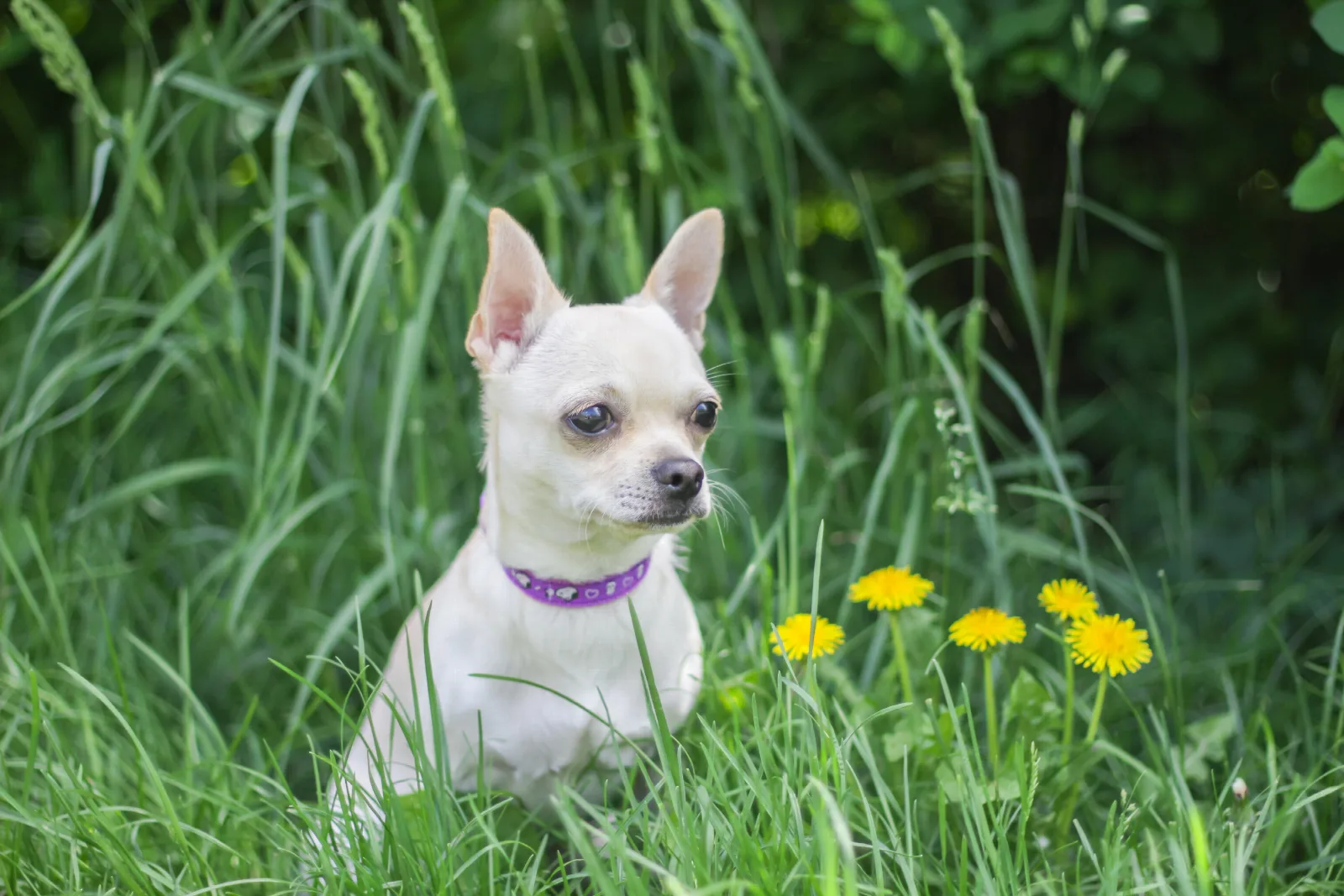
Let us begin with the sentence every mortified owner needs: poop eating, coprophagia in the clinical register, is one of the most common complaints in all of dog ownership, your chihuahua is not broken, and you did not cause it. Dogs are scavengers by heritage, mother dogs clean their puppies this way by instinct, and to a certain kind of dog, feces is simply an item of interest with a smell attached. Revolting to us; unremarkable to them. The habit is also, for good reasons laid out below, worth actually fixing rather than just enduring.
Quick answer: Poop eating is one of the most common complaints in all of dog ownership, and it does not mean your chihuahua is broken or that you caused it. The drivers are exploration and scavenging, especially in puppies who mostly age out of it, plain opportunity, and learned attention. Her own stool in a parasite-protected dog is mostly a hygiene horror; other animals' feces carries real parasite and pathogen risk. Deterrent powders give mixed results, so the reliable fixes are engineering ones.
Why she does it
The honest driver list, per the behavior chapter of the Merck Veterinary Manual: exploration and scavenging, especially in puppies, most of whom age out of it; opportunity, meaning a yard or litter box with inventory available; learned attention, because the one guaranteed way to make a bored chihuahua's day exciting is to grab the forbidden item and enjoy the ensuing chase; and habit, once any of the above has run long enough.
Occasionally the driver is dietary or medical, a ravenous appetite, malabsorption, parasites, or enzyme issues, which is why a persistent case with weight loss, diarrhea, or a suddenly bottomless appetite routes to the clinic rather than the training plan; our appetite guide covers that neighborhood from the other side.
And the part that upgrades this from gross to genuinely worth fixing: other animals' feces is the parasite superhighway, worms, giardia, and friends, a risk with less margin at four pounds, as the parasite guide lays out. Cat litter boxes add their own hazards. A poop-eating dog needs her parasite prevention and stool checks current, no exceptions.
The plan: cleanup first, training second
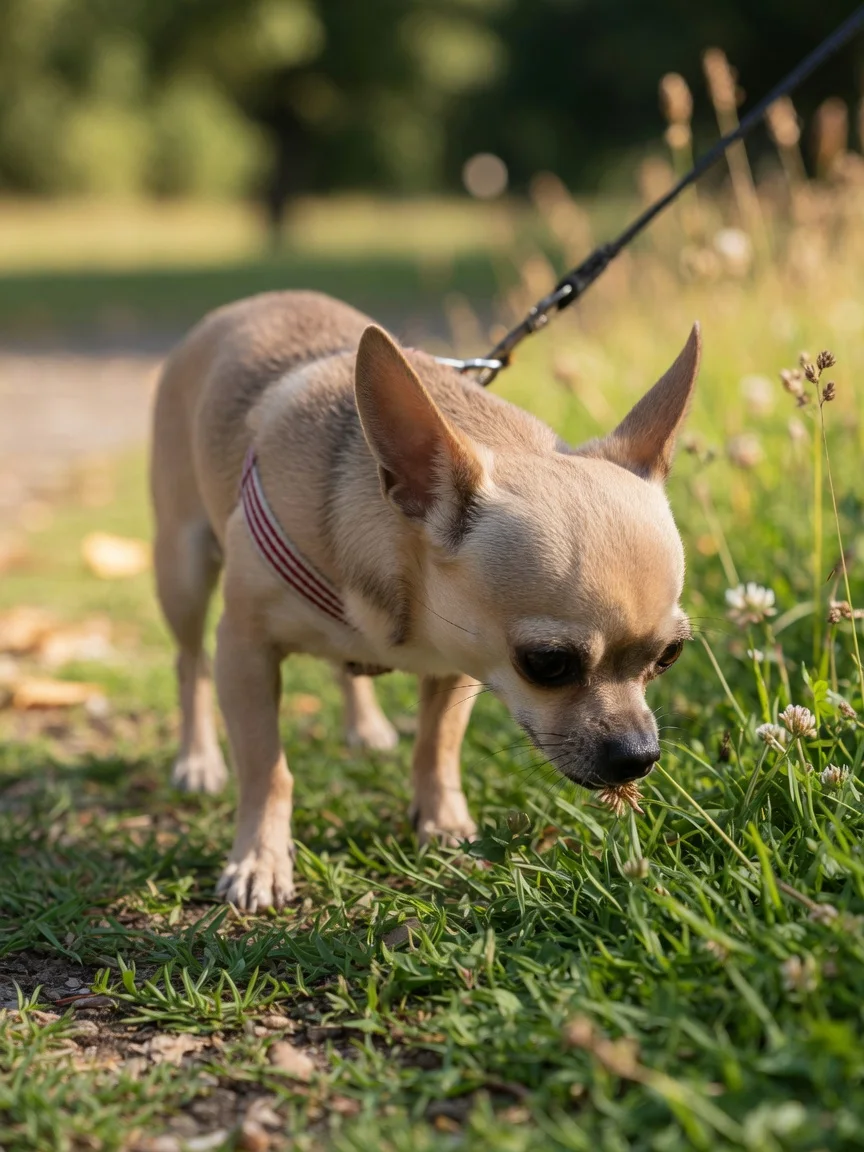
Remove the inventory. This is ninety percent of the fix and the step everyone hopes to skip. Yard patrolled and picked up immediately, litter box gated, baby-gated, or lidded beyond chihuahua reach, and on walks, you at the scene of her deposit before she can pivot. No inventory, no habit; every skipped cleanup is a rehearsal.
Change the after-poop script. The moment she finishes, call her to you for a genuinely good treat, every single time. The old script was poop, then investigate the poop; the new script is poop, then sprint to the human for chicken. Rehearsed daily, the new script wins, because it pays better and pays first.
Teach leave it as a cheerful skill, not a threat: reward turning away from low-value items, escalate to harder ones, and pay the turn-away richly. Paired with a leash on walks in target-rich environments, it converts encounters from heists into paydays.
Do not chase, do not scold. The chase is the best game she owns, and punishment teaches speed and secrecy, the fast furtive gulp before you can react. It also poisons the after-poop recall you are trying to build. Boring prevention beats dramatic reaction in every version of this story.
Ask your veterinarian about the supporting cast. Food additives and deterrent powders exist, work for some dogs and not others, and belong in a plan rather than instead of one. The same visit can rule out the medical drivers and check the diet, which quietly resolves a minority of cases outright.
When to call your veterinarian
Same-day call: poop eating plus vomiting, diarrhea, or lethargy, or a known snack from an unknown dog when her parasite prevention has lapsed. Routine appointment: a persistent habit despite the plan, ravenous appetite, weight loss, or a new adopter's first stool check, and any case where you want the deterrent-additive conversation. Training territory: the ordinary opportunistic habit of a healthy dog, which cleanup, the after-poop payday, and leave-it dismantle within weeks.
Frequently asked questions
Is eating poop dangerous for my chihuahua?
Her own, in a parasite-protected dog, is mostly a hygiene horror rather than a health crisis. Other animals' feces carries real parasite and pathogen risk, and litter box raids add clumping-litter ingestion to the bill. Current prevention, regular stool checks, and the cleanup-first plan cover the actual danger.
Why did my chihuahua suddenly start eating poop?
Sudden onset earns more curiosity than a lifelong habit: diet changes, a hungrier dog than usual, stress, or a medical driver like malabsorption or parasites. Pair the sudden start with any appetite, weight, or stool change and it is an appointment, not a training project yet.
Do the deterrent powders and pineapple tricks work?
Results are honestly mixed: some dogs are deterred, many are not, and nothing added to the food fixes the neighbor-dog buffet at the park. Treat additives as an adjunct your veterinarian approves, layered on top of cleanup and training, never as the whole plan.
How do I stop my chihuahua raiding the cat's litter box?
Engineering, not willpower: a lidded or top-entry box, a baby gate the cat can hop and the chihuahua cannot, or the box relocated beyond small-dog reach. To a dog, cat feces is a delicacy; no amount of training outcompetes free delicacies at nose height forever.
Coprophagia is the least dignified problem in this entire library and one of the most straightforwardly fixable: deny the inventory, pay the walk-away, keep the parasite armor current, and let the habit starve. She will find a new hobby, and nearly anything qualifies as an upgrade.

No comments yet
Leave a comment