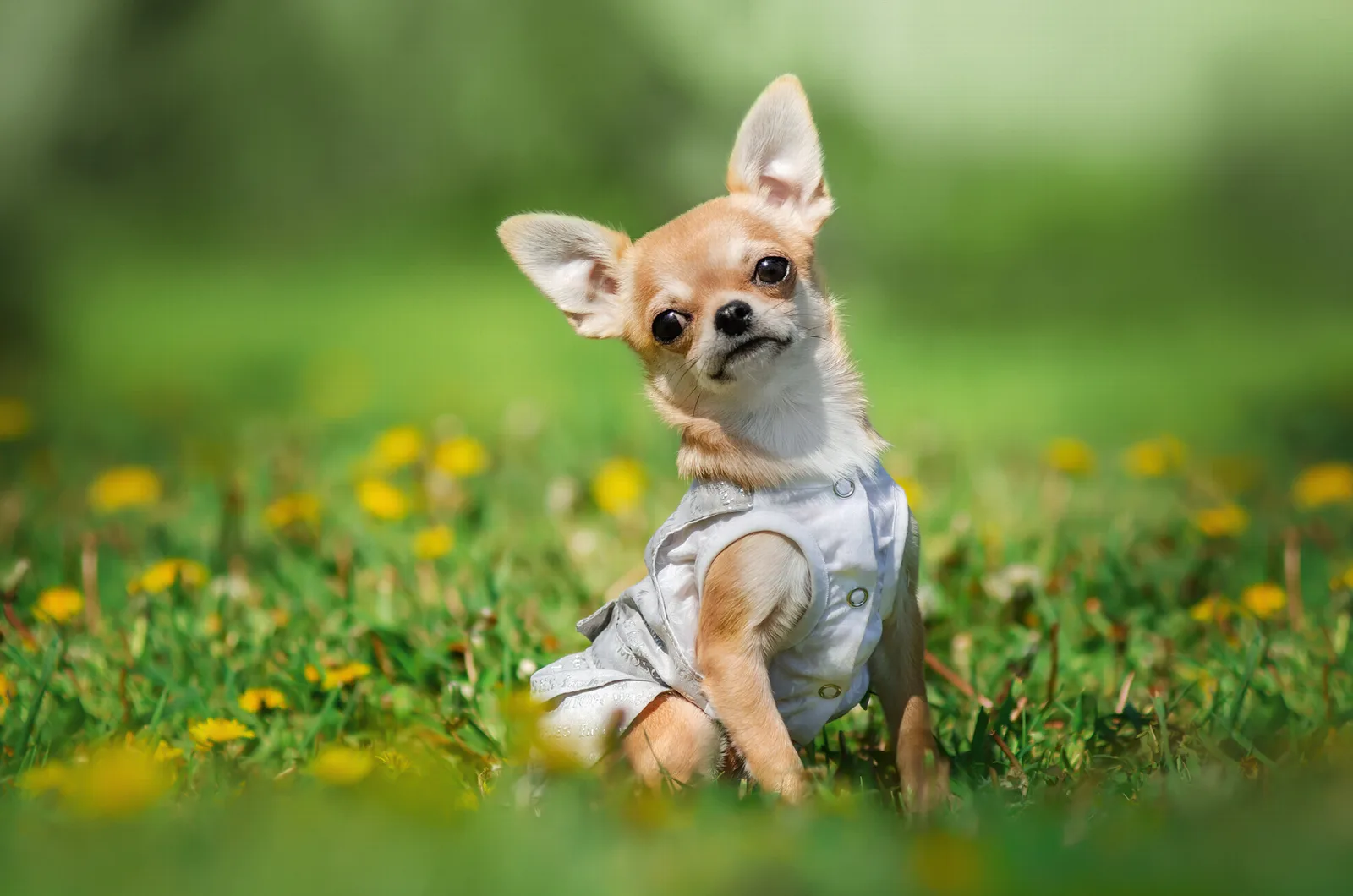
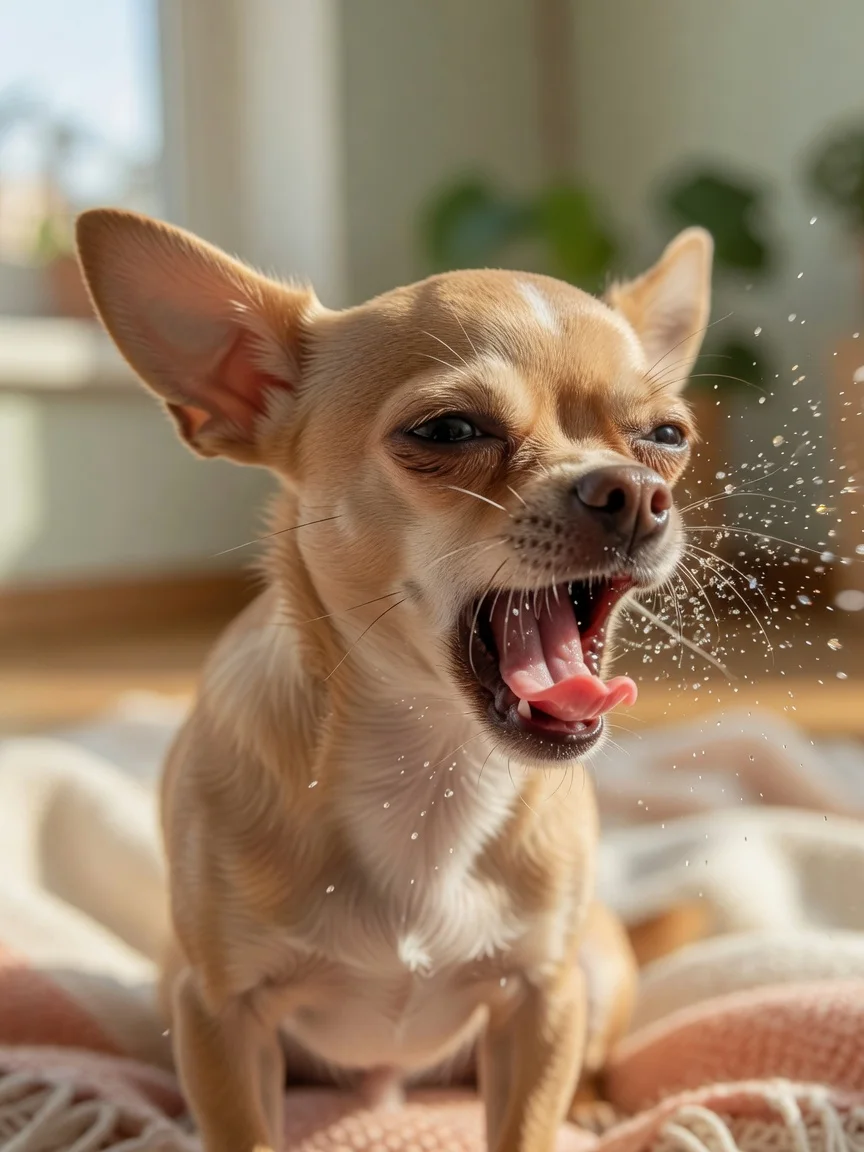
The first reverse sneeze is a rite of passage for chihuahua owners. The dog freezes, stretches her neck out, plants her elbows, and produces a rapid volley of snorting, honking inhales that sounds like she is choking on the air itself. It lasts thirty seconds, maybe a minute. Then she shakes off, trots away, and asks what is for dinner while you stand there holding the phone with the emergency clinic half dialed.
Here is the reassuring anatomy of that moment, and, because this is still a health column, the short list of look-alikes that are not harmless at all.
Quick answer: Reverse sneezing is a noisy but harmless reflex spasm: the dog freezes, stretches her neck, and pulls a rapid volley of snorting inhales, and she is breathing throughout. A typical episode ends within a minute with no aftermath. You mostly wait it out calmly, and a gentle throat stroke or a brief nostril cover to prompt a swallow often shortens it. The look-alike that matters is tracheal collapse, which is a dry outward cough rather than a fit of inward snorts.
What is actually happening
An ordinary sneeze pushes air out through the nose. A reverse sneeze, true to the name, yanks air rapidly in. The clinical label is paroxysmal respiration: a spasm at the back of the throat and soft palate, usually set off by some small irritation of the nasal passages or throat, which triggers a reflexive fit of forceful inhales until the spasm settles. The VCA hospitals guide to reverse sneezing describes it as common, usually benign, and disproportionately a small-breed event. Chihuahuas, with their compact throats and enthusiastic opinions, are card-carrying members.
During an episode the dog is getting air. It sounds desperate; it is mostly just loud. Most dogs are completely normal the moment it ends, which is itself a useful diagnostic detail.
The usual triggers
Excitement tops the list, which is why fits so often fire during greetings, play, or the sacred ceremony of your arrival home. After that: pulling against a collar, drinking or eating too fast, dust and household sprays, pollen, sudden temperature swings such as stepping into winter air, and strong scents. Some dogs have a signature trigger; many have none you will ever identify. A pattern worth noting in your phone either way, because trigger notes make the veterinary conversation shorter.
What to do during a fit
Mostly: stay boring. Your calm is contagious, and the fit ends on its own schedule. Owners commonly help it along with a slow, gentle stroke down the throat, or by briefly covering the nostrils for a second, which prompts a swallow that can break the spasm; both are standard-issue suggestions your veterinarian can demonstrate. Do not clamp the mouth, do not shake or thump the dog, and do not pour water in mid-fit.
The single most useful thing you can do happens after: film the next one. A ten-second phone video does more diagnostic work than five minutes of imitating the noise at the clinic, and it is how reverse sneezing gets confidently separated from its more serious sound-alikes.
When it is not a reverse sneeze
Three look-alikes earn respect. The goose-honk cough, a dry outward honk during excitement or leash pressure, points at the soft small-breed windpipe instead, and lives in our coughing guide. True choking involves pawing at the mouth, gagging with real distress, and a dog who does not bounce back to normal in a minute; that is an emergency.
And genuine respiratory distress, the full-body labored breathing described in our breathing guide, with belly effort or gum color changes, is a now-emergency, whatever noise came first. The bounce-back is your tell: a reverse sneezer returns to factory settings immediately; a dog in real trouble does not.
When to call your veterinarian
Emergency care now: distress that continues past the fit, blue or grey gums, pawing at the mouth with panic, or collapse. Same-day call: fits arriving many times a day out of nowhere, episodes joined by nasal discharge, nosebleeds, or face rubbing, which can suggest something lodged in a nasal passage, or a first-ever fit you are not confident classifying. Routine appointment: episodes that are clearly increasing in frequency or length across weeks, with your videos in hand. Monitor at home: the occasional classic fit, seconds to a minute, in a dog who is instantly herself afterward. The other noise owners routinely confuse with this one is simpler still: hiccups are a quiet, evenly spaced catch rather than a fit of snorting inhales.
Frequently asked questions
Is reverse sneezing dangerous for chihuahuas?
Almost never. It is a noisy reflex spasm, the dog is breathing throughout, and the typical episode ends within a minute with zero aftermath. The exceptions announce themselves by breaking that pattern: no bounce-back, rising frequency, or added signs like discharge.
Why does my chihuahua reverse sneeze after drinking water?
Fast drinking splashes and tickles the back of the throat, which is prime spasm territory. Smaller water portions or a slower bowl usually thins the pattern out. Mention it at a routine visit if it is frequent; it rarely signals anything deeper.
How do I stop a reverse sneezing fit?
You mostly wait it out calmly. A gentle throat stroke or a brief nostril cover to prompt a swallow often shortens the fit, and your veterinarian can show you both. If fits are long, frequent, or distressing, that conversation, plus a video, is the actual fix.
Reverse sneeze or collapsed trachea: how do I tell?
Direction and sound. Reverse sneezing is a fit of snorting inhales that ends with a normal dog; the tracheal honk is a dry outward cough, often leash- or excitement-linked, that tends to recur over months. Film both for your veterinarian, and use a harness either way; necks this size never need pressure.
Reverse sneezing is the rare chihuahua health topic where the correct emotional setting is amusement. Learn the look, film one for the file, master the throat stroke, and save your adrenaline for the short list of imposters above.

No comments yet
Leave a comment