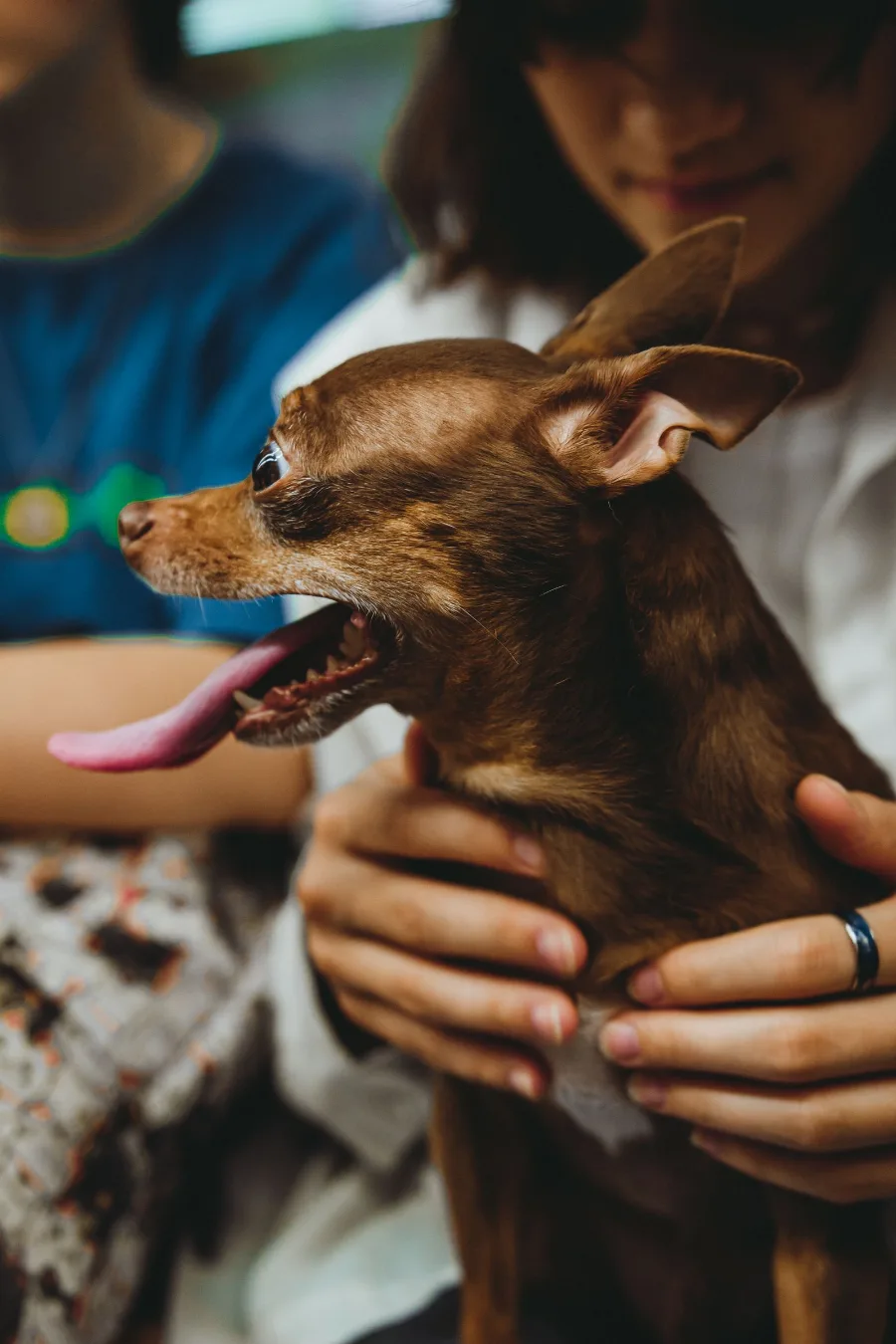
The logic of dog theft is simple economics stacked on simple physics: thieves favor dogs that are worth money and easy to carry, and a chihuahua is emphatically both. Tom Sharp, president and CEO of AKC Reunite, the American Kennel Club's pet identification and recovery service, names chihuahuas alongside bulldogs, french bulldogs, and yorkshire terriers among the dogs thieves commonly take, precisely because high value meets grab-and-run size, in the AKC's guidance on dog theft. This is the service version of an uncomfortable subject: why she is a target, where thefts actually happen, the prevention rules that cost nothing, and the first-hours protocol if she disappears anyway.
Quick answer: Dog theft runs on economics stacked on physics: thieves take dogs that are worth money and easy to carry, and a chihuahua is emphatically both, which is why recovery services name the breed among those commonly taken. No complete national ledger exists, so every most-stolen ranking is an estimate. A microchip is identification rather than a tracker and prevents nothing, but it makes ownership provable. Never tie her outside a store, not even for a moment.
Why a chihuahua, specifically
Nobody keeps a complete national ledger of stolen dogs. Police log dog theft under general property crime, many cases are never reported, and every "most stolen breeds" ranking is an estimate built from partial data. What recovery services can describe is the pattern in their own casework, and the pattern the AKC describes is two lists that overlap: dogs with high resale value, and dogs small enough to grab and run with. A chihuahua sits on both lists at once.
Purebred puppies routinely sell for four figures, arithmetic our cost breakdown lays out, and the AKC notes that stolen dogs are often flipped for quick resale profit. Meanwhile the portability this site usually celebrates works exactly as well for a thief as it does for you: no dragging, no commotion, one motion from bench to jacket. None of this is a reason to panic. It is a reason to run the same unglamorous management that powers the rest of chihuahua ownership.
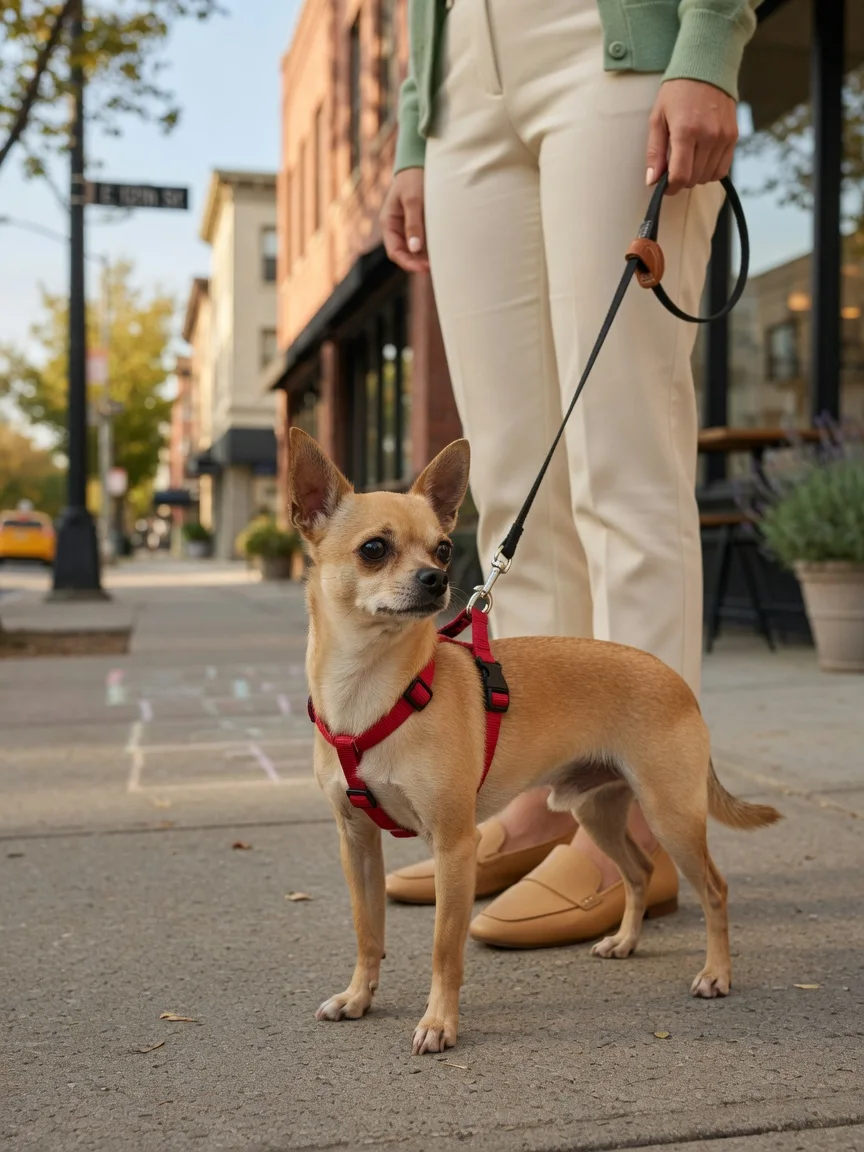
Where dogs are actually taken
Tied outside a shop is the classic scenario, and the AKC's guidance is blunt: a dog left unattended even for a moment is vulnerable, and a friendly dog more so, because the dog who greets every stranger will also greet the wrong one. Alone in a parked car is the second, with the same arithmetic: the AKC warns that a couple of minutes is all a thief needs, and a determined one is not stopped by a window.
Cars also run their own heat emergency in warm months, a separate hazard our road trip guide covers, which makes the rule easy to remember because it is the same rule. Alone in the yard is the third: an unsupervised dog behind a gate anyone can open, visible from the street on a predictable schedule, is inventory on display. The quieter fourth channel is information. The AKC specifically advises against telling strangers what your dog cost or where and when you walk her, since casual pride converts neatly into a shopping brief.
Prevention, in five household rules
One: she runs errands with you or she stays home, never tethered outside as a doorside deposit. If a shop will not admit a four-pound dog in a carrier, the shop can keep its errand. Two: on walks she is leashed, on gear that actually contains her; a startled chihuahua who slips a loose collar is a lost dog even without a thief involved, the fit problem our harness guide exists to solve. Three: yard time is supervised at this size, a rule that also covers hawks, open gates, and the escape routes cataloged in our runaway guide; walk the fence line for gaps on a schedule.
Four: keep her price and her timetable out of circulation, online and on the sidewalk, and be politely boring when strangers press for details. Five: layer her identification. A collar tag with a current phone number is the fast lane; a microchip, registered and kept current, is the permanent record, and the American Veterinary Medical Association is emphatic that a chip only works if the contact information behind it is up to date. Recent clear photos, kept where you can find them, complete the file.
If she disappears: the first-hours protocol
Move immediately, on several fronts at once, per the AKC's stolen-dog checklist. File a police report and say theft, not lost, when there is evidence she was taken: a cut tether, a witnessed grab, an opened gate. Call your microchip company and flag her as stolen, so a scan anywhere raises the alarm. Notify local shelters and any lost-and-found or stolen-dog databases in your area, then put fliers and social media to work, since a resold dog surfaces through ordinary channels: a new vet visit, a shelter intake, a neighbor's feed.
The identification math argues for that chip above all. In a study of more than 7,700 shelter strays cited in the AVMA's microchipping FAQ, microchipped dogs went home at more than double the rate of strays overall, and the most common reason a chipped dog failed to get home was an out-of-date phone number in the registry. Check the registration today; the AVMA even keeps an annual reminder date, August 15, for exactly this chore. One case makes the economics unusually clear: the Lady Gaga dog theft happened because the dogs were small and valuable, not because they were famous.
Frequently asked questions
Are chihuahuas really among the most stolen dog breeds?
They are consistently named among the commonly taken breeds by the people who handle recoveries, including AKC Reunite's president, though no comprehensive national count of dog thefts exists and rankings vary by source and year. The honest version: small size plus resale value puts the breed squarely in the target profile, whatever the exact league table says.
Does a microchip prevent theft?
No. A chip is identification, not a tracker: it does nothing until someone scans her at a clinic or shelter, and it broadcasts no location. What it does is make her provably yours and far more likely to come home, provided the registration carries a phone number that still rings. Prevention is the leash, the supervision, and the closed yard; the chip is the recovery system behind them.
Is it ever safe to tie her up outside a store for a minute?
The AKC's answer is no, not even for a moment, and at chihuahua size the moment is shorter than most: she can be inside a jacket before the espresso machine finishes. Bring her in, use a carrier, or leave her home. There is no errand priced correctly against her.
What should I do in the first hour if I think she was stolen?
Report the theft to police, call the microchip company to flag her, and alert nearby shelters and lost-pet databases, in that order and in the same hour. Then photos, fliers, and social media, with her chip number in your notes. Early, loud, and organized beats every other strategy available to you.
So: the breed's whole sales pitch, portable, adorable, valuable, reads the same to a thief, which means protection is mostly the art of never leaving her where the pitch can be heard. Keep her with you, keep her identified, keep her details boring, and let the tag and the chip stand guard for the one day the system fails.


No comments yet
Leave a comment