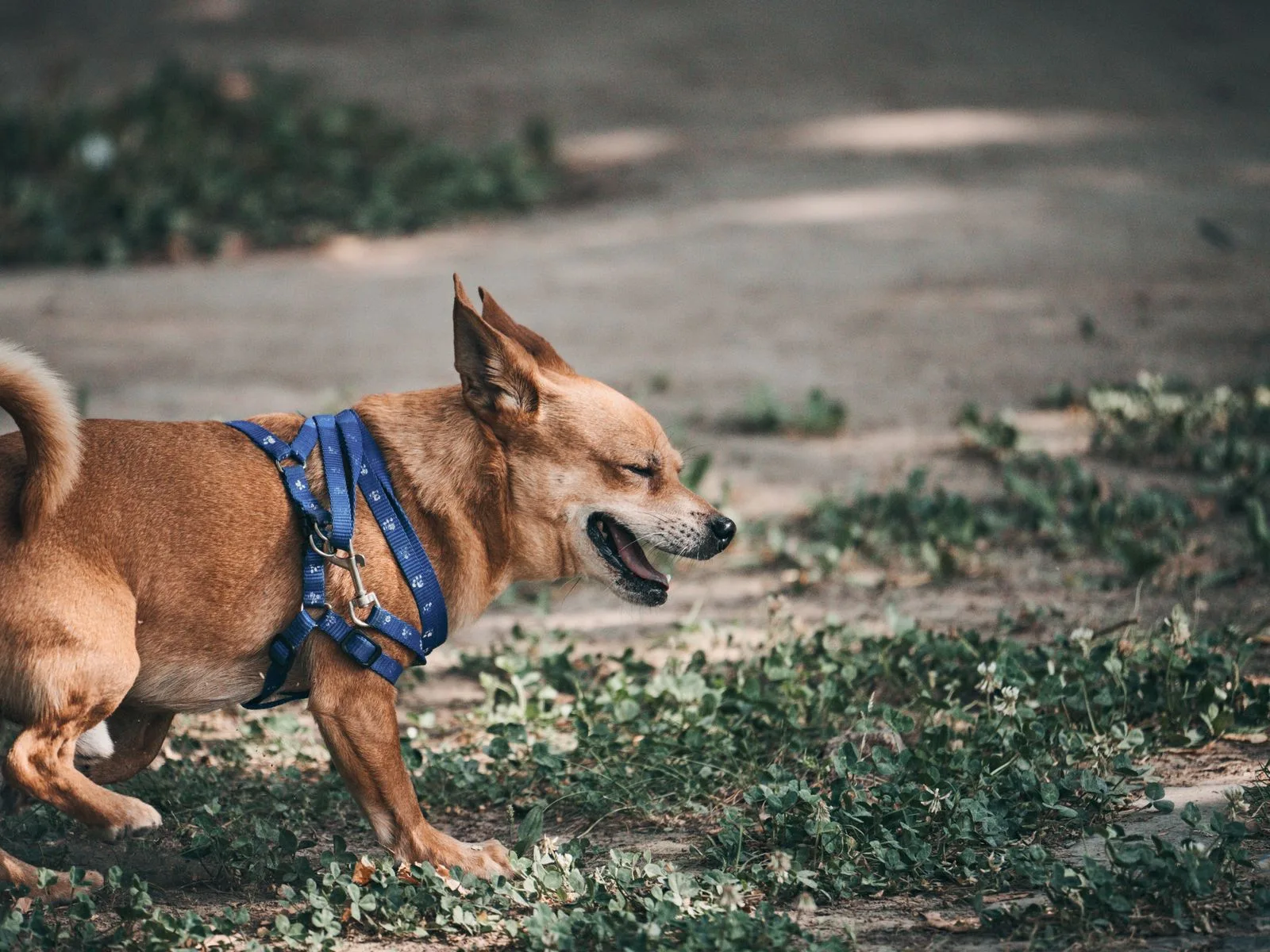
Most hawk-and-small-dog stories fall apart on contact with a scale. Birds of prey lift far less than their reputation suggests, which makes the risk conversation mostly theater for beagle and terrier owners. Chihuahuas are the exception, and the reason is arithmetic: the International Owl Center puts the band of genuine vulnerability at pets weighing five pounds or less, and much of this breed lives inside it. So the question owners keep asking is fair. Does a spiked, puncture-resistant vest do anything? The short answer: a defensible supplement with an unproven field record, and nowhere near the most useful thing on the list.
Quick answer: Carrying is the least likely part of the hawk story: raptors lift far less than folklore claims, and the realistic risk band for pets is five pounds or under, which is precisely where chihuahuas sit. Large owls do on rare occasions attempt to catch small cats and very small dogs, and guidance is that pets of five pounds or under should not be left outside unattended. Whether hawk-proof vests work is unknown, since no independent field testing exists. Dusk, night, and dawn carry the most owl risk.
What the risk actually looks like
Rare, documented, and not zero. The International Owl Center's guidance is that large owls do on rare occasions attempt to catch and kill small cats and very small dogs, and that pets of five pounds or under should not be left outside unattended. The species most often involved is the great horned owl, which the Audubon field guide describes as a night and dusk hunter that watches from elevated perches, takes prey up to the size of rabbits and opossums, and lives in nearly every North American habitat, suburbs included. Daytime hawks work the same yards on the opposite shift.
The documented pattern is not the one in the viral clips. In March 2013 the Alaska Department of Fish and Game reported a series of great horned owl attacks on pets in Gakona over roughly four days. Several animals died, and a local veterinarian treated injured dogs for punctures consistent with talon wounds, including one that narrowly missed an eye.
A raptor specialist quoted in the report linked the behavior to a low point in the local snowshoe hare cycle, and experts called the episode unusual. Note what the injuries were: strike wounds delivered on the ground, not a clean lift into the air. Frequency remains unclear: no agency keeps a national count of raptor attacks on pets, so anyone quoting a rate is estimating.
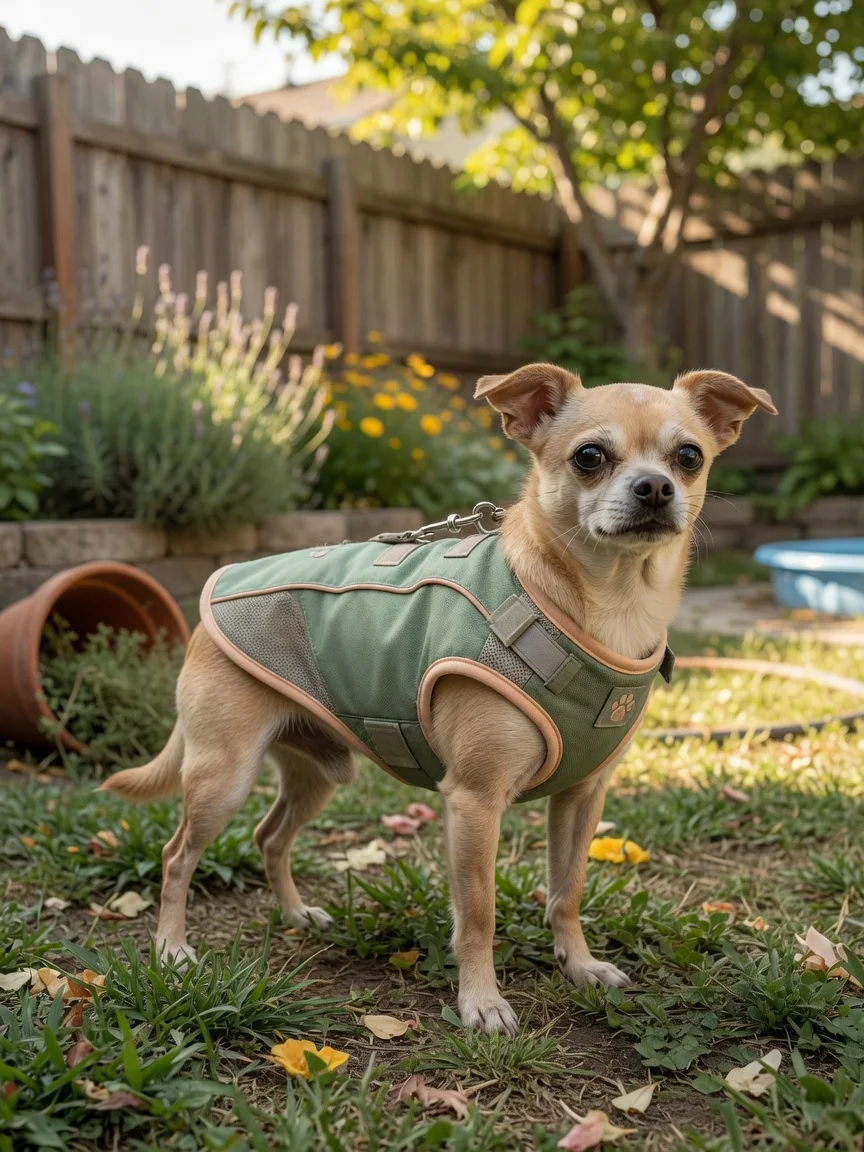
What a hawk-proof vest is, and what it can plausibly do
The products sold under names like Raptor Shield and CoyoteVest's HawkShield are variations on one idea: a rigid or puncture-resistant panel across the back and neck, often with spikes or stiff bristles, worn over the dog's normal harness. The mechanism is more sensible than most pet gadgets, because it matches the attack geometry: a strike arrives from above onto the spine and shoulders, so armor placed there sits on the line the bird is flying.
What does not exist is evidence. There is no independent or peer-reviewed field testing of these vests, and there realistically cannot be, since nobody can ethically run a trial in which raptors strike dogs. Manufacturers publish material tests; buyers report anecdotes.
The limits deserve stating plainly: coverage is partial, leaving legs, flanks, and head exposed; a strike delivers blunt force as well as puncture, and a four-pound dog knocked flat is still knocked flat; and the vest is weight and insulation on an animal with a narrow heat margin, which our temperature guide already governs. Introduce it gradually and with treats, like every other item in our gear guide. Buy one if you live under genuine raptor pressure. Do not buy one and then start leaving her alone in the yard.
The prevention that does the heavy lifting
Supervision is the whole program; everything else is refinement. The International Owl Center's recommendation is to keep small dogs leashed and attended at all times, which at chihuahua weight means the yard is not a place she occupies alone, however well fenced: a fence has no roof. Weight the vigilance toward dusk, dark, and dawn, when great horned owls hunt, and keep the leash short in open ground with nothing overhead.
If she has a regular outdoor pen, roof it: netting or mesh over the run removes the risk rather than hedging against it. Learn where local nests are in spring and route walks around them. A standing adult beside a small dog is a deterrent by itself, the same argument our guide to chihuahuas who bolt makes for a short line.
One option is off the table. Hawks, owls, eagles, and falcons are protected under the federal Migratory Bird Treaty Act, and the Virginia Department of Wildlife Resources states the position bluntly: raptors cannot be destroyed or harmed, and persistent conflicts go to USDA Wildlife Services. Harassing, trapping, or shooting a bird that hunts over your yard is a federal matter, not a neighborhood one.
If a bird makes contact
Treat it as a same-day veterinary call, symptoms or none. Talon injuries are puncture injuries, and the American Kennel Club's chief veterinary officer, Dr. Jerry Klein, describes puncture wounds in dogs as an iceberg, with most of the damage under a surface that coat hair hides.
His guidance is to have the dog seen as soon as possible, ideally within six hours, since early cleaning lowers infection risk; small punctures are often left open to drain; and untreated infection can reach the bloodstream. At four pounds the margins are thinner, and chest punctures matter most. Note the time, photograph what you saw, and go, on the logic of our emergency vet guide. Ask for a look at the eyes. The documented cases are rare and strange, including the one-pound puppy a hawk dropped in front of Texas construction workers in 2019.
Frequently asked questions
Can a hawk actually carry off a chihuahua?
Carrying is the least likely part. Raptors lift far less than folklore claims, and the realistic risk band for pets is five pounds or under, per the International Owl Center, which is where many chihuahuas sit. The harm documented in the 2013 Alaska attacks came from talon strikes on the ground, not from a bird flying off.
Do hawk-proof vests really work?
Nobody knows. The design logic is sound, since armor over the spine and neck sits where a strike lands, but no independent field testing exists and none realistically can. Treat a vest as a hedge in a high-risk area, never as license to look away.
When is my chihuahua most at risk outdoors?
Dusk, night, and dawn carry the most owl risk, since Audubon describes the great horned owl as a night and dusk hunter, while hawks work daylight over the same ground. Setting matters more than hour: an open yard with no cover and no adult nearby is the vulnerable case.
Can I scare off a hawk that hunts my yard?
Not by any method that touches the bird. Raptors are federally protected, and state wildlife agencies refer persistent conflicts to USDA Wildlife Services rather than to homeowners. You can remove what attracts prey, roof the run, and change your routine, which is both the legal half and the effective half.
So the vest is real gear aimed at a real risk that is smaller and stranger than the folklore, and not the answer to the question it advertises. The answer is a leash, a roofed pen, dusk taken seriously, and a chihuahua who does not spend unsupervised time under open sky. Buy the vest if it lets you breathe on the trail. Just do not let it take over a job your eyes were doing better.

No comments yet
Leave a comment