
Coyotes are a permanent feature of American suburbs, and the research on what they do to pets is more specific than the folklore. Researchers with the Urban Coyote Research Project, a long-running study led by Ohio State University with the Forest Preserves of Cook County, compiled 70 recorded attacks on dogs and 10 on cats in the Chicago metropolitan area, with small breeds accounting for most of the breeds involved.
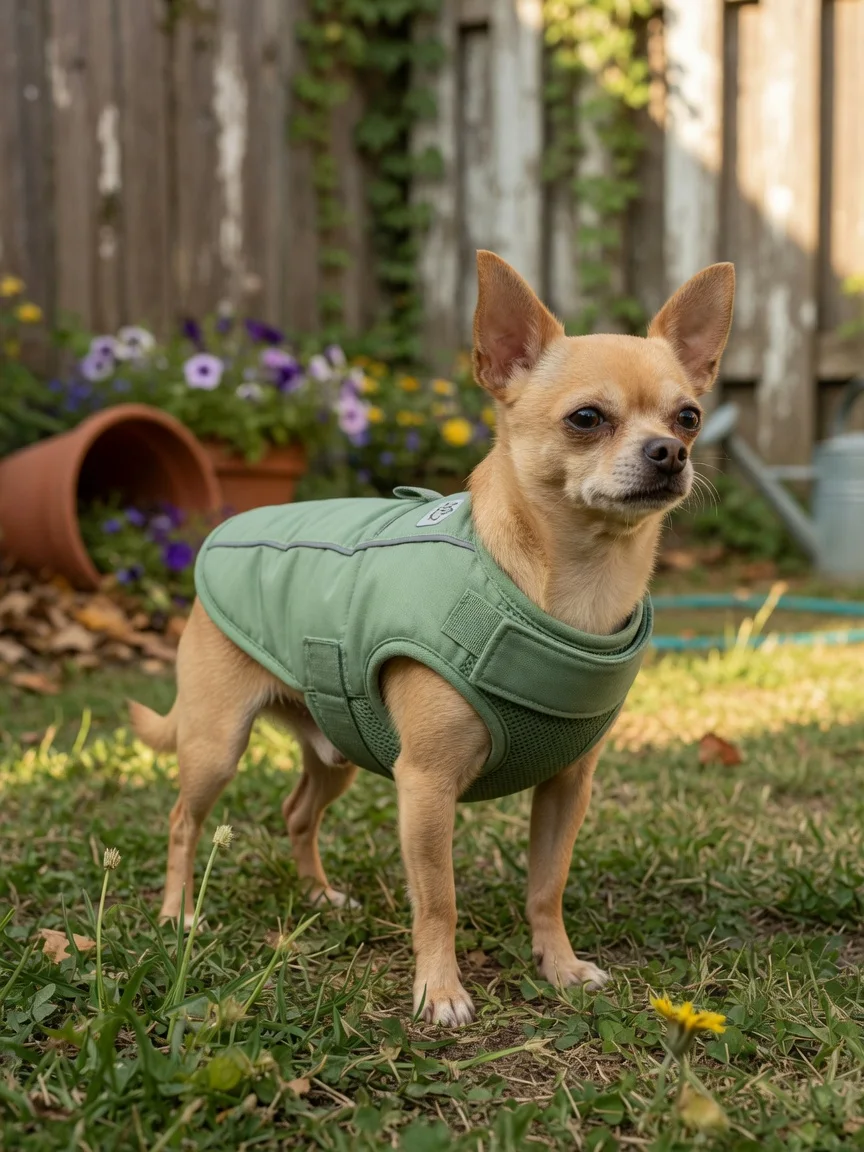
A chihuahua sits at the center of that profile: prey-sized, low to the ground, and often outdoors at the hours predators hunt. This is the practical version of the subject, coyotes first, raptors second, and the household rules that address both.
Quick answer: A chihuahua sits at the centre of the risk profile for both predators: prey-sized, low to the ground, and often outdoors at the hours they hunt. With coyotes, the documented pattern includes daytime backyard and park attacks, some with the owner present, clustering from late fall through early spring rather than in summer. With raptors, the documented pattern is a strike on the ground rather than an abduction. After any attack, see a veterinarian the same day, because punctures seal over fast.
What the coyote research found
The Cook County record is useful because it was counted rather than collected from rumor. Reported attacks on pets rose from zero to two a year in the early 1990s to between six and 14 a year by the mid-2000s, according to the project's summary of conflicts. Yorkshire terriers and Shih Tzus were the breeds most commonly attacked, at six incidents each, followed by Jack Russell terriers and Labrador retrievers at five each, so small dogs dominate the list without size offering anyone a guarantee.
Two findings matter more than the totals. Dogs were attacked in their own backyards, including with the owner present, and while being walked in parks. And incidents clustered in late fall, winter, and early spring, overlapping the coyote breeding season, when territorial behavior increases. The translation for owners: this risk is not restricted to remote trails after dark, and it has a calendar.
Hawks and owls: what the record supports
Raptor stories travel faster than raptor facts, so here is a documented case instead of a rumor. Alaska Fish and Wildlife News reported in May 2013 that one great horned owl attacked a series of pets near Gakona, Alaska, over several days that March, including a cat, a small terrier, and pet rabbits.
Steve Lewis, a raptor specialist with the U.S. Fish and Wildlife Service in Juneau, told the publication that "a great horned owl is a big bird, but they look way bigger than they are actually built," and his advice for owners of small animals was blunt: keep them on a leash or be right with them.
That is the honest shape of the risk. Attacks on small pets are documented but uncommon, they concentrate around dawn and dusk, and what follows is a strike wound rather than a vanishing act. Treat any puncture, new limp, or unexplained quietness after time outdoors as a same-day veterinary call, and our emergency vet guide covers what to bring.
The yard, made unrewarding
A fenced yard is not a supervision substitute at four pounds. Humane World for Animals, formerly the Humane Society of the United States, advises that dogs never be left outside unattended or chained, that they stay leashed in public areas, and that pet food and water bowls stay indoors, since outdoor feeding is an open invitation.
If fencing is the plan, the specification is real: at least six feet tall, extended at least six inches underground or fitted with a mesh apron running about 12 inches outward at ground level, because coyotes both climb and dig. The rest is attractant management: secured trash, fallen fruit cleared, spilled birdseed swept, brush piles thinned so nothing has cover to wait in. For dawn and dusk potty breaks, go out with her, on leash, with a light, every time, which is also the routine our guide to chihuahuas who bolt recommends for entirely different reasons.
Walk protocol and encounters
Six feet of fixed leash beats a retractable one here without argument: a flexi-lead can put 15 feet of unreachable dog between you and a problem, and reeling it in costs the seconds that matter. A harness she cannot reverse out of does more work than usual, per our harness and collar comparison, and the steady manners built in leash training keep her beside you rather than in the brush.
Avoid greenbelt edges, culverts, and golf course margins at first and last light, and carry a deterrent you would actually use: an air horn, a whistle, or a shaker can. The same never-alone rule answers why thieves target chihuahuas: she is not tied outside a shop, ever.
If a coyote appears, pick her up first, before anything else. Then face the animal, stand tall, be loud, and back away slowly without running or turning around. Hazing works only when the coyote can tell the unpleasantness is coming from a person, which is why shouting and arm-waving beat a quiet retreat.
If it does not leave, or returns repeatedly, report it to local animal control or your state wildlife agency, since a coyote that has lost its wariness of people is a neighborhood matter rather than a personal one. Camping and rural stays tighten the same rules, per our camping guide: leashed by day, inside by night, never tied out alone. The best-known case is also the least confirmed: the coyote explanation for Paris Hilton's missing chihuahua was never verified by any agency. Owners often ask about armour, so we looked at whether hawk-proof vests actually work, and the honest answer is that nobody has tested them. Not every case is a raptor, either: the 2019 Devon seagull report travelled the world and was never publicly resolved. Owners do sometimes intervene directly, as the California contractor who drove a bear off his deck with his fist did in 2015.
Frequently asked questions
Can a hawk really fly away with a chihuahua?
The documented pattern is a strike on the ground, not an abduction. A great horned owl looks considerably bigger than it is built, in the words of the U.S. Fish and Wildlife Service specialist quoted above, and reported attacks on small pets involve a bird coming down on an animal where it stands. That still injures a four-pound dog seriously, so the useful response is supervision at dawn and dusk rather than reassurance.
Are coyotes only a danger at night?
No. The Cook County records include dogs attacked in daytime backyards and on park walks, some with the owner present, with incidents clustering from late fall through early spring. Dawn and dusk remain the busiest hours, but the middle of the afternoon is not protection. Report any coyote that approaches people or dogs without hesitation.
Does a six-foot fence make the yard safe?
It lowers the odds, and only when built to specification with a dig barrier and a climb deterrent. It also does nothing about birds and nothing about a gate left open. A fence buys time and discourages casual entry; it does not replace an adult standing outside with the dog.
What should I do if my chihuahua is attacked?
See a veterinarian the same day even if she seems fine, since punctures from teeth or talons seal over quickly and small bodies have little margin. Photograph the injuries, note the time and place, and report the incident to animal control so the sighting enters the local record.
None of this requires treating the outdoors as enemy territory. It requires accepting that a four-pound dog reads as prey to animals that are only doing their jobs, and building the routine around that: leashed, escorted at dusk, fenced properly, and never left out alone on the grounds that the yard has always been fine before. The predators are not the anomaly here. The unattended small dog is.



No comments yet
Leave a comment