
In late April 2015, a 73-year-old contractor in Meadow Vista, California, drove a bear off his deck with his fist after hearing his Chihuahua yelping outside. Carl Moore told KTVU that the animal was pushing past a low gate onto the deck of his Placer County home when he raised his arms, charged it, and hit it with a right hand as it reared up and turned toward him.
"Boom, I hit him good," Moore said. The bear ran off. Neither Moore nor his dogs were reported injured. The clip crossed onto national television within a week and has recirculated online most years since, usually with the details filed off. The details are the part worth keeping.
Quick answer: In late April 2015, a 73-year-old contractor in Meadow Vista, California drove a bear off his deck with his fist after hearing his Chihuahua yelping outside. Carl Moore said the animal was pushing past a low gate when he raised his arm and struck it; the bear ran off, and neither Moore nor his dogs were reported injured. The clip reached national television within a week and has recirculated most years since, usually with the details filed off.
What happened in Meadow Vista
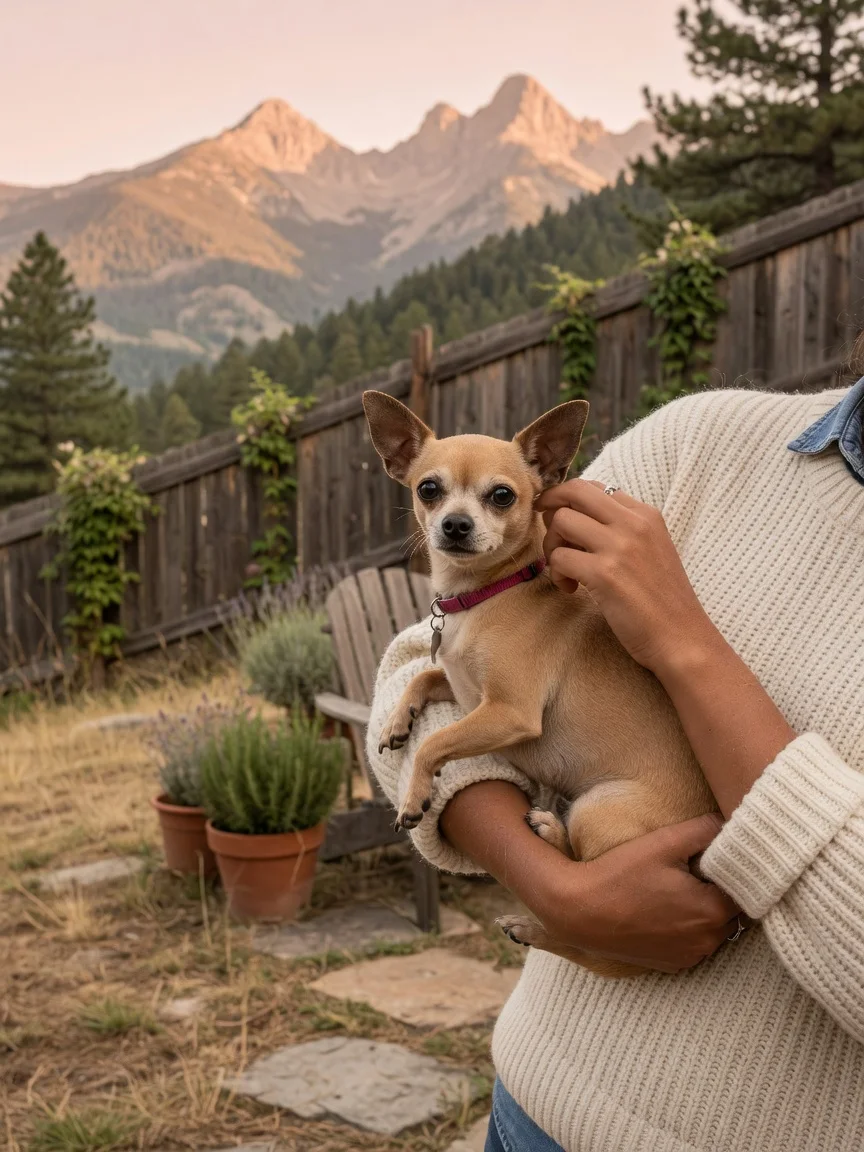
Moore, a contractor who described himself to reporters as a former Marine, boxer and bar bouncer, said he was inside the house when he heard the dog. Two dogs were on the property, according to ABC7's May 1, 2015 report: a Chihuahua and Bailey, a 15-year-old Labrador. "She was terrified," Moore told KTVU of the Chihuahua, describing the bear straddling a low gate at the edge of the deck.
John Sargent, who works at Moore's construction company and had known him roughly 25 years, watched the encounter and described it to CBS News: "Carl just smacks it, I couldn't believe it." Moore's own summary, repeated to several outlets, was less technical. "I ain't letting no bear eat my puppies, that ain't going to happen," he said. By every published account the bear absorbed the punch, turned, and left the property under its own power.
Why the bear was on the deck
The most useful fact in the coverage came from the agency rather than the man. Officers with the California Department of Fish and Wildlife estimated the bear at roughly 300 pounds and said it was most likely after the chickens Moore kept in his yard, KTVU reported. That reframes the whole scene. A bear on a residential deck in the Sierra foothills is generally not hunting a four-pound dog. It is following a food line, and in this case the line ran through a chicken run and ended at a gate a small dog happened to be standing behind.
The department also told Moore he could apply for a depredation permit, the revocable authorization California has issued since 1957 to owners and tenants whose property is being damaged by specific animals, according to the same report. Moore declined it. "If it comes back I'll call 911 and let the sheriff's do it because I don't want to shoot no animal," he said.
What was never confirmed
Several things in this story were never nailed down, and a retrospective should say so plainly. No outlet published an exact date for the encounter; the earliest reports aired on April 28, 2015, and placed it within the preceding weeks. The Chihuahua's name appears as Lacey in ABC7's account and Lacy in CBS News coverage.
The bear was never identified, tagged or, as far as any published record shows, seen again. There is no public agency incident report, and the sequence rests on Moore's description supported by one named witness, which is why ABC7 framed its headline as a claim rather than a finding. No follow-up coverage established whether the bear returned to the property, or what became of the chickens.
What wildlife agencies tell small-dog owners
None of the official guidance resembles what Moore did. The California Department of Fish and Wildlife's black bear conflict guidance tells residents to keep a safe distance and back away slowly, not to run, and not to make eye contact, while making noise and making themselves look larger. Fighting back appears in that guidance only after a black bear makes physical contact, and it is followed immediately by a call to 911. Advancing on a bear is not on the list at any point.
The prevention half is where owners of very small dogs have real leverage. The same agency advises bringing pets inside at night, leashing pets outdoors, securing trash and compost in bear-resistant containers, removing bird feeders, collecting fallen fruit, and installing electric fencing around chicken coops and similar enclosures. For a dog whose body weight sits in raccoon territory, that leash line is not a formality.
It is the difference between a dog you can lift in one motion and a dog already twenty feet into the treeline, which is the recall problem our guide to why chihuahuas run away covers in detail. A well-fitted harness is what makes the one-motion lift possible without wrenching her neck, per our harness and collar comparison.
Owners who take small dogs into wild country should read the attractant rules as camping rules as well, since the food-storage discipline in our chihuahua camping guide is the same discipline that keeps a residential deck boring to a bear.
The underlying point is one this site has made about an entirely different predator in why thieves target chihuahuas: a dog this size is portable, and portability is the risk, whatever is doing the carrying. If a wild animal does make contact, treat it as an emergency rather than a wound to monitor at home, and work the checklist in our emergency vet guide, because puncture wounds on a small body go bad quickly.
Eleven years on, the story survives on the punch alone. What it should be remembered for is quieter: a chicken run that drew a 300-pound animal onto a residential deck, a state agency that offered a lethal permit to a man who turned it down, and a very small dog standing outside alone when the bear arrived. The first was preventable, the second was avoidable, and the third is the one every owner of a four-pound dog controls completely.




No comments yet
Leave a comment