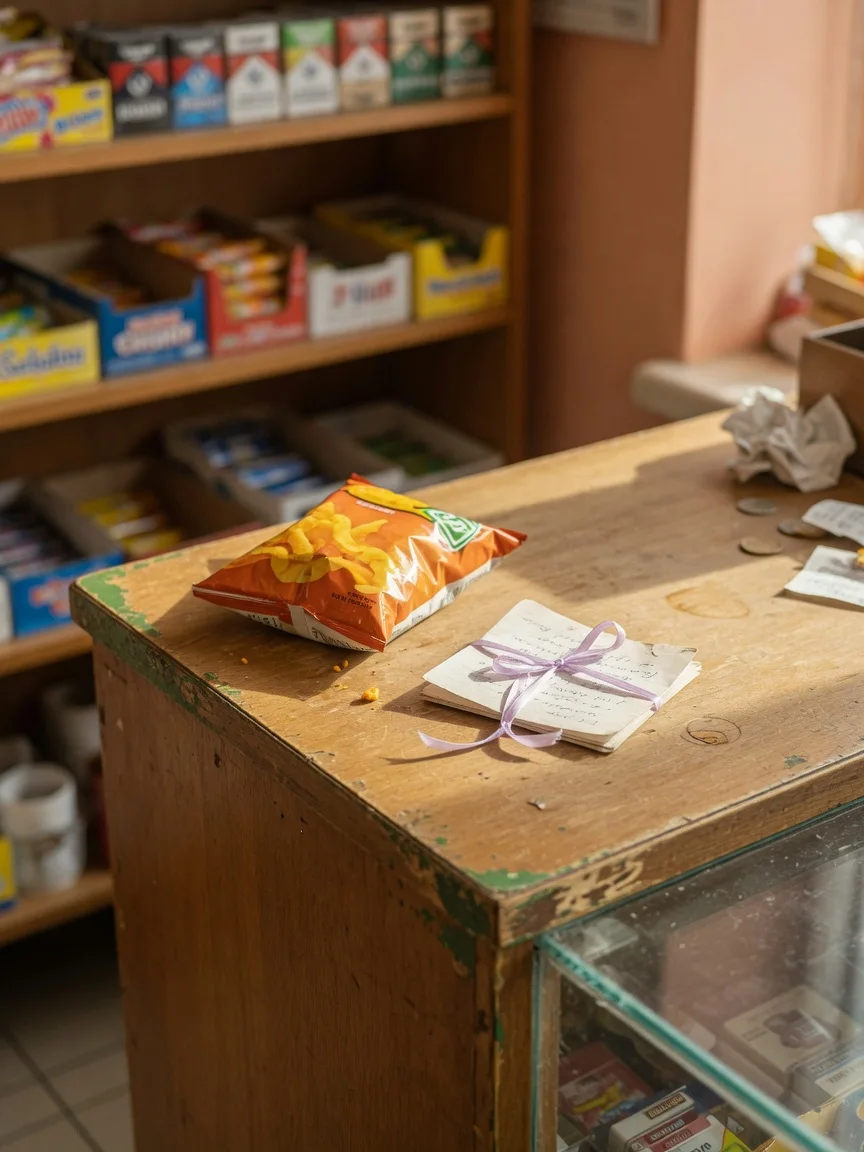
In March 2020, a man in the Mexican state of Nuevo León tied a handwritten note and a 20-peso coin to his small dog's collar and sent her across the street to the corner store. She came back with a bag of orange Cheetos.
The photographs he posted to Facebook outran nearly every other pet story of that spring, and they have recirculated in some form every year since, usually stripped of the details that would let anyone check them. More than six years later those details are still on the record, and they are more interesting than the version that travels.
Quick answer: In March 2020, a man in the Mexican state of Nuevo Leon tied a handwritten note and a 20-peso coin to his small dog's collar and sent her across the street to the corner store. She came back with a bag of orange Cheetos. The photographs outran nearly every other pet story of that spring and have recirculated since, usually stripped of checkable detail. The widely repeated $20 is a translation error: the note said twenty pesos. Sending a dog on an errand is not a good idea.
What the Mexican coverage actually says
The owner is Antonio Muñoz. Excélsior reported the errand on March 20, 2020, placing him in Nuevo León and quoting the note attached to the collar. Infobae revisited the story on September 2, 2022, describing the dog as a brown chihuahua and locating Muñoz in the Lomas de San Martín neighborhood. SDP Noticias, in its own account, placed the errand in Monterrey. All three carry the same core sequence: note, coin, store, Cheetos, dog home.
The timing is the part almost no English version keeps. Muñoz captioned his post "Día tres de la cuarentena," day three of quarantine, and Excélsior published on March 20. Mexico's federal distancing program, the Jornada Nacional de Sana Distancia, had been announced by the Secretaría de Salud to run from March 23 to April 19, 2020. He was already staying home before the national measure formally began, which is the entire reason the story had a premise.
The note, and the detail lost in translation
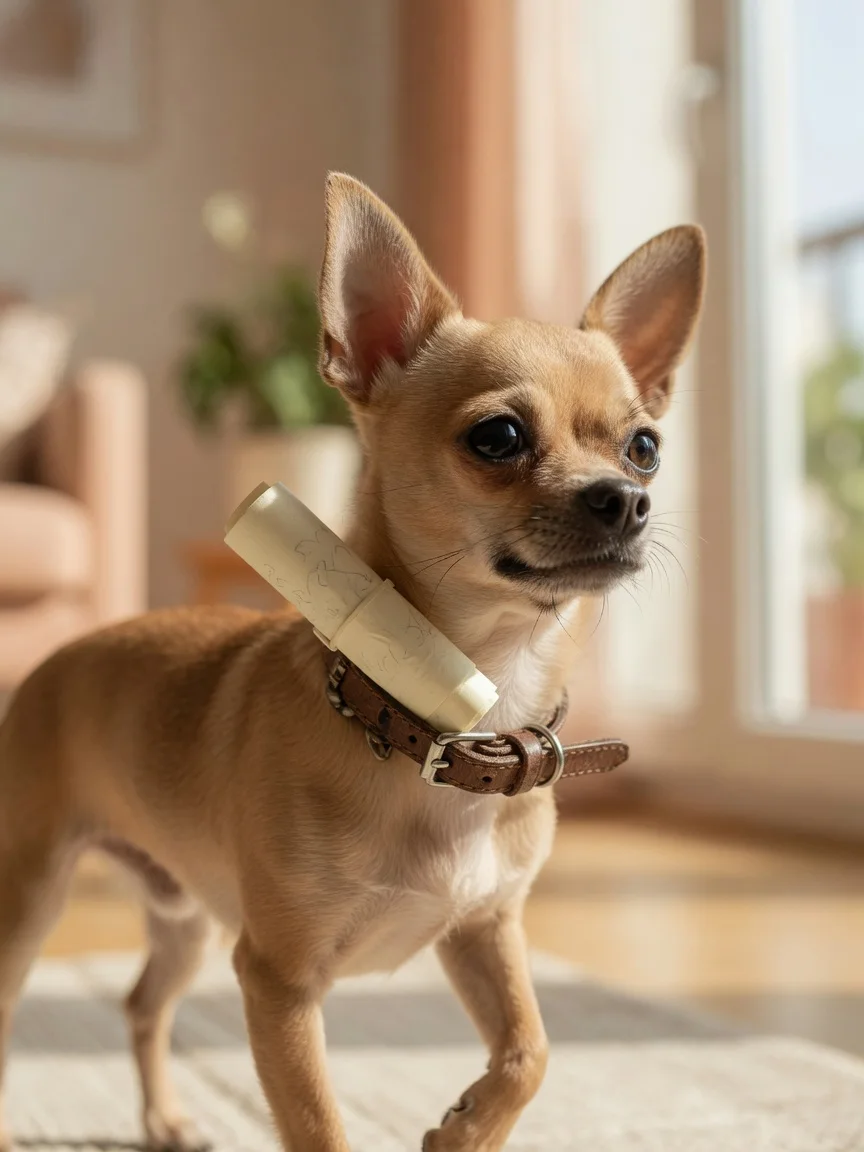
As quoted by Infobae and SDP Noticias, the note read: "Hola, señor de la tienda. ¿Puede venderle a mi perrita unos Cheetos naranjas? Rojos no porque pican. En el collar trae 20 pesos. Ojo, si no atiende bien a mi perra lo muerde. Atentamente, el vecino de enfrente." In English, roughly: Hello, Mr. Shopkeeper. Can you sell my dog some orange Cheetos? Not the red ones, because they are spicy. She has 20 pesos on her collar. Careful, if you do not treat my dog well she will bite you. Sincerely, the neighbor across the street.
Twenty pesos. Not twenty dollars, which is what a long tail of English-language blogs printed, converting a small-change snack run into an implausibly funded one. The rest survives translation better. The color specification is a real preference with a reason supplied by the note itself, that the red bags are the spicy ones. The bite warning reads as the joke a chihuahua owner makes about a dog whose reputation arrives several steps ahead of her.
What was never confirmed
A fair amount, and it is worth saying plainly. The dog's name appears in none of the Mexican reports reviewed here. English aggregator sites supply one, and it traces back to those sites rather than to the coverage. The exact date of the errand is nowhere stated, only the day-three caption and Excélsior's March 20 publication date. Nuevo León is agreed on, the neighborhood is not, with Infobae naming Lomas de San Martín and SDP Noticias reporting Monterrey.
The larger gap is the errand itself. Everything known about it comes from Muñoz's own post and his photographs. None of the outlets reviewed reported speaking with the shopkeeper, and there is no independent account of the walk over, the transaction at the counter, or whether anyone stood in a doorway watching. That does not make the story false, and no fact-checking organization appears to have contested it. It makes it what it is: a well-documented viral post, carried by established Mexican outlets, rather than an investigated event.
Why the errand was riskier than the photographs suggest
The charming version of this story ends at the doorstep with a returned bag. The practical version notes that a dog this size crossing a street alone is exposed to drivers who cannot see her, to larger loose dogs, and to strangers, and that chihuahuas are among the breeds most often taken from yards, porches and parked cars, which is why our guide to why thieves target chihuahuas exists at all.
A small dog loose outdoors is also a dog who can be startled into a sprint, the failure mode covered in our guide to chihuahuas who bolt. Whatever supervision Muñoz had arranged is not in the record either way.
The cargo deserves a line. Cheetos are not on any toxicity list, and the concern here is duller than poisoning and far more common. The ASPCA's guidance on people foods notes that excessive salt can produce increased thirst and urination and, in larger quantities, more serious effects, and a snack portion that is trivial for an adult is not trivial for a dog weighing a few pounds.
The genuinely dangerous items, xylitol and chocolate and grapes among them, are catalogued in our toxic foods list, and the better shopping list lives in what chihuahuas can eat. One licked finger is not an emergency. A shared bag is a habit.
Frequently asked questions
Was the dog actually a chihuahua?
Infobae described her as a brown chihuahua, and the circulated photographs show a small short-coated dog consistent with that description. Excélsior's contemporaneous report did not specify a breed. Treat the identification as reported rather than documented, which is the honest position on most viral dog photographs.
How much money was on the collar?
Twenty pesos, according to the note itself as quoted by Excélsior, Infobae and SDP Noticias. The widely repeated "$20" is a translation error that entered the English-language versions early and never left them.
What was the dog's name?
It is not reported in the Mexican coverage reviewed here. A name circulated widely on English aggregator sites, but it does not appear in Excélsior, Infobae or SDP Noticias, so this article does not repeat it.
Is sending a dog on an errand like this a good idea?
No. A small dog alone outdoors faces traffic, other animals and theft, and there is no supervising a transaction you are not present for. Delivery services and neighbors are the version of this plan that keeps the dog off the road. Chihuahuas are quick learners, as our piece on chihuahua intelligence lays out, but nothing here required the dog to understand the assignment.
The photograph endures because it is small and funny and precisely of its moment: a shut door, a craving, a neighbor across the street, and a dog who was going to be walked anyway. More than six years on, the checkable parts have held up, the uncheckable parts remain uncheckable, and the twenty pesos have at last been converted correctly. That is about as much as a viral story from March 2020 can reasonably be asked to deliver.



No comments yet
Leave a comment