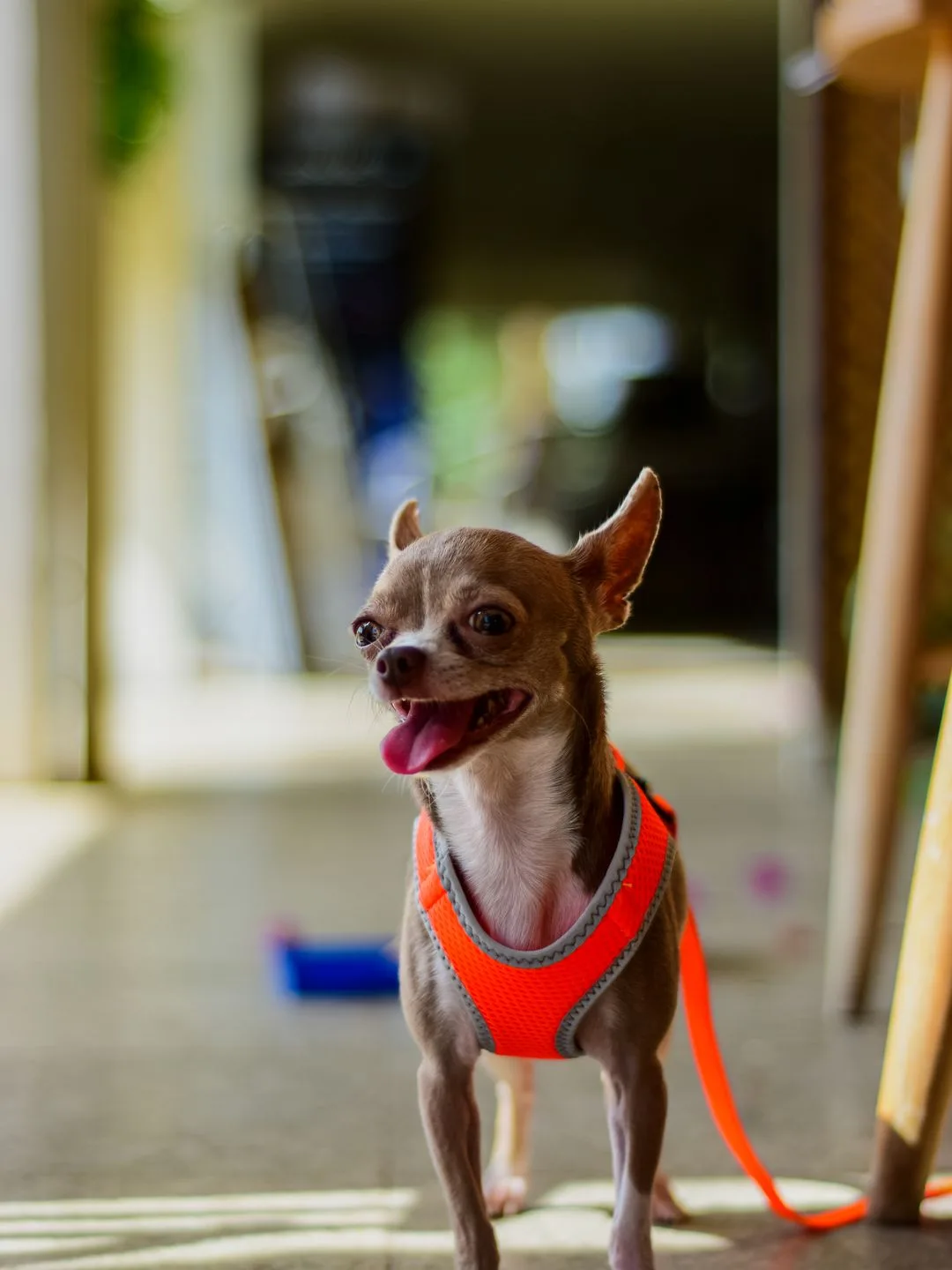
Most dog gear is designed for dogs five to twenty times a chihuahua's size and then shrunk, which is how owners end up with harnesses that slide, beds she disappears into, and toys rated for jaws that could eat hers. This guide deliberately names no brands, because brands change and physics does not: what follows are the specs and fit checks that make gear work at four pounds, category by category, so you can audit anything on any shelf.
Quick answer: Most dog gear is designed for dogs five to twenty times a chihuahua's size and then shrunk, which is how owners end up with sliding harnesses and toys rated for jaws that could eat hers. Day one needs a Y-front harness with a light leash, a crate or pen, a cave bed or bed-plus-blanket, shallow bowls, and chew toys above choke range but under carry weight. The harness is the non-negotiable one: the leash never attaches to a collar, because of the delicate windpipe.
Harness and leash: the equipment that touches the trachea
The harness is the one non-negotiable purchase. This breed walks on a harness, never a collar, because a delicate trachea and a dog that occasionally launches at the end of the lead are a bad combination, the full case argued in our harness-versus-collar guide. The spec: a Y-front shape that leaves the throat untouched and the shoulders free, two points of adjustment minimum, and the two-finger fit test at neck and girth, snug enough that she cannot reverse out of it, which small dogs perform as an escape art.
Weigh the hardware in your hand; buckles built for a beagle are a meaningful percentage of a chihuahua's body weight. The leash follows the same logic: light webbing, small clip, four to six feet fixed. Retractables earn a caution at this size: a sprinting four-pound dog hitting the end of a thin cord, and the habit of walking permanently at full extension, argue against them for the trachea's owner, per the mechanics in our leash-training guide.
Carrier and travel: the mobile den
Portability is the breed's superpower, and the carrier is where gear money is best spent. The fit rule: she should stand, turn, and lie flat inside, with rigid or semi-rigid walls that survive being bumped, ventilation on multiple sides, and an interior clip for the harness. A soft-sided under-seat carrier doubles as the airline option; carriers and restraint on the road are covered in our road-trip guide, where the standing rule is that a loose dog in a car is a projectile, and at this size, a fragile one.
The sling or dog bag, mocked as accessory culture, is honestly defensible equipment for a breed this portable: crowded sidewalks, long errands, and tired-puppy legs are all legitimate use cases, provided the dog rides clipped in and the bag is treated as transport, not as a substitute for walking, per the exercise budget in our exercise guide.
Bed, ramp, and the warmth department
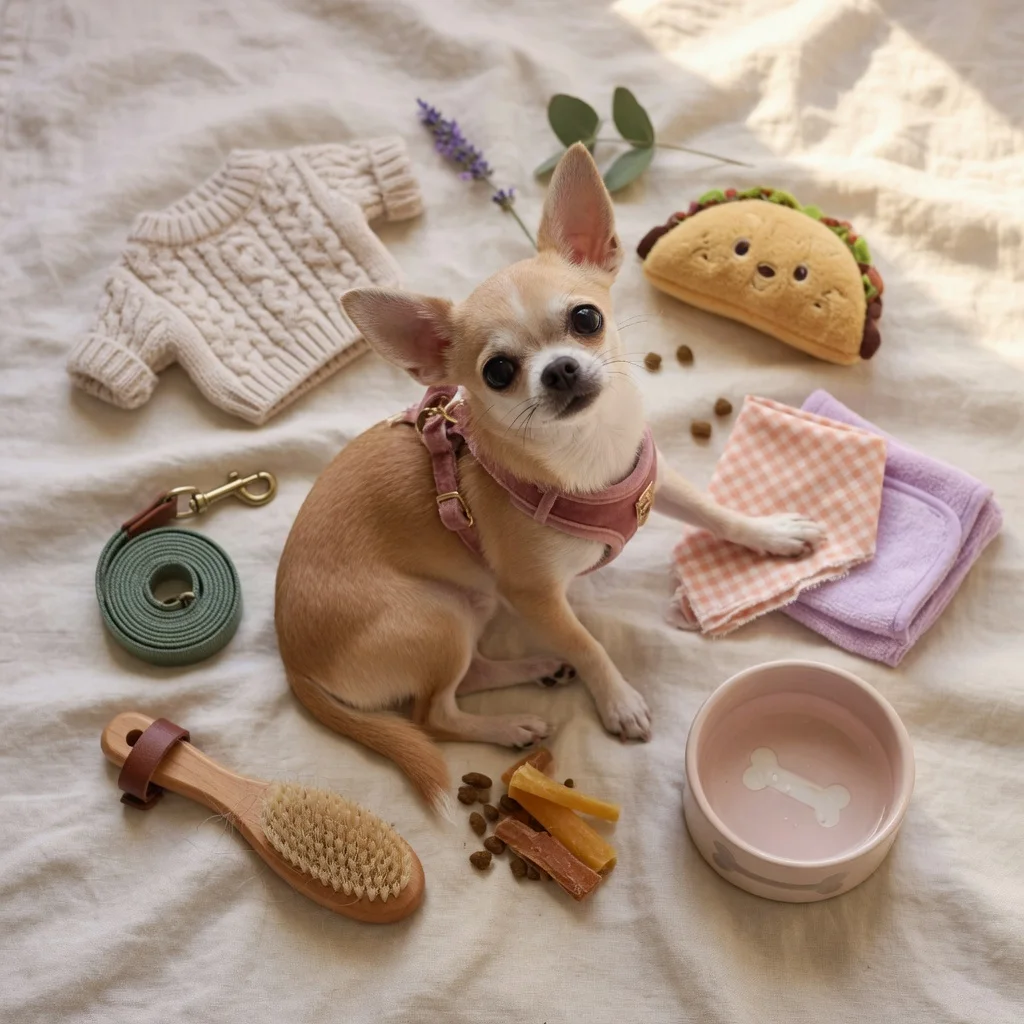
Buy the bed for the burrower she is: this breed sleeps under things, per the burrowing guide, so a cave-style bed or a flat bed plus a dedicated blanket beats an open cushion, placed out of drafts, because thermoregulation at four pounds is a genuine engineering problem, per the temperature guide. The sweater and coat are equipment, not costume, with the fit specs in our clothes guide.
The unsung category is ramps and steps: repeated launches off sofas and beds are exactly the loading a breed with patellar luxation in its file does not need, per our patella guide, and a ramp with a grippy surface at the couch and bed is the cheapest orthopedic insurance sold. Bowls: shallow, stable, and washed daily, with the meal math handled by the feeding guide; a puzzle feeder or snuffle mat earns its shelf space as brain work.
Toys: sized for the jaw, checked like equipment
Toy sizing runs on two failure modes. Too large or too hard, and a tiny jaw cannot engage it, so the expensive chew becomes furniture; too small, and it is a choking hazard the moment a seam gives. The spec: soft-to-medium chew density she can actually dent, size larger than a golf ball but light enough to carry, squeakers behind stitching you inspect weekly, and rope toys retired the day they fray, since swallowed strands are a surgical story.
Rotate a small set rather than amassing a bin; novelty does more work than volume, per the enrichment logic in the exercise guide. And for the teething months specifically, the teething guide covers the freezer tricks that save your furniture. General safe-toy guidance from the ASPCA's dog care resources applies down here too, just at smaller diameters. Mobility equipment can be built to order now, which is how a puppy born without front legs got a 3D-printed cart from a designer who never met him.
Frequently asked questions
What gear does a new chihuahua actually need on day one?
Y-front harness with a light leash, a crate or pen, a cave bed or bed-plus-blanket, shallow bowls, appropriately sized chew toys, and a sweater if your climate demands one. Everything else, ramps included, can follow in week two; the full onboarding list lives in our first-days guide.
Should a chihuahua wear a collar or a harness?
Harness for the leash, always, to keep force off the trachea. A lightweight collar may still carry ID tags, but it should never be the attachment point for walking. The full argument is in the harness-versus-collar guide.
Are dog slings and carrier bags bad for chihuahuas?
Used as transport, no: they are legitimate equipment for a genuinely portable breed, provided the dog is clipped in and still gets her real walks. Used as a lifestyle, yes: a dog carried everywhere misses the socialization and exercise that keep the breed sane.
What toys are safest for a chihuahua?
Soft-to-medium chews she can dent, sized above choke range but under carry weight, with stitched-in squeakers and weekly seam checks. Retire frayed rope toys immediately, and rotate a small set for novelty rather than stockpiling.
Fit the harness to the trachea, the bed to the burrower, the ramp to the kneecaps, and the toys to the jaw: that is the entire buying philosophy. The brands will churn annually; the four-pound engineering brief has not changed since the breed arrived, and now you can audit any shelf against it.


No comments yet
Leave a comment